16+ Inspiring Old Mobile Home Exterior Remodel Ideas
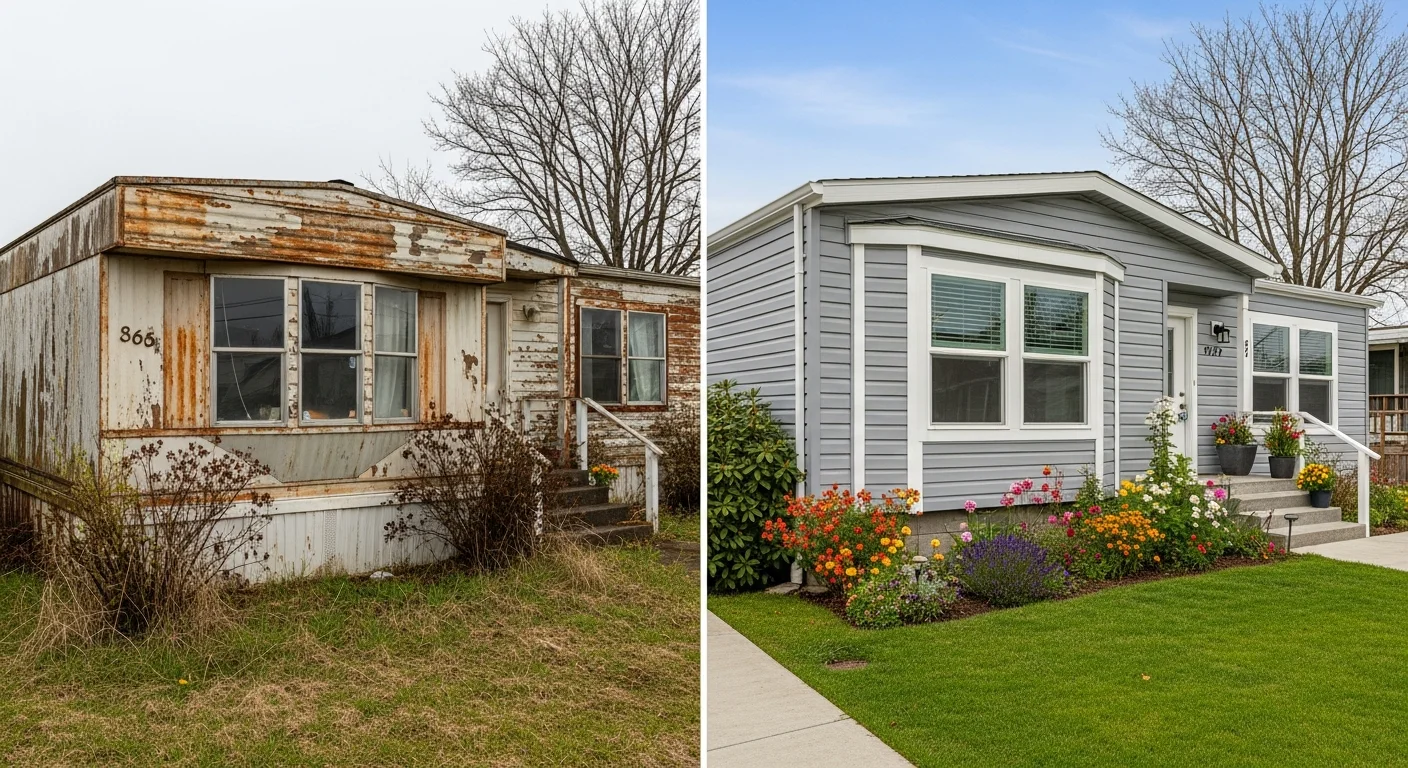
Transforming an old mobile home exterior can dramatically enhance its curb appeal, increase property value, and create a living space you are proud to call home. Many homeowners overlook the incredible potential hidden beneath weathered siding and dated trim, but with the right remodeling strategies, your manufactured home can rival traditional site-built houses in both aesthetics and functionality.
The beauty of mobile home exterior remodeling lies in its versatility. Whether you own a single wide from the 1970s or a double wide from the 1990s, countless renovation options exist to suit every budget and design preference. From simple cosmetic updates like fresh paint to comprehensive overhauls involving new siding and structural enhancements, these projects breathe new life into aging structures while improving energy efficiency and durability.
This comprehensive guide explores over sixteen proven exterior remodel ideas that have transformed countless old mobile homes across the country. Each suggestion addresses common challenges faced by mobile homeowners while providing practical solutions that deliver lasting results. Whether you are planning a complete exterior renovation or seeking affordable updates to refresh your home’s appearance, these ideas will inspire your transformation journey.
Replace Old Siding with Modern Materials
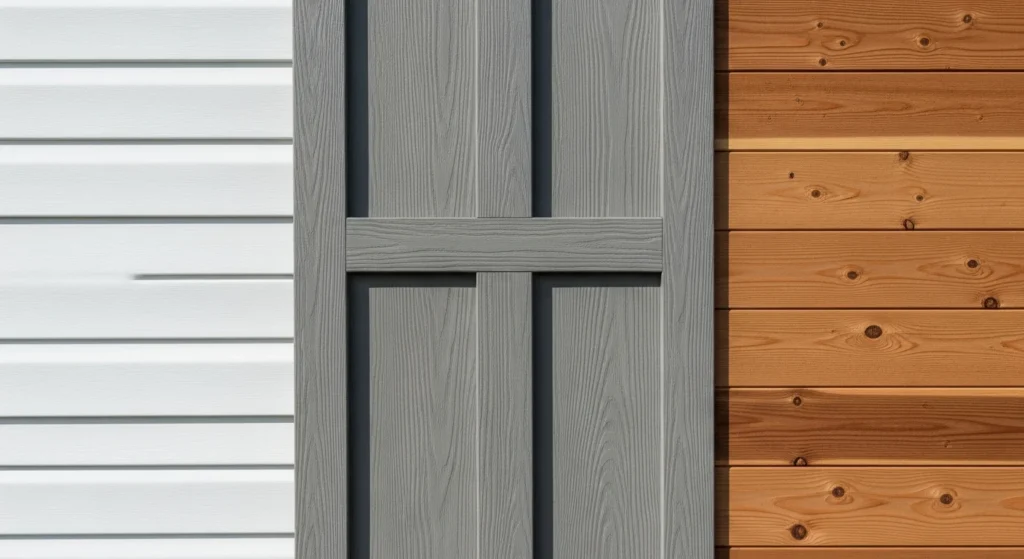
Siding replacement stands as the most impactful exterior renovation you can undertake for your mobile home. Old mobile homes often feature thin aluminum or vinyl siding that has faded, warped, or sustained damage over decades of exposure to the elements. Modern siding materials offer superior durability, better insulation properties, and stunning visual appeal that instantly modernizes your home’s appearance.
Vinyl siding remains the most popular choice due to its affordability and low maintenance requirements. However, not all vinyl siding performs equally. Residential-grade vinyl with a thickness of 0.44 to 0.46 millimeters provides significantly better durability than the recycled vinyl commonly installed on old mobile homes. Premium vinyl at 0.52 millimeters or thicker offers even greater longevity and resistance to cracking, fading, and warping.
Fiber cement siding has gained tremendous popularity among mobile homeowners seeking a more upscale appearance. This material combines cement, cellulose fibers, and sand to create extremely durable planks that resist rot, insects, and fire. Fiber cement withstands extreme temperatures and harsh weather conditions better than most alternatives, making it ideal for regions with challenging climates. The material accepts paint beautifully and maintains its appearance for decades with minimal maintenance.
Wood siding delivers natural warmth and rustic charm that appeals to homeowners seeking a traditional or farmhouse aesthetic. Cedar and other wood species provide excellent insulation properties and create an inviting exterior that blends seamlessly with natural surroundings. Keep in mind that wood requires regular maintenance including staining and sealing to prevent deterioration, but the timeless beauty often justifies the additional upkeep.
Install Energy-Efficient Windows and Doors
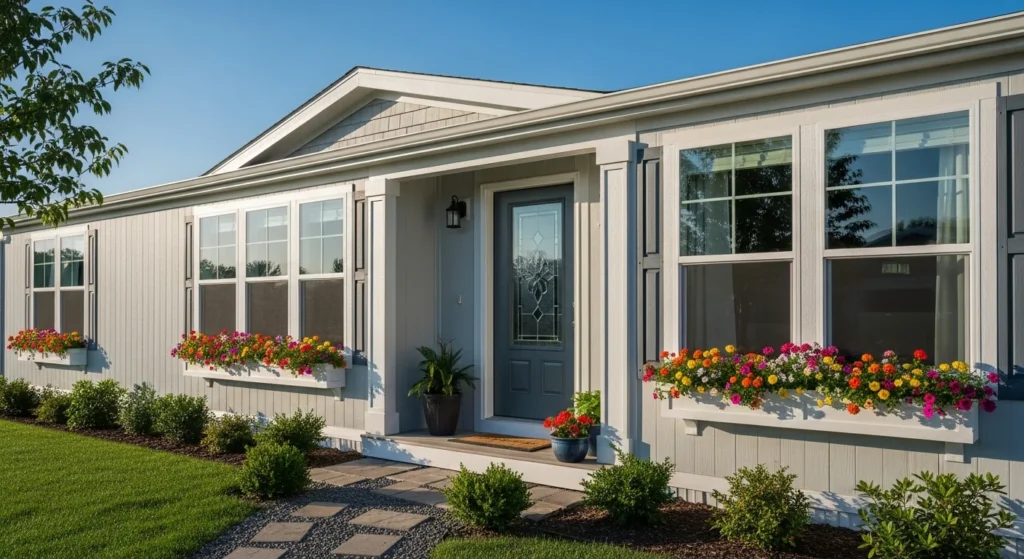
Windows and doors represent critical elements in your o;d mobile home’s exterior envelope. Older manufactured homes typically feature smaller, single-pane windows that leak air and fail to provide adequate insulation. Replacing these outdated windows with modern, energy-efficient models dramatically reduces heating and cooling costs while transforming both interior and exterior aesthetics.
Double-hung windows with low-emissivity glass coatings reflect heat during summer while retaining warmth during winter. These windows come in numerous styles and sizes, allowing you to maintain your home’s character or completely update its appearance. When replacing windows, consider adding insulation around the frames to maximize energy efficiency and prevent air infiltration.
Bay windows deserve special consideration for mobile home exteriors. These projecting window structures make rooms feel larger, flood interiors with natural light, and create striking architectural interest on the exterior. Bay windows work particularly well on end walls of mobile homes where they add dimension and elegance without requiring extensive structural modifications.
Exterior doors on mobile homes are typically 32 inches wide and 76 inches tall, smaller than standard residential doors. Upgrading to full-size, insulated exterior doors immediately elevates your home’s appearance and security. Six-panel doors with decorative glass inserts or modern steel doors with wood-grain finishes provide excellent protection while enhancing curb appeal. Remember that installing standard-sized doors requires reframing the openings, but this investment pays dividends in both function and aesthetics.
Update Skirting for a Finished Look
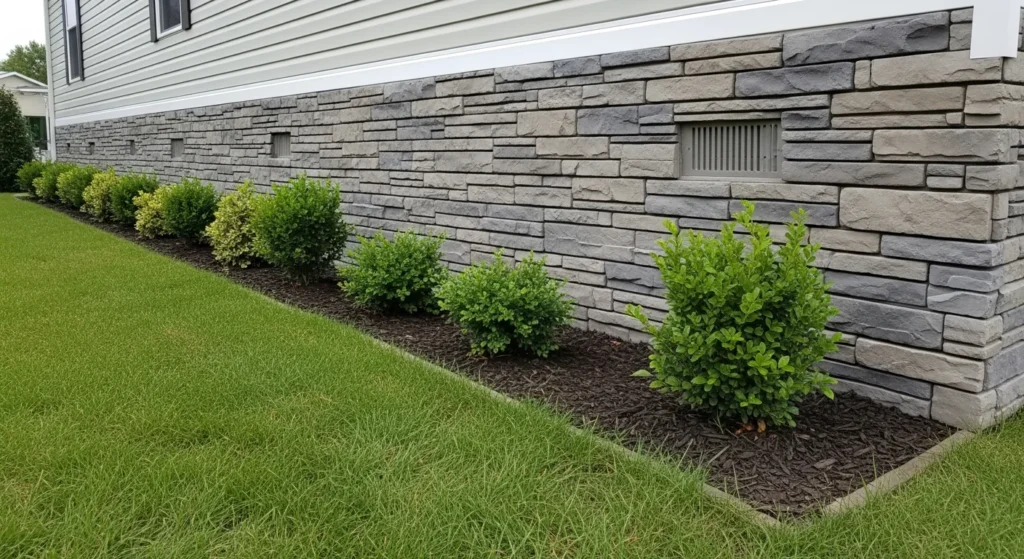
Skirting forms the foundation of your mobile home’s exterior appearance, yet it often receives insufficient attention during renovations. Old vinyl skirting fades, cracks, and sags over time, creating an unkempt appearance that undermines other improvements. Fortunately, skirting replacement ranks among the most affordable and impactful updates you can make.
Traditional vinyl skirting remains popular due to its cost-effectiveness and ease of installation. Modern vinyl skirting products offer better UV resistance and color retention than older versions, maintaining their appearance for many years. Choose colors that complement your siding and overall design scheme to create visual harmony.
Alternative skirting materials can elevate your home’s exterior to new heights. Faux stone panels create the illusion of a solid foundation while providing excellent durability and weather resistance. These lightweight panels install easily and come in various stone textures including river rock, stacked stone, and brick patterns. The dimensional appearance adds depth and sophistication that basic vinyl cannot match.
Brick or stone veneer skirting makes a bold statement and significantly increases perceived value. While more expensive than vinyl, these materials withstand decades of exposure without fading or requiring replacement. The natural texture and earthy colors create a grounded, permanent appearance that disguises the mobile home’s manufactured origins.
Apply Fresh Paint to Transform the Exterior
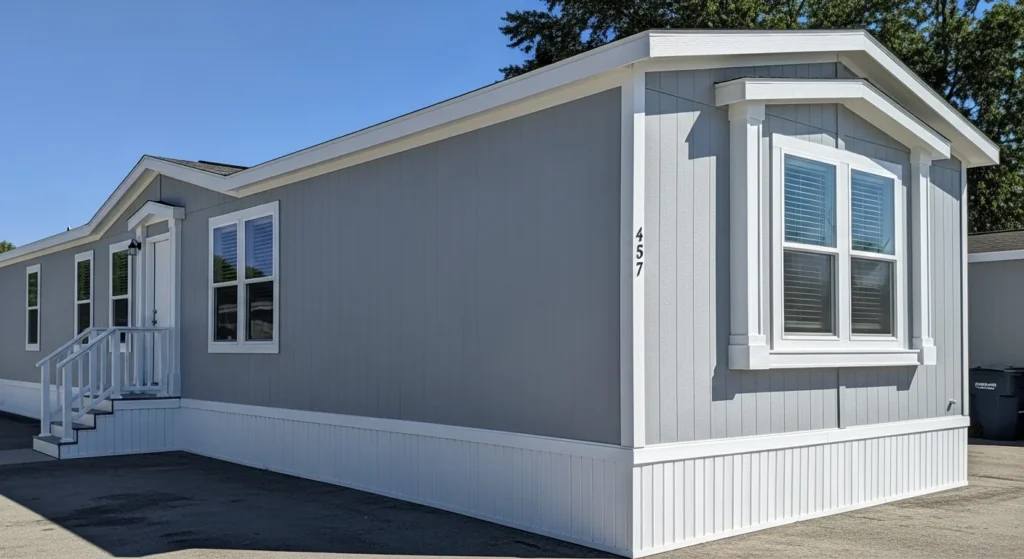
Paint provides the most cost-effective method to dramatically alter your mobile home’s appearance. Whether you are refreshing existing colors or completely changing your home’s palette, quality exterior paint delivers impressive results with relatively minimal investment.
Preparation determines paint success more than any other factor. Thoroughly clean all surfaces using a pressure washer to remove dirt, mildew, and chalky residue. Allow surfaces to dry completely before applying paint. For metal siding, use paint specifically formulated for metal surfaces to ensure proper adhesion. Trim that has faded or peeled benefits from sanding and priming before topcoat application.
Color selection influences your home’s entire aesthetic. Neutral tones like grays, tans, and whites create timeless appeal and pair well with various accent colors. Darker colors like navy, forest green, or charcoal gray make bold statements and hide dirt effectively. Consider your neighborhood context and surrounding landscape when choosing colors to ensure your home complements rather than clashes with its environment.
Accent colors on trim, shutters, and doors add personality and visual interest. Contrasting trim draws attention to architectural details and creates definition between surfaces. Popular combinations include white siding with black trim, gray siding with white trim, or beige siding with brown accents. Do not hesitate to express your personal style through color choices while maintaining overall cohesiveness.
Add or Replace Trim and Shutters
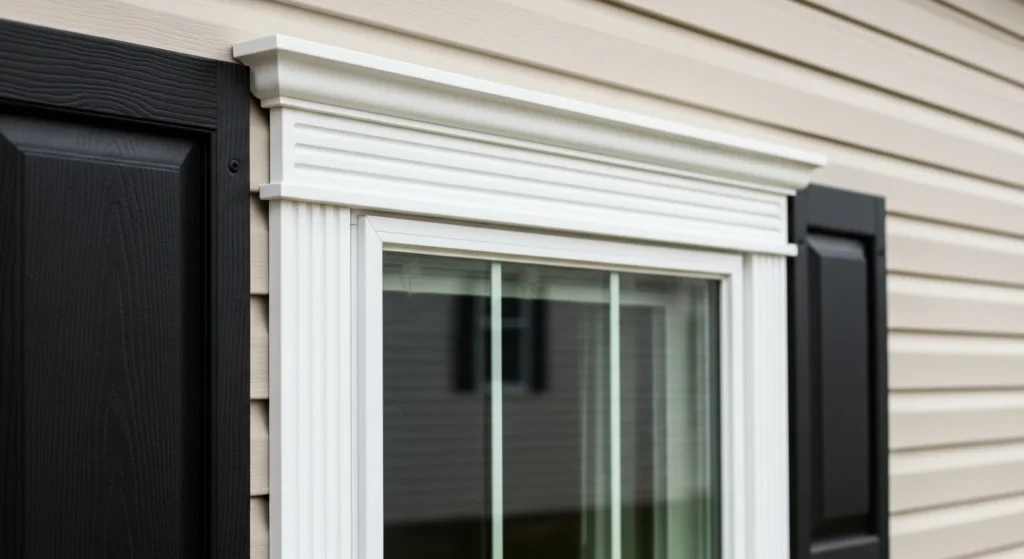
Trim work frames your old mobile home’s exterior features and adds architectural detail that elevates the overall design. Many old mobile homes lack substantial trim or feature deteriorated trim that detracts from their appearance. Adding new trim around windows, doors, corners, and eaves creates a polished, finished look that resembles traditional home construction.
Window trim serves both functional and aesthetic purposes. Properly installed trim directs water away from window frames, preventing leaks and moisture damage while creating attractive borders that enhance window prominence. Use contrasting colors to make windows pop or match trim to siding for a cohesive appearance. Wider trim boards create a more substantial, high-quality look.
Shutters offer another opportunity to inject personality and charm into your exterior. Functional or decorative shutters flanking windows add color, texture, and traditional appeal. Choose shutter styles that complement your overall design vision, whether that means classic raised-panel shutters, rustic board-and-batten designs, or sleek modern alternatives. Ensure shutters are properly sized for your windows to maintain authentic proportions.
Corner trim boards define your home’s edges and create clean transitions between walls. This simple addition makes your mobile home appear more substantial and well-constructed. Paint corner boards in contrasting colors to emphasize your home’s shape and add visual interest.
Increase Roof Pitch for Better Function and Style
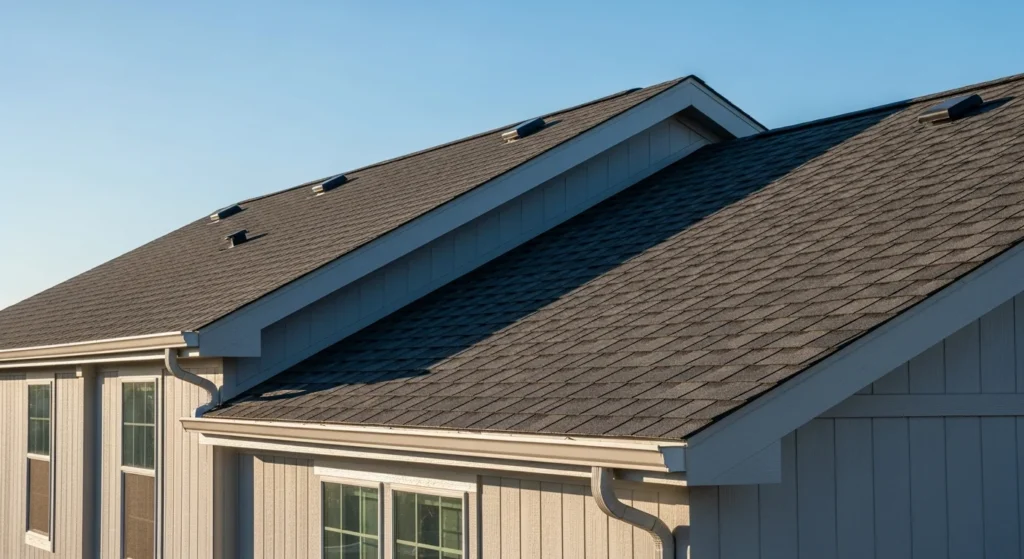
Roof modifications represent more involved renovations but deliver transformative results for mobile home exteriors. Many older manufactured homes feature low-pitched or nearly flat roofs that accumulate water, snow, and debris while appearing dated and uninspired. Increasing roof pitch solves multiple problems simultaneously.
Higher-pitched roofs shed precipitation more effectively, reducing the risk of leaks and water damage that plague flat mobile home roofs. This functional improvement extends roof lifespan and decreases maintenance requirements. Additionally, steeper roofs allow greater flexibility in roofing material selection. Traditional asphalt shingles work best on roofs with adequate pitch, and architectural shingles create attractive, dimensional surfaces that enhance curb appeal.
Aesthetically, increased roof pitch makes mobile homes resemble traditional houses more closely. The taller roofline creates better proportions and adds architectural interest that flat roofs cannot provide. This modification also creates additional attic space that can accommodate more insulation, further improving energy efficiency.
Wider eaves accompany many roof pitch modifications. Standard mobile homes typically feature narrow eaves around six inches wide, while site-built homes have eaves measuring twelve to sixteen inches. Expanding eave width protects siding and windows from water runoff while creating shadows and depth that enhance the exterior appearance. Combined with improved pitch, wider eaves dramatically transform your home’s silhouette.
Build a Front Porch or Deck
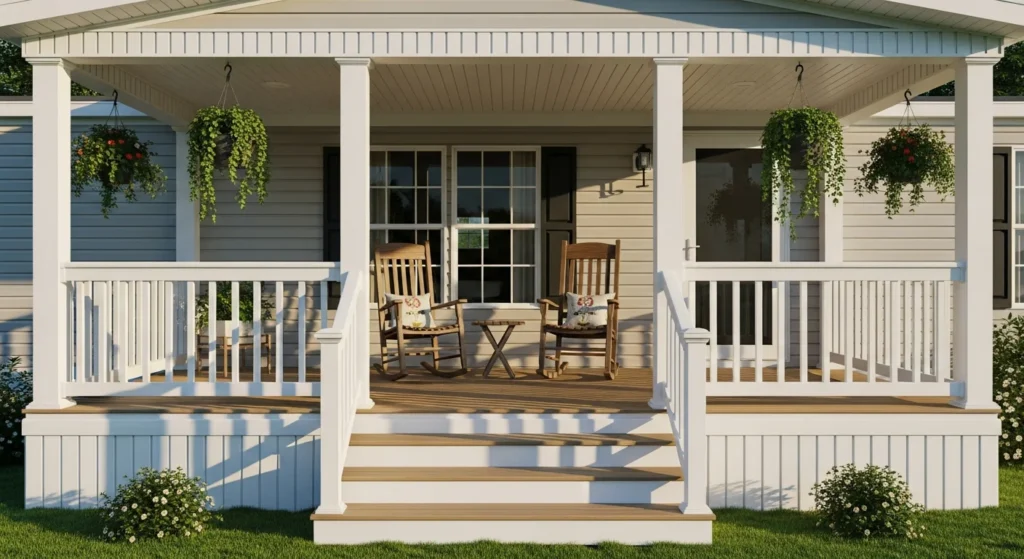
Porches and decks extend living space outdoors while creating welcoming entries that boost curb appeal substantially. Many old mobile homes lack substantial outdoor spaces, but adding these features transforms how your home looks and functions.
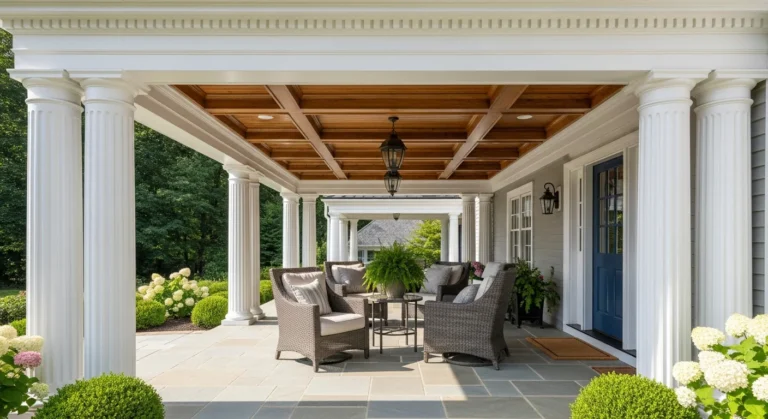
Front porches invite relaxation and neighborhood interaction. A covered porch provides shelter from sun and rain while creating an attractive focal point that draws the eye. Incorporate columns, railings, and decorative trim to match your home’s style, whether that means farmhouse simplicity, Victorian elegance, or modern minimalism. Furnish your porch with comfortable seating and planters to create an inviting atmosphere.
Decks offer versatility for entertaining and recreation. Build decks across the front, back, or side of your mobile home to maximize usable outdoor space. Use materials that complement your exterior including composite decking, natural wood, or vinyl boards. Built-in seating, planters, and privacy screens enhance deck functionality and aesthetics.
Consider deck safety and structural requirements carefully. Old Mobile homes have specific weight limitations, so consult professionals to ensure your deck design does not exceed these thresholds. Proper footings and supports distribute weight safely while providing a stable platform. Plan deck height to align smoothly with your door thresholds for easy access.
Install an Attached Carport or Garage
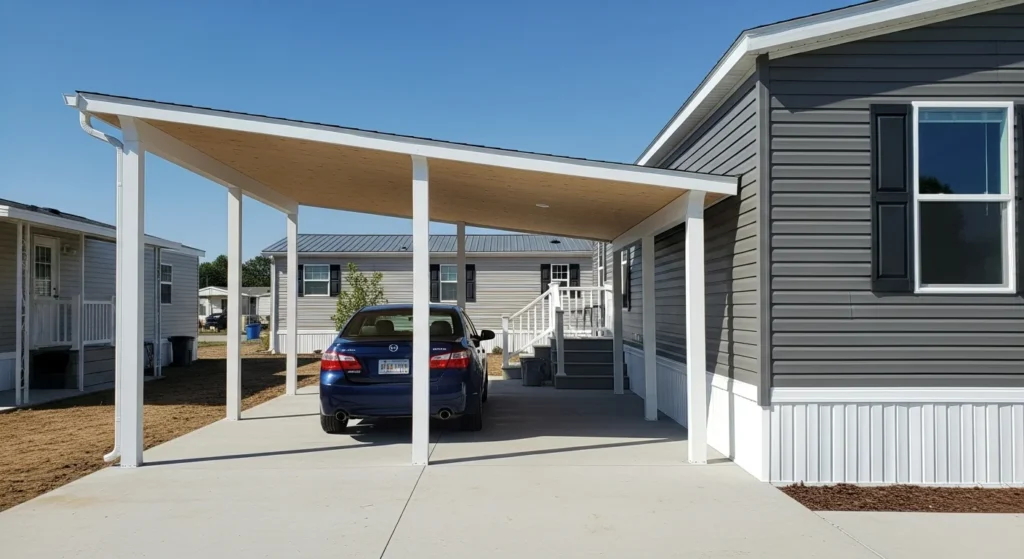
Carports and garages provide practical protection for vehicles while enhancing your home’s exterior significantly. These structures add perceived value and permanence that standalone mobile homes often lack.
Attached carports create cohesive designs when their roofing materials and architectural details match your home. Choose carport styles that complement your overall aesthetic, from simple metal structures to elaborate wooden designs with decorative columns and trim. Ensure carport roofs slope properly to direct water away from your home and maintain appropriate clearance heights for your vehicles.
Garages offer even greater value through enclosed storage and workspace. Building an attached garage requires more investment but provides superior protection for vehicles and belongings. Connect your garage to your home through covered breezeways or direct entry doors to maximize convenience and create seamless transitions between structures.
Consider local building codes and homeowners association requirements before constructing carports or garages. Many communities regulate these additions through permits and design standards. Work with contractors familiar with mobile home modifications to ensure proper construction that respects your home’s unique structural characteristics.
Enhance Landscaping and Create Flower Beds
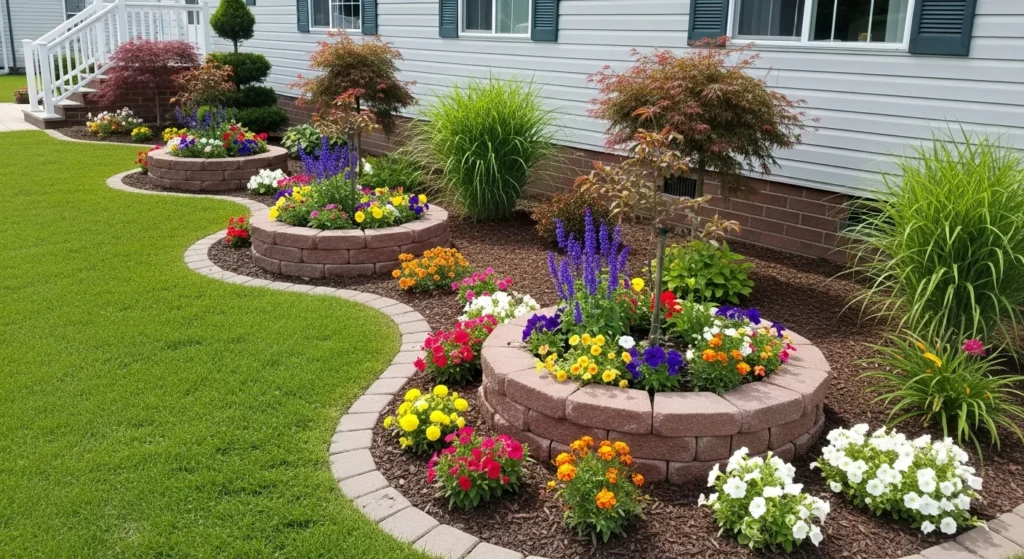
Landscaping frames your old mobile home and softens its manufactured appearance through natural elements. Even modest landscaping efforts dramatically improve curb appeal and create welcoming outdoor environments.
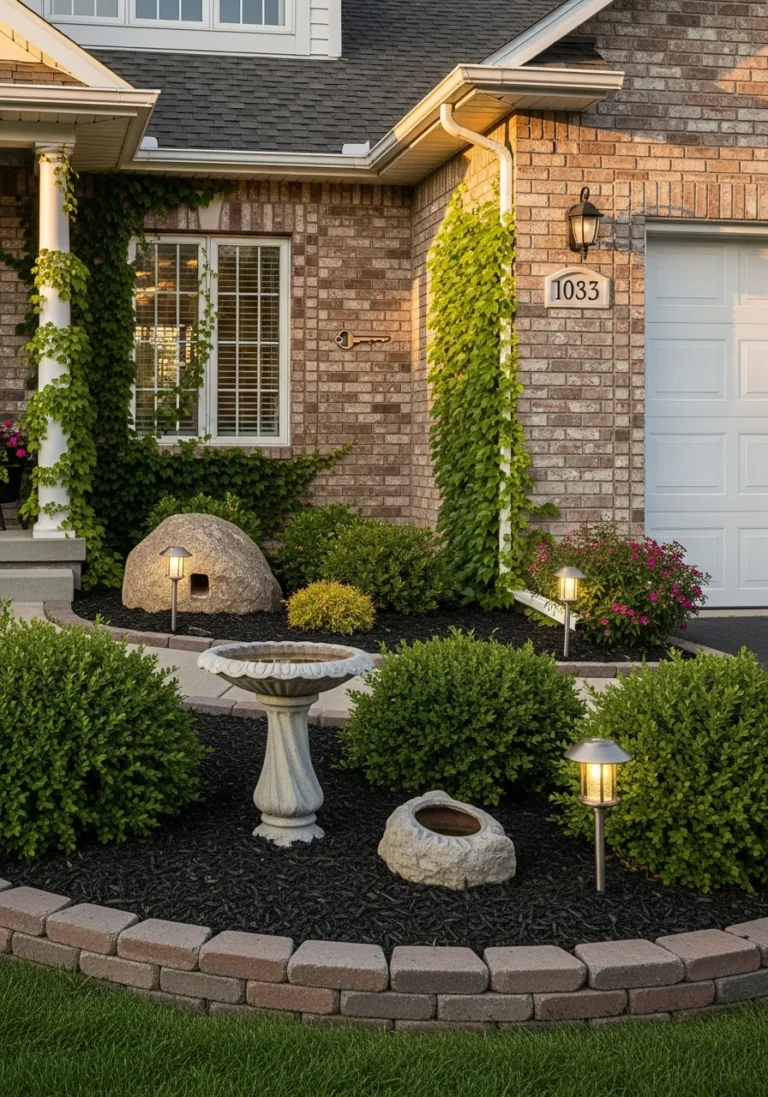
Raised flower beds work particularly well around mobile home perimeters. These contained gardens do not require extensive yard space and allow creativity in plant selection and arrangement. Build beds using timber, stone, or brick that complements your skirting and overall design. Fill beds with colorful annuals, hardy perennials, or evergreen shrubs depending on your maintenance preferences and climate.
Foundation plantings disguise skirting and anchor your home visually to its site. Choose plants appropriate for your sun exposure and growing zone, mixing textures and heights to create interest. Ornamental grasses, flowering shrubs, and low-maintenance groundcovers work well in foundation plantings. Maintain proper spacing to prevent plants from damaging your home’s exterior while allowing room for growth.
Trees provide shade, privacy, and vertical elements that balance your home’s horizontal lines. Select trees appropriate for your space constraints and avoid species with aggressive root systems that might damage your foundation or underground utilities. Flowering trees add seasonal color and charm, while evergreens provide year-round structure and privacy screening.
Walkways and edging complete your landscaping by defining spaces and creating clear pathways. Poured concrete, pavers, or gravel paths guide visitors to entries while preventing soil erosion and mud tracking. Edge beds with metal, plastic, or stone borders to maintain clean lines and prevent grass encroachment.
Add Outdoor Lighting for Safety and Ambiance
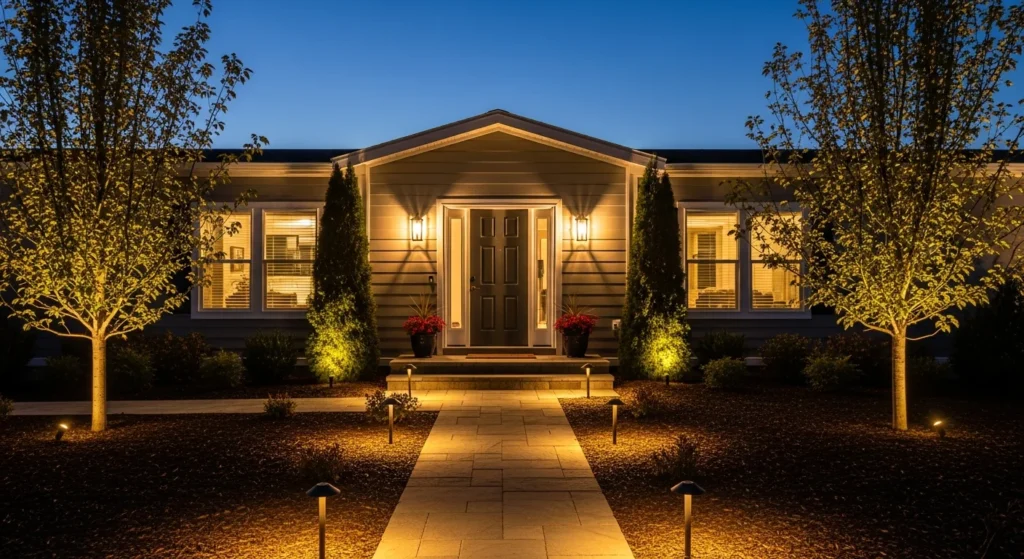
Exterior lighting serves practical and aesthetic purposes, illuminating pathways and entries while highlighting architectural features after dark. Thoughtfully designed lighting systems transform old mobile home exteriors into welcoming, secure environments.
Entry lighting provides essential illumination for safe navigation while greeting visitors warmly. Install sconces flanking your front door or overhead fixtures that match your home’s style. Choose fixtures with adequate brightness for safety without creating harsh glare. Motion sensors add convenience and security by activating lights automatically when people approach.
Accent lighting showcases architectural details, landscaping, and focal points. Uplight trees and shrubs to create dramatic silhouettes and depth. Illuminate pathways with low-level fixtures that guide movement without overwhelming the landscape. Highlight interesting architectural elements like columns, trim work, or decorative shutters with directional spotlights.
String lights and decorative fixtures create inviting atmospheres on porches and decks. These ambient lights extend outdoor living hours while adding charm and personality. Solar-powered options eliminate wiring requirements and reduce energy consumption, making them ideal for mobile home applications.
Replace Old Gutters and Downspouts
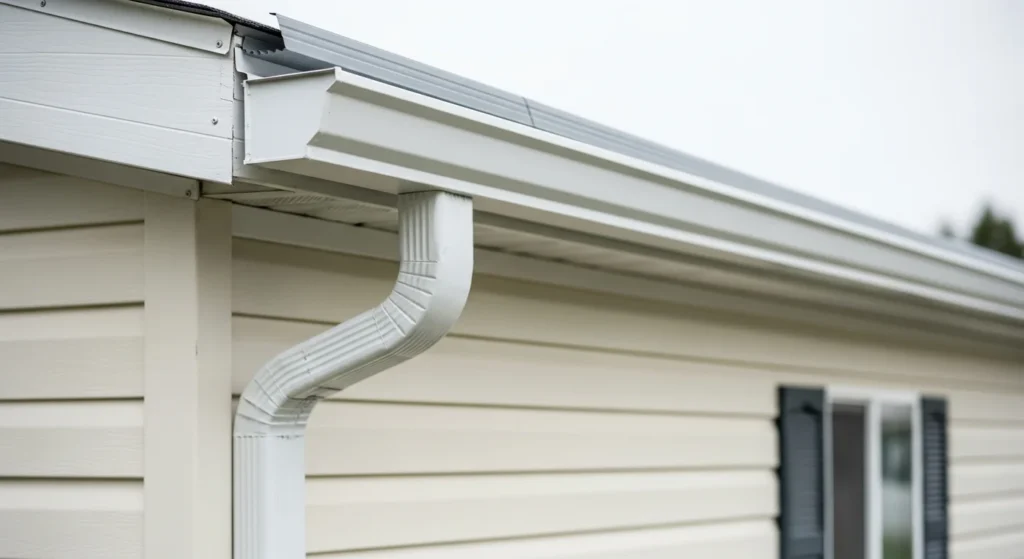
Gutters and downspouts protect your old mobile home from water damage while contributing to its finished appearance. Older homes often feature undersized, corroded, or improperly installed gutter systems that fail to manage water effectively.
Standard mobile home gutters measure approximately five inches wide, smaller than the six-inch gutters common on site-built homes. Upgrading to larger gutters improves water management capacity, reducing overflow during heavy rains. Choose materials that resist corrosion and match your home’s aesthetic, including aluminum, vinyl, or copper options.
Proper gutter installation requires correct slope and secure mounting to handle water volume and weight. Ensure gutters direct water away from your home’s foundation through strategically placed downspouts. Extend downspouts at least four feet from your home using splash blocks or underground drainage systems to prevent foundation undermining and skirting damage.
Gutter guards reduce maintenance by preventing leaf and debris accumulation. These protective screens or covers allow water flow while blocking larger materials that cause clogs. While requiring higher initial investment, gutter guards save time and effort over the long term while ensuring consistent drainage performance.
Install Window Awnings for Shade and Style
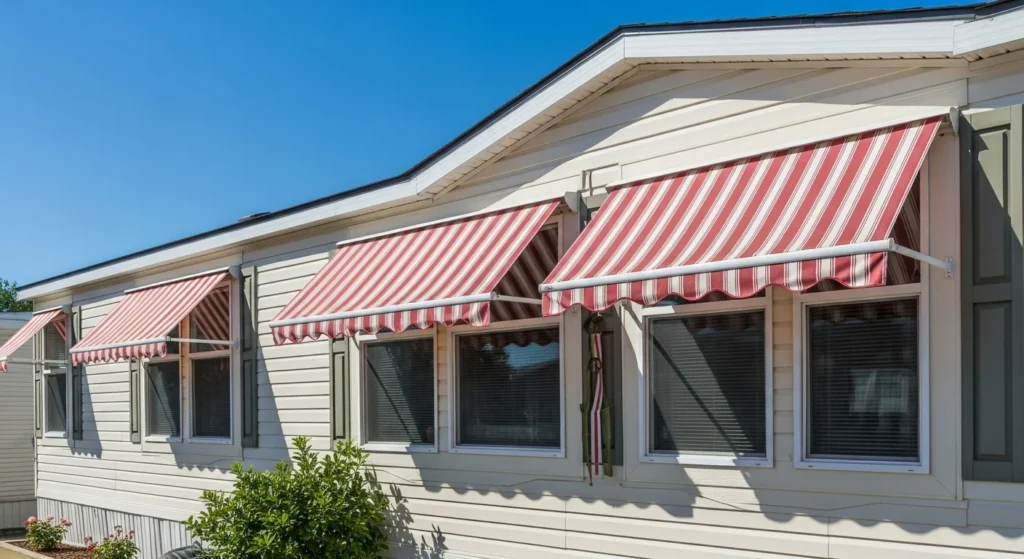
Awnings provide functional shade while adding decorative elements that break up plain siding expanses. These additions reduce solar heat gain, lowering cooling costs during warm months while protecting windows from weather exposure.
Metal awnings offer durability and come in various colors to complement your exterior palette. Aluminum awnings resist rust and maintain their appearance for years with minimal maintenance. Traditional stationary awnings create permanent shade and weather protection, while retractable models offer flexibility for different seasons and weather conditions.
Fabric awnings deliver softer aesthetics and come in countless patterns and colors. Modern fabric treatments resist fading, mildew, and weather damage while providing excellent UV protection. Striped patterns add playful charm, while solid colors create sleek, contemporary looks. Ensure fabric awnings include proper drainage and ventilation to prevent water pooling and mildew growth.
Window awnings work particularly well on south and west-facing windows that receive intense afternoon sun. This targeted shading reduces interior temperatures significantly, easing air conditioning demands and protecting furnishings from sun damage. Combine awnings with energy-efficient windows for maximum cooling cost reduction.
Create Faux Stone or Brick Accents
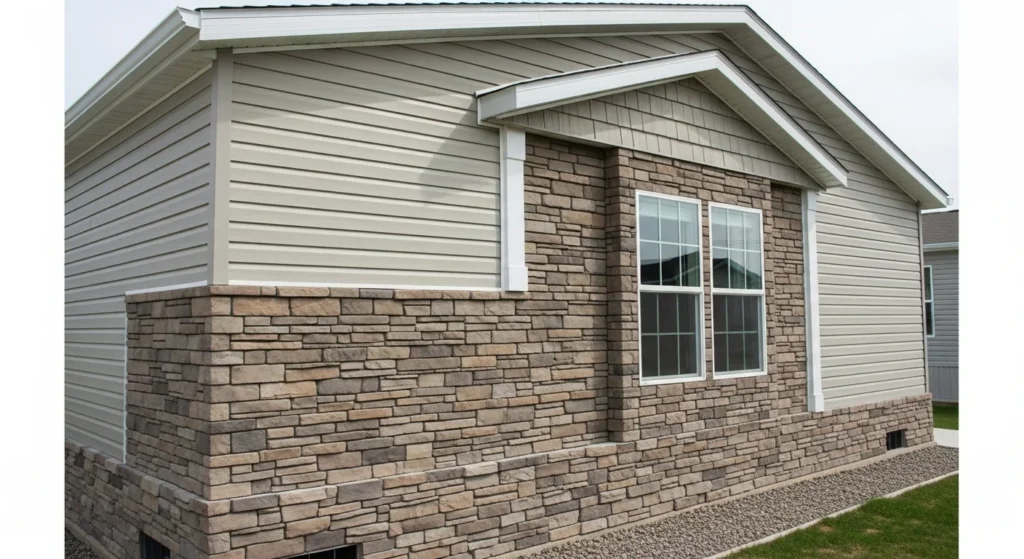
Stone and brick accents add texture, color, and upscale appeal to old mobile home exteriors without the expense and weight of real masonry. Modern faux materials convincingly replicate natural stone and brick while installing easily over existing siding.
Faux stone panels work beautifully as wainscoting, skirting upgrades, or accent walls. These lightweight panels attach directly to exterior surfaces using construction adhesive or mechanical fasteners. Available textures include stacked stone, river rock, fieldstone, and cut stone patterns in various earth-tone color palettes. The dimensional surface creates depth and visual interest that flat siding cannot achieve.
Brick veneer panels offer classic appeal and timeless beauty. These thin brick panels capture the appearance of hand-laid masonry while weighing a fraction of traditional brick. Use brick accents around entries, on chimney-style features, or as contrasting wainscoting beneath lap siding. The warm, natural colors complement virtually any design scheme.
Combine faux stone or brick with complementary materials for maximum impact. Pair stone wainscoting with vinyl lap siding above, or use brick accents to frame entries and window groupings. These strategic applications create focal points that elevate your entire exterior without overwhelming the design.
Upgrade House Numbers and Mailbox
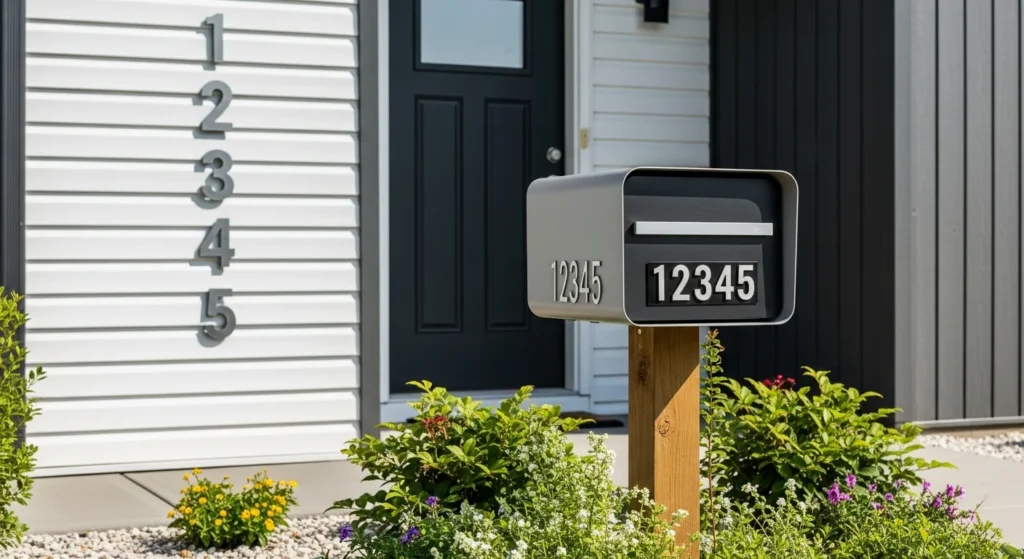
Small details significantly influence overall impression, and house numbers plus mailbox styling offer easy opportunities to enhance curb appeal. These functional elements become design features when chosen thoughtfully.
House numbers should be visible from the street, aiding emergency responders and visitors in locating your home quickly. Choose numbers sized appropriately for your home’s scale and viewing distance. Modern metal numbers create contemporary elegance, while traditional painted wood numbers suit farmhouse or cottage styles. Illuminated numbers ensure visibility after dark.
Mailbox selection extends your design theme to the street. Coordinated mailbox posts and boxes complement your home’s architecture and color scheme. Custom designs, decorative posts, and landscaping around mailboxes create attractive street-facing focal points. Ensure mailbox placement meets postal service requirements while enhancing your property’s appearance.
Address plaques offer another avenue for personalization. Mounted near entries or prominently displayed on front facades, decorative plaques incorporate house numbers into attractive designs featuring your family name, established date, or welcoming messages.
Add Architectural Details Like Gables or Dormers
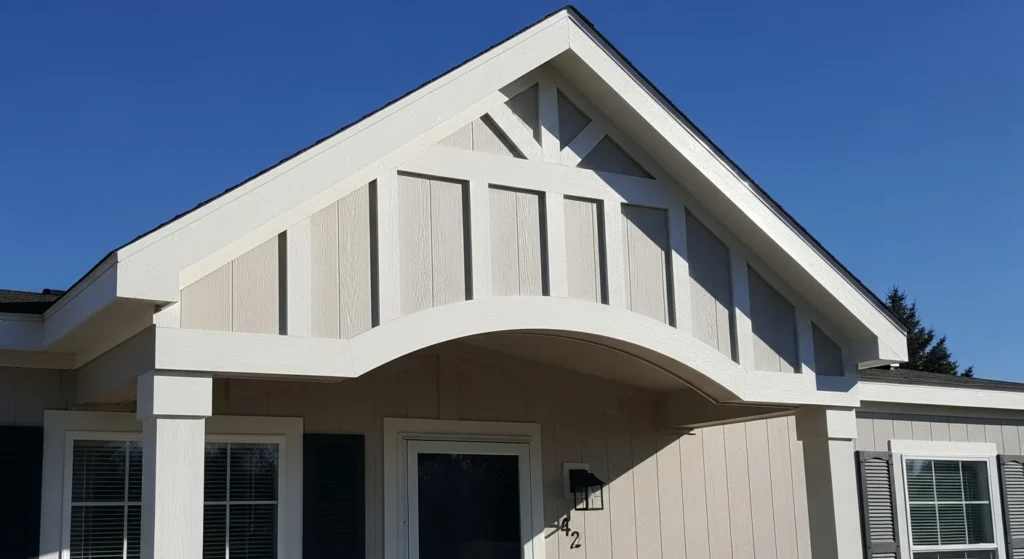
Architectural enhancements transform plain old mobile home exteriors into distinctive, custom-appearing residences. While more complex and expensive than cosmetic updates, these modifications deliver dramatic results that completely alter your home’s character.
Gable additions break up long rooflines and add visual interest to otherwise monotonous facades. A gable centered over your entry creates a focal point that draws attention and provides architectural distinction. Gables also facilitate better water drainage and can accommodate decorative vents or windows that enhance both exterior appearance and interior lighting.
Dormers serve similar functions while creating additional interior headroom and natural light. These projecting structures integrate seamlessly with roof modifications and work particularly well when updating old mobile homes to resemble traditional cottages or farmhouses. Dormers accommodate windows that illuminate and ventilate attic spaces while contributing substantially to curb appeal.
Cupolas and weathervanes add charming details that personalize your exterior. These traditional elements work especially well on homes with increased roof pitches and suggest craftsmanship and attention to detail. While purely decorative, cupolas and weathervanes contribute significantly to overall aesthetic appeal.
Install Vertical or Board and Batten Siding
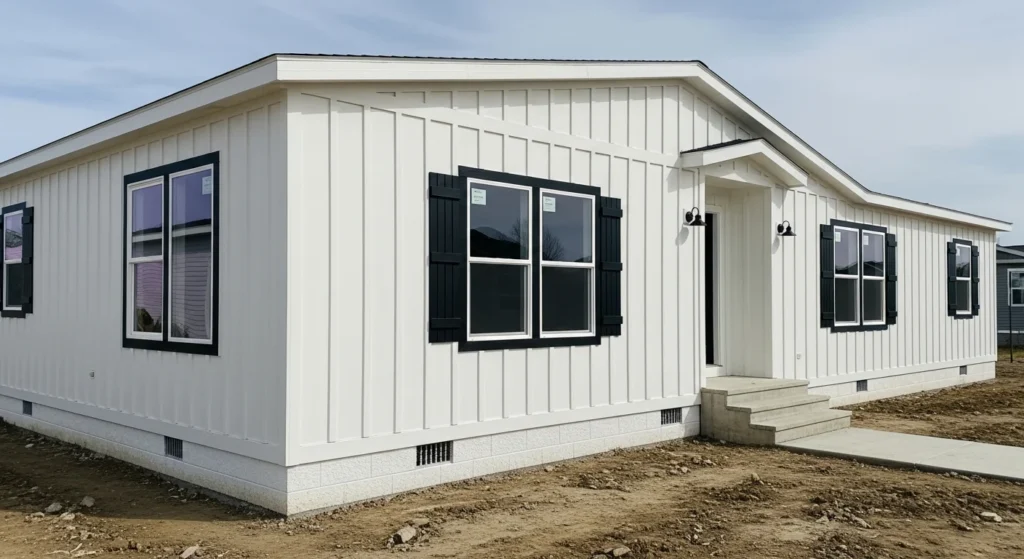
Siding orientation and profile dramatically affect old mobile home appearance. Vertical siding creates different visual effects than traditional horizontal lap siding, offering distinctive alternatives for homeowners seeking unique exteriors.
Board and batten siding delivers rustic farmhouse charm through wide vertical boards with narrow battens covering seams. This classic style suits country settings and creates strong vertical lines that make homes appear taller. Modern fiber cement board and batten products provide authentic appearance with superior durability and minimal maintenance requirements.
Vertical panel siding offers contemporary aesthetics with clean lines and minimal ornamentation. Metal panels create industrial or modern farmhouse looks, while vertical vinyl planks provide affordability and easy maintenance. Mixing siding orientations adds dimension, such as using horizontal siding on upper portions with vertical board and batten wainscoting below.
Shake and shingle siding brings coastal cottage or mountain cabin character to mobile homes. These textured profiles create depth and shadow lines that enhance visual interest. Fiber cement shake siding captures the appearance of hand-split cedar without the maintenance demands and fire risks of natural wood.
Conclusion
Remodeling an old mobile home exterior represents one of the most rewarding home improvement projects you can undertake. The transformative power of new siding, updated windows and doors, fresh paint, and thoughtful landscaping turns dated manufactured homes into attractive, comfortable residences that rival traditional site-built houses in both appearance and value.
Success in old mobile home exterior remodeling requires careful planning, realistic budgeting, and attention to your home’s unique structural characteristics. Start with projects that deliver maximum impact for your investment, such as siding replacement or paint updates, then expand to additional enhancements as budget allows. Whether you complete all renovations simultaneously or tackle them gradually over several years, each improvement builds toward your vision of the perfect home.
Remember that professional assistance often proves invaluable for complex projects like roof modifications, structural additions, or extensive siding replacement. These experts understand mobile home construction nuances and ensure work meets safety standards while delivering quality results. However, many updates including painting, trim installation, and landscaping fall well within the capabilities of motivated do-it-yourself homeowners.
Your mobile home exterior remodel journey begins with inspiration and vision. Use these ideas as starting points, adapt them to your specific circumstances and preferences, and create an exterior that reflects your personal style while providing comfortable, energy-efficient shelter for years to come. The investment in your home’s exterior pays dividends through increased enjoyment, reduced maintenance costs, improved energy efficiency, and enhanced property value that makes every effort worthwhile.
Frequently Asked Questions
What is the most cost-effective exterior remodel for an old mobile home?
Fresh paint ranks as the most affordable exterior transformation you can make. Quality exterior paint costs significantly less than siding replacement while dramatically improving appearance. Combine paint with simple landscaping additions like flower beds and updated house numbers for maximum impact on a modest budget. These projects often cost under a few hundred dollars yet deliver impressive curb appeal improvements.
How much does it cost to replace siding on a old mobile home?
Siding replacement costs vary widely based on materials, home size, and labor expenses. Vinyl siding typically ranges from three to eight dollars per square foot installed, while fiber cement siding costs six to twelve dollars per square foot. A single-wide mobile home might require eight to twelve thousand dollars for complete vinyl residing, while double-wides can cost fifteen to twenty-five thousand dollars or more depending on complexity and material choices.
Can I install standard-sized doors and windows in my old mobile home?
Yes, you can install standard residential doors and windows in your mobile home, but this requires reframing the openings since manufactured homes typically have smaller dimensions. Mobile home doors are usually 32 inches wide and 76 inches tall, while standard doors measure 36 inches wide and 80 inches tall. This modification involves cutting larger openings, adding proper framing, and ensuring structural integrity. Many homeowners find this upgrade worthwhile for improved aesthetics and functionality.
Do I need permits for old mobile home exterior renovations?
Permit requirements vary by location and project scope. Cosmetic updates like painting, landscaping, and minor trim work typically do not require permits. However, structural modifications including roof changes, additions like porches or carports, electrical work, and sometimes even siding replacement may require building permits. Contact your local building department to determine specific requirements for your planned projects before beginning work.
How can I make my old mobile home look like a regular house?
Combining several strategic improvements makes mobile homes closely resemble site-built houses. Increase roof pitch to create more traditional proportions, install wider eaves, replace small windows and doors with standard-sized versions, add substantial trim work around all openings, upgrade to quality siding materials like fiber cement or wood, install skirting that resembles a solid foundation such as stone veneer, and add a front porch. These modifications collectively transform manufactured home appearance into something indistinguishable from traditional construction.