17+ Inspiring Privacy Railing Ideas for Your Home
Creating a private outdoor sanctuary begins with the right railing system. Whether you want to block unwanted views, reduce noise from neighbors, or simply establish boundaries around your deck or patio, privacy railings offer both functional benefits and aesthetic appeal. This comprehensive guide explores over 17 inspiring privacy railing ideas that transform ordinary outdoor spaces into secluded retreats while complementing your home’s architectural style.
Privacy railings have evolved far beyond simple barriers. Today’s designs incorporate innovative materials, contemporary aesthetics, and smart engineering to deliver solutions that meet building codes while enhancing property value. From traditional wood slat systems to modern cable and glass combinations, the options available allow homeowners to customize their outdoor living areas according to personal preferences and practical needs.
Horizontal Wood Slat Railing
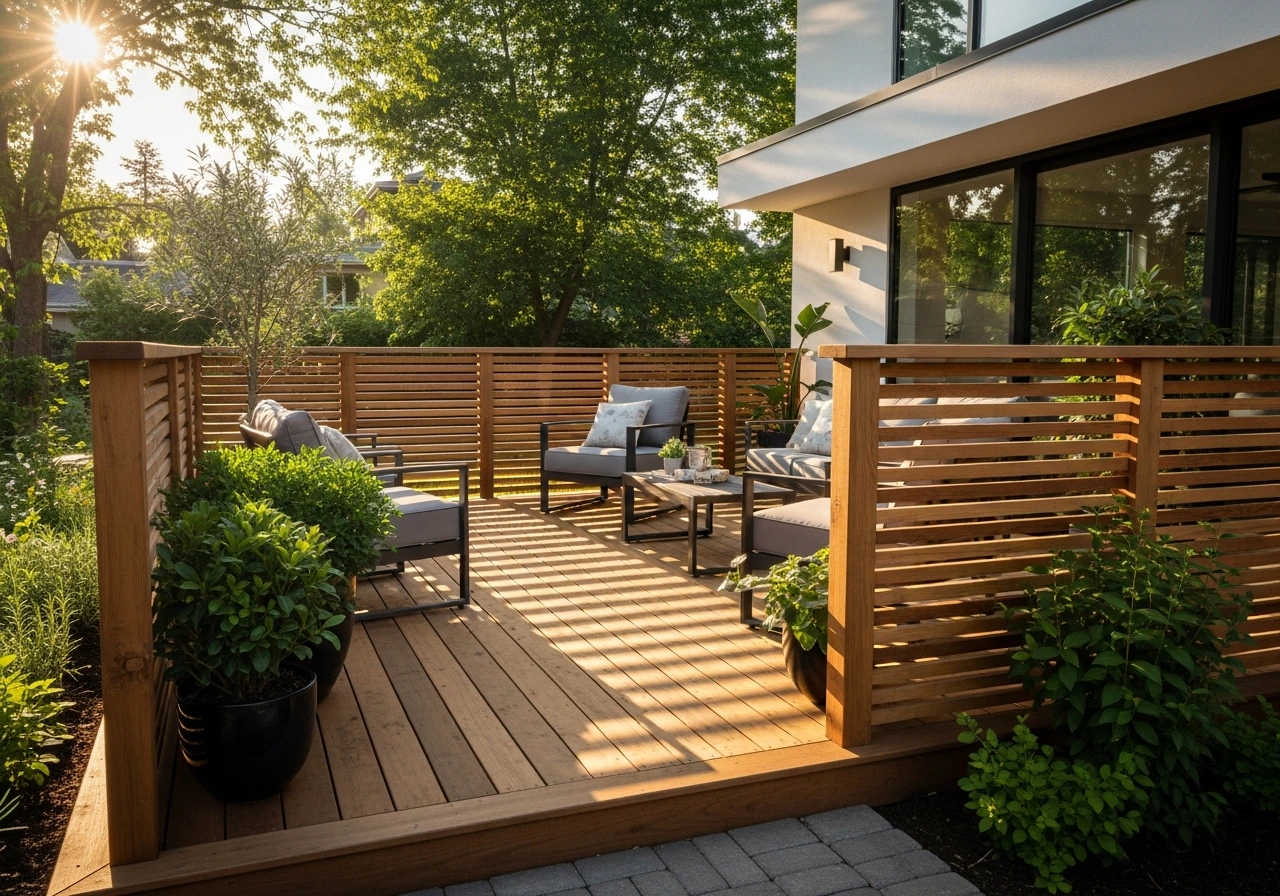
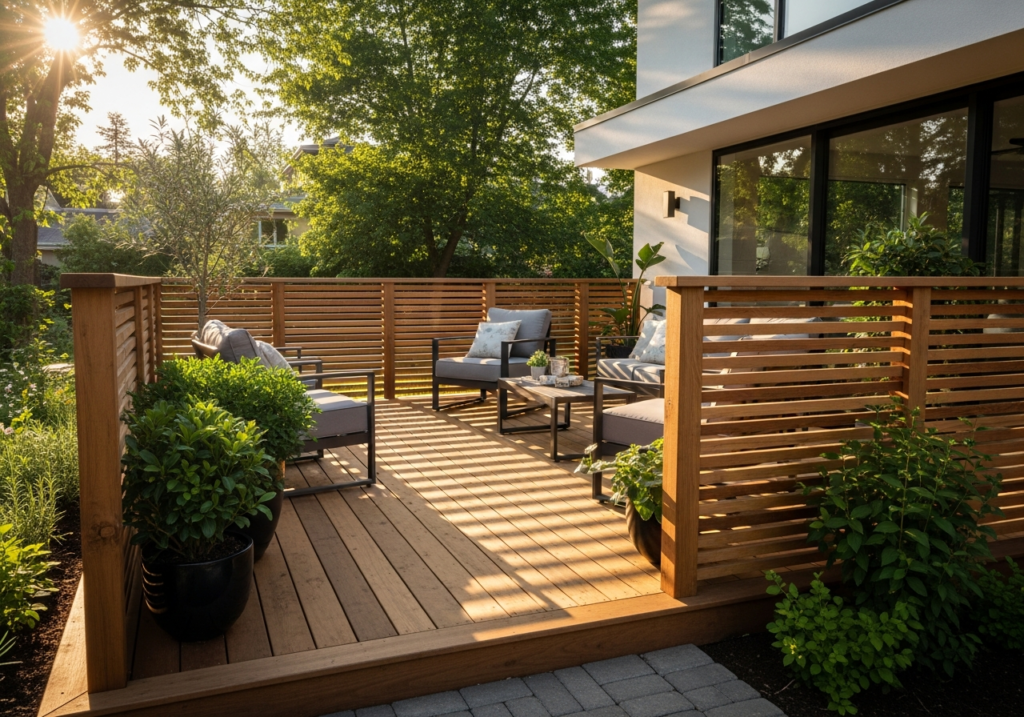
Horizontal wood slat railings represent one of the most popular choices for contemporary homes. This design features wooden boards installed parallel to the ground, creating clean lines that make spaces appear wider and more expansive. Cedar and redwood remain preferred materials due to their natural resistance to decay and insects, though pressure-treated pine offers a budget-friendly alternative.
The spacing between slats determines privacy levels. Boards positioned one to two inches apart provide complete seclusion, while wider gaps allow breezes to flow through while maintaining partial privacy. Many homeowners appreciate how this design complements modern architecture, particularly when paired with minimalist outdoor furniture and neutral color palettes. The horizontal orientation also simplifies installation compared to traditional vertical picket designs, as fewer cuts and measurements are typically required.
Maintenance involves periodic staining or sealing every two to three years to protect against weathering. Natural wood develops a silver-gray patina over time, which some homeowners embrace for its rustic charm. Others prefer to maintain the original color through regular treatment with wood preservatives and UV-resistant finishes.
Vinyl Privacy Railing Systems
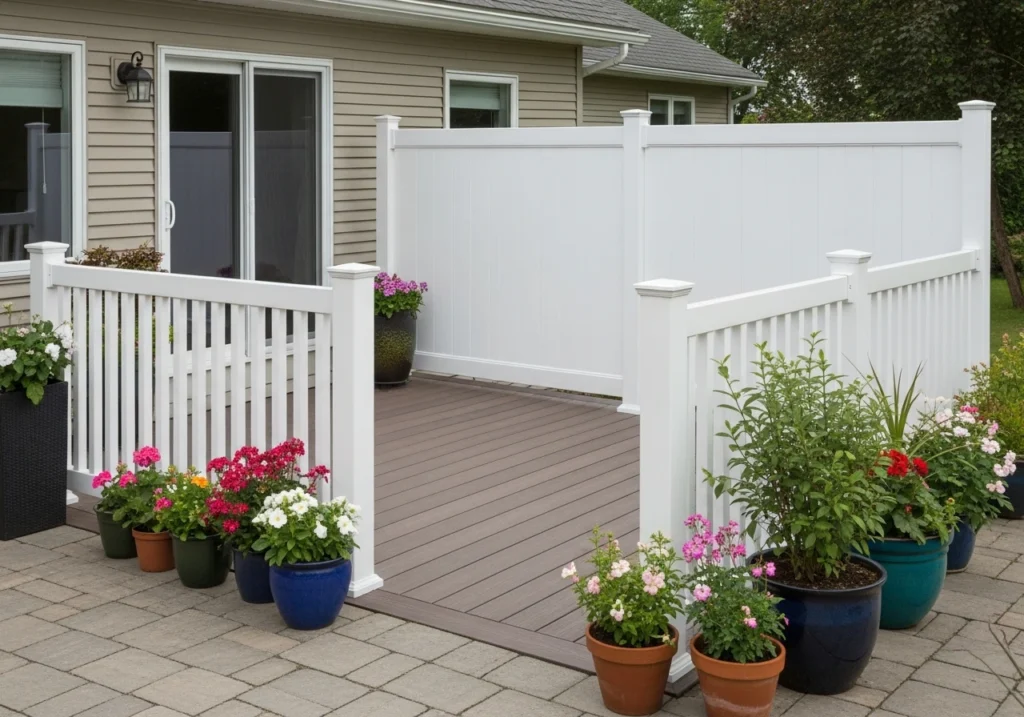
Vinyl railing systems deliver maximum privacy with minimal maintenance requirements. These solid panels completely block sightlines while withstanding harsh weather conditions without fading, cracking, or rotting. Available in various heights, full privacy systems typically reach 72 inches, while semi-private options measure 36 to 42 inches and may incorporate decorative elements at the top.
Modern vinyl railings come in multiple colors beyond traditional white, including earth tones like clay, slate gray, and cedar. Many systems feature interlocking technology that creates seamless panels meeting building code requirements. The material resists moisture, insects, and temperature fluctuations, making it suitable for diverse climates from humid coastal regions to cold northern areas.
Installation involves surface-mounting posts to existing deck structures or patios, with vinyl infill boards sliding into channels. The process requires basic tools and can often be completed over a weekend. Unlike wood, vinyl never needs painting or staining, requiring only occasional washing with soap and water to maintain appearance.
Cable Railing with Wood Frame
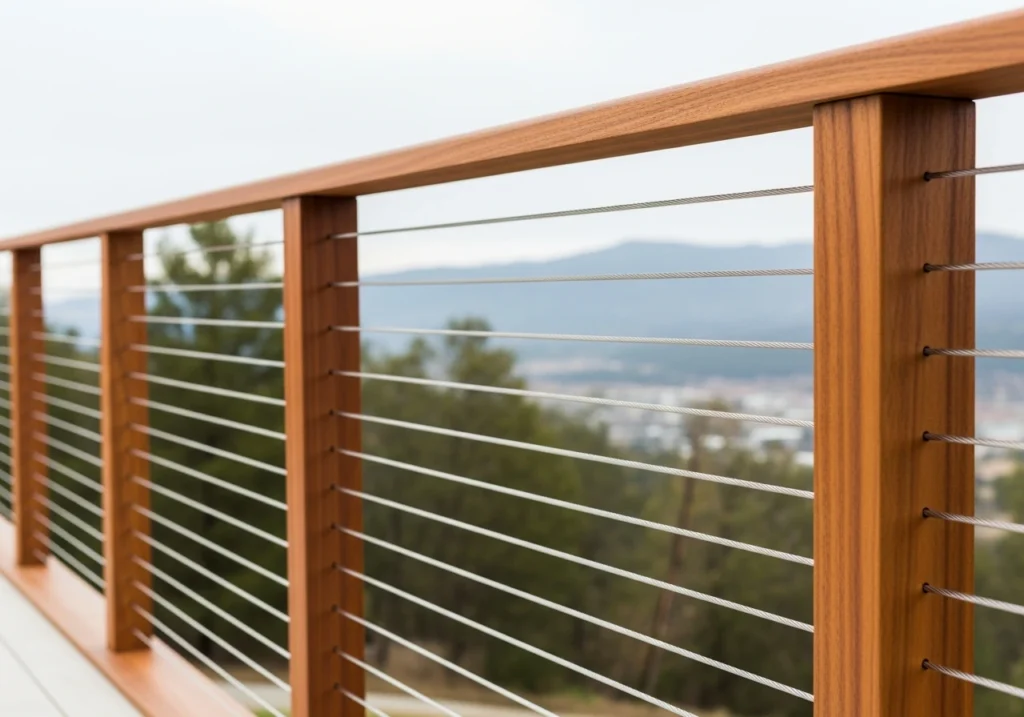
Cable railing systems combine stainless steel cables with wood or metal posts to create modern privacy solutions that preserve views while establishing boundaries. The cables run horizontally between posts, spaced close enough to meet safety codes while maintaining an open, airy aesthetic. This design works exceptionally well for properties with scenic views where complete privacy is unnecessary.
The tension system keeps cables taut and secure, preventing sagging over time. Stainless steel resists corrosion, making it ideal for coastal environments or poolside installations. Wood frames add warmth and can be stained or painted to match decking materials. The combination creates visual interest through contrasting textures and materials.
While cable systems primarily offer transparency, adding fabric panels or climbing plants between cables increases privacy without sacrificing the contemporary look. The minimal visual obstruction makes spaces feel larger, particularly beneficial for smaller decks or balconies. Regular inspection of cable tension and hardware ensures long-term safety and performance.
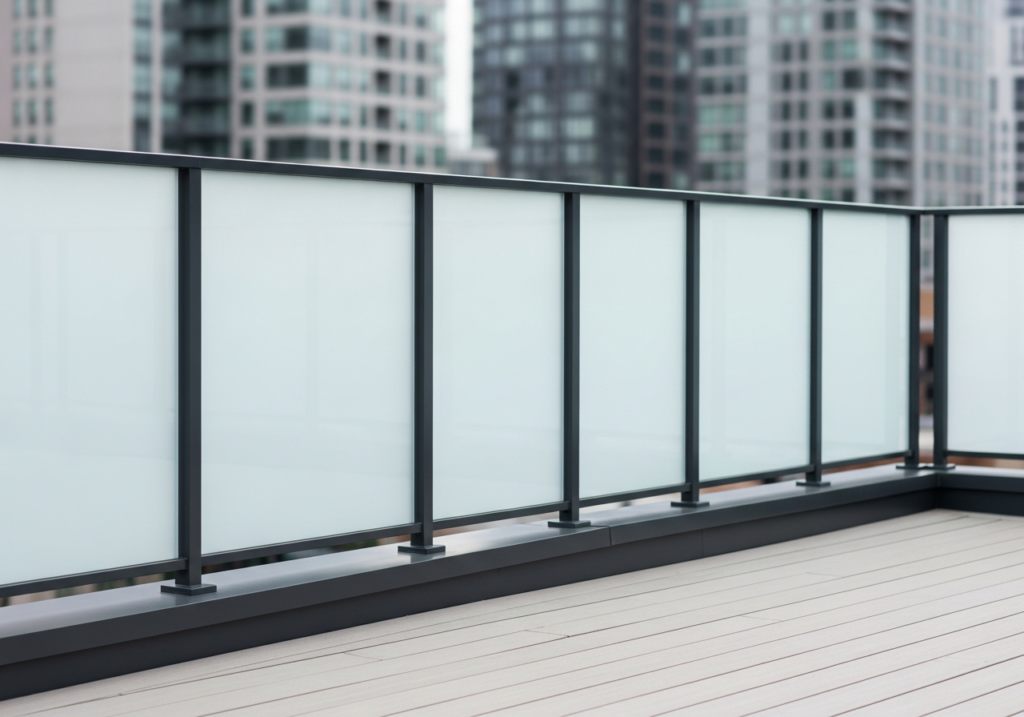
Glass Panel Privacy Screens
Glass panels provide privacy while allowing natural light to filter through outdoor spaces. Frosted or translucent glass blocks direct sightlines while maintaining brightness, creating an open feeling without exposure. Clear glass with decorative etching or patterns offers customizable privacy levels based on design complexity and coverage area.
Tempered glass meets safety requirements for railings and withstands impact better than standard glass. The material is particularly effective for urban settings where maximizing light in compact spaces is essential. Glass panels pair beautifully with metal frames, especially powder-coated aluminum or stainless steel, creating sleek contemporary appearances.
Installation requires professional expertise to ensure proper mounting and safety compliance. The weight of glass panels demands robust support structures and specialized hardware. Maintenance involves regular cleaning to prevent water spots and mineral deposits, though the smooth surface makes this task straightforward. Glass panels resist fading and weather damage, maintaining clarity for decades with proper care.
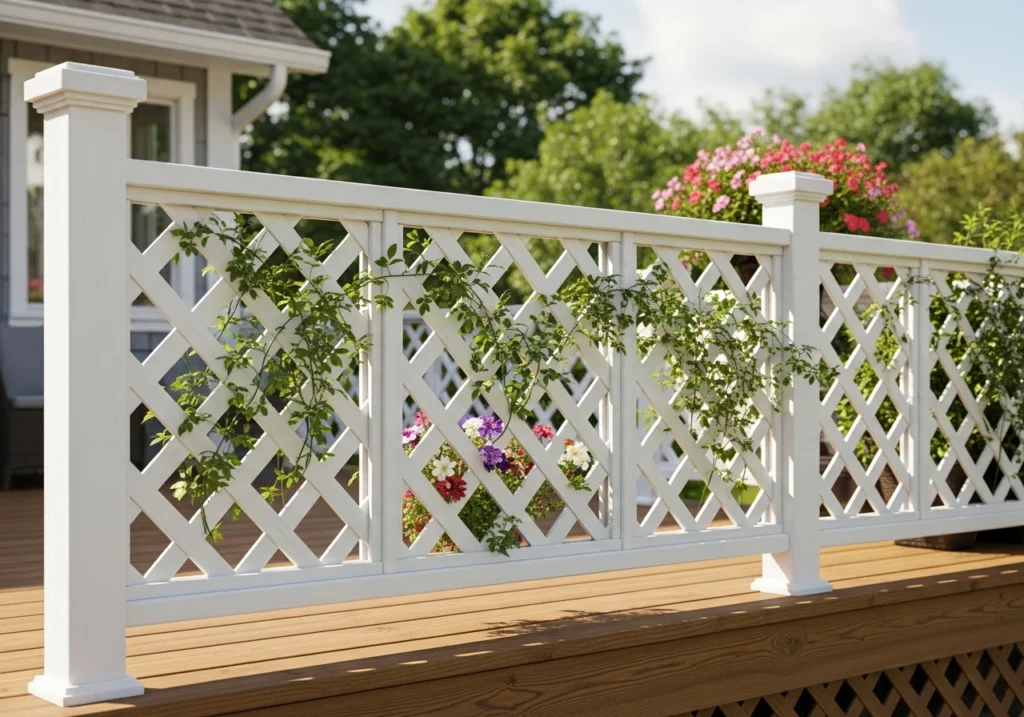
Lattice Panel Designs
Lattice panels offer traditional charm with practical privacy benefits. These interwoven wood or vinyl strips create diamond or square patterns that partially obscure views while supporting climbing plants. The openwork design allows air circulation, preventing the enclosed feeling that solid panels sometimes create.
Vinyl lattice provides durability advantages over wood, resisting moisture and eliminating the need for painting or staining. The material comes pre-finished in white and earth tones that coordinate with various architectural styles. Wood lattice offers authentic texture and can be customized through staining to achieve desired colors.
This design particularly appeals to gardeners who want living privacy screens. Morning glories, clematis, jasmine, and ivy transform lattice into vertical gardens that provide seasonal color and fragrance. The combination of structure and greenery creates soft boundaries that feel organic rather than imposing. Lattice panels work well as full-height privacy screens or as decorative toppers above solid lower sections.
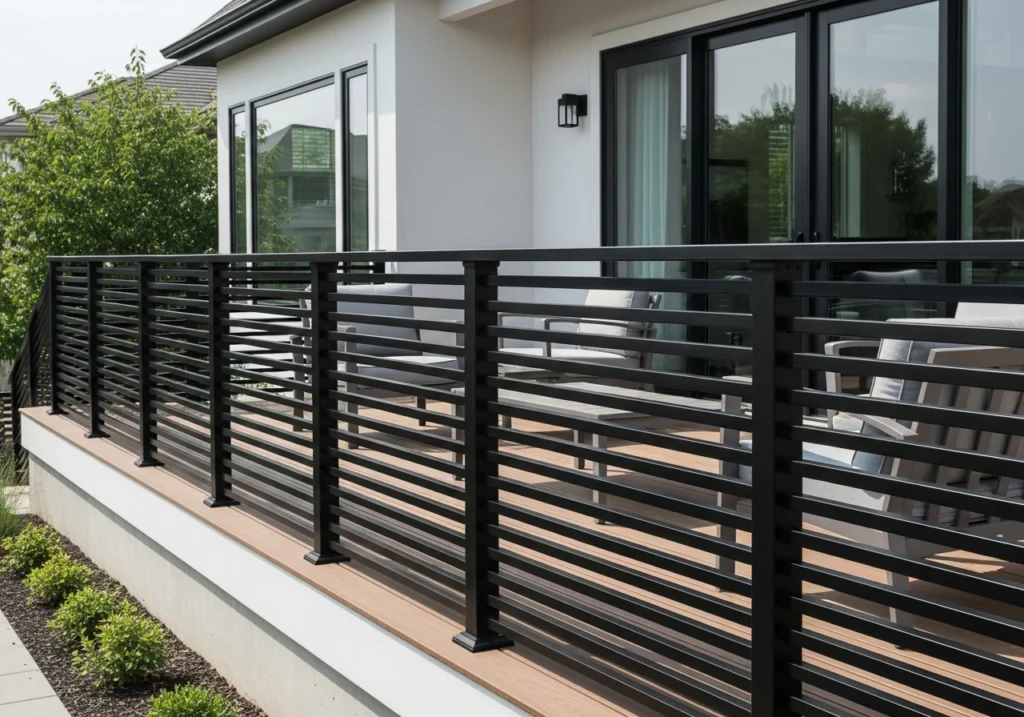
Aluminum Horizontal Slat Systems
Aluminum horizontal slat railings deliver contemporary aesthetics with exceptional durability. The material resists rust, corrosion, and warping, maintaining appearance through extreme temperature variations and weather exposure. Powder-coated finishes come in numerous colors, from matte black and bronze to woodgrain textures that mimic natural lumber.
Slat spacing can be adjusted during installation to control privacy levels and airflow. Tight spacing creates complete seclusion, while wider gaps permit breezes and partial transparency. The lightweight material simplifies installation compared to heavier alternatives, though aluminum’s strength easily meets structural requirements for deck railings.
These systems often feature modular components that snap together, reducing installation time and complexity. Aluminum requires virtually no maintenance beyond occasional washing to remove accumulated dirt and debris. The long lifespan and low upkeep make these railings cost-effective despite higher initial investment compared to wood options.
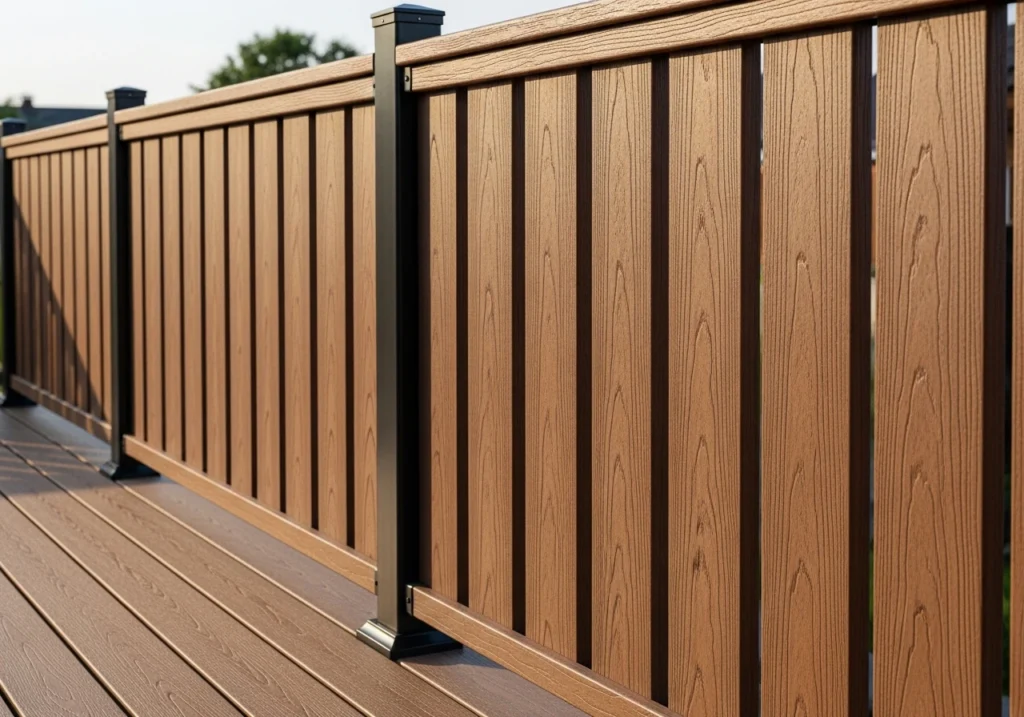
Composite Board Privacy Fencing
Composite materials combine wood fibers with plastic polymers to create boards that resist moisture, insects, and decay. These railings offer wood’s visual appeal without maintenance demands. The material won’t splinter, crack, or warp, making it safe for families with children and pets.
Available in various wood-grain patterns and colors, composite boards coordinate with composite decking for cohesive outdoor designs. The boards can be installed horizontally or vertically depending on desired aesthetics. Horizontal installations emphasize width, while vertical boards add height perception to spaces.
Composite materials maintain color stability better than natural wood, reducing fading from UV exposure. The surface resists staining from spills and weather, cleaning easily with standard household products. Though initial costs exceed pressure-treated wood, the elimination of staining, sealing, and replacement over time creates long-term savings.
Bamboo Privacy Screens
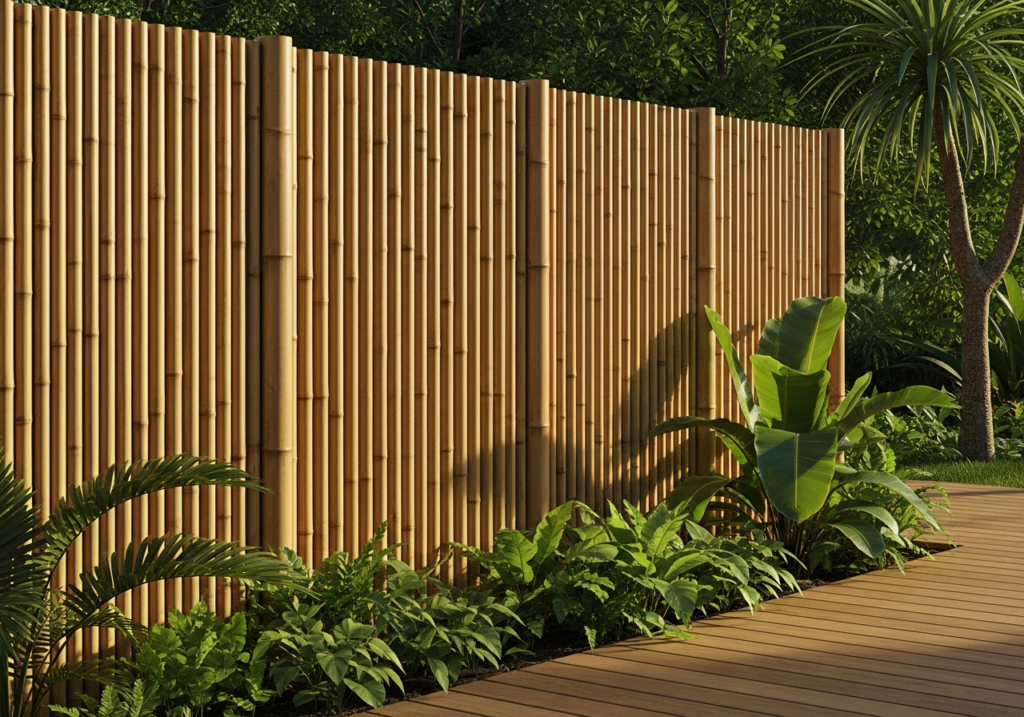
Bamboo screens bring exotic ambiance to outdoor spaces while providing effective privacy. Natural bamboo poles or woven panels create textured barriers that filter light and views. The material’s sustainability appeals to environmentally conscious homeowners, as bamboo grows rapidly and regenerates after harvesting.
Bamboo screens come in rolled formats that attach to existing railings with cable ties or mounting hardware, offering quick installation without permanent modifications. This flexibility benefits renters or those seeking temporary privacy solutions. The golden-brown tones complement tropical, Asian-inspired, and natural design themes.
Natural bamboo requires annual sealing to prevent weathering and fading. UV exposure gradually lightens the material to pale yellow or gray. Some homeowners embrace this aging process, while others maintain original coloring through protective treatments. Synthetic bamboo alternatives replicate natural appearance while resisting weather damage without maintenance.
Decorative Metal Screen Panels
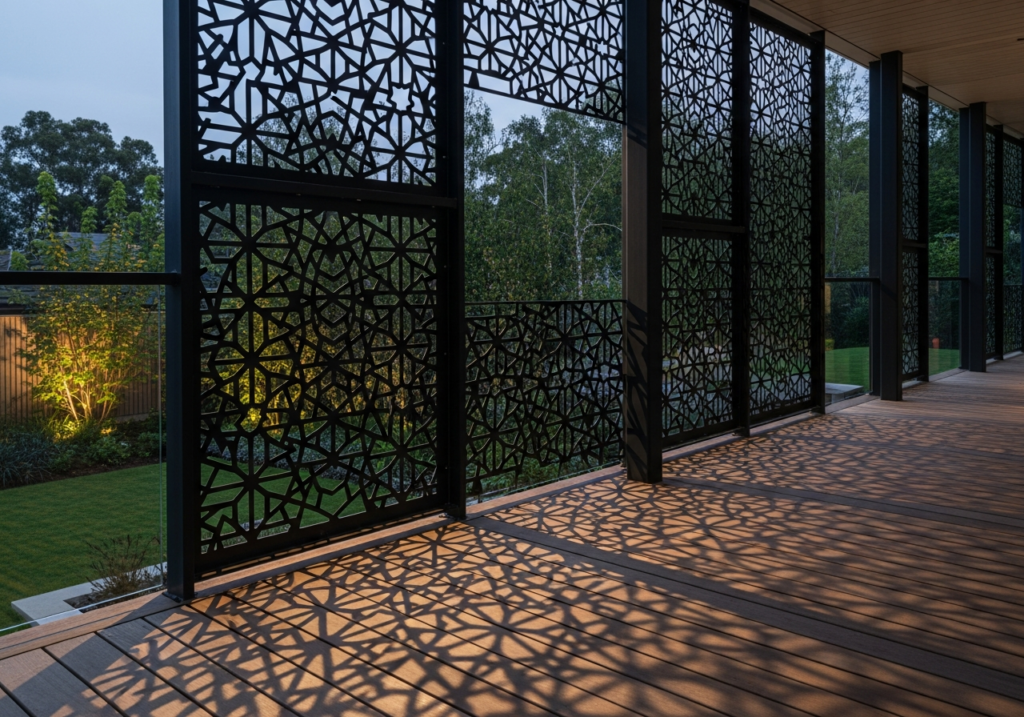
Metal screen panels with geometric patterns add artistic elements to privacy railings. Laser-cut designs range from simple linear arrangements to complex organic motifs, creating shadows and visual interest throughout the day. Steel and aluminum screens resist weather while making bold style statements.
Powder-coated finishes protect against rust and corrosion while offering extensive color options. Matte black delivers modern sophistication, while weathered bronze or copper tones suggest industrial or rustic themes. The panels can span entire railing sections or accent smaller areas between traditional balusters.
These screens provide semi-privacy, obscuring clear views while maintaining openness. The interplay of solid metal and negative space creates dynamic visual effects as light and viewing angles change. Installation typically involves mounting panels within metal or wood frames attached to deck posts. The durable materials require minimal maintenance, needing only occasional cleaning to preserve appearance.
Vertical Board and Batten Style
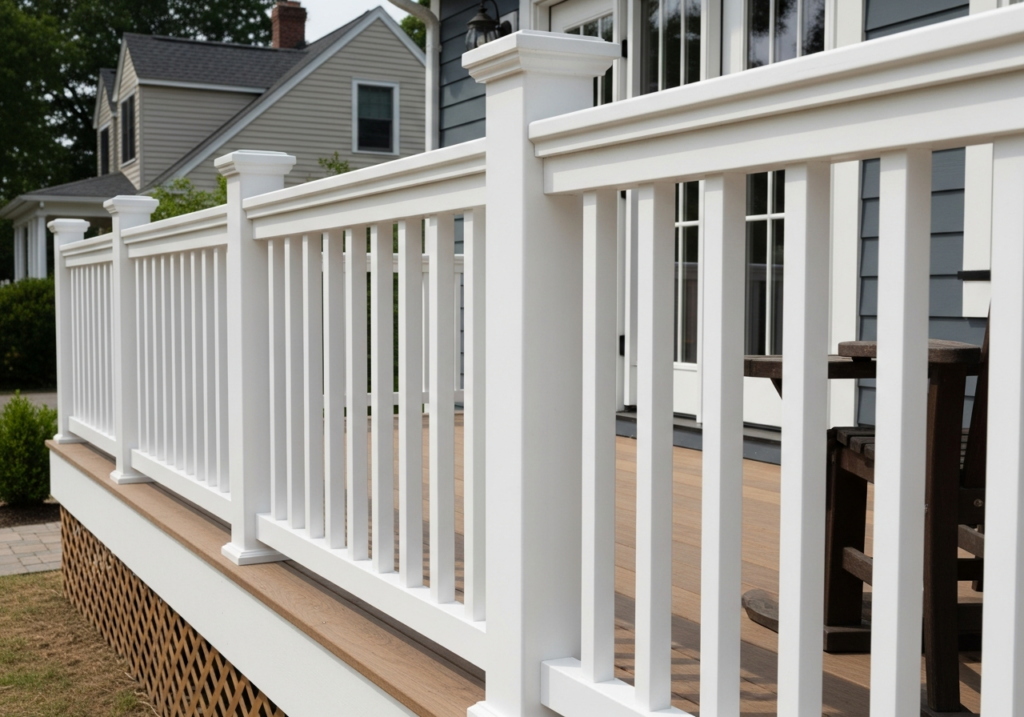
Board and batten styling adapts traditional siding techniques to create privacy railings with architectural character. Wide boards install vertically with narrow battens covering seams, creating rhythmic patterns with dimensional depth. This design complements farmhouse, craftsman, and cottage architectural styles.
The overlapping construction eliminates gaps, providing complete privacy while maintaining visual interest through shadow lines. Wood species selection affects overall appearance, with cedar offering rich reddish tones, pine providing light neutrals, and tropical hardwoods delivering dramatic dark colors. Paint or stain can unify the look with home exteriors.
This construction method requires more material and labor than simple slat designs, potentially increasing costs. However, the substantial appearance and robust construction deliver lasting value. The vertical orientation suits narrower decks and smaller spaces where horizontal lines might emphasize limited dimensions.
Mixed Material Combinations
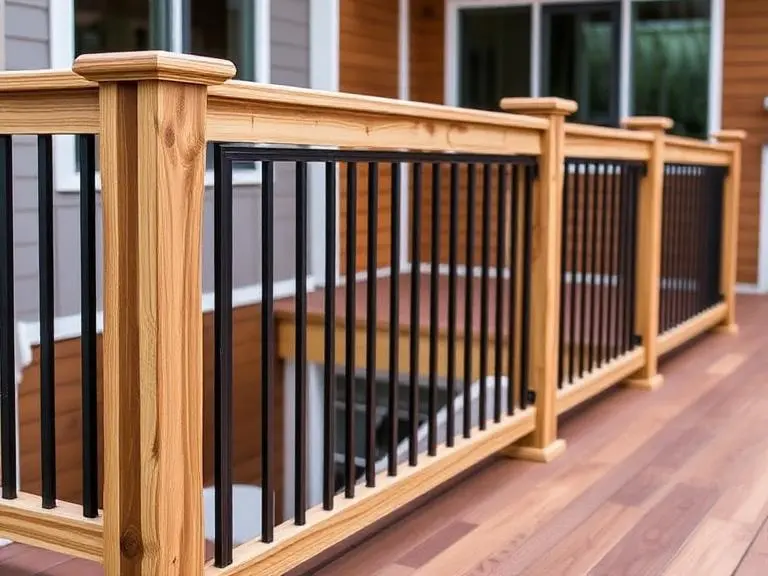
Combining different materials creates custom privacy solutions with unique character. Popular pairings include wood posts with metal infill panels, cable railings accented by wood privacy screens, or glass panels set in wood frames. These combinations balance transparency and seclusion while introducing textural variety.
The contrast between materials highlights each component’s qualities. Natural wood warmth offsets metal’s industrial edge, while transparent glass lightens solid wood structures. Strategic material placement can direct views toward desirable vistas while screening less appealing sightlines.
Design cohesion requires careful planning to ensure materials complement rather than clash. Considering color relationships, texture balance, and proportional distribution prevents disjointed appearances. Working with design professionals or studying completed projects helps visualize how materials interact before committing to installations.
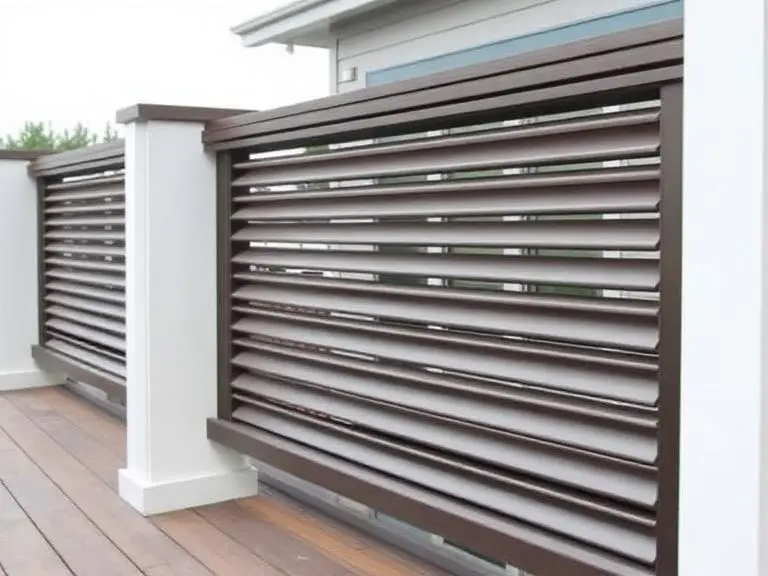
Louvered Privacy Panels
Louvered panels feature angled slats that block direct sightlines while permitting airflow and light penetration. The slat angle determines privacy levels, with steeper angles providing greater seclusion. This design offers adjustability unavailable with fixed solid or open railings.
Aluminum louvered systems include adjustable options where slat angles can be changed seasonally or throughout the day. Closed positions maximize privacy for gatherings, while open settings increase ventilation during hot weather. Fixed louvers permanently set at specific angles require less maintenance but sacrifice flexibility.
The angled design naturally sheds water, preventing moisture accumulation that causes deterioration in horizontal surfaces. This self-cleaning characteristic reduces maintenance while extending material lifespan. Louvered panels work particularly well in regions with frequent rain or high humidity.
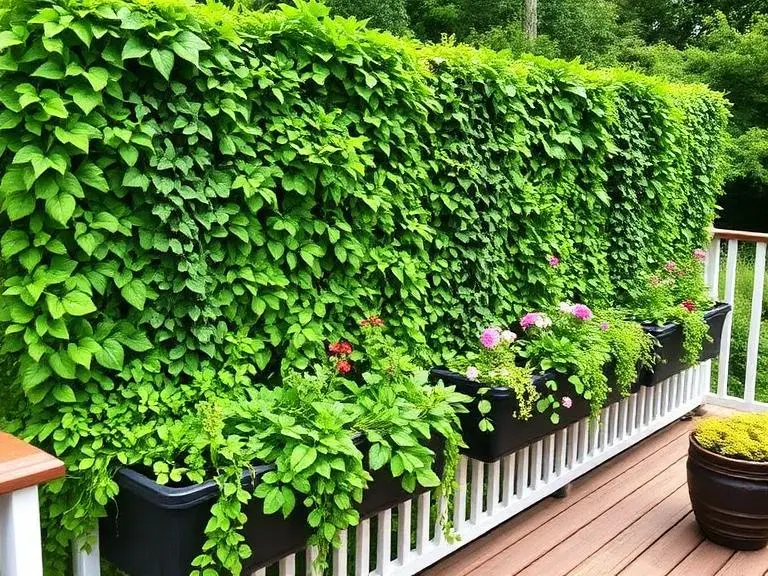
Living Wall Privacy Railings
Living walls transform railings into vertical gardens that provide privacy through lush greenery. Modular planter systems attach to existing railings or standalone frames, supporting various plants from flowering annuals to evergreen vines. The organic privacy increases throughout growing seasons as plants mature.
Suitable plants include climbing varieties like Boston ivy, Virginia creeper, and passion flower, which naturally ascend support structures. Compact shrubs and ornamental grasses planted in railing boxes create immediate screening without vertical training. Evergreen selections maintain privacy year-round in temperate climates.
This approach requires ongoing maintenance including watering, fertilizing, pruning, and seasonal plant replacement. Irrigation systems simplify watering, particularly important during hot summers. The living screen benefits extend beyond privacy, improving air quality, reducing ambient temperature, and attracting beneficial insects and birds.
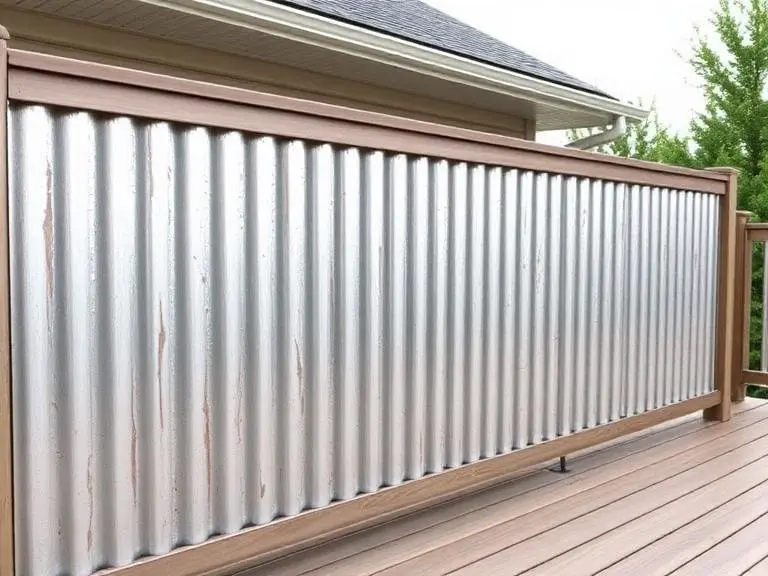
Corrugated Metal Panels
Corrugated metal panels offer industrial chic privacy with weatherproof durability. Galvanized steel or aluminum sheets resist rust while creating distinctive visual textures through ribbed profiles. The material suits contemporary, industrial, and modern farmhouse design aesthetics.
Panel installation involves securing sheets to wood or metal frames using specialized fasteners with rubber washers that prevent water infiltration. The lightweight material simplifies handling during installation despite creating substantial visual presence. Various finishes include bare metal that develops natural patina, powder-coated colors, or paint treatments.
Corrugated panels reflect heat, potentially creating warmer microclimates near railings in sunny locations. Strategic placement and orientation minimize this effect while maximizing privacy benefits. The material’s longevity and low maintenance requirements make it practical for permanent installations requiring minimal ongoing attention.
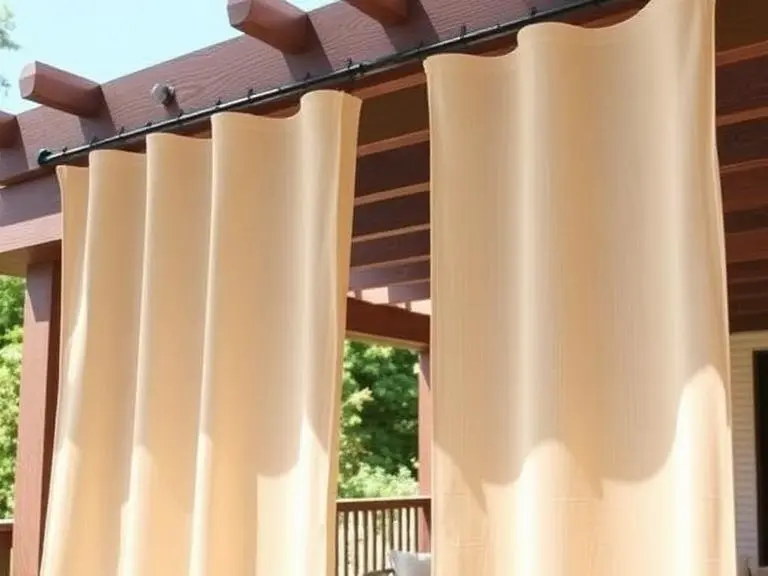
Fabric Privacy Curtains
Outdoor fabric curtains provide flexible privacy solutions that adjust according to needs. Weather-resistant materials treated for UV and mildew resistance withstand outdoor conditions while offering soft, flowing aesthetics. Curtains mount to overhead tracks or rods attached to pergolas and covered deck structures.
The adjustable nature allows opening curtains to enjoy views and breezes, then closing them for privacy during gatherings or to block low-angle sun. Various mounting systems accommodate different structures, from simple grommets and rods to sophisticated track systems with smooth gliding mechanisms.
Fabric selection affects durability and maintenance requirements. Solution-dyed acrylic fabrics resist fading and mildew while remaining breathable. Canvas provides substantial screening but requires more frequent treatment to maintain weather resistance. Regular cleaning according to manufacturer specifications preserves appearance and extends fabric life.
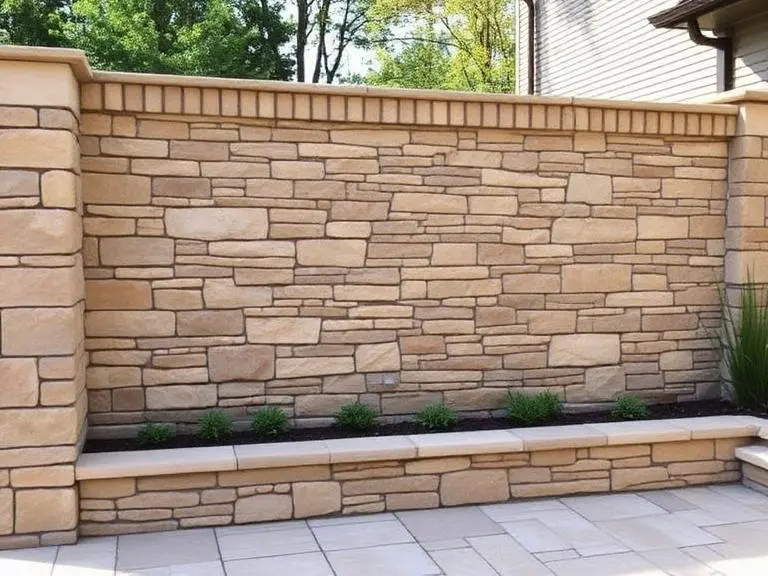
Stone or Brick Privacy Walls
Permanent masonry privacy walls deliver maximum security and noise reduction. Stone or brick construction creates substantial barriers that completely block views and sound while adding significant property value. These structures suit ground-level patios and terraces rather than elevated decks due to weight considerations.
Natural stone offers organic textures and colors that blend with landscaping. Manufactured stone veneer replicates natural appearance at reduced weight and cost. Brick provides traditional charm with various colors, sizes, and laying patterns. Cap stones or coping completes walls with finished edges and weather protection.
Masonry construction requires professional expertise to ensure proper footings, drainage, and structural stability. The permanence makes careful planning essential regarding location, height, and style. While initial costs exceed other privacy solutions, masonry walls last for generations with minimal maintenance beyond occasional repointing or sealing.
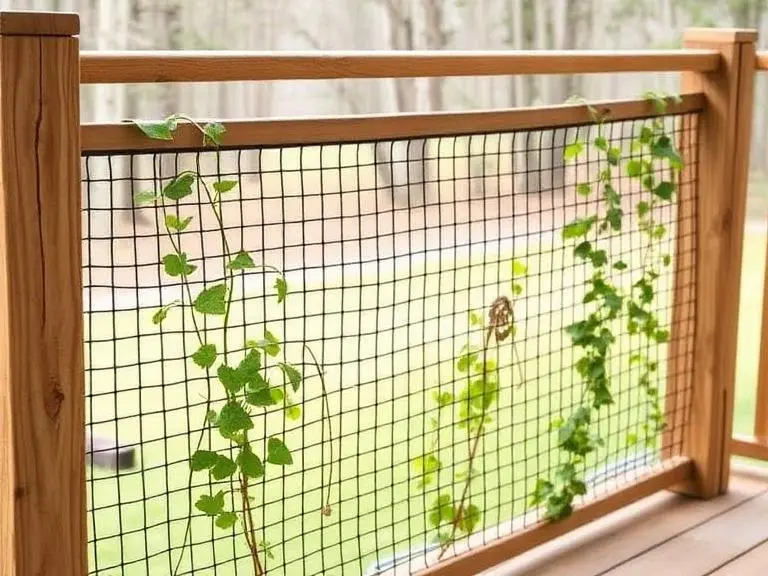
Hog Wire Mesh Panels
Hog wire mesh creates rustic privacy screens with farmhouse appeal. The welded wire grid provides structure for climbing plants while offering partial screening immediately after installation. Metal frames support mesh panels, creating durable systems that withstand weather and physical impact.
The gridded appearance complements natural wood posts and beams, particularly reclaimed or rough-sawn lumber that enhances rustic aesthetics. The open mesh maintains airflow and light while establishing clear boundaries. As climbing plants mature, the combination evolves into living privacy screens that change with seasons.
Galvanized wire resists corrosion, though powder-coated options provide additional protection and color customization. The affordable material keeps project costs manageable while delivering versatile functionality. Simple installation involves stretching mesh between posts and securing with staples or specialized fasteners.

Gabion Privacy Walls
Gabion structures use wire cages filled with stones or other materials to create distinctive privacy barriers. The industrial aesthetic suits modern and contemporary designs while providing substantial visual and acoustic screening. The modular cages stack and configure into various shapes and heights.
Stone selection affects overall appearance, from smooth river rock creating refined looks to rough quarry stone delivering bold texture. Alternative fillings include reclaimed brick, colored glass, or even wood rounds, allowing creative customization. The materials within cages remain visible, making fill selection crucial to desired aesthetics.
Gabion walls offer excellent drainage, preventing water accumulation issues that affect solid masonry. The flexibility accommodates ground movement better than rigid structures, reducing cracking in unstable soil conditions. Professional installation ensures proper engineering for structural stability and longevity. The unique appearance creates focal points that define outdoor spaces while solving privacy needs.
Conclusion
Selecting the right privacy railing transforms outdoor spaces into personal retreats that balance seclusion with style. The diverse options explored in this guide demonstrate how materials, designs, and installation methods combine to create solutions suited to various architectural styles, budgets, and maintenance preferences. Whether you prefer the natural warmth of wood slats, the contemporary elegance of glass panels, the durability of vinyl systems, or the rustic charm of living walls, privacy railings enhance both functionality and aesthetic appeal.
Consider factors including climate conditions, existing architecture, desired maintenance levels, and long-term costs when choosing privacy railing systems. Local building codes and homeowner association regulations may influence material choices and height limitations, making research essential before beginning projects. Consulting with professionals ensures installations meet safety standards while achieving design goals.
The investment in quality privacy railings pays dividends through increased property value, enhanced outdoor enjoyment, and reduced intrusion from surrounding properties. As outdoor living spaces continue growing in importance, thoughtful privacy solutions create environments where families and friends gather comfortably throughout seasons. Taking time to explore options, plan carefully, and execute installations properly results in outdoor sanctuaries that serve for years to come.
Frequently Asked Questions
What is the most affordable privacy railing option for decks?
Pressure-treated wood slats and bamboo screens typically represent the most budget-friendly privacy solutions. Pressure-treated pine costs significantly less than cedar or composite materials while providing adequate durability when properly maintained with staining every two to three years. Rolled bamboo screens offer even lower initial costs and install quickly over existing railings, though they require replacement more frequently than permanent systems.
How tall should privacy railings be to block neighbors’ views?
Standard deck railings typically measure 36 to 42 inches high to meet building codes, but full privacy systems often extend to 72 inches. The ideal height depends on deck elevation, neighboring property sightlines, and local regulations. For ground-level patios, 6-foot privacy screens effectively block most views. Elevated decks may require taller solutions or strategic placement to shield specific sightlines while maintaining compliance with height restrictions.
Do privacy railings require special maintenance compared to standard railings?
Maintenance requirements vary by material rather than privacy level. Wood privacy railings need regular staining or sealing every two to three years, similar to standard wood railings. Vinyl and aluminum systems require only occasional washing with soap and water. Living wall systems demand the most attention, including watering, fertilizing, and pruning plants. Glass panels need regular cleaning to prevent water spots. Choosing materials that match your available maintenance time ensures long-term satisfaction.
Can I install privacy railings on an existing deck without major modifications?
Most privacy railing systems install over existing deck structures without significant alterations. Bamboo screens, fabric curtains, and certain panel systems attach directly to current railings using mounting brackets or cable ties. Replacing existing railings with privacy systems typically involves removing old balusters while keeping posts and structural components. Some heavy materials like glass panels or masonry walls may require structural reinforcement, necessitating professional assessment before installation.
What privacy railing materials work best in harsh weather climates?
Aluminum, vinyl, and composite materials excel in extreme weather conditions. Aluminum resists rust and corrosion in coastal environments while withstanding temperature fluctuations without warping. Vinyl maintains integrity through freezing winters and hot summers without cracking or fading. Composite boards resist moisture, preventing rot and insect damage in humid regions. For areas with heavy snow, ensure any system meets increased load requirements. Wood options work well in all climates but require diligent maintenance to prevent weather-related deterioration.