Rooftop Railing 16+ Stylish Ideas to Inspire You
When it comes to creating a stunning rooftop space, the railing you choose plays a dual role that goes far beyond simple functionality. A well-designed railing system provides essential safety while simultaneously defining the aesthetic character of your outdoor retreat. Whether you’re transforming a residential rooftop into a personal oasis or designing a commercial space that demands both form and function, the railing you select will significantly impact how people experience and enjoy the area.
The modern homeowner faces an exciting array of railing options that weren’t available even a decade ago. From sleek glass panels that preserve panoramic views to industrial cable systems that blend strength with minimalism, today’s rooftop railings combine innovative materials with thoughtful design. This guide explores more than sixteen distinctive railing ideas, each offering unique benefits in terms of style, durability, maintenance, and visual appeal. By understanding the possibilities available, you can make an informed decision that enhances your rooftop’s safety, complements your architectural vision, and creates an outdoor environment you’ll enjoy for years to come.
Frameless Glass Panel Railings
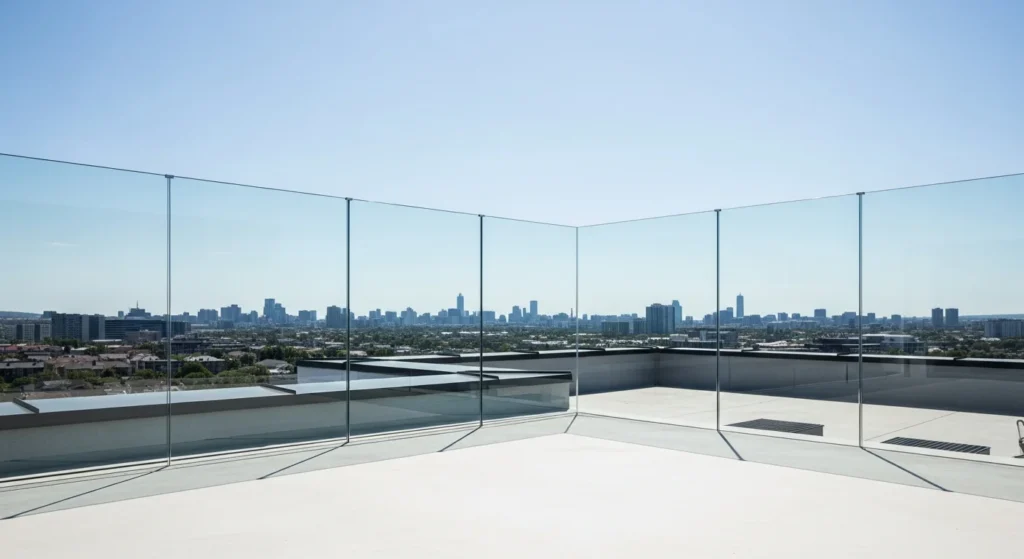
Frameless glass railings represent the pinnacle of contemporary rooftop railing design, offering unobstructed views that make your outdoor space feel limitless. These systems use thick tempered or laminated glass panels, typically ranging from 10mm to 19mm in thickness, mounted directly to the rooftop surface or attached with minimal hardware. The absence of bulky frames creates a floating effect that particularly benefits urban rooftops where cityscape views are a premium feature.
The transparency of glass railings allows natural light to flow freely throughout your rooftop area, preventing the shadowy zones that solid railings can create. This makes smaller rooftops feel more spacious and inviting. Installation typically involves specialized clamps or channels that secure the glass while maintaining the clean, modern aesthetic. While the initial investment tends to be higher than traditional options, many property owners find the visual payoff worthwhile, especially in settings where preserving sightlines is paramount.
Maintenance requires regular cleaning to prevent water spots and fingerprints, but quality tempered glass resists scratching and weathering remarkably well. For wind-exposed locations, glass railings also provide superior protection compared to open designs, creating comfortable microclimates that extend the usability of your rooftop space throughout the seasons.
Horizontal Metal Cable Railings
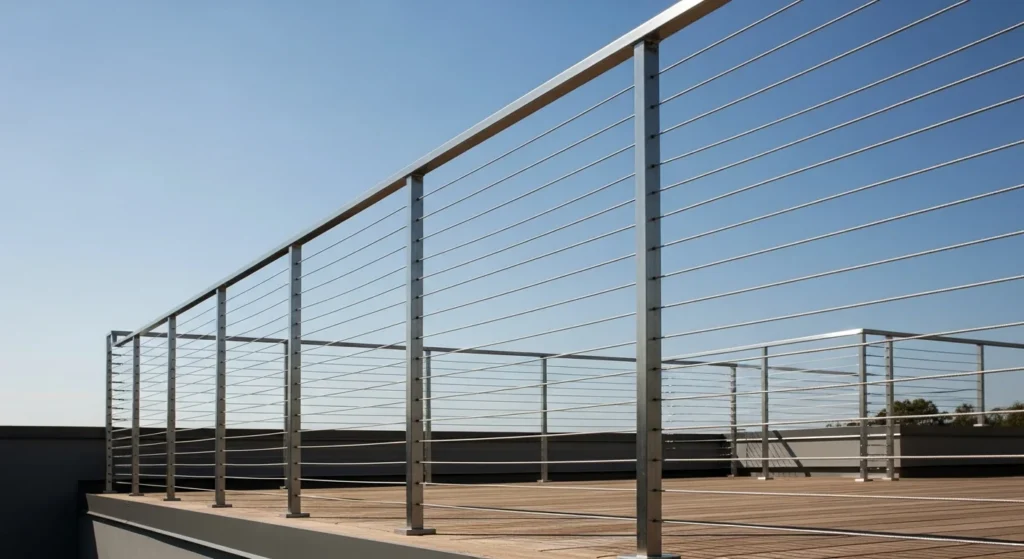
Cable railing systems have surged in popularity for rooftop applications, combining industrial strength with an almost transparent appearance. These systems feature stainless steel cables tensioned between posts, creating horizontal lines that guide the eye outward rather than blocking views. The spacing between cables typically measures three to four inches, meeting safety codes while maintaining an open, airy feel.
The minimalist nature of cable railings makes them particularly suitable for modern and contemporary architectural styles. Stainless steel cables resist corrosion from rain, snow, and humidity, making them ideal for rooftop environments where weather exposure is constant. Post materials can vary from stainless steel to wood or aluminum, allowing customization to match your design preferences.
Installation requires precise tensioning to prevent sagging over time, which is why professional installation is recommended. The cables must be tightened to specific tensions, usually around 300 pounds of force, to maintain their clean, taut appearance and structural integrity. This system works exceptionally well on rooftops with strong supporting structures, as the tension creates lateral loads that the mounting surface must accommodate.
Traditional Wrought Iron Rooftop Railings
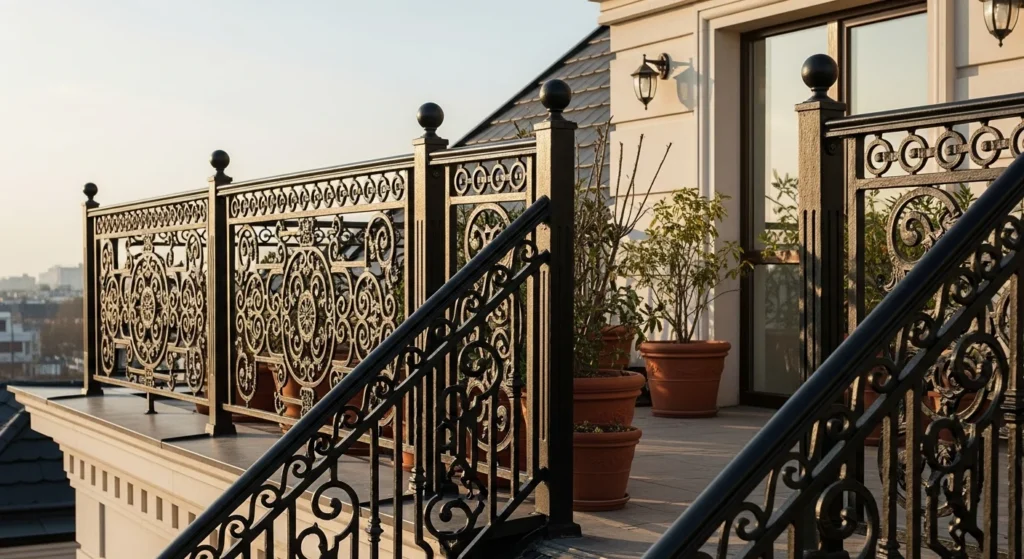
For those drawn to classical elegance, wrought iron railings bring timeless sophistication to rooftop spaces. These hand-crafted or manufactured systems feature ornate scrollwork, geometric patterns, and decorative elements that add architectural interest. Wrought iron railings work particularly well on traditional homes, historic buildings, or properties where a more formal aesthetic is desired.
The material itself offers exceptional durability when properly maintained. Quality wrought iron can last for decades, developing a distinguished patina that many owners appreciate. The vertical pickets can be spaced to provide privacy while still allowing air circulation, and the design possibilities are virtually endless. Custom fabrication allows you to incorporate monograms, specific patterns, or motifs that reflect your personal style or complement existing architectural details.
Weather protection is essential for wrought iron systems. Powder coating provides superior protection against rust and corrosion compared to traditional paint, and it’s available in numerous colors beyond the classic black. Regular inspections for rust spots and prompt treatment help extend the life of these beautiful railings. The weight of wrought iron requires robust mounting and structural support, which should be evaluated by a professional before installation.
Aluminum Picket Rooftop Railings

Aluminum railings offer a practical middle ground between aesthetics and maintenance concerns. Modern aluminum systems can mimic the appearance of wrought iron or create entirely contemporary designs, but without the rust and corrosion issues that plague ferrous metals. The material’s natural resistance to oxidation makes it ideal for rooftops where constant weather exposure is inevitable.
Contemporary manufacturing techniques allow aluminum railings to feature powder-coated finishes in virtually any color, from classic black and bronze to vibrant modern hues. The lightweight nature of aluminum simplifies installation and reduces structural demands on your rooftop, making it suitable for a wider range of applications. Despite being lightweight, properly designed aluminum railings meet all safety codes and can withstand significant force.
The cost-effectiveness of aluminum becomes apparent over time. The material requires minimal maintenance beyond occasional cleaning with soap and water. Unlike wood, it never needs staining or sealing, and unlike steel, it won’t rust even in humid coastal environments. For property owners seeking a reliable, attractive railing that won’t demand constant upkeep, aluminum represents an intelligent choice that balances appearance, performance, and value.
Wood and Composite Horizontal Railings
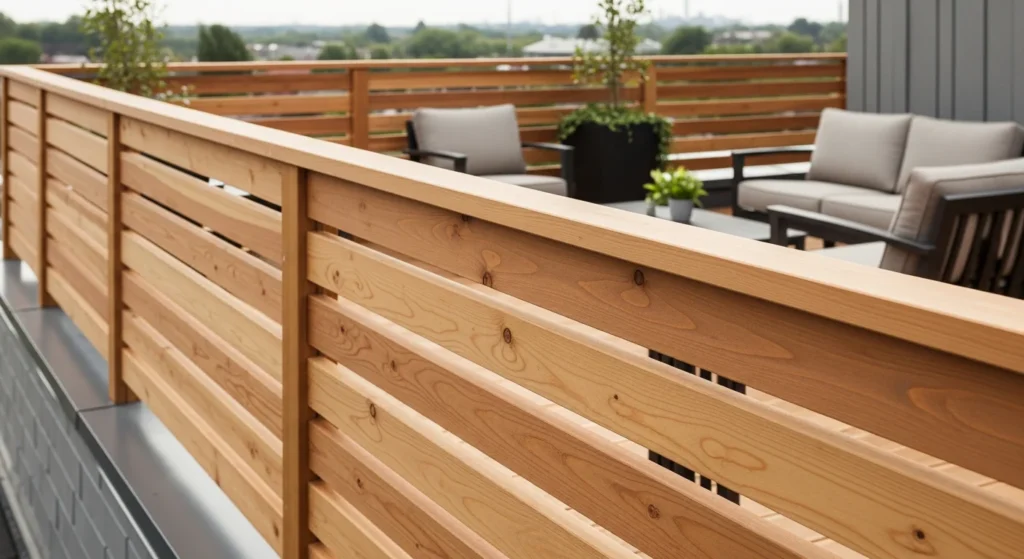
Wood railings bring natural warmth and organic texture to rooftop environments, creating inviting spaces that feel connected to nature. Horizontal wood slat designs are particularly popular in modern applications, where the clean lines complement contemporary architecture while providing partial privacy. Cedar, redwood, and tropical hardwoods like ipe offer natural rot resistance, though all wood railings benefit from regular sealing and maintenance.
The horizontal orientation of wood slats creates visual interest while allowing air to flow through the space. This design prevents the solid, wall-like appearance that vertical slats can sometimes create. Spacing between slats can be adjusted based on your privacy needs and local building codes, which typically specify maximum gaps to prevent small children from slipping through.
Composite materials provide a wood-alternative that eliminates much of the maintenance burden. Made from recycled wood fibers and plastic polymers, composites resist fading, splintering, and insect damage while maintaining a wood-like appearance. They never require staining or sealing, though they typically cost more initially than natural wood. For rooftop applications where exposure to sun and moisture is constant, composites offer long-term value through reduced maintenance and extended lifespan.
Tempered Glass with Metal Framing
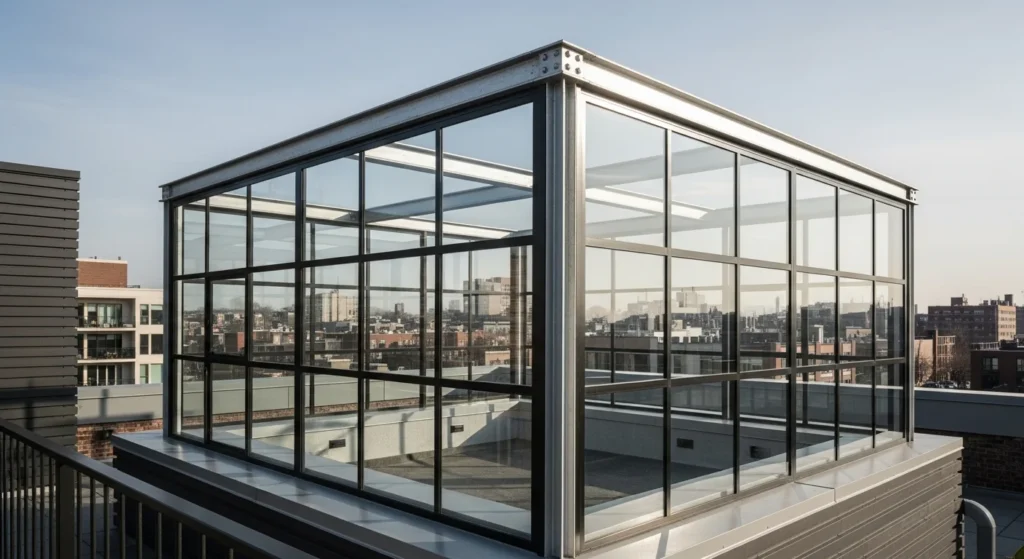
Combining glass panels with visible metal framing creates a hybrid design that balances transparency with structural expression. Black powder-coated aluminum or stainless steel frames hold glass panels while creating bold geometric patterns that define the railing’s character. This approach costs less than frameless glass systems while still preserving views and creating a modern aesthetic.
The frames provide natural mounting points for handrails, eliminating the need for the standoff hardware that frameless systems require. This can simplify installation and reduce costs while creating opportunities for design expression. The metal frames can be thin and minimalist or more substantial, depending on your architectural vision and structural requirements.
Glass panel sizes typically measure around 4 to 6 feet in width, with the frames creating regular divisions along the railing length. This modular approach simplifies replacement if a panel is ever damaged, as individual sections can be swapped without disturbing the entire system. The combination of materials creates visual interest through contrast, with the solidity of metal highlighting the transparency of glass.
Perforated Metal Panel Rooftop Railings
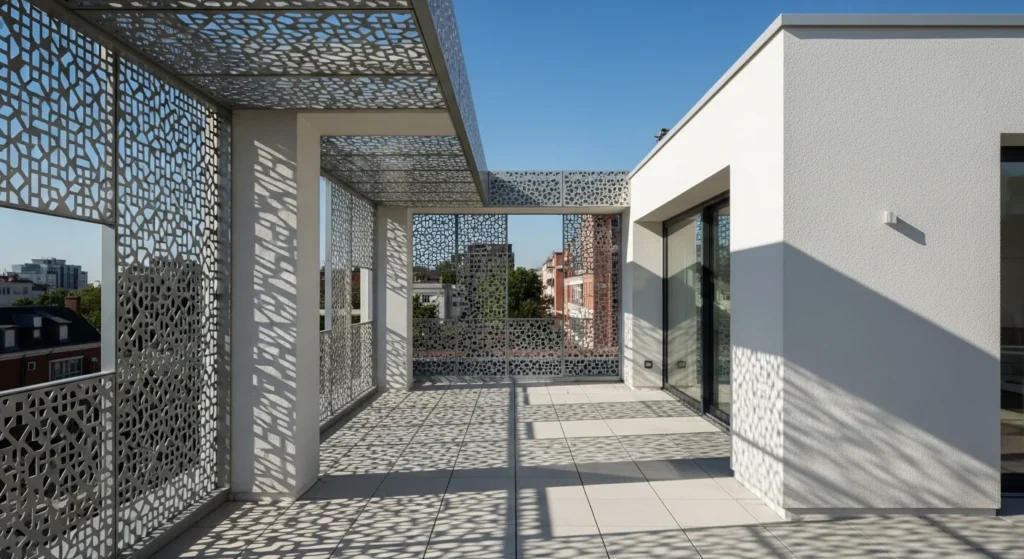
Perforated metal panels offer a contemporary solution that balances privacy, ventilation, and design flexibility. These panels feature patterns of holes or slots cut through metal sheets, creating semi-transparent screens that filter views while allowing light and air to pass through. The patterns can range from simple circular holes to complex geometric designs or even custom artwork.
The density and size of perforations can be customized to control how much visibility and privacy the railing provides. Tighter patterns with smaller holes offer more privacy and wind protection, while larger, more widely spaced openings maintain better visibility. Metal options include aluminum, stainless steel, and Cor-Ten steel, each offering different aesthetic qualities and weather resistance characteristics.
Perforated panels work particularly well on rooftops where wind protection is desired without completely blocking views. They create interesting shadow patterns as the sun moves throughout the day, adding dynamic visual interest to your outdoor space. The panels can be backlit with LED lighting for dramatic nighttime effects, transforming your rooftop railing into a design feature that extends its impact beyond mere safety compliance.
Privacy Screen Railings with Integrated Planters
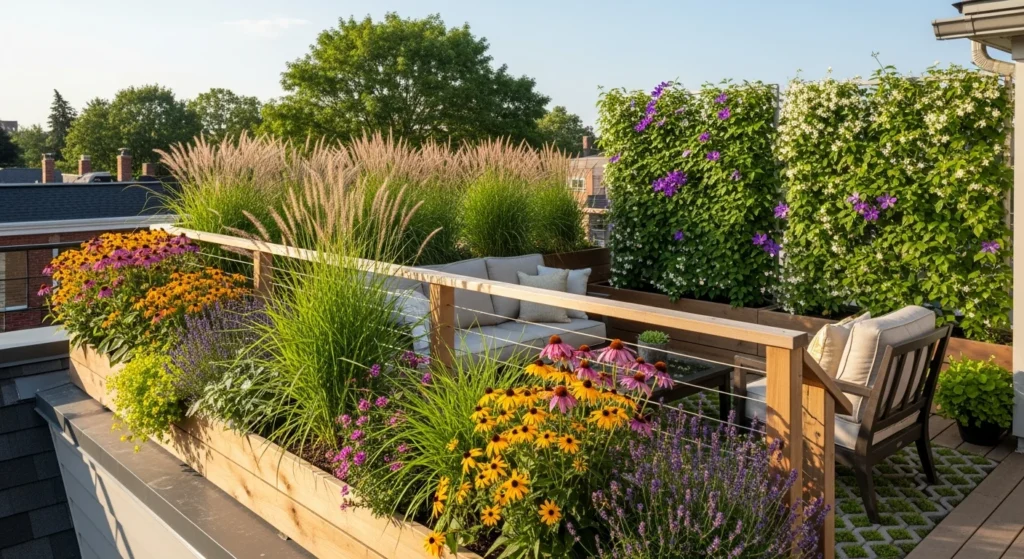
Combining railings with integrated planter boxes creates living privacy screens that evolve throughout the seasons. This approach uses structural posts and horizontal rails to support planter boxes filled with ornamental grasses, climbing vines, or flowering plants. The greenery provides natural privacy while softening the hard edges of urban rooftop environments.
Planter-integrated Rooftop railings work particularly well on rooftops where neighboring buildings create privacy concerns. Tall grasses like miscanthus or bamboo species can grow to create effective visual barriers, while flowering vines like clematis or climbing roses add seasonal color and fragrance. The planters themselves can be constructed from wood, metal, or composite materials to match your overall design scheme.
Proper drainage is essential for these systems to prevent water damage to your rooftop structure. Planters should include drainage holes and be positioned over drainage mats or systems that direct water away from the building. Irrigation considerations should also be planned, especially for rooftops without easy hose access. Drip irrigation systems can be integrated to maintain healthy plants without constant manual watering.
Nautical-Inspired Rope Railings
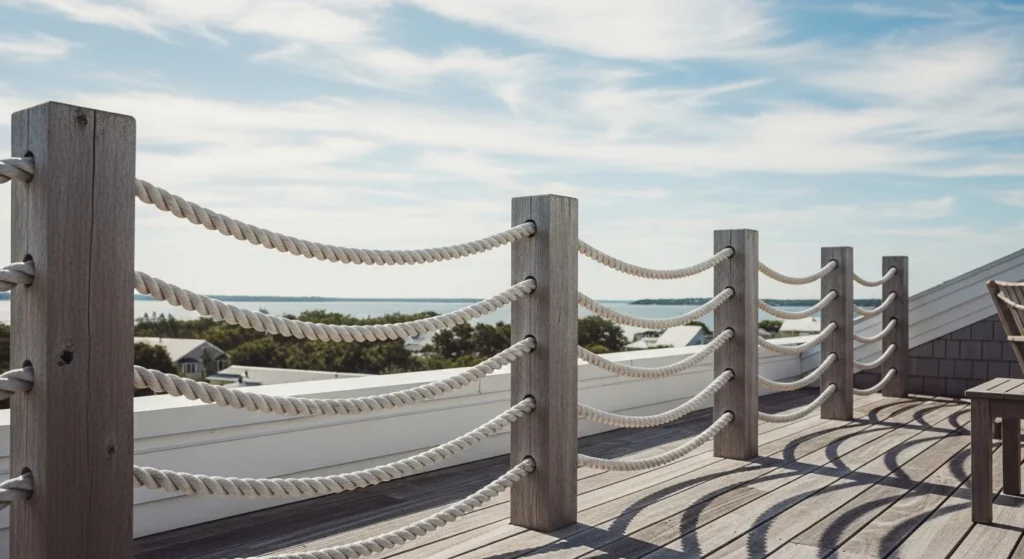
Drawing inspiration from maritime design, rope rooftop railings create a casual, coastal aesthetic that works beautifully on residential rooftops. These systems use heavy-duty synthetic or natural fiber rope woven between posts in horizontal configurations. The rope creates a tactile, organic element that contrasts beautifully with hard architectural materials.
Modern rope railing systems typically use marine-grade synthetic ropes that resist UV degradation, moisture damage, and mildew growth. These materials maintain their appearance and structural integrity far better than natural fiber options, which can rot and weaken when exposed to weather. The rope diameter typically ranges from one to two inches, providing substantial visual presence while remaining easy to grip.
Posts for rope railings can be crafted from wood, metal, or composite materials, with many homeowners choosing weathered wood or galvanized metal to enhance the nautical theme. The spacing between rope lines must meet local building codes, typically requiring gaps of four inches or less to prevent children from slipping through. This design creates a relaxed, vacation-like atmosphere that makes rooftop spaces feel like seaside retreats.
Vertical Steel Bar Railings

Simple vertical steel bars create clean, modern railings that emphasize vertical lines and maintain excellent visibility. Round or square steel bars are welded or fastened to top and bottom rails, creating a straightforward design that never goes out of style. The vertical orientation naturally guides the eye upward, which can make rooftop spaces feel taller and more open.
Powder coating protects steel from rust while providing color options to match your design vision. Black remains the most popular choice for its classic appearance and ability to recede visually, but bronze, white, and custom colors are readily available. Bar spacing typically measures around four inches on center to meet safety codes while maintaining the open feeling that makes this design appealing.
The simplicity of vertical bar railings makes them suitable for nearly any architectural style, from traditional to ultra-modern. They provide excellent safety without overwhelming the space visually, and their straightforward design typically results in more affordable pricing compared to elaborate ornamental systems. Installation is relatively straightforward, and the lack of horizontal elements means the railing is less likely to accumulate leaves, snow, or debris.
Laser-Cut Metal Pattern Railings
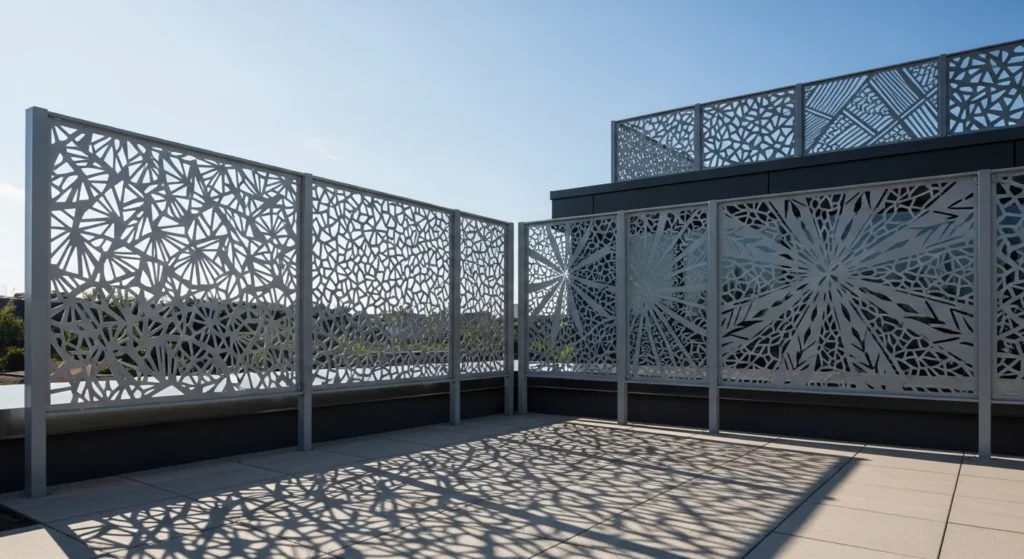
Laser cutting technology enables the creation of intricate patterns in metal panels, transforming functional railings into artistic statements. These custom designs can incorporate geometric patterns, natural motifs like leaves or branches, or abstract artistic compositions. The precision of laser cutting allows incredibly detailed work that would be impossible or prohibitively expensive with traditional fabrication methods.
The design possibilities are limited only by imagination and the capabilities of laser cutting equipment. Some homeowners choose patterns that reference their cultural heritage, while others opt for modern geometric designs that complement contemporary architecture. The patterns can be purely decorative or designed to provide specific levels of privacy and wind protection based on the density and arrangement of the cutouts.
Materials for laser-cut railings typically include aluminum, stainless steel, or mild steel with protective coatings. The panels can be left in their natural metal finish, powder coated in colors, or treated to develop intentional patinas. Backlighting these panels with LED strips creates stunning nighttime effects, turning your rooftop railing into an illuminated art installation that enhances the ambiance of evening gatherings.
Mixed Material Combination Railings

Combining different materials within a single railing system creates visual interest and allows you to balance the strengths of various options. Popular combinations include wood posts with metal cable infill, glass panels with wood handrails, or metal frames with horizontal wood slats. These hybrid designs can address multiple priorities simultaneously, such as durability, cost, aesthetics, and maintenance.
A common approach pairs low-maintenance metal or composite posts and frames with natural wood handrails that provide warmth and tactile appeal. The wood only appears where people actually touch the railing, reducing the maintenance burden while preserving the aesthetic benefit. Another popular combination uses glass lower panels for maximum visibility with decorative metal or wood upper sections that add architectural interest.
When designing mixed material railings, consider how different materials will age and weather together. Wood and metal expand and contract at different rates with temperature changes, so proper detailing and hardware selection are essential to prevent gaps or binding over time. Professional design assistance can help ensure that your material combinations work together harmoniously both aesthetically and structurally.
Industrial Pipe Railings

Reclaimed or new metal pipes create distinctive railings with strong industrial character. Using black steel pipes, galvanized pipes, or copper tubing connected with standard plumbing fittings, these systems offer a DIY-friendly approach to rooftop railing design. The modular nature of pipe systems allows creative configurations that can be customized to fit irregular spaces or create unique visual effects.
Black steel pipe railings develop a matte, slightly rough texture that complements loft-style spaces and industrial architecture. The material is incredibly strong, easily meeting structural requirements for safety railings. Standard pipe fittings like elbows, tees, and flanges provide connection points, allowing non-welded construction that handy homeowners can potentially tackle themselves.
Galvanized pipe offers similar industrial appeal with enhanced corrosion resistance, making it particularly suitable for rooftops where weather exposure is constant. The silvery-gray finish works well in modern settings and requires virtually no maintenance. Copper pipe creates a warmer, more refined industrial aesthetic that develops a beautiful natural patina over time, though the material cost is substantially higher than steel options.
Minimalist Handrail with Glass Toe Rail
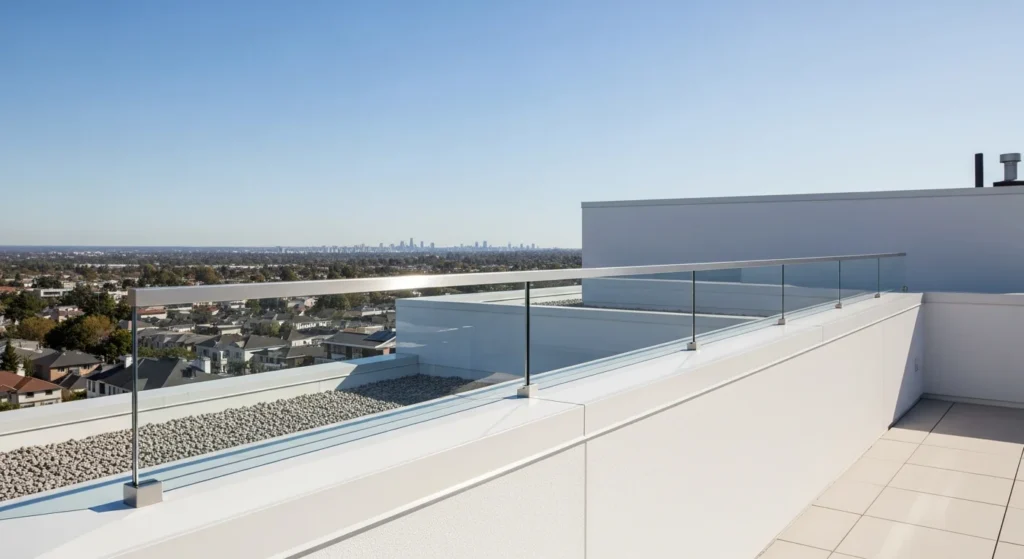
For those who want safety compliance with minimal visual impact, a minimalist design uses a simple top handrail supported by discrete posts with a glass toe rail at the base. This configuration meets building codes while preserving maximum transparency and view access. The glass toe rail, typically 4 to 6 inches tall, prevents objects from rolling off the edge while remaining nearly invisible.
The handrail itself can be crafted from stainless steel, aluminum, or wood, depending on your aesthetic preferences. Sleek round or square metal rails create the most minimalist appearance, while wood handrails add organic warmth. The posts supporting the handrail can be extremely slender, sometimes as small as one inch in diameter, further reducing visual obstruction.
This design works particularly well on rooftops where views are the primary feature and any visual barrier would diminish the space’s appeal. The minimal material use typically results in lower costs compared to full infill systems, and maintenance requirements are reduced as there are fewer components exposed to weather. However, this open design provides no wind protection or privacy, so it’s best suited for rooftops where those factors aren’t concerns.
Slatted Wood Privacy Screens
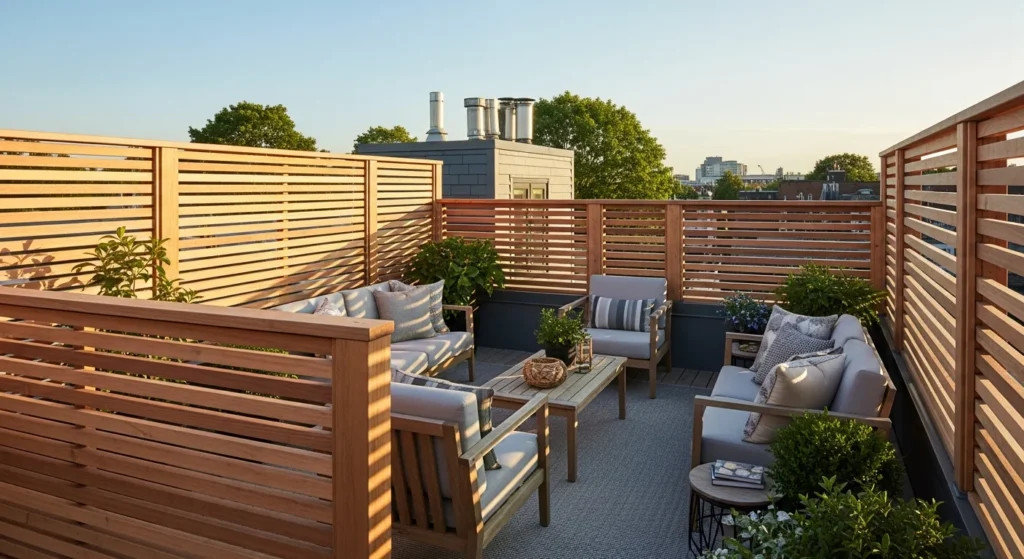
Vertical or horizontal wood slats arranged with deliberate spacing create privacy screens that filter views while maintaining airflow. These systems work well on rooftops where neighboring buildings or windows create privacy concerns. The spacing between slats can be adjusted to control how much visibility is blocked, with tighter spacing providing more privacy and looser spacing maintaining better transparency.
Horizontal slat orientation creates a contemporary look and makes spaces feel wider, while vertical slats tend to make areas feel taller. Angled slats offer another variation, allowing people inside the rooftop to see out while blocking views inward from specific directions. This louver-like approach provides excellent privacy control while maintaining excellent ventilation.
Wood species selection significantly impacts the long-term performance and appearance of slatted screens. Cedar and redwood offer natural rot resistance and beautiful grain patterns, while tropical hardwoods like ipe provide exceptional durability with minimal maintenance. The slats can be left natural to weather to a silver-gray patina, or they can be stained or sealed to maintain their original color. Proper spacing from the rooftop surface and adequate drainage prevent moisture accumulation that could lead to premature deterioration.
LED-Integrated Modern Railings
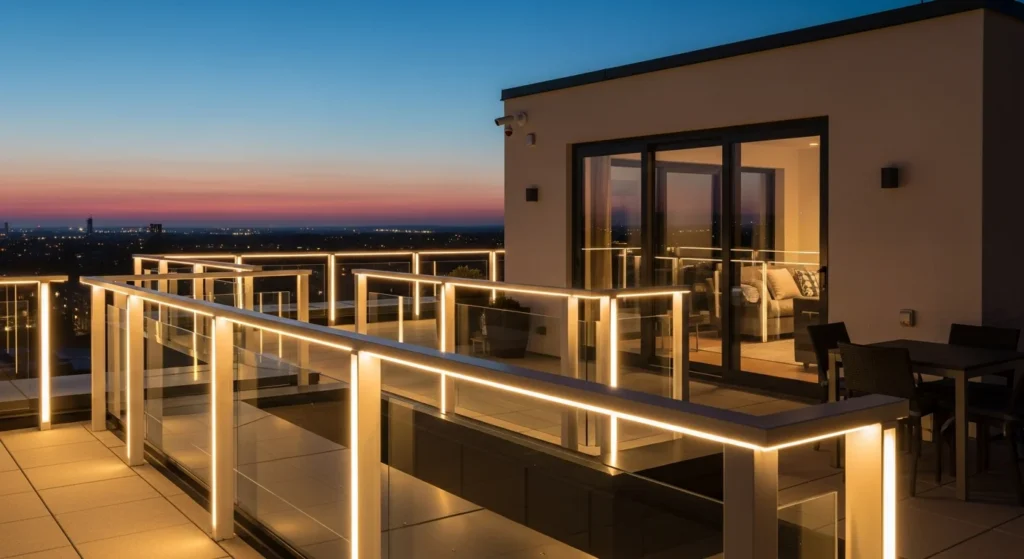
Incorporating LED lighting into railing systems extends the usability of rooftop spaces into evening hours while creating dramatic ambiance. Lights can be integrated into handrails, post caps, or infill panels, providing functional illumination and aesthetic enhancement. Low-voltage LED systems are energy-efficient and safe, with minimal heat generation and extremely long operational lifespans.
Under-rail LED strips create a floating effect, washing light downward onto the rooftop surface while leaving the railing itself subtly illuminated. Post cap lights provide vertical punctuation points along the railing length, marking corners and changes in direction. Glass panels can be edge-lit or backlit for stunning visual effects that transform the railing into a luminous feature.
Color-changing RGB LED systems offer the flexibility to adjust lighting to suit different moods or occasions. Warm white creates intimate, relaxing atmospheres for quiet evenings, while cooler whites provide bright, energizing light for gatherings. Colored options can mark holidays or special events. Smart controls allow remote operation and programming, making it easy to set lighting schedules or adjust settings without going outside.
Cable and Glass Hybrid Systems
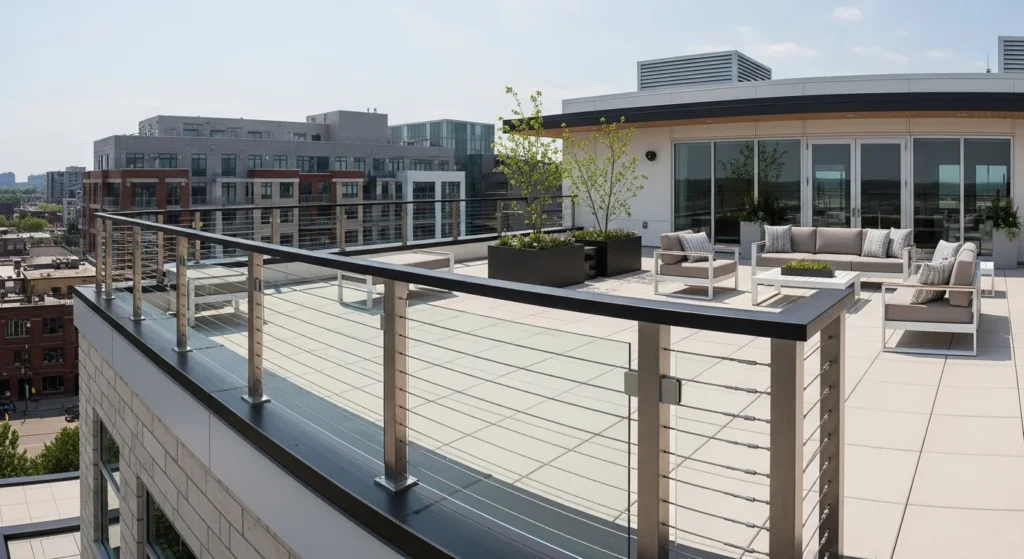
Combining cable rooftop railings with strategic glass panel insertions creates systems that balance openness with targeted wind protection. This approach uses horizontal cables for the primary infill with glass panels positioned in areas where wind protection or additional privacy is desired. The result is a custom solution that addresses specific site conditions while maintaining design coherence.
Glass panels might be concentrated on the windward side of a rooftop, blocking prevailing winds while cables are used on protected sides where views are prioritized. Alternatively, glass could provide privacy screening near seating areas while cables maintain openness elsewhere. The combination offers design flexibility that neither material alone can provide.
Installation requires careful planning to ensure the different systems integrate visually and structurally. Post spacing must accommodate both cable tension requirements and glass panel sizes, and the top rail must support both systems adequately. Professional design assistance ensures that the hybrid system works cohesively while meeting all safety codes and structural requirements.
Conclusion
Selecting the ideal rooftop railing involves balancing numerous considerations including safety compliance, aesthetic preferences, maintenance requirements, budget constraints, and site-specific factors like wind exposure and privacy needs. The sixteen options explored here represent just a starting point in the vast landscape of rooftop railing possibilities available to today’s property owners. From the pristine transparency of frameless glass to the rustic charm of rope railings, from high-tech LED-integrated systems to timeless wrought iron, each approach offers distinct advantages.
The best railing for your rooftop ultimately depends on how you envision using the space. Will it be a quiet retreat for morning coffee and evening relaxation, or an entertainment venue for gatherings with friends and family? Do you need wind protection to extend the comfortable season, or is your rooftop naturally sheltered? Are panoramic views the primary feature, or is privacy from neighboring buildings your main concern? By carefully considering these questions and exploring the options available, you can select a railing system that enhances your rooftop’s functionality, complements your architectural vision, and creates an outdoor environment you’ll treasure for years to come.
Frequently Asked Questions
What is the standard height requirement for rooftop railings?
Most building codes require rooftop railings to be at least 42 inches tall, which is higher than the 36-inch standard for residential decks and stairs. This increased height accounts for the greater fall risk on rooftops. Always verify specific requirements with your local building department, as regulations can vary by jurisdiction and building type.
How much does it typically cost to install rooftop railings?
Rooftop railing costs vary widely based on materials, design complexity, and installation challenges. Basic aluminum systems might start around 50 to 75 dollars per linear foot, while premium frameless glass installations can exceed 200 to 300 dollars per linear foot. Custom designs, difficult access, and structural reinforcement needs can increase costs further.
Do glass railings require a lot of maintenance?
Glass railings need regular cleaning to maintain their transparent appearance, typically requiring washing every two to four weeks depending on location and weather. Rain spots, dust, and fingerprints are the main concerns. Using a squeegee and glass cleaner makes maintenance straightforward, and the tempered glass itself is highly durable and scratch-resistant.
Can I install rooftop railings myself or do I need a professional?
While some simple systems like pipe railings might be DIY-friendly for experienced builders, most rooftop railing installations benefit from professional expertise. Proper installation ensures safety compliance, structural adequacy, and warranty protection. Rooftop access challenges, waterproofing concerns, and code compliance make professional installation advisable for most situations.
Which railing material works best in coastal environments?
When selecting a rooftop railing for coastal environments, it is essential to consider materials that can withstand harsh conditions. Stainless steel and aluminum are highly recommended due to their resistance to corrosion caused by salt air. Additionally, glass railings offer a stylish option that complements scenic views while maintaining durability. Ultimately, investing in high-quality materials will enhance safety and longevity, ensuring that your rooftop railing remains both functional and visually appealing.