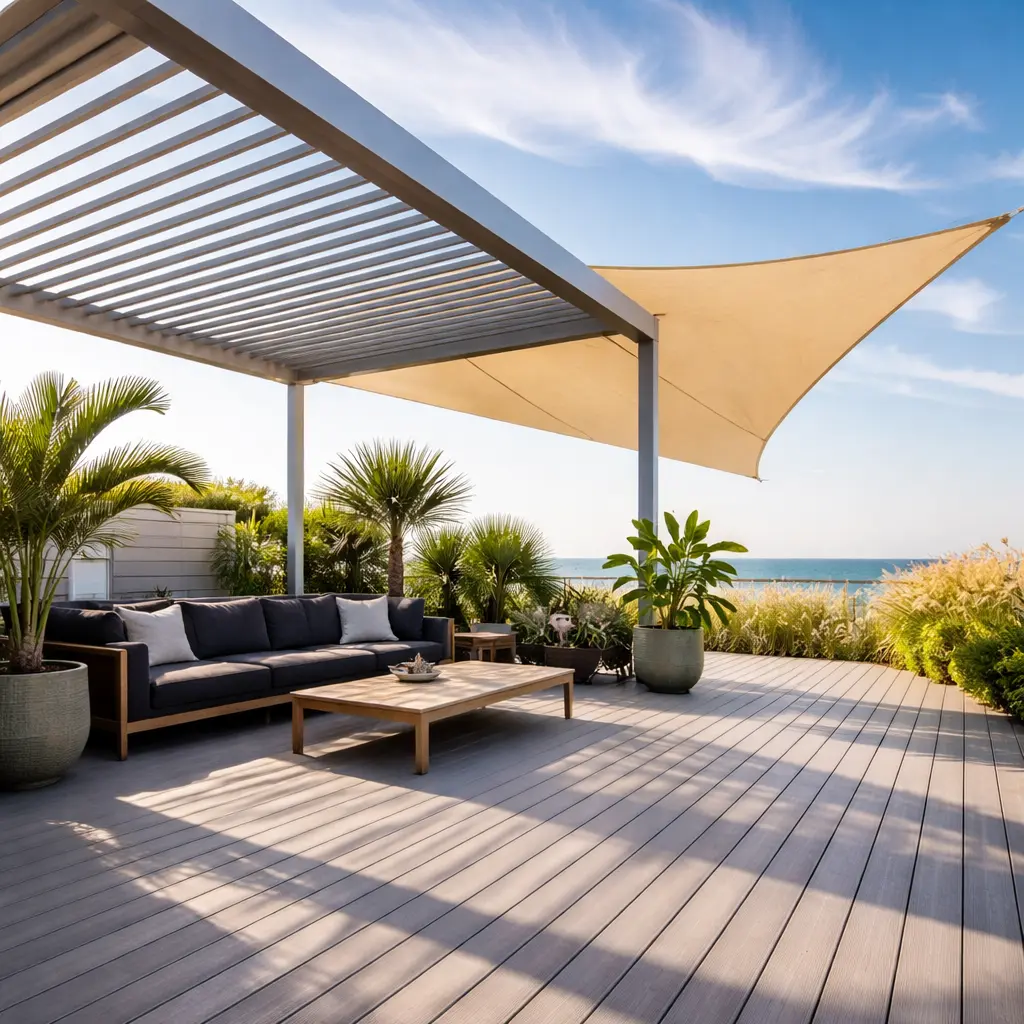
14+ Smart Deck Shade Ideas for Windy Areas
There is nothing more frustrating than designing a beautiful deck only to find that the wind turns every outdoor moment into a battle. Whether you live on a coastal property, an elevated hillside, or simply in a region known for strong gusts, finding the right deck shade for windy areas is not just about comfort. It is about safety, durability, and making a smart long-term investment in your outdoor living space.
The wrong shade structure in a high-wind environment can become a projectile, a maintenance nightmare, or a financial loss. The right one, however, can transform your deck into a cool, sheltered retreat that you use every single day. This guide walks you through more than fourteen proven deck shade ideas specifically chosen for their ability to perform in demanding wind conditions. From heavy-duty shade sails and anchored pergolas to louvered roof systems and smart natural windbreaks, every option here is practical, attractive, and built to last.
Before choosing any solution, it helps to understand your local wind patterns. Measure average wind speeds with an anemometer if necessary. Know the direction of your prevailing winds. And always check manufacturer wind ratings before purchasing any shade product. With that foundation in place, the following ideas will serve you well.
1. Attached Pergola With a Solid Roof Panel
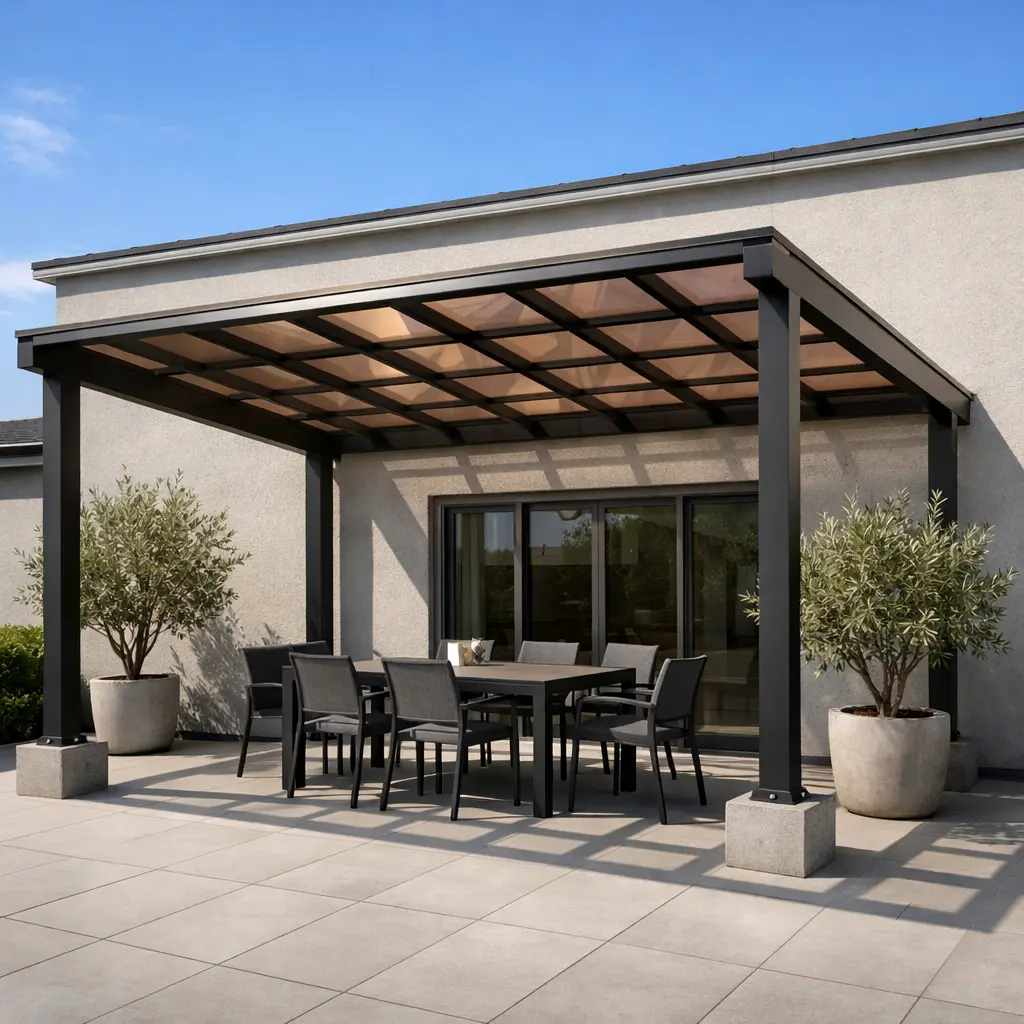
An attached pergola is one of the most wind-resistant shade structures you can install on a deck. Because one side fastens directly to your home’s exterior wall, the structure benefits from the additional support of the building itself. This reduces wind load dramatically compared to freestanding options. When you pair that attached frame with solid polycarbonate or corrugated metal roof panels, you create a shade solution that blocks both sun and rain without being torn away by gusts.
The key to making this work in a windy area is the quality of anchoring. Use heavy-duty lag bolts to secure the ledger board to the house framing, not just the siding or sheathing. Steel or aluminum post bases anchored in concrete footings will keep the structure grounded even when gusts become severe. This option also adds significant curb appeal and resale value to your home.
2. Commercial-Grade Shade Sails With Stainless Steel Hardware
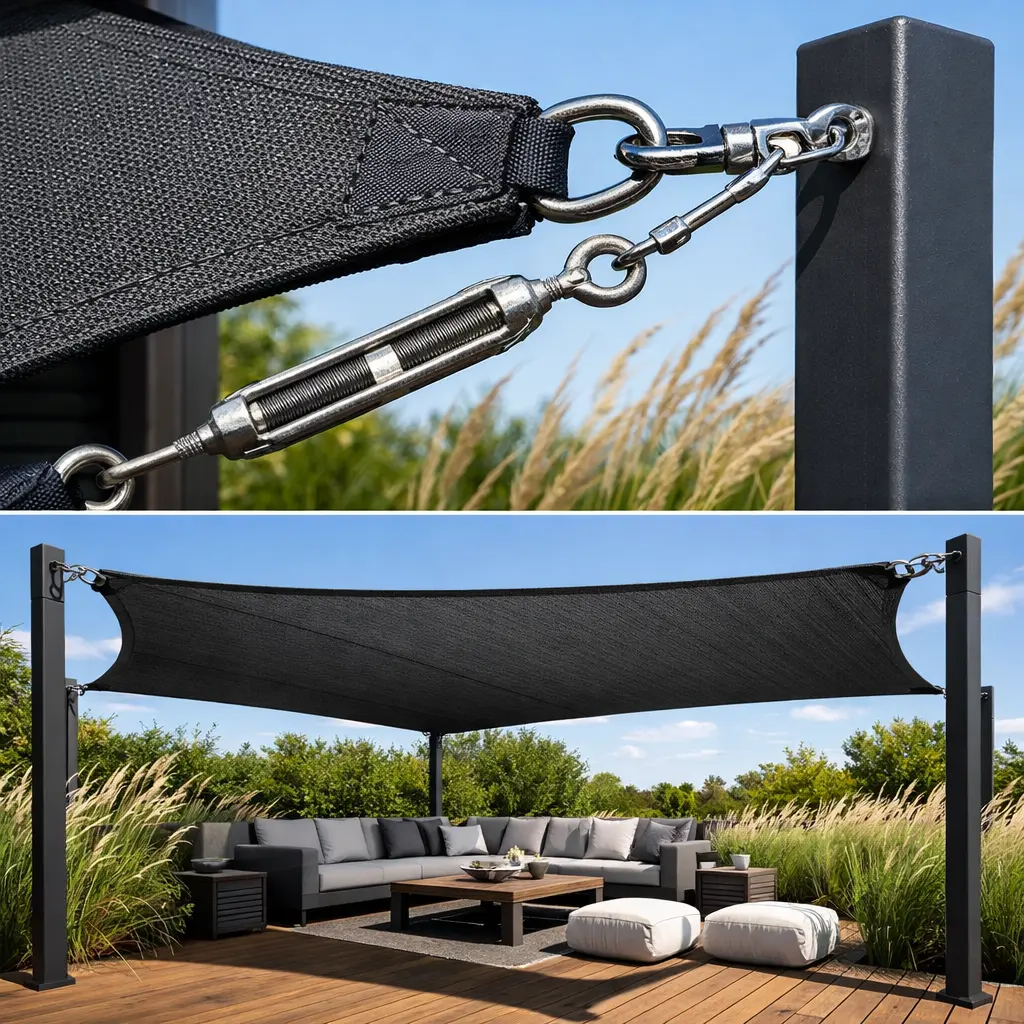
Shade sails have gained enormous popularity because they are affordable, stylish, and surprisingly functional in high-wind environments when installed correctly. The critical factor is distinguishing between residential and commercial-grade sails. Commercial-grade shade sails use high-density polyethylene or reinforced polyester with double-stitched edges and reinforced corners. They are built to remain taut rather than flapping, which is what causes tearing.
For windy areas, rectangular shade sails outperform triangular ones because the distributed tension across a rectangle is more aerodynamic under sustained wind pressure. Mount each corner to a properly anchored post or structural wall bracket using stainless steel hardware including D-rings, snap hooks, and tensioning turnbuckles. The posts should be buried at approximately forty percent of their total height in concrete. Angle the sail so that wind hits the top surface and pushes toward the base, keeping the structure stable rather than lifting it.
3. Retractable Awning With Wind Sensor Technology
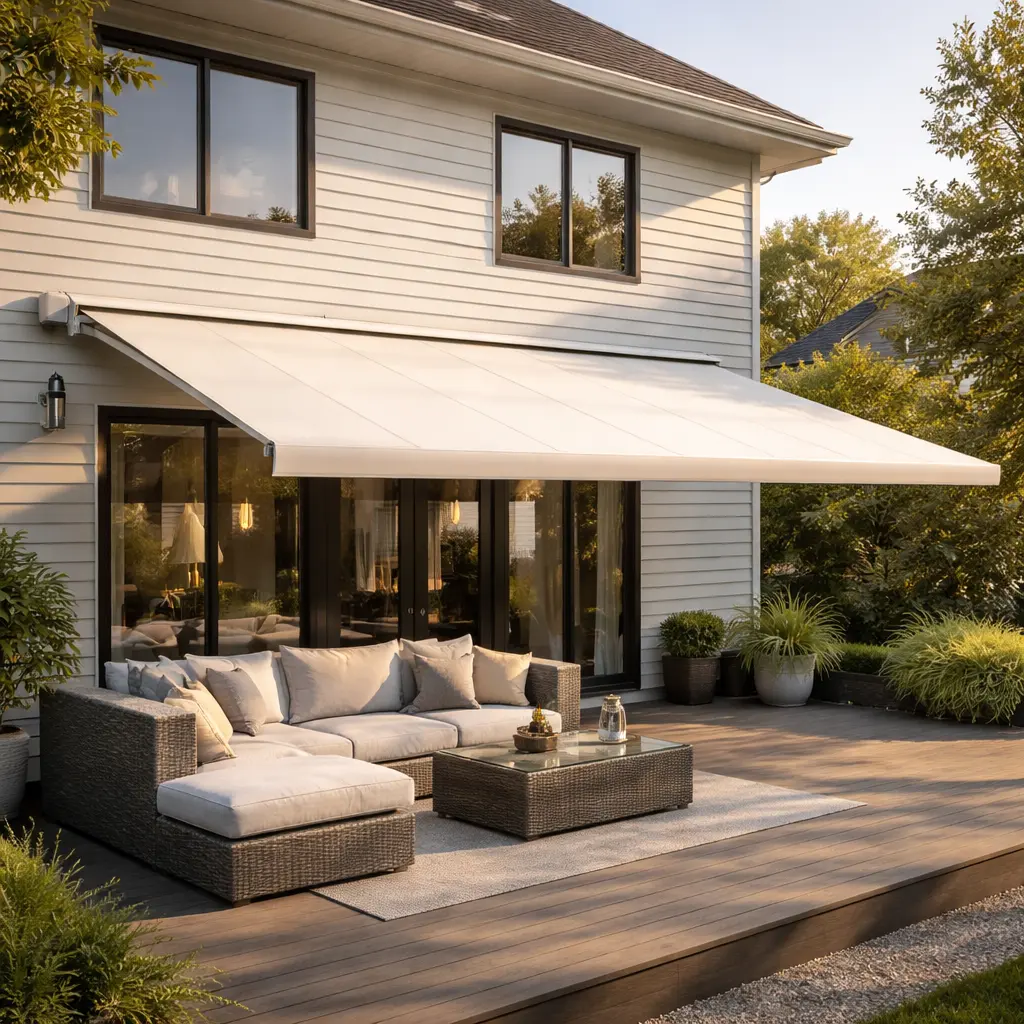
Retractable awnings are one of the most intelligent deck shade solutions available today. Modern motorized retractable awnings come equipped with anemometer-based wind sensors that automatically retract the fabric when wind speeds exceed a preset threshold. This means you never have to worry about leaving the awning extended during an unexpected storm.
When retracted, a high-quality awning sits in a protected housing unit that shields the fabric from UV degradation and weather exposure. When extended, the fabric stretches across a rigid aluminum arm frame that maintains tension and resists moderate wind. Look for awnings rated for winds up to thirty to forty miles per hour when extended. Fabric choices matter as well. Solution-dyed acrylic fabrics resist fading, mildew, and water far better than standard polyester options.
4. Louvered Pergola With Adjustable Aluminum Slats
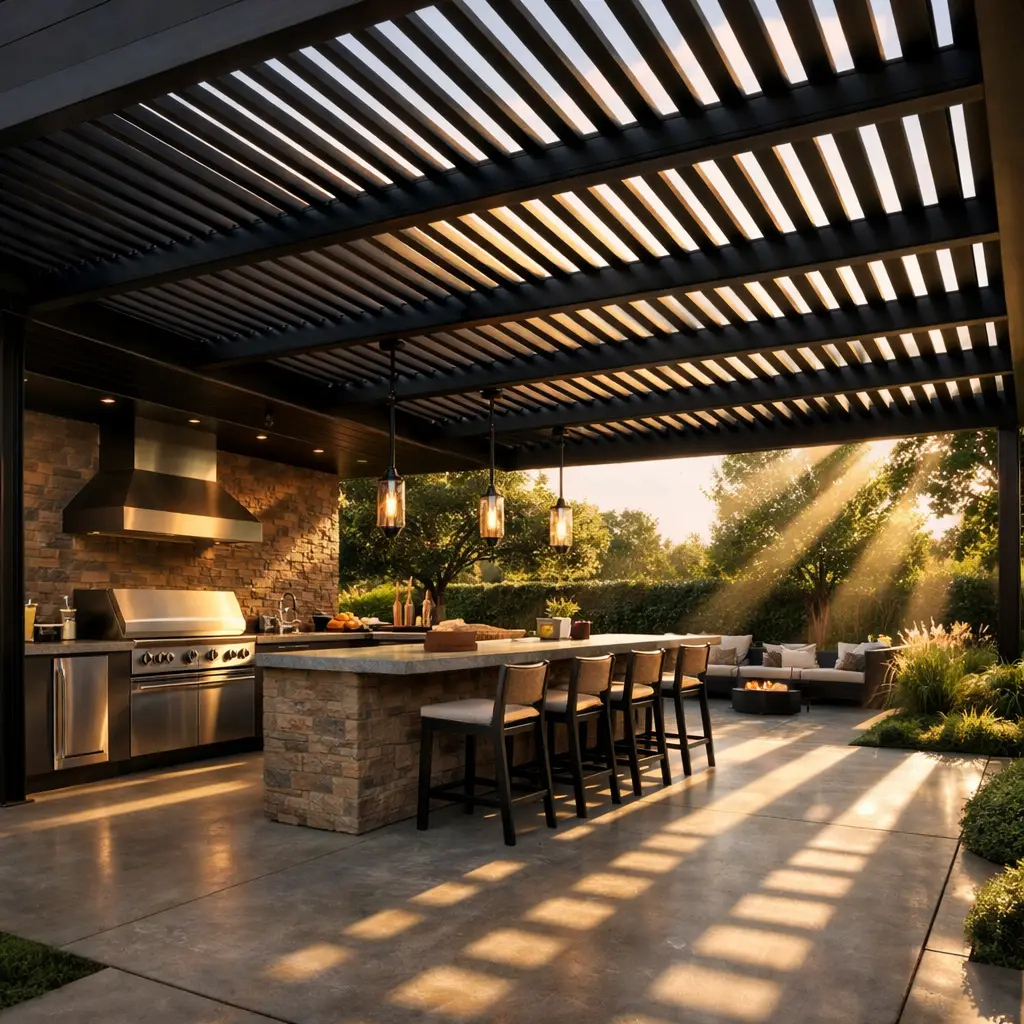
A louvered pergola represents the premium end of deck shade technology for windy regions. Instead of a fixed or fabric roof, it uses motorized aluminum slats that rotate from fully open to fully closed. When strong winds arrive, you simply adjust the louvers to a partially open position that allows wind to pass through rather than catching it like a sail. This dramatically reduces wind resistance compared to any solid or fabric roof system.
The aluminum frames are powder-coated for corrosion resistance, making them ideal for coastal environments as well. Many louvered systems also include integrated rain channels within the slats, so when fully closed they shed rainwater efficiently. The investment is higher than other options, but the combination of wind control, weather protection, and architectural beauty makes louvered pergolas the gold standard for upscale outdoor living in challenging climates.
5. Cantilever Umbrella With a Weighted Base
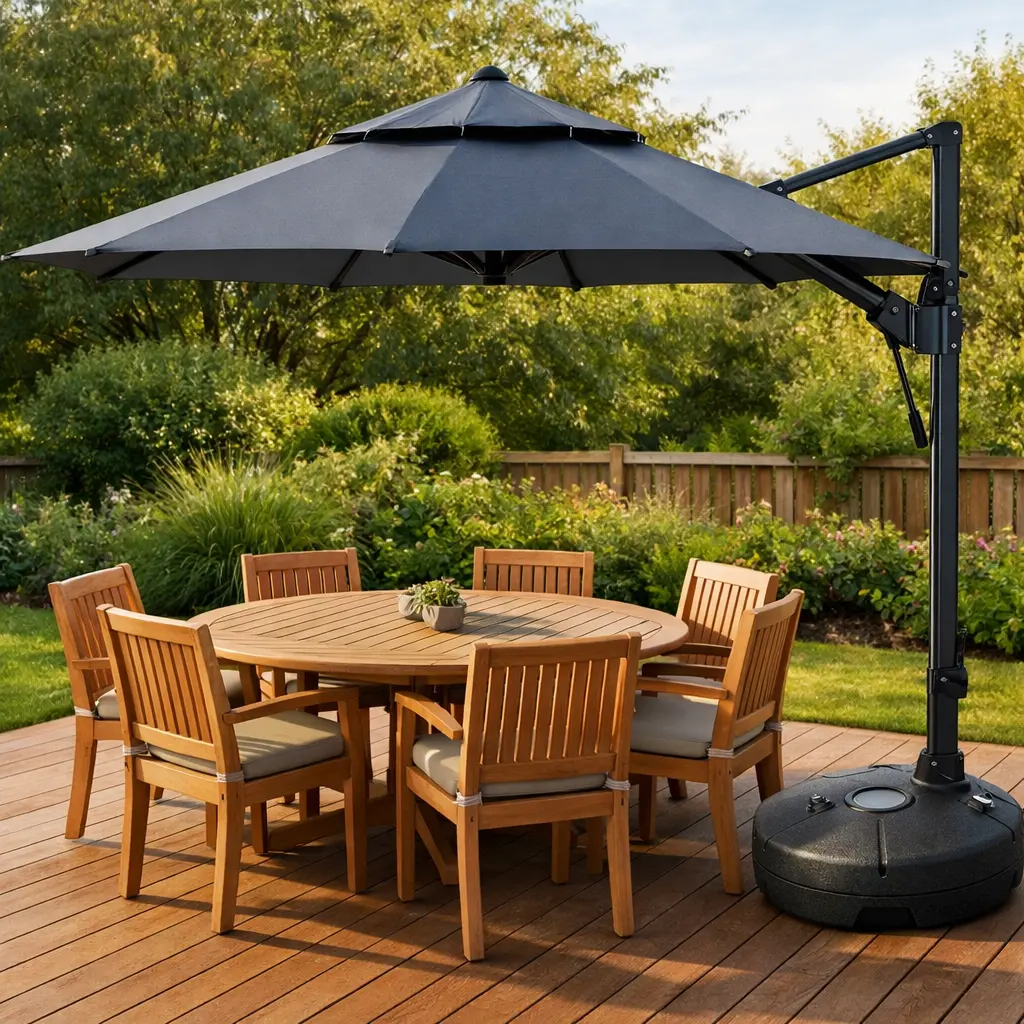
Many homeowners assume that cantilever umbrellas are fragile in wind because the canopy extends outward on an arm rather than resting on a central pole. In practice, the opposite is often true. Cantilever umbrellas typically have far heavier bases than standard patio table umbrellas. Many bases can be filled with sand, water, or gravel, and some commercial models anchor directly to the deck surface.
For windy decks, choose a cantilever model with a vented canopy. The vent at the top of the umbrella allows air to pass through instead of lifting the entire structure. Look for models built with powder-coated aluminum frames rather than plastic or thin steel. A nine-foot diameter with a 360-degree rotation capability allows you to position the shade optimally throughout the day while keeping the base out of foot traffic paths.
6. Steel or Aluminum Gazebo With Hardtop Roof
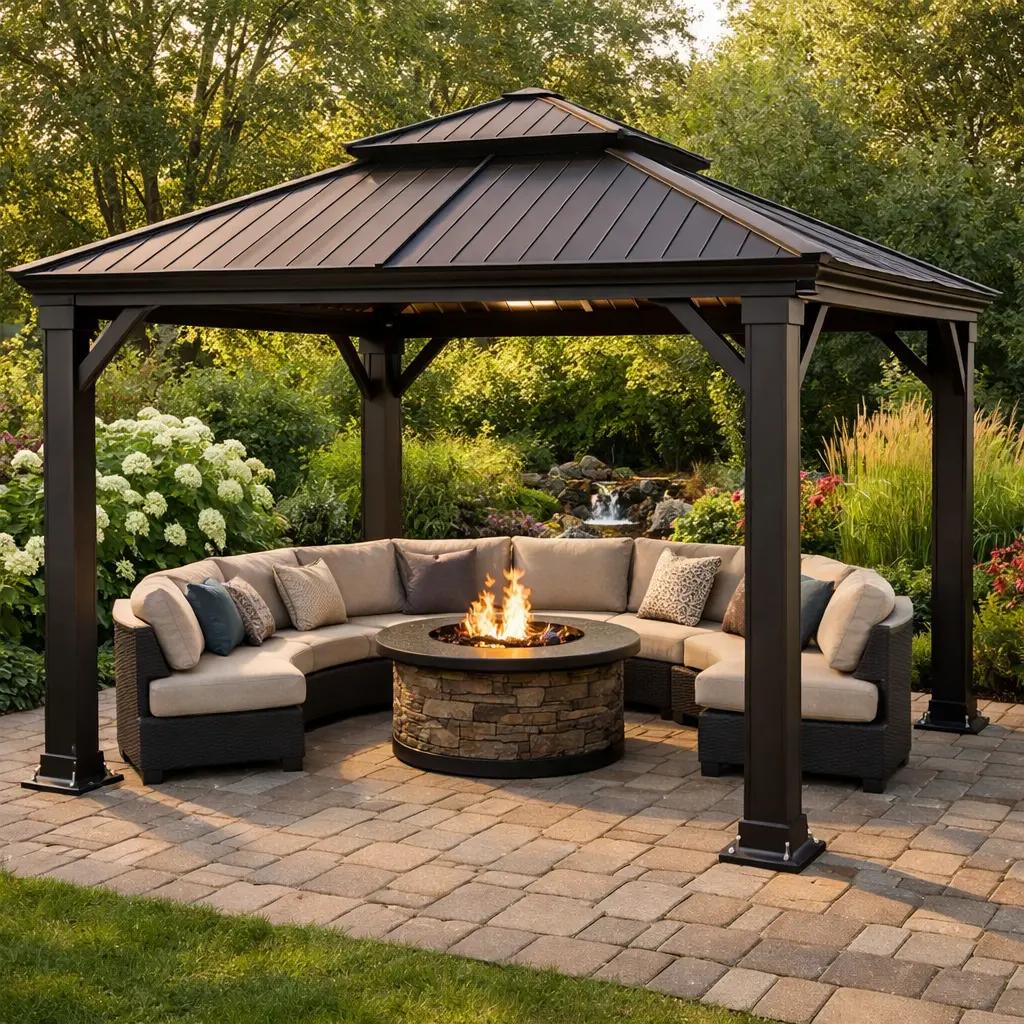
A freestanding gazebo with a hard roof made from steel, aluminum, or polycarbonate panels provides some of the most robust shade protection available for any deck. Unlike fabric-covered gazebos, hard-top versions have no canopy to shred or blow away. The roof is a permanent fixture, and the corner posts anchor either to deck planks or directly into concrete footings.
Hard-top gazebos work especially well when the deck has a fixed layout and you want to create a defined outdoor room. Many models come with optional curtain panels or mosquito screens on the sides, which you can add during calm weather and remove when winds pick up. The roof design matters for wind resistance. A hip roof style with four sloping sides distributes wind pressure more evenly than a flat or gabled roof.
7. Shade Sail Over an Existing Pergola Frame
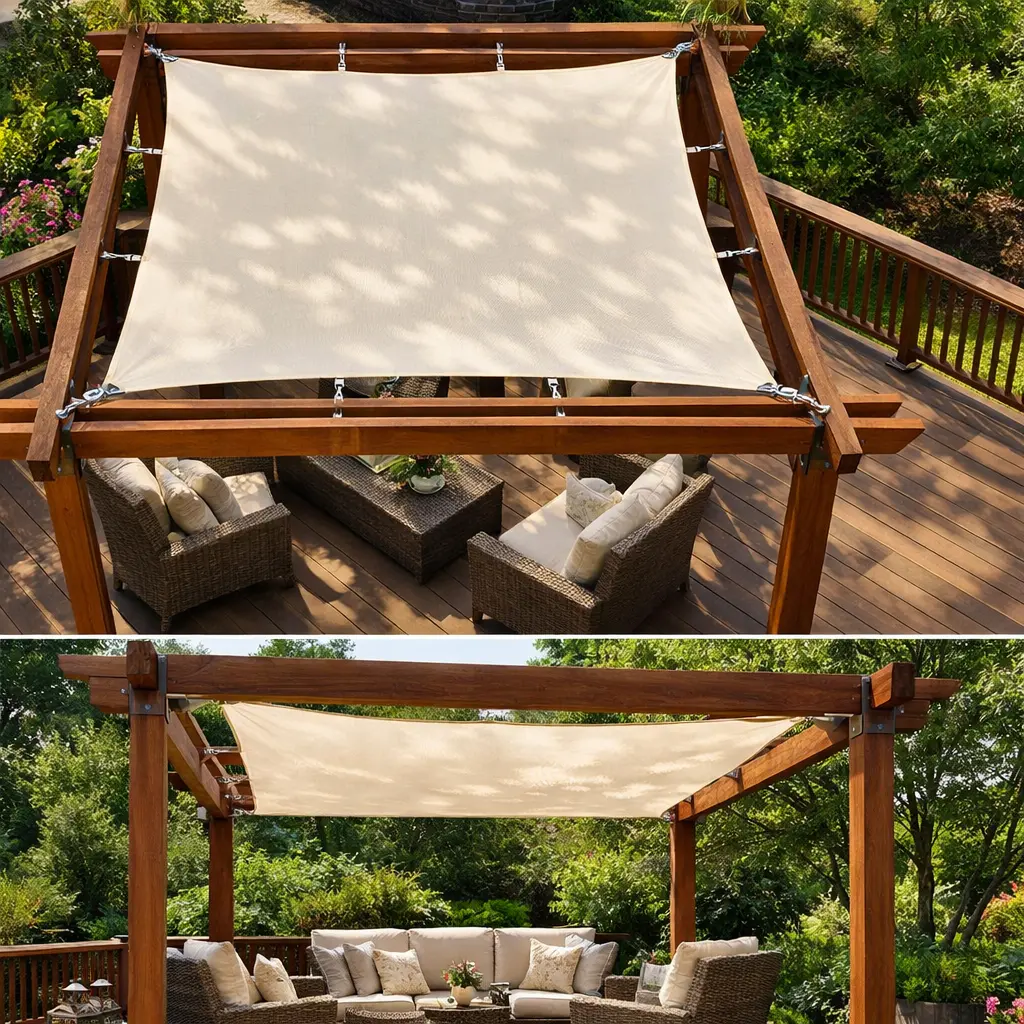
If you already have a pergola on your deck and want to increase its shade coverage without rebuilding, adding a shade sail over the existing structure is a practical and cost-effective upgrade. The pergola frame acts as the anchor system, and the sail attaches to the corner posts and beams using stainless steel connectors.
This approach works well because the pergola gives the sail something rigid to tension against, which keeps it taut during moderate wind. Make sure the pergola posts are well-anchored before adding a sail, as the additional wind load will increase stress on the footings. Use a sail that fits just inside the pergola’s dimensions rather than extending beyond it, so the framing absorbs the tension rather than transferring it to unsupported corners.
8. Windbreak Screens and Deck Privacy Panels
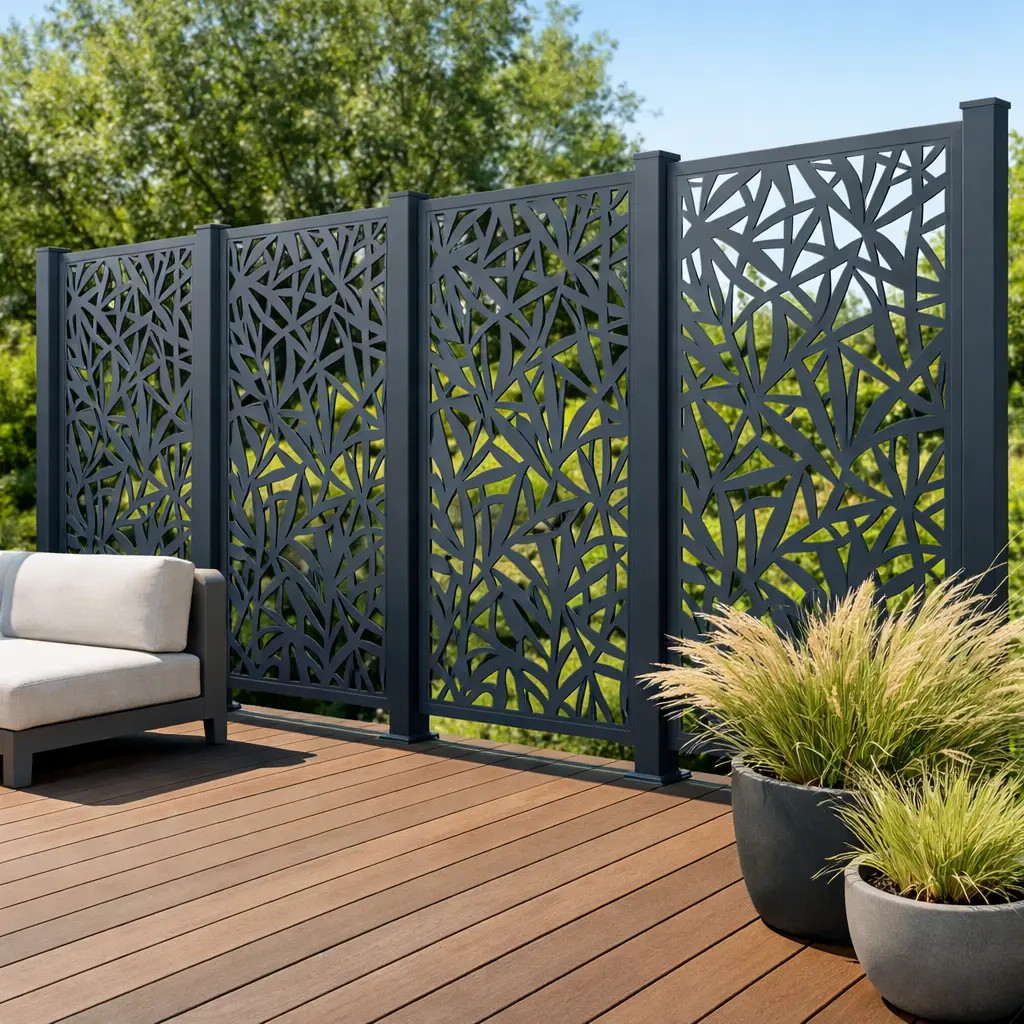
Addressing wind at the source is often more effective than trying to protect an overhead shade structure from it. Installing windbreak screens or privacy panels along the sides of the deck that face the prevailing wind direction can reduce wind speed on the deck surface by a significant margin. A well-designed windbreak does not need to be a solid wall. In fact, a slightly permeable screen is more effective than a solid barrier because it slows and disperses wind rather than creating turbulence behind a hard surface.
Options include decorative metal panel screens, laser-cut aluminum privacy screens, wood lattice panels, and polypropylene shade cloth stretched between posts. These panels serve double duty by also providing privacy from neighbors. Once you reduce wind speed at the deck level, lighter shade structures such as fabric canopies and market umbrellas become viable options that would otherwise be impractical.
9. Roll-Down Exterior Shades and Motorized Screens
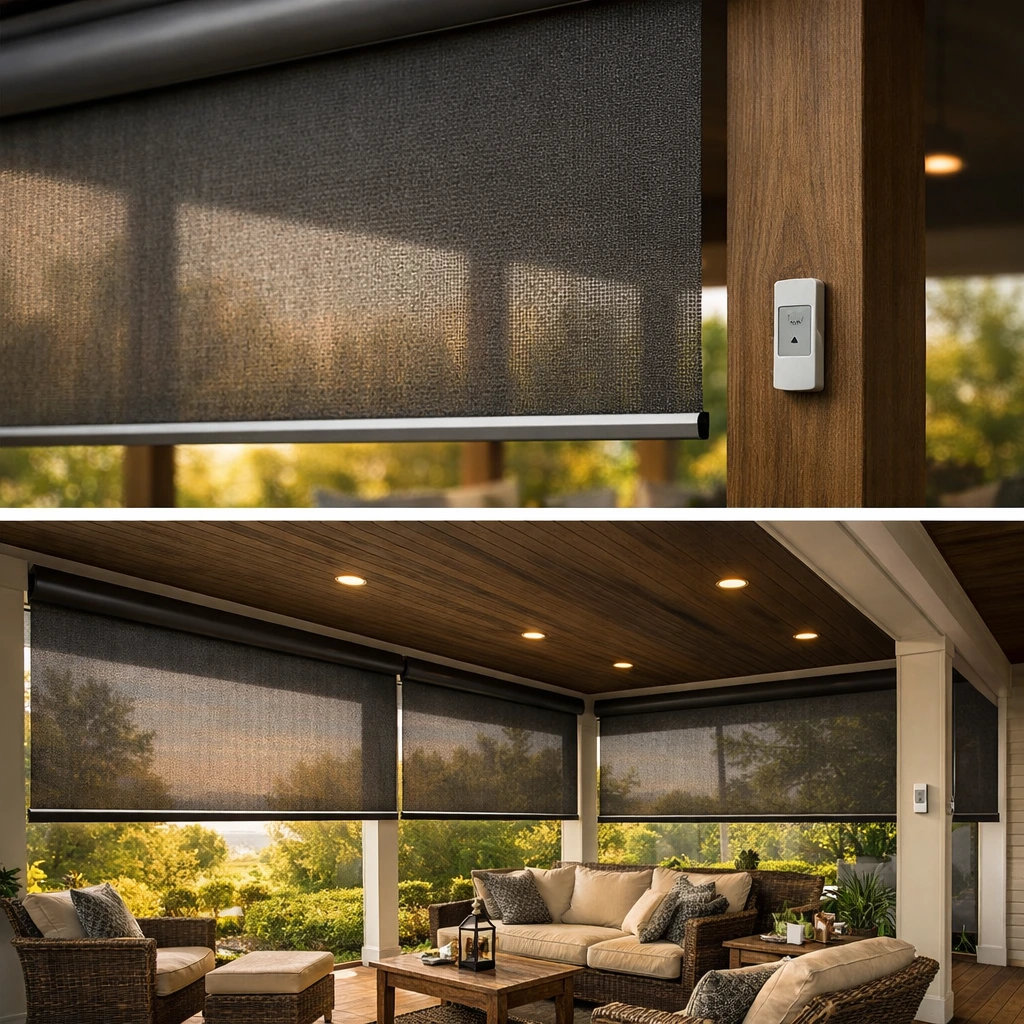
Roll-down exterior shades and motorized screens mount along the top of a pergola, porch ceiling, or attached structure and drop vertically when needed. Unlike horizontal shade solutions, vertical roll-down screens work with the wind rather than against it. They filter light, reduce glare, and provide partial shade without catching wind from above.
Solar screen fabrics with an openness factor between five and ten percent are ideal for windy decks. This level of perforation allows a significant amount of air circulation while still blocking the majority of harmful UV rays. Motorized versions can be operated via remote control or smart home systems and can be programmed to retract automatically at a certain wind threshold, similar to retractable awnings. When not in use, they roll up into a compact housing unit that protects the fabric from wind and UV damage.
10. Outdoor Curtains on Tensioned Wire Systems
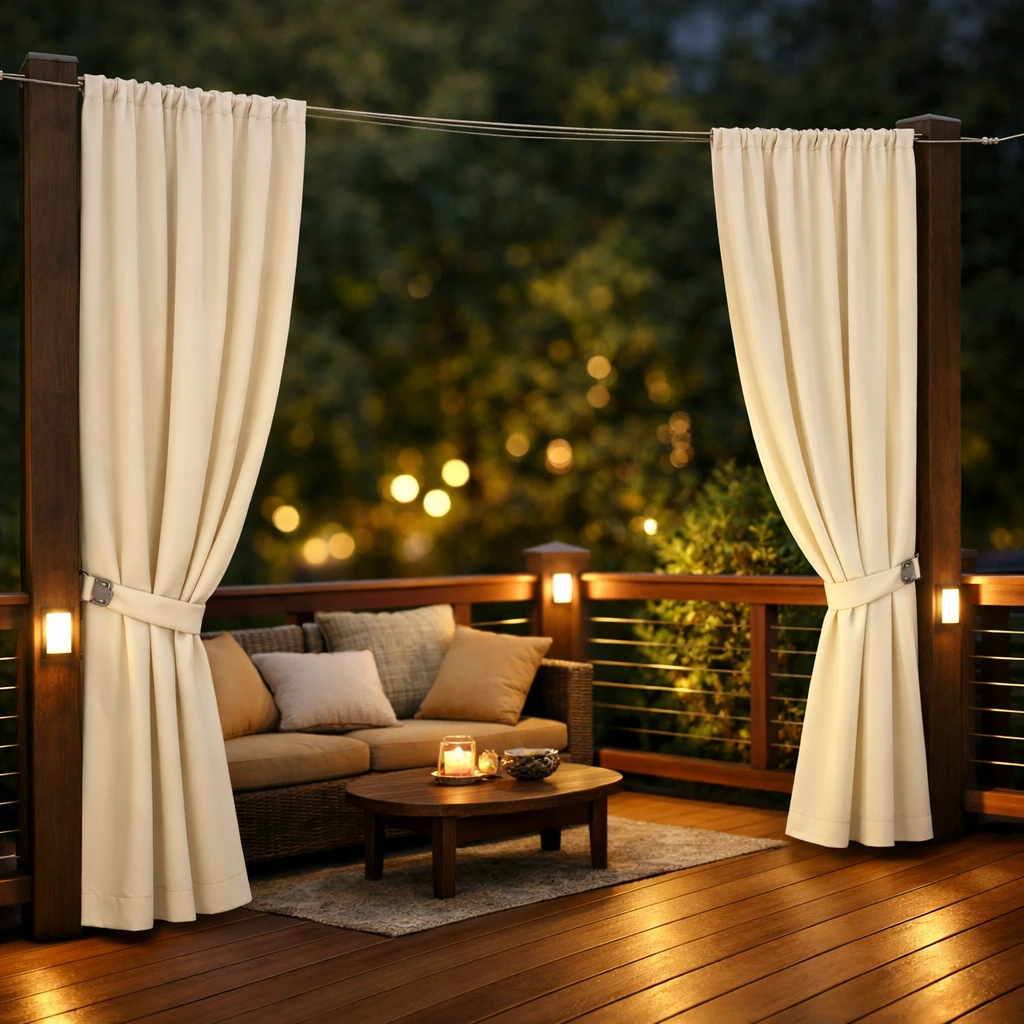
Outdoor curtains might seem like a delicate choice for a windy deck, but when mounted on a tensioned wire system rather than a flimsy curtain rod, they become far more functional. Heavy-duty stainless steel cable or tensioned wire stretched tightly between two anchor posts provides a firm track for curtain panels to slide along. This setup prevents the curtains from billowing uncontrollably and allows you to draw them closed during moderate wind to create a sheltered enclosure.
Choose curtain fabrics that are water-resistant, UV-stabilized, and heavy enough to hang straight in mild wind. Sunbrella fabric is a widely recommended choice in the outdoor industry for this purpose. Tie-backs or magnetic closures at the base of each panel help secure the curtains to the deck railing or adjacent post when the wind picks up. This solution is particularly appealing for homeowners who want to create an intimate, enclosed atmosphere on the deck.
11. Shade Cloth Over a Wire Frame or Cable System
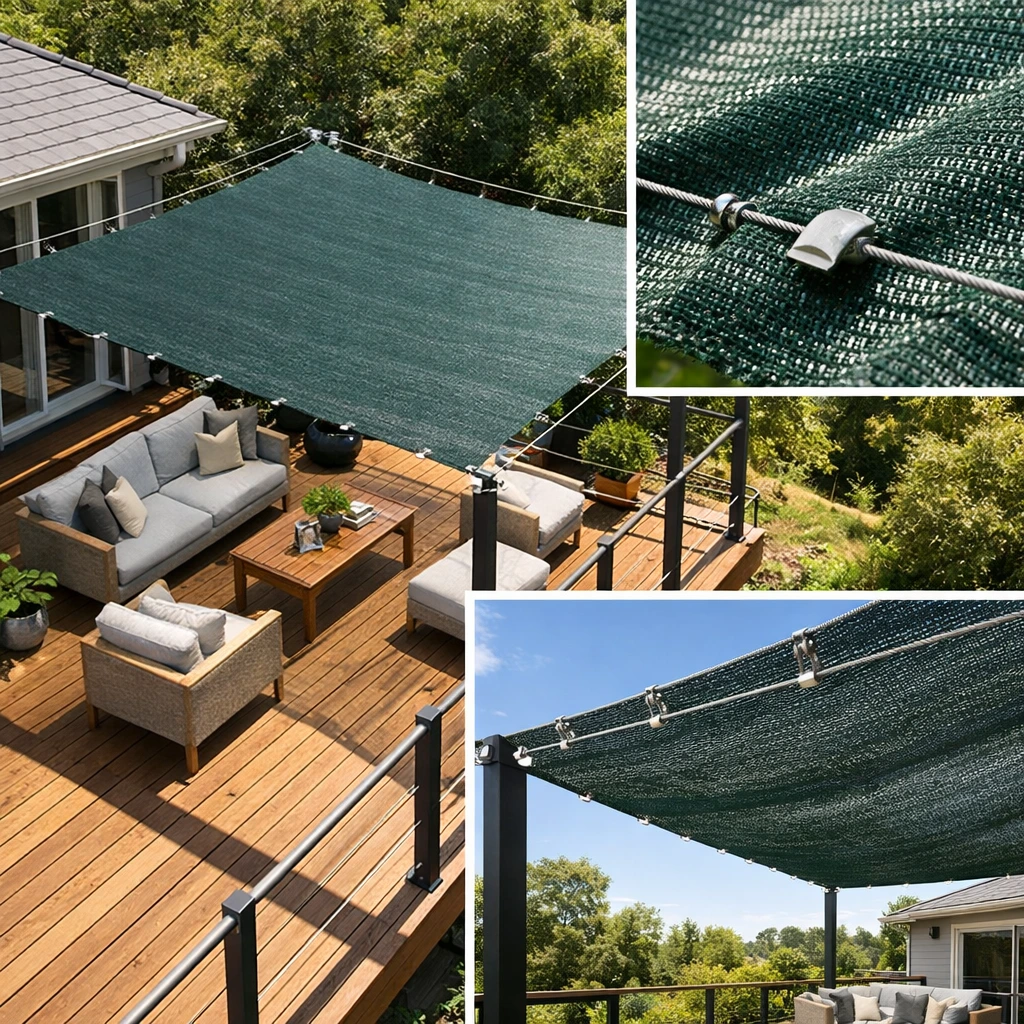
A knitted shade cloth stretched over a lightweight wire frame or stainless steel cable system is one of the most cost-effective and surprisingly durable deck shade ideas for windy areas. The knitted construction of the fabric is key. Unlike woven fabrics that resist airflow and can act as sails, knitted shade cloth has a porous structure that allows wind to pass through while still blocking significant UV radiation.
Commercial-grade knitted shade cloth rated at seventy to ninety percent shade reduction can be secured with stainless steel zip ties or shade cloth clips to a cable grid. This system is often used in agricultural settings where wind resistance is critical. For a residential deck, this same approach can be adapted with a clean aesthetic by using powder-coated cable tensioners and minimal hardware. The cloth can be removed seasonally and stored during extreme weather months, extending its lifespan considerably.
12. Trellis With Fast-Growing Climbing Vines
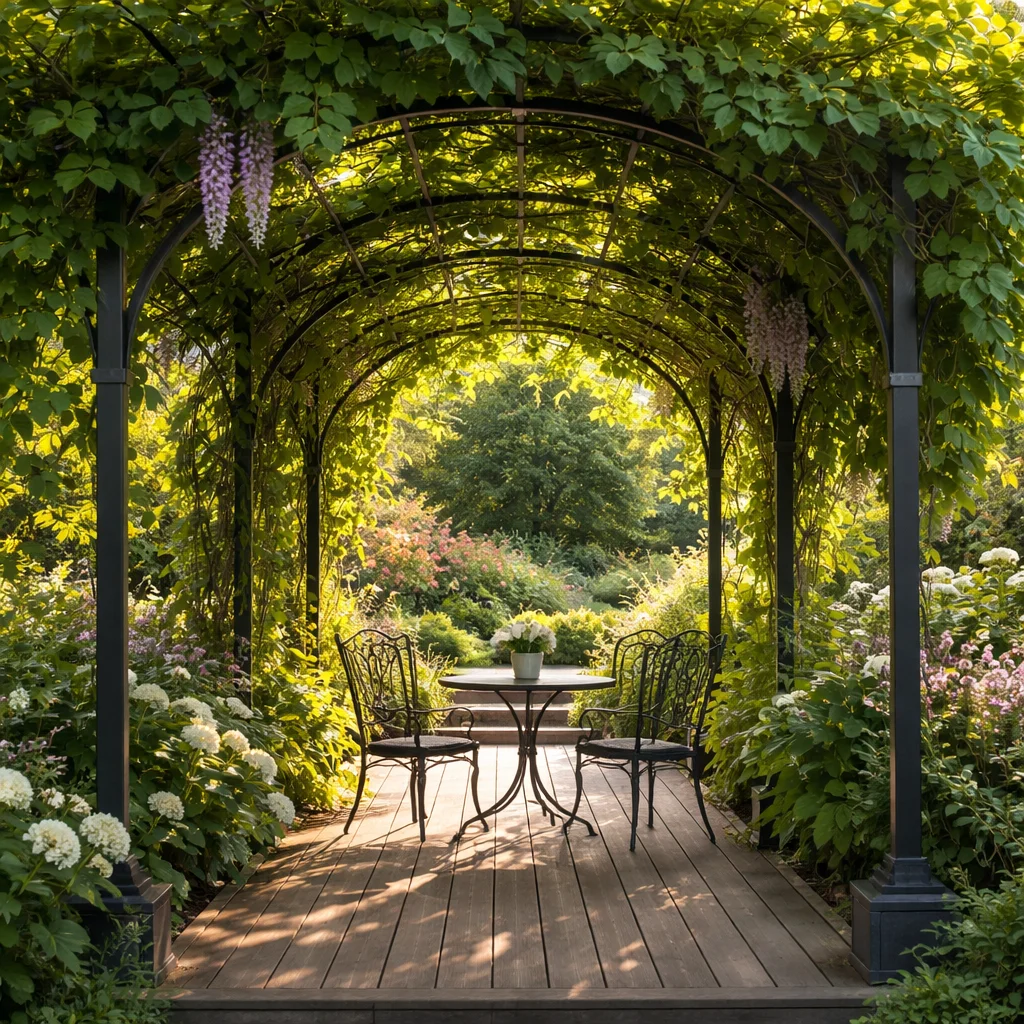
Natural shade is one of the most overlooked deck shade ideas for windy areas, and a well-constructed trellis with climbing vines can deliver results that no manufactured product can fully replicate. A trellis made from heavy-gauge steel or rot-resistant hardwood can anchor to existing deck framing and serve as a vertical or overhead structure for vines to grow across.
The vines themselves become wind-resistant once established because their flexible stems move with gusts rather than resisting them. Fast-growing options such as wisteria, clematis, grapes, or passionflower can cover a trellis within one to three growing seasons. Once mature, the leaf canopy provides dense shade and helps cool the deck through the natural process of plant transpiration. The trellis frame should be engineered to handle the eventual weight of mature plant material, which can be considerable.
13. Polycarbonate Roof Panel Shade Cover
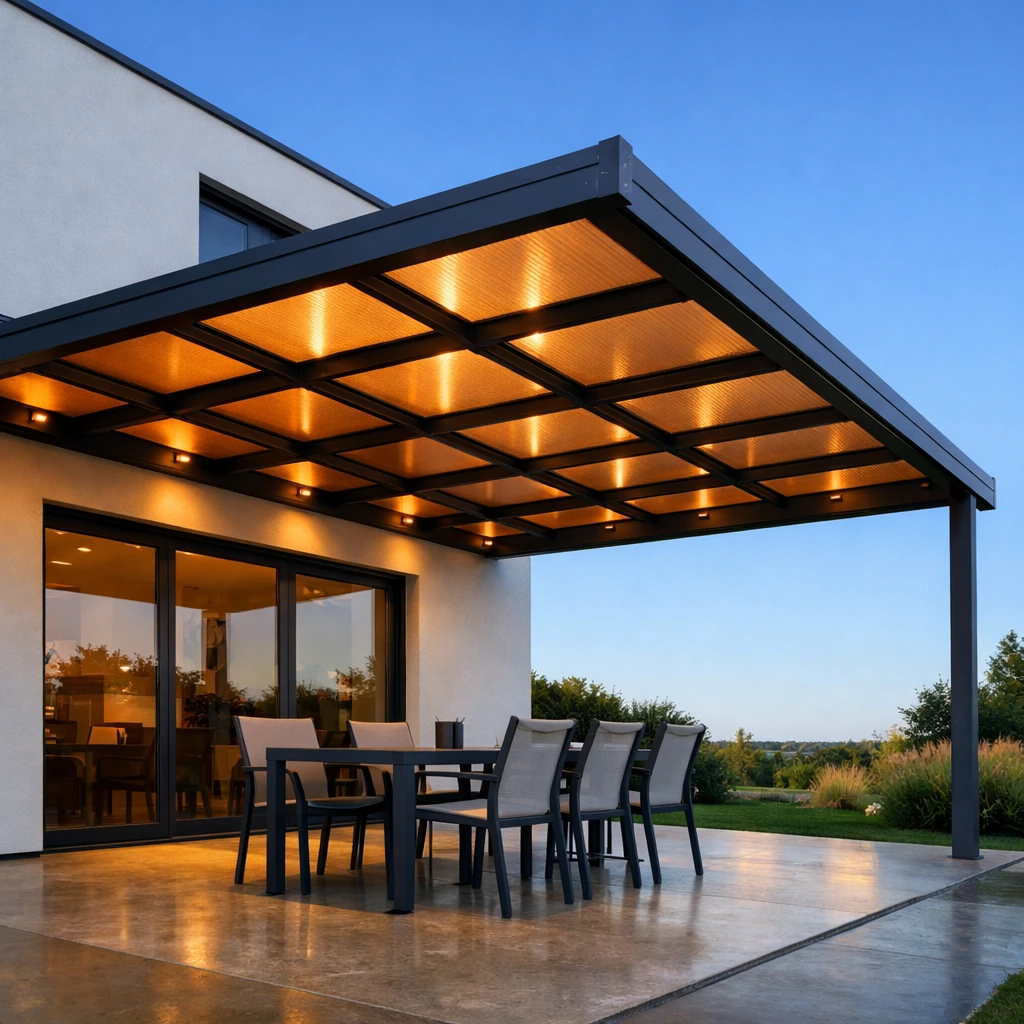
For homeowners who want permanent, all-weather protection on their deck, a polycarbonate roof panel shade cover is an excellent alternative to fabric-based solutions. Twin-wall or multi-wall polycarbonate panels transmit soft, diffused light while blocking ultraviolet rays. They install on a lightweight aluminum frame and are far more impact-resistant than glass. In high-wind areas, they hold up to sustained gusts and flying debris that would shred any fabric option.
Tinted polycarbonate panels in bronze or gray reduce glare while still allowing natural light to filter through. Clear versions maximize light transmission for decks where brightness is valued. The panels should be installed with appropriate thermal expansion gaps and sealed with weather-resistant silicone to prevent leaks. The overall appearance is clean and modern, and the structure adds measurable value to the property.
14. Strategic Landscaping as a Natural Windbreak
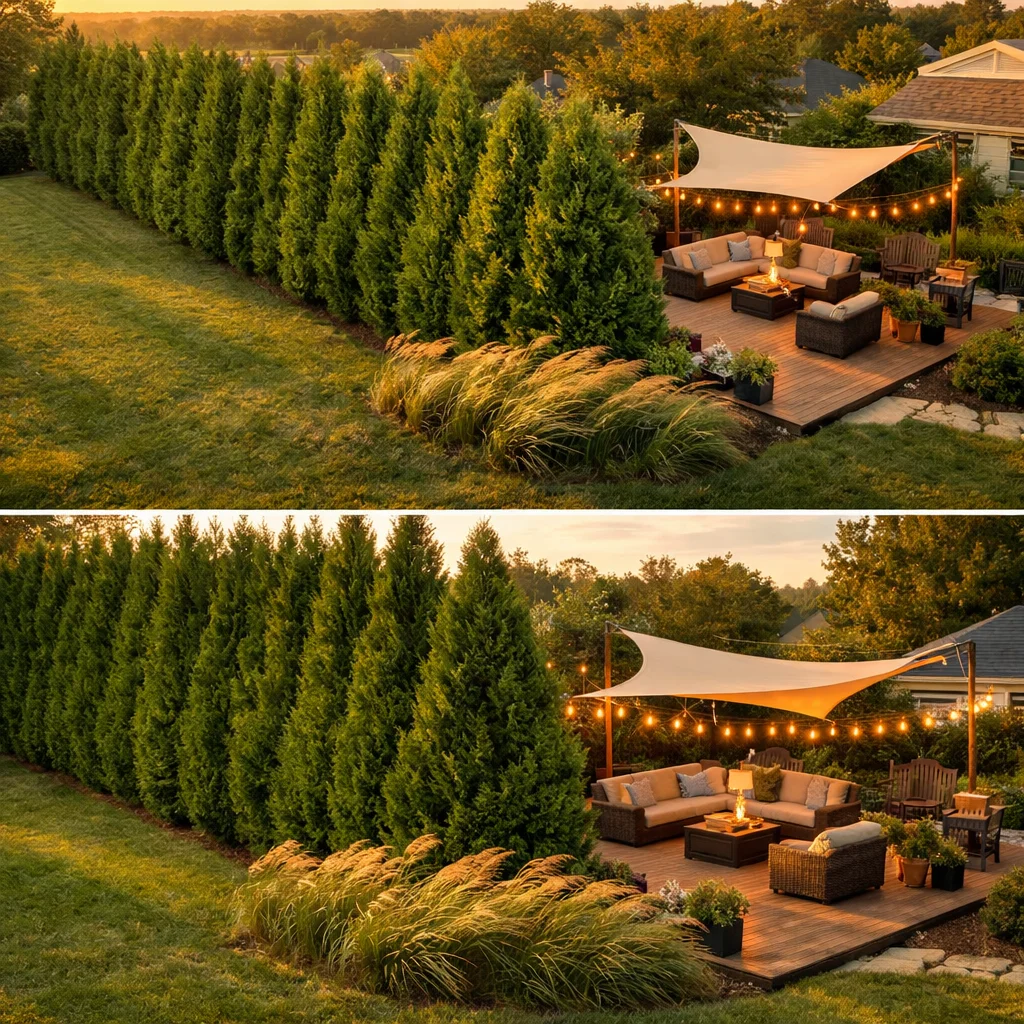
Before you install any overhead shade structure, consider addressing wind at its source through strategic landscaping. A dense row of evergreen trees or large shrubs planted on the windward side of the deck can reduce wind speed at the deck surface by as much as fifty to seventy percent, depending on the species density and height. This makes every other shade solution on this list significantly more effective.
Suitable species for windbreak planting include arborvitae, Eastern red cedar, Leyland cypress, and holly. These plants are dense, fast-growing, and maintain their foliage year-round. Position the windbreak at a distance of roughly two to five times its eventual height from the deck for maximum protection. Combining a natural windbreak with one of the overhead shade structures described in this article gives you a comprehensive, layered solution that performs beautifully in even the windiest environments.
General Installation Tips for Windy Deck Shade Structures
No matter which shade solution you choose, a few universal principles apply when installing deck shade in a windy area. First, always check the manufacturer’s stated wind rating before purchasing any product. Wind ratings are typically expressed in miles per hour and will tell you how much sustained wind the structure can tolerate. Second, use the highest quality fasteners available. Galvanized or stainless steel screws, bolts, and anchors will resist corrosion and maintain their holding strength through years of outdoor exposure. Cheap hardware is the most common reason shade structures fail.
Third, consider hiring a professional installer for any permanent or semi-permanent structure. Improper installation is dangerous and can void manufacturer warranties. Fourth, perform seasonal maintenance checks on all hardware, fabric, and connections. Replace worn components before they fail rather than after. A proactive approach to maintenance will extend the life of your shade structure significantly.
Conclusion
Living with a windy deck does not mean sacrificing comfort, beauty, or functionality. The fourteen-plus deck shade ideas presented here prove that there is a smart, durable solution for every budget, every aesthetic preference, and every level of wind exposure. The most successful outcomes come from matching the right solution to your specific conditions, rather than reaching for the cheapest or most popular option.
If you live in a genuinely high-wind zone such as a coastal region, exposed hillside, or tornado-prone area, prioritize permanent structures like attached pergolas with solid roof panels, louvered aluminum systems, or hard-top gazebos. If your winds are more occasional or moderate, retractable awnings with wind sensors, commercial-grade shade sails, and windbreak screens will serve you extremely well.
The investment you make in a well-chosen, properly installed deck shade structure pays dividends in daily outdoor enjoyment, reduced energy costs from lower ambient heat near the home, and increased property value. Take your time, do the research, and choose a solution built to handle what your climate demands.
Frequently Asked Questions
1.What is the most wind-resistant deck shade structure?
An attached pergola with solid polycarbonate or metal roof panels anchored to the home’s structure is generally the most wind-resistant deck shade option. Louvered aluminum pergolas come in as a close second because their adjustable slats allow wind to pass through rather than creating full resistance. Both options significantly outperform fabric-based solutions in sustained high-wind environments.
2.Can shade sails survive strong winds if installed properly?
Yes, commercial-grade shade sails installed with deep-set anchor posts, stainless steel hardware, and proper tensioning can withstand significant wind. The key factors are sail shape, fabric quality, and anchor depth. Rectangular sails perform better than triangular ones in high-wind conditions. Posts should be buried at approximately forty percent of their total length in concrete to provide adequate stability.
3.How do I stop my patio umbrella from blowing away?
Choose a vented cantilever umbrella model specifically rated for wind resistance. Use the heaviest base possible, ideally one that anchors to the deck surface. Fill the base with sand or water for maximum weight. Never leave an umbrella open unattended in high-wind conditions. Vented models allow air to escape through the top rather than lifting the entire canopy.
4.What material is best for shade structures in coastal or windy areas?
Powder-coated aluminum is the top choice for frames in coastal and windy areas because it resists corrosion and is lightweight yet strong. For fabric components, solution-dyed acrylic such as Sunbrella is the industry standard for UV resistance, mildew resistance, and durability. For hard roof panels, multi-wall polycarbonate offers excellent impact resistance combined with UV blocking capability.
5.Should I use a windbreak before installing an overhead shade structure?
Yes, installing a windbreak before or alongside an overhead shade structure is highly recommended in exposed locations. A dense evergreen hedge or decorative screen panel on the windward side of the deck can reduce surface wind speeds dramatically. This makes lighter shade solutions viable in areas where they would otherwise be impractical, and it extends the lifespan of any shade structure you choose by reducing wind stress on the materials and hardware.