16+ Stylish Boat Upholstery Ideas to Inspire You
The interior of your boat speaks volumes about your personal style and attention to detail. While hull color and deck features catch the eye from afar, it’s the upholstery that truly defines your onboard experience. Whether you’re piloting a sleek fishing vessel, a family-friendly pontoon, or a luxury yacht, the right upholstery choices transform functional seating into a statement of craftsmanship and comfort.
Boat upholstery serves dual purposes that extend far beyond mere decoration. First, it must withstand the relentless assault of marine conditions including saltwater spray, intense ultraviolet radiation, temperature fluctuations, and constant moisture. Second, it needs to reflect your aesthetic preferences while maintaining the practical requirements of boating life. The good news is that modern marine fabrics and design techniques make it possible to achieve both durability and stunning visual appeal without compromise.
This comprehensive guide explores more than sixteen distinct upholstery ideas that cater to various boat types, design preferences, and functional needs. From timeless classic styles to cutting-edge contemporary designs, you’ll discover inspiration to elevate your vessel’s interior. Whether you’re planning a complete renovation or simply refreshing worn seating, these ideas will help you create a boat interior that feels authentically yours.
Classic Vintage Aesthetics
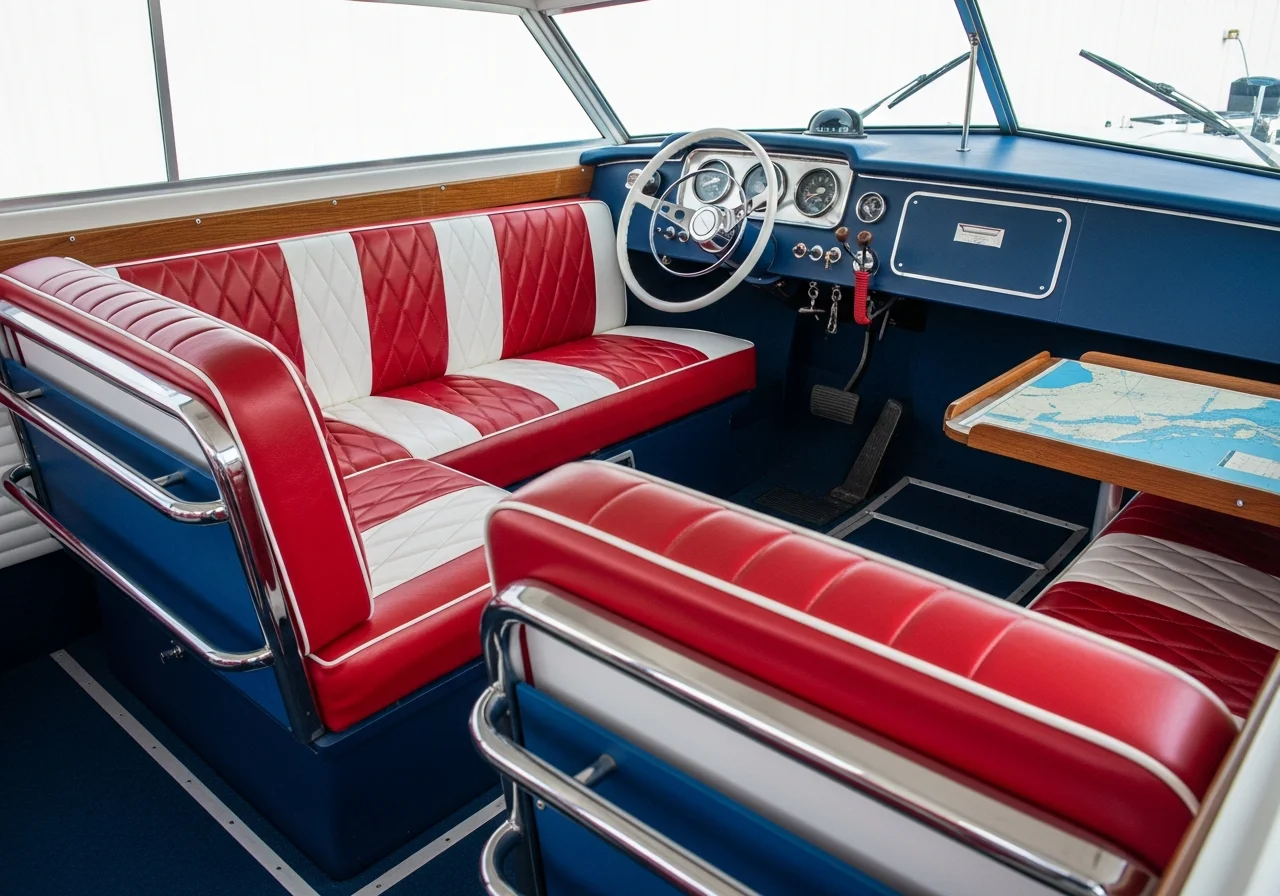
The vintage approach to boat upholstery remains popular among enthusiasts who appreciate traditional maritime charm. This style typically features bold primary colors or soft pastels applied to durable vinyl materials that evoke the golden era of recreational boating. Think deep reds, ocean blues, and crisp whites arranged in clean, straightforward patterns.
Vintage upholstery works exceptionally well on casual fishing boats and classic speed boats where nostalgia meets functionality. The beauty of this approach lies in its simplicity and versatility. You can incorporate retro color combinations without overwhelming the space, and the vinyl materials used are remarkably easy to maintain. Pairing vintage-style seating with period-appropriate steering wheels and chrome accents creates a cohesive throwback aesthetic that turns heads at every marina.
Modern Minimalist Design
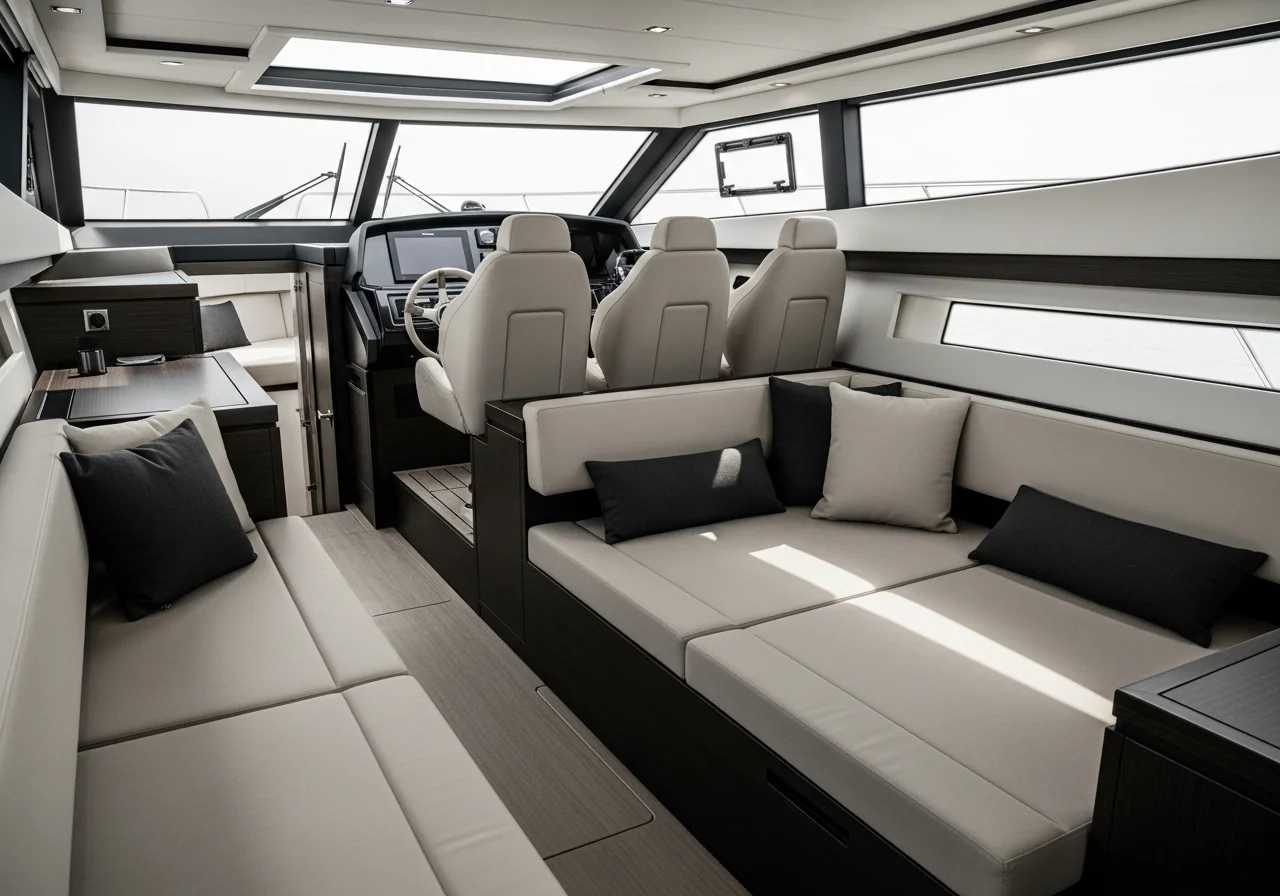
For boat owners who prefer understated elegance, the minimalist approach delivers sophisticated results. This design philosophy emphasizes neutral color palettes including beige, gray, charcoal, and white, often arranged in solid blocks without busy patterns or excessive ornamentation. The minimalist style prioritizes clean lines and quality materials over flashy details.
The practical advantage of minimalist upholstery extends beyond aesthetics. Neutral tones prove more forgiving when it comes to visible wear and tend to complement rather than clash with hull colors. This approach also provides flexibility for future modifications, as neutral upholstery serves as a versatile foundation that pairs well with various accent colors through pillows, towels, and other removable accessories. The result is a timeless interior that won’t feel dated as design trends evolve.
Bold Contrast Piping
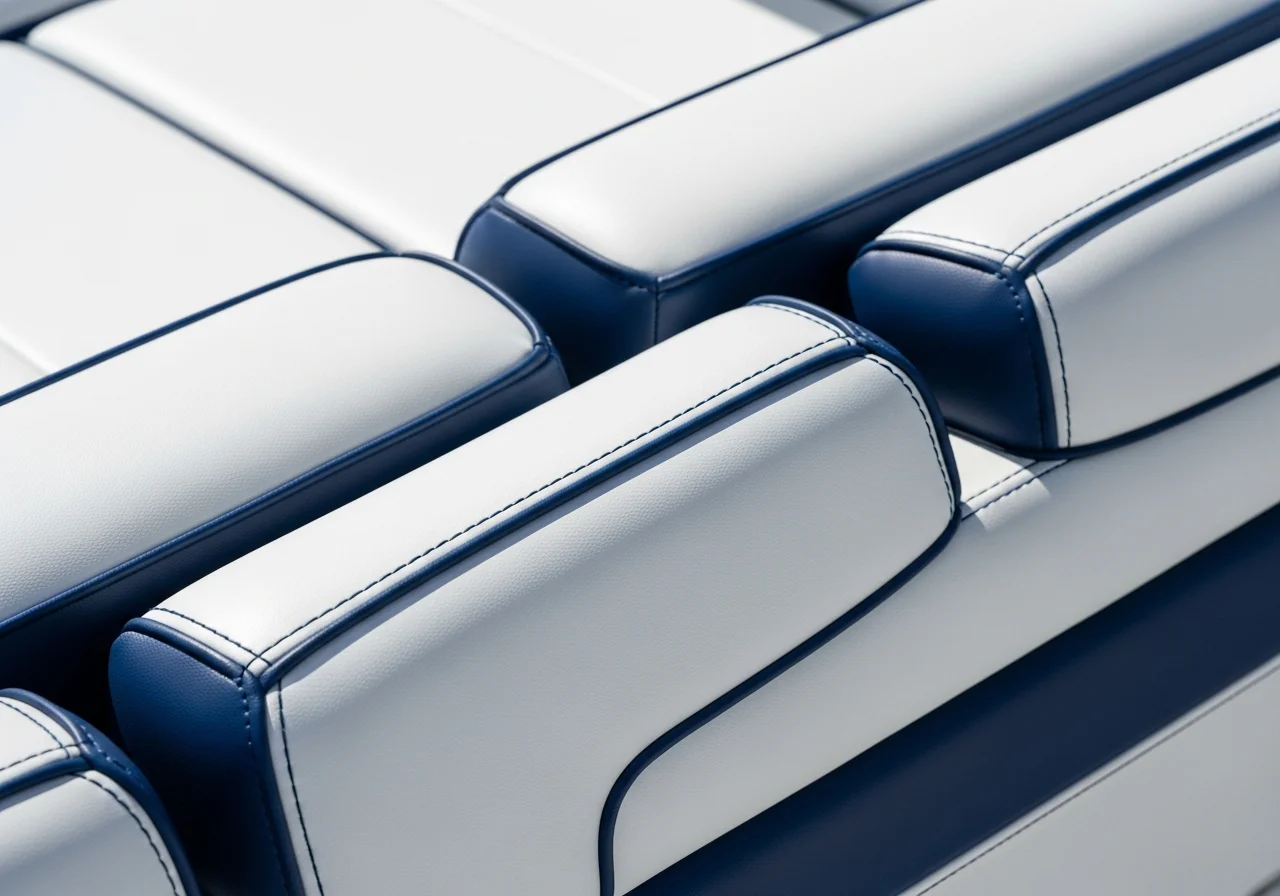
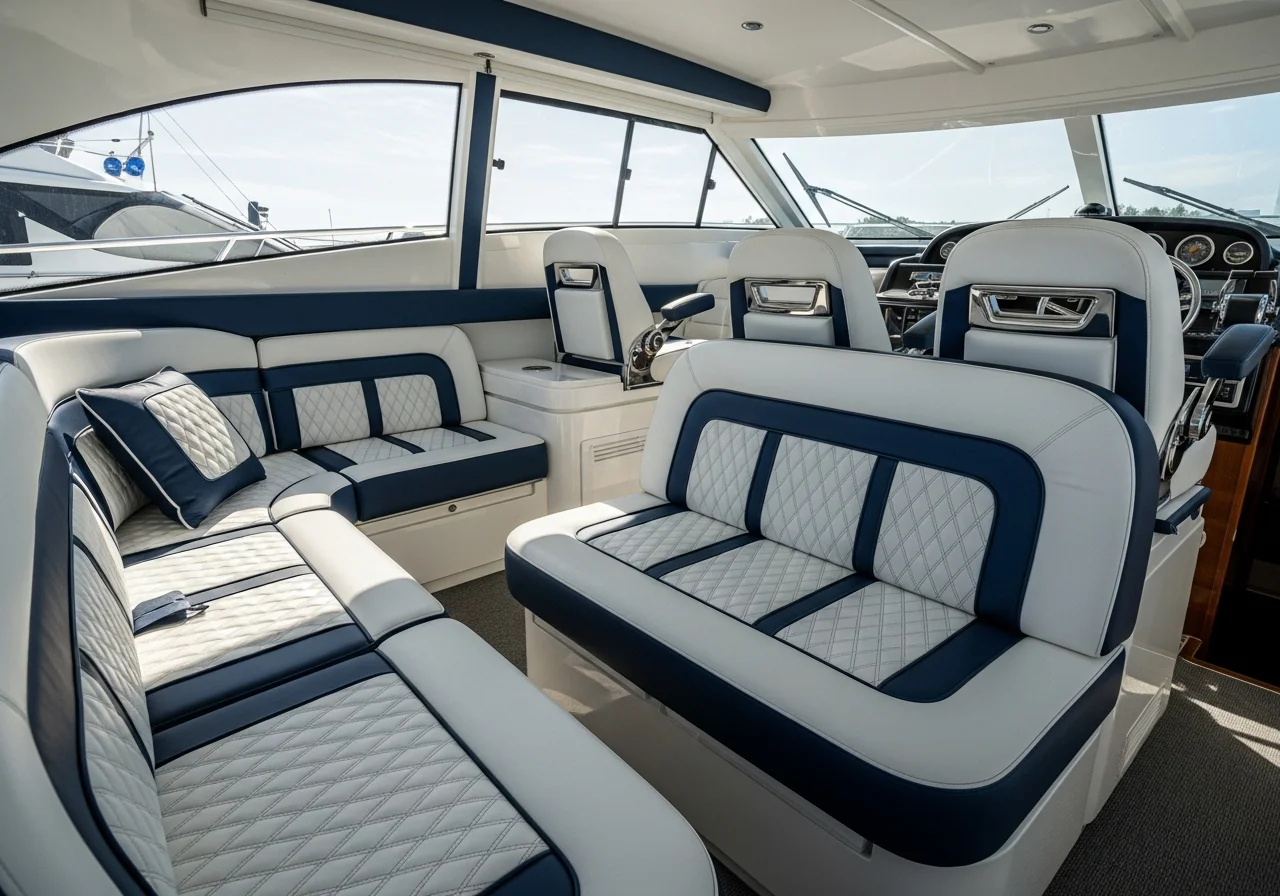
Contrast piping represents one of the most effective ways to add visual interest without committing to elaborate patterns. This technique involves using thread or fabric trim in a contrasting color along the seams and edges of cushions and seats. A white seat with navy piping, or gray upholstery accented with vibrant orange trim, creates definition and polish.
The beauty of contrast piping lies in its subtlety and versatility. It draws the eye to the craftsmanship of your upholstery while adding a custom-tailored appearance. This detail proves particularly effective on boats with solid-color hulls, as you can echo the hull color in the piping to create visual harmony between exterior and interior. Contrast piping also provides an excellent opportunity to introduce your favorite accent color in a controlled, professional manner.
Diamond Quilted Patterns
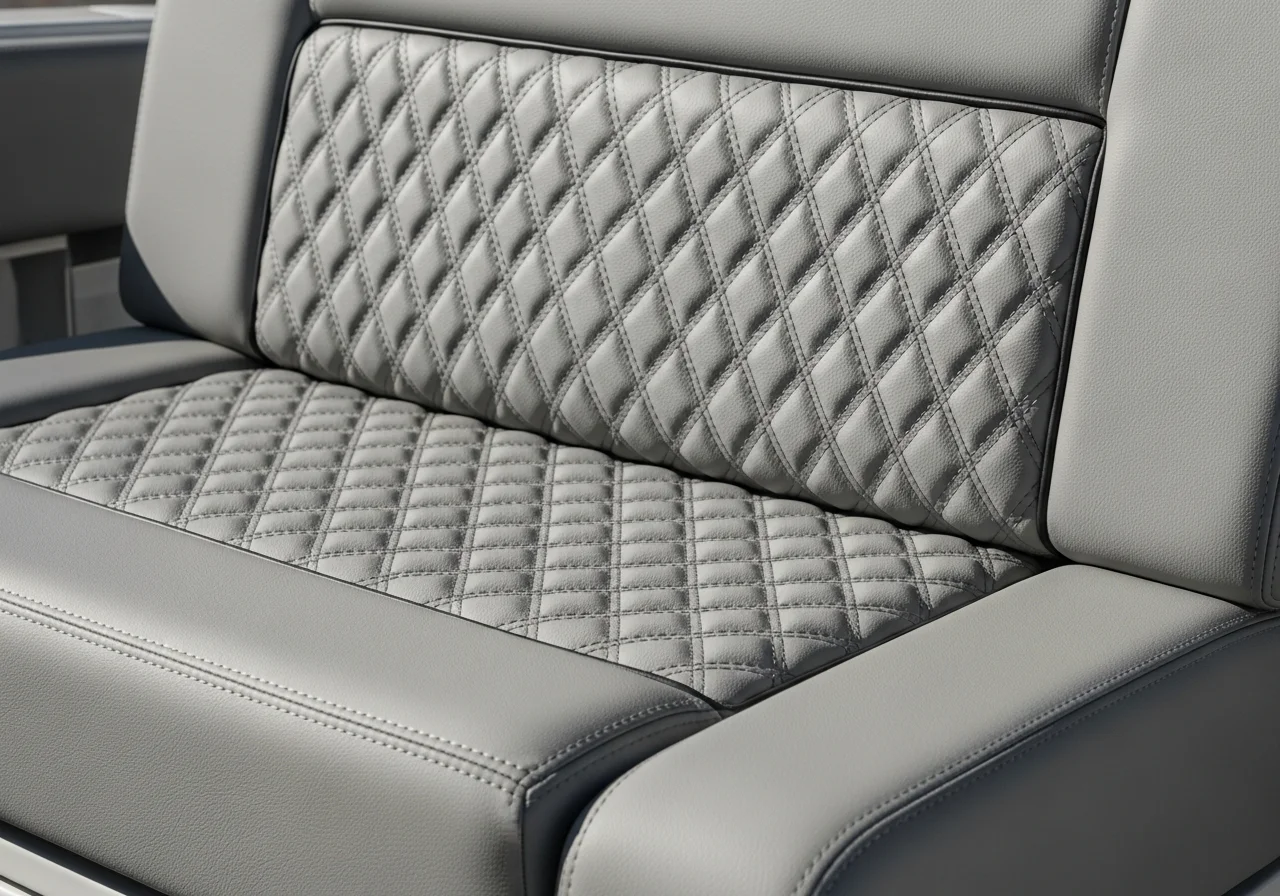
Diamond quilting has surged in popularity across marine upholstery applications, and for good reason. This pattern creates visual depth and texture while serving practical purposes. The quilted surface provides additional cushioning, improved grip on seating surfaces, and enhanced durability by distributing stress across multiple stitching points.
Modern diamond patterns range from tight, small diamonds to bold, oversized geometric arrangements. The pattern works beautifully on helm seats, sun pads, and bench seating where both comfort and style matter. Many boat owners choose to combine diamond quilting with contrast stitching in complementary colors, creating a luxury aesthetic reminiscent of high-end automotive interiors. The raised surface created by quilting also helps channel water away from seating areas, making it both beautiful and functional.
Sleek Performance Styling
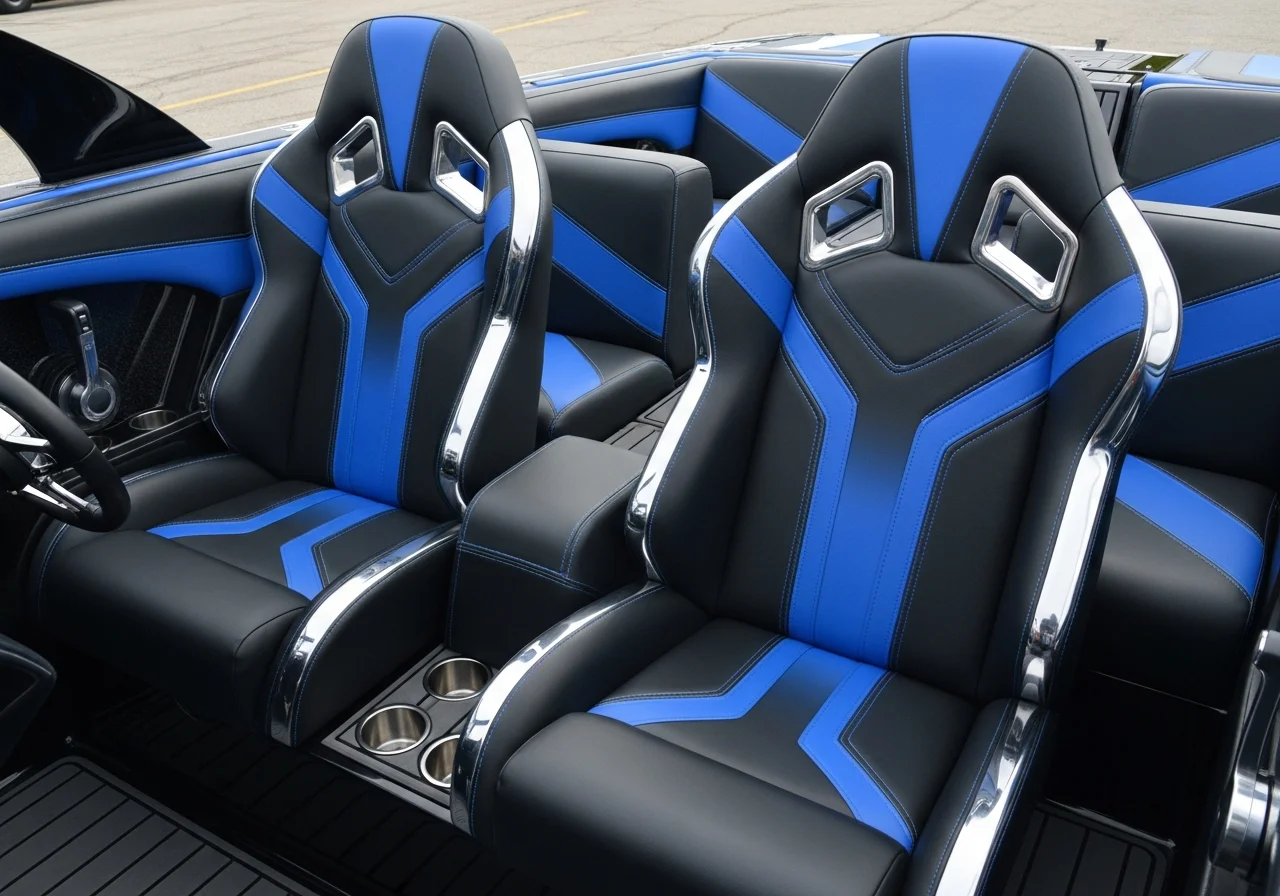
Speed boats and performance vessels demand upholstery that matches their aggressive capabilities. Performance styling typically incorporates sharp lines, angular patterns, and bold color contrasts that convey speed and power even when docked. Think racing stripes, geometric shapes, and color blocking in high-contrast combinations.
This approach often pairs an all-black or charcoal base with vibrant accent colors like electric blue, lime green, or bright orange. The color placement follows the boat’s lines to emphasize its sporty profile. Chrome accents and metallic threading frequently complement performance upholstery, reinforcing the high-tech appearance. Materials selection focuses heavily on water resistance and quick-drying properties since performance boats typically see active use that involves splash and spray.
Laid-Back Pontoon Comfort
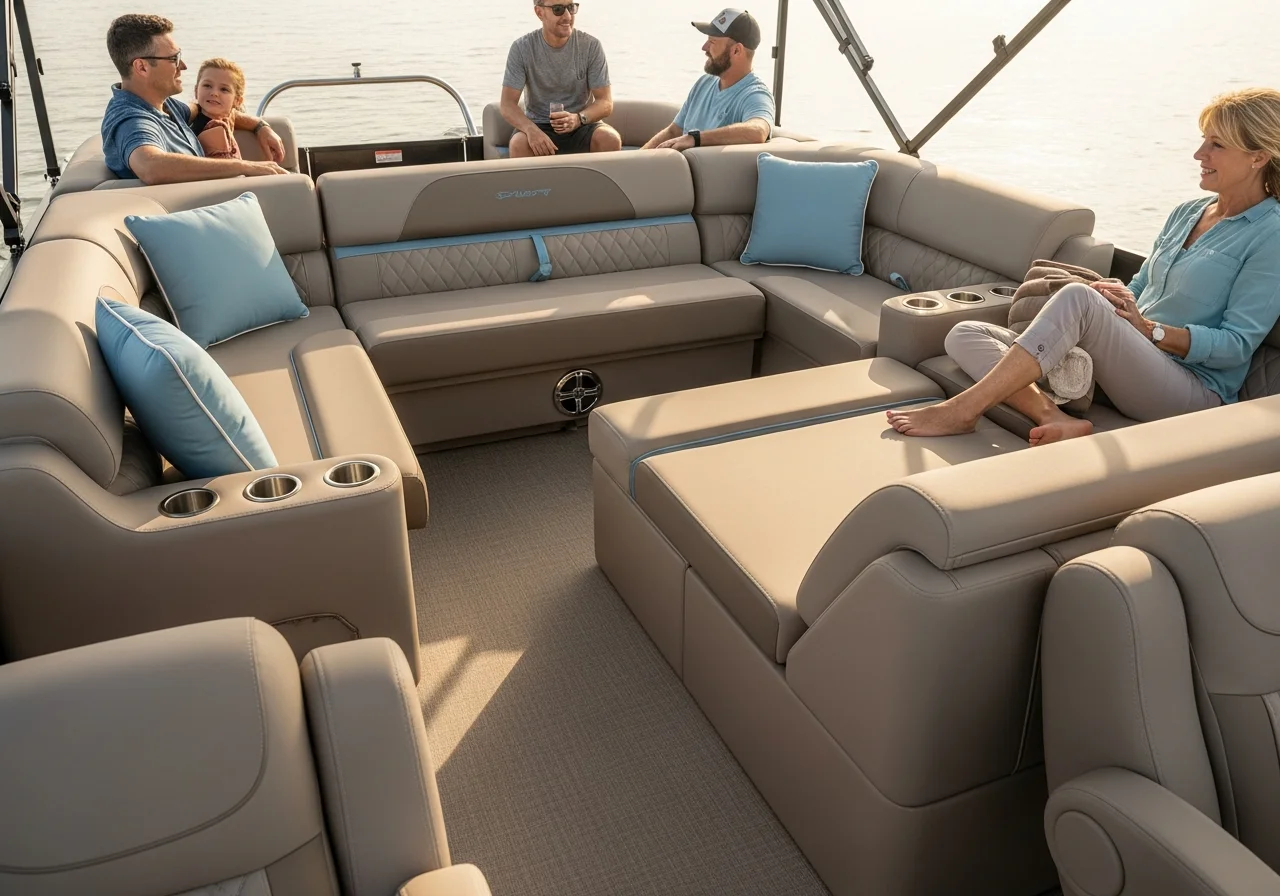
Pontoon boats call for upholstery that prioritizes relaxation and social comfort. The laid-back style emphasizes wide, plush seating with integrated convenience features like built-in cup holders, storage compartments, and convertible configurations. Material choices favor soft-touch vinyl that mimics the feel of leather while maintaining marine-grade durability.
Color palettes for pontoon upholstery typically lean toward earth tones, soft blues, and neutral shades that create a welcoming atmosphere for extended lounging. The design often incorporates L-shaped seating arrangements and generous sun pads that maximize usable space. Practical details like stain-resistant treatments and UV protection ensure that the comfortable aesthetic doesn’t sacrifice longevity, even under regular family use.
Nautical Stripe Patterns
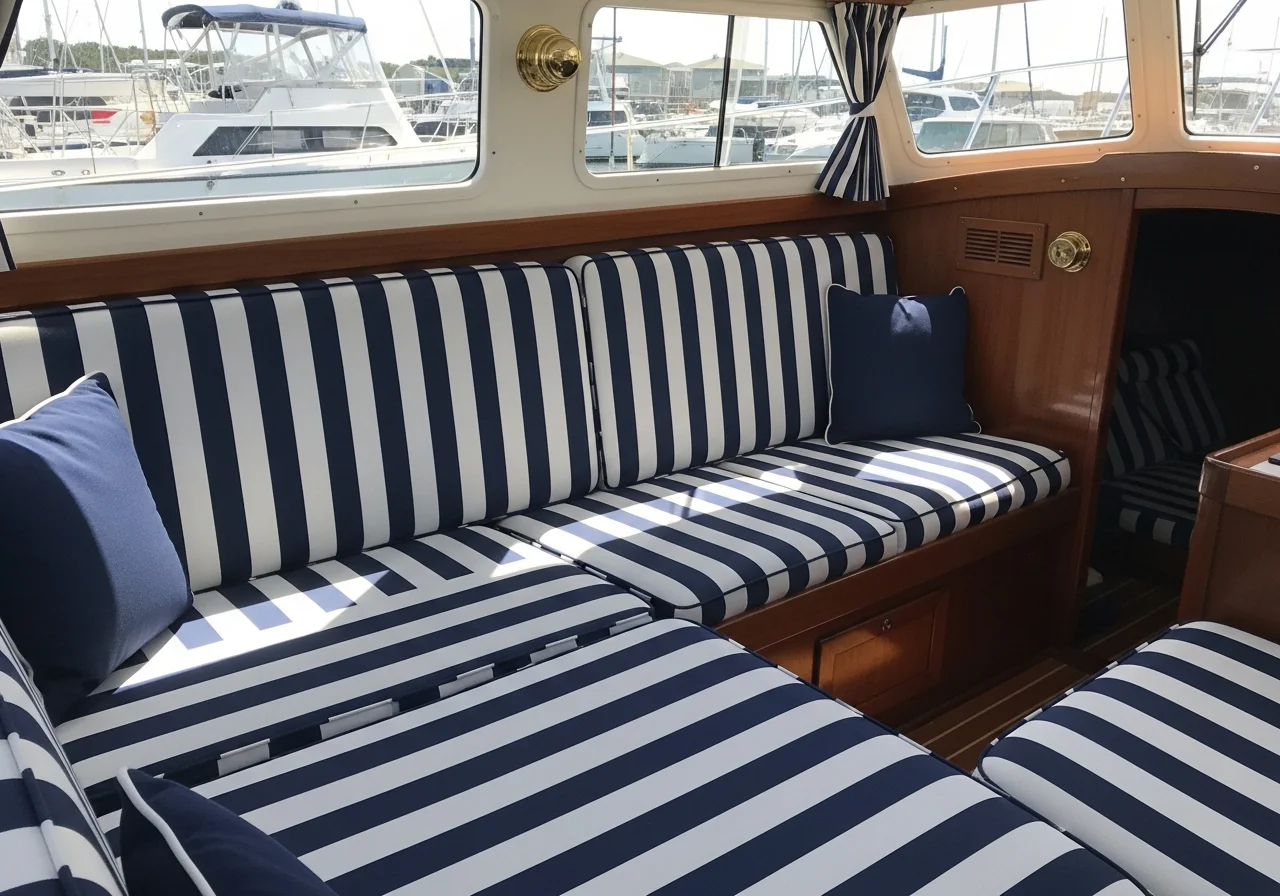
Few design elements say “boating” quite like classic nautical stripes. This timeless pattern works across various boat types and can be adapted to suit different aesthetic preferences. Traditional navy and white combinations evoke maritime heritage, while contemporary interpretations might use gray and yellow, red and cream, or other complementary color pairs.
Stripe orientation matters significantly in the overall effect. Horizontal stripes can make seating areas appear wider, while vertical stripes add visual height. Consider the scale of stripes relative to your boat size; smaller vessels benefit from thinner stripes, while larger yachts can accommodate bold, wide bands. Stripes pair beautifully with solid-color accents and can be used strategically on certain seating elements while leaving others solid for balance.
Textured Vinyl Applications
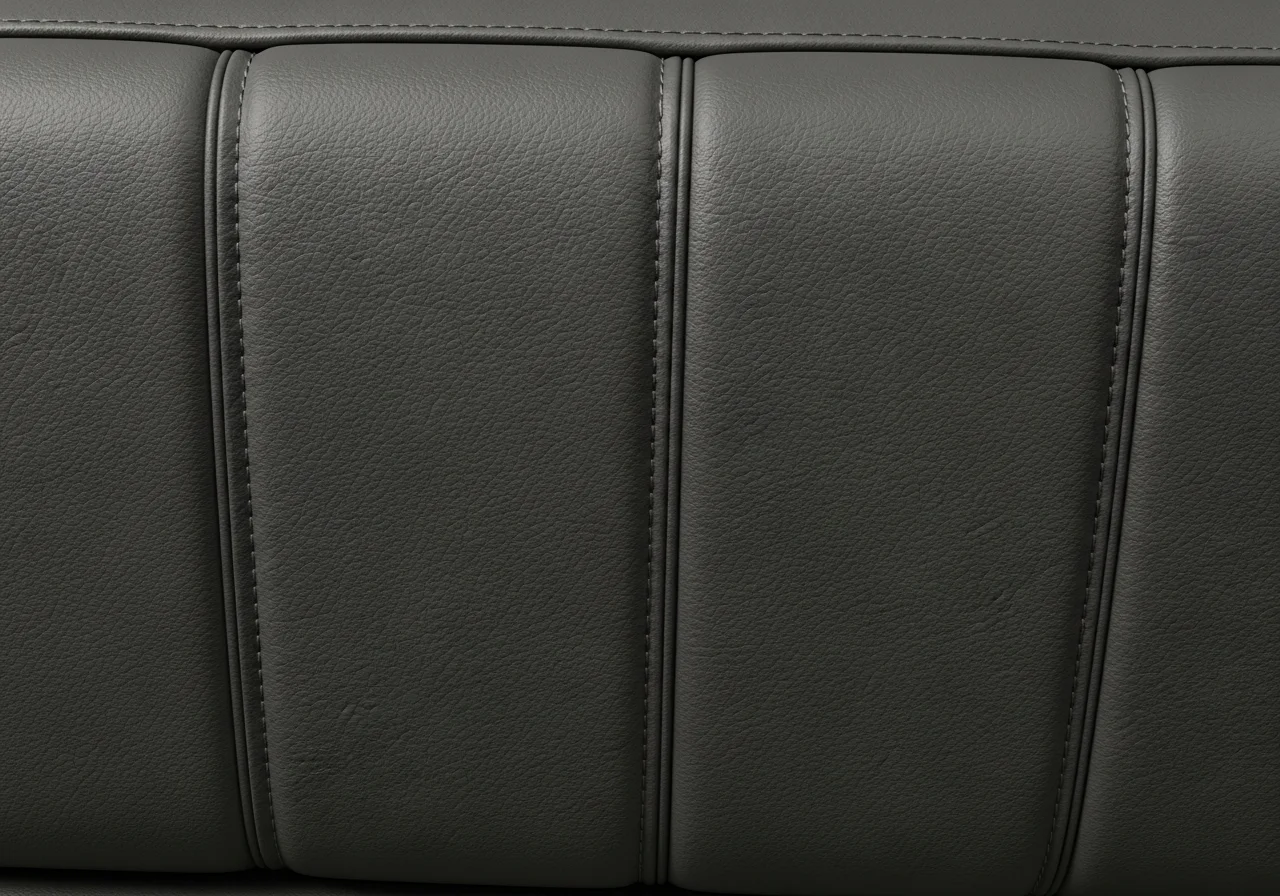
Advances in marine vinyl technology have introduced an impressive range of textured options that add tactile and visual interest. Textured vinyls can mimic natural materials like leather grain, linen weave, or even subtle reptile patterns, all while maintaining superior water resistance and durability compared to their natural counterparts.
Texture serves both aesthetic and functional purposes. From a design perspective, it adds depth and sophistication to solid colors that might otherwise appear flat. Functionally, textured surfaces provide better grip, reducing the tendency to slide on seating during active maneuvering. Mixing textures within a single interior creates visual layers; smooth vinyl on vertical seat backs paired with textured material on horizontal seating surfaces exemplifies this effective approach.
Custom Embroidery Details
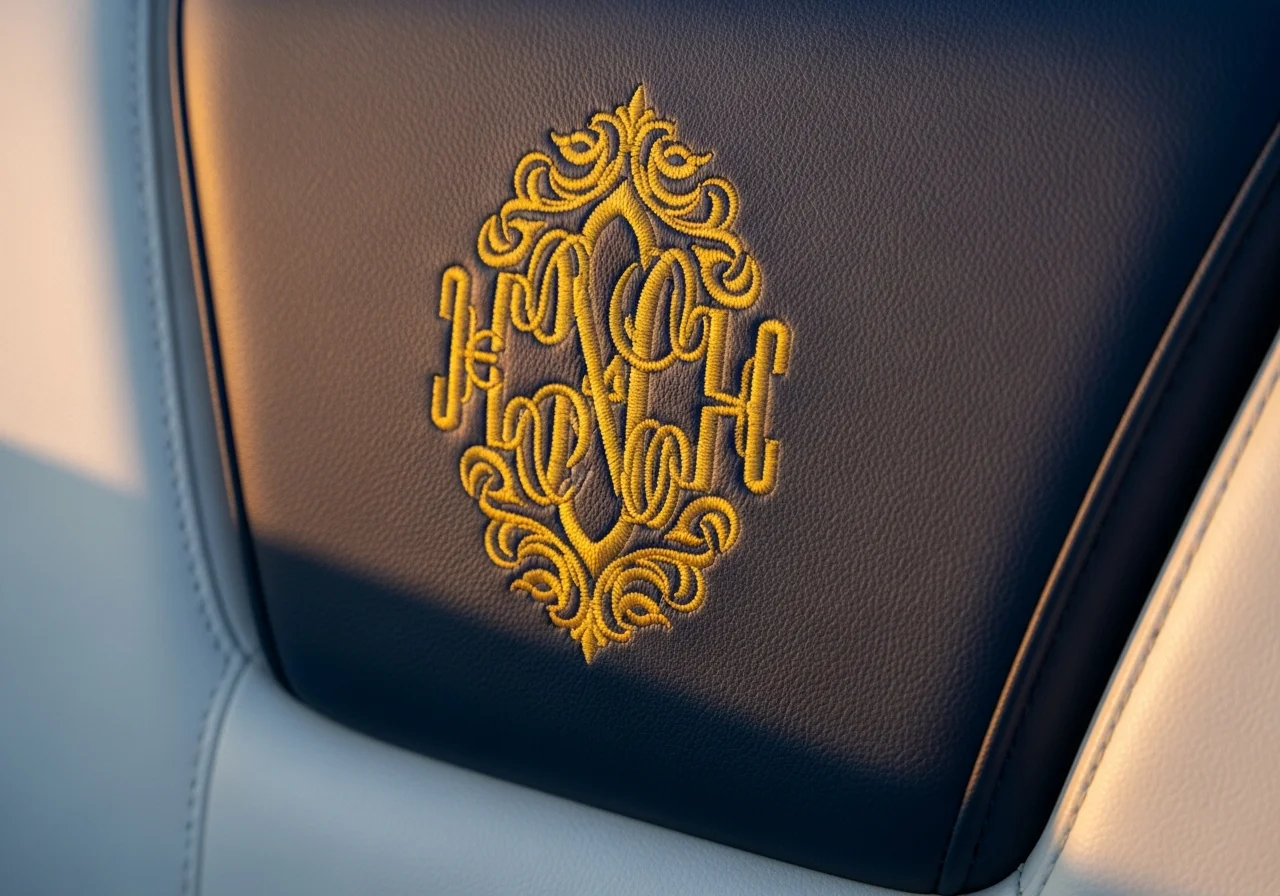
Personalization reaches new heights with custom embroidery incorporated into upholstery design. Boat names, personal monograms, family crests, or decorative maritime motifs can be professionally stitched directly into seat backs, helm areas, or sun pads. This level of customization transforms standard upholstery into truly bespoke craftsmanship.
Modern embroidery technology allows for intricate designs in multiple colors while maintaining the durability required for marine applications. The key to successful embroidered upholstery lies in thoughtful placement and scale. Large, bold designs work best on substantial surfaces like sun pads, while smaller, refined details suit helm seats and captain’s chairs. Embroidery also provides an excellent opportunity to incorporate brand colors if you use your boat for business purposes or charter operations.
Two-Tone Color Blocking
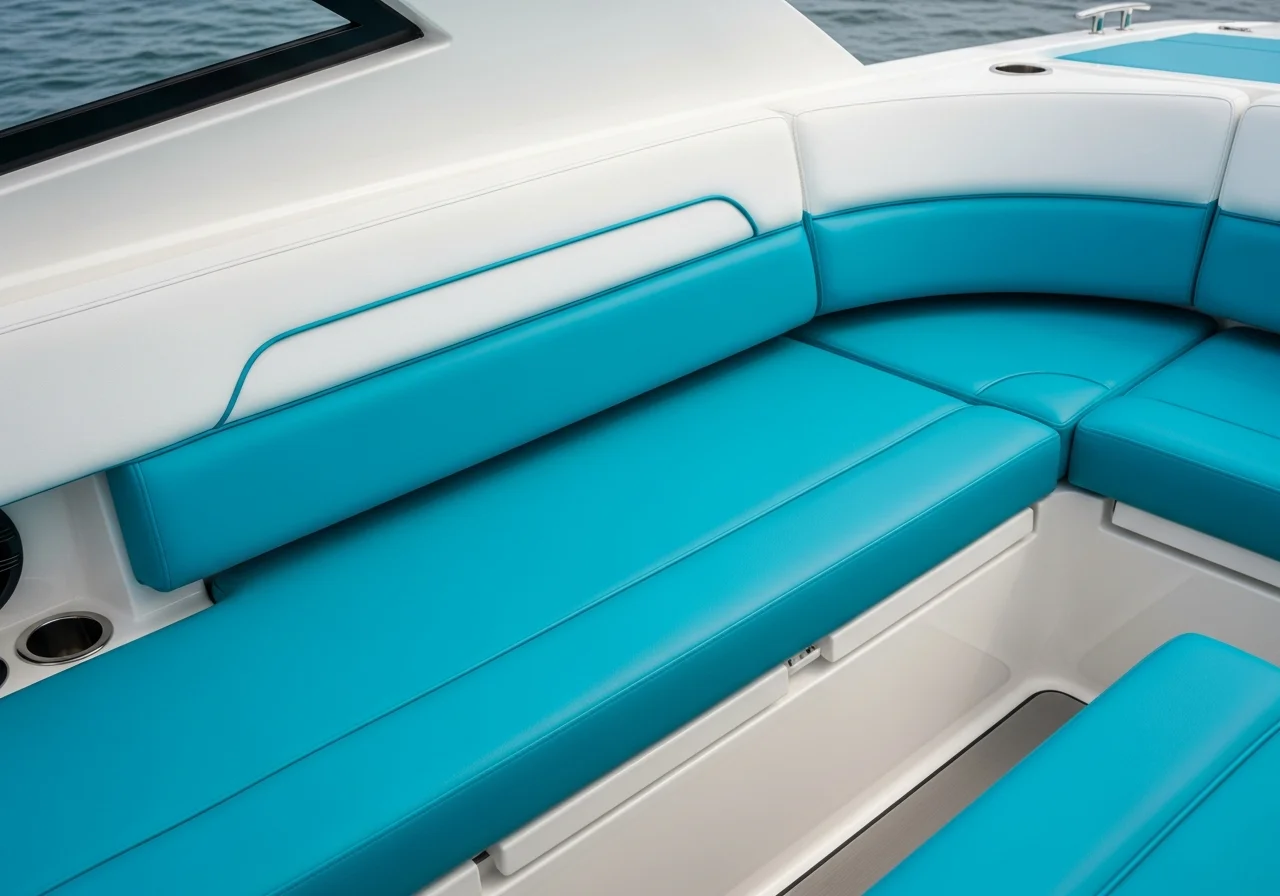
Color blocking creates dramatic visual impact through strategic placement of contrasting solid colors. This technique divides seating surfaces into distinct color zones, often separating seat bottoms from backs, or creating horizontal or vertical divisions within single cushions. Successful color blocking requires careful attention to proportion and color relationships.
The most effective two-tone designs use complementary colors that share similar saturation levels. Pairing a vibrant teal with crisp white, or combining charcoal gray with burnt orange, creates energy without chaos. Color blocking also offers practical advantages; using darker colors on high-contact areas like seat bottoms helps disguise wear, while lighter colors on seat backs keep the overall appearance bright and open. This strategic color placement enhances both form and function.
Eco-Friendly Sustainable Fabrics
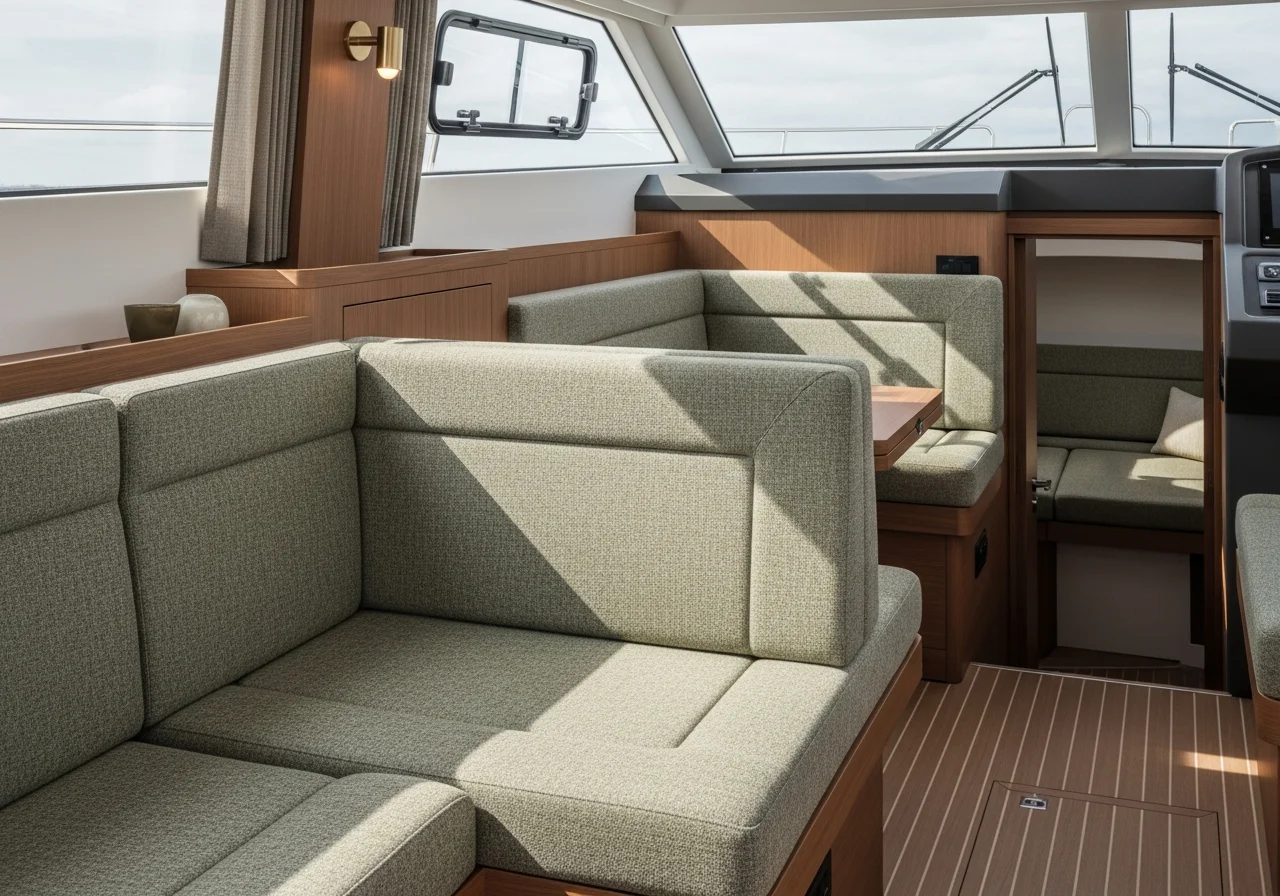
Environmental consciousness has reached the marine upholstery industry, with manufacturers now offering fabrics made from recycled plastics, organic cotton, and plant-based fibers. These sustainable options deliver impressive performance characteristics including UV resistance, water repellency, and mold resistance while reducing environmental impact.
Choosing eco-friendly upholstery doesn’t mean sacrificing style or durability. Modern recycled polyester fabrics rival traditional marine vinyl in longevity and are available in extensive color ranges and patterns. Some manufacturers even offer biodegradable options for boat owners committed to minimizing their ecological footprint. As sustainability becomes increasingly important to the boating community, eco-friendly upholstery represents both a responsible choice and a forward-thinking design decision.
Mixed Material Combinations
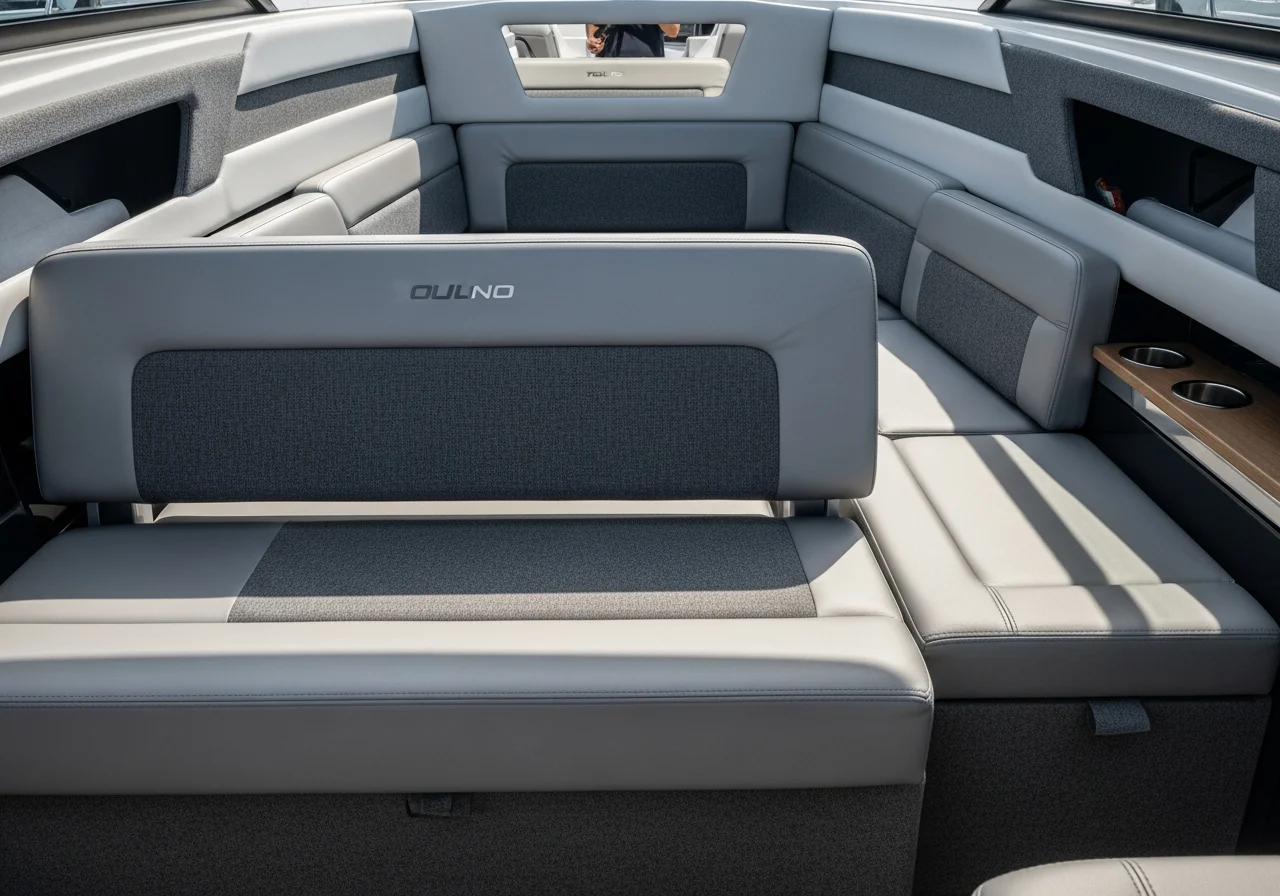
Breaking away from single-material interiors, the mixed material approach combines different fabric types within one boat to maximize both aesthetic appeal and functional performance. This might involve pairing durable, easy-clean vinyl on high-traffic helm seats with softer, breathable fabric on lounge areas where comfort takes priority.
The key to successful material mixing lies in maintaining visual cohesion through coordinated colors and complementary textures. You might use smooth vinyl on seat bottoms for water resistance while incorporating soft fabric on seat backs for comfort. Alternatively, combine leather-look vinyl on prominent seating with mesh fabric inserts for breathability in hot climates. This thoughtful approach to material selection ensures each surface performs optimally for its specific use while creating an interesting, layered interior design.
Pleated Accent Panels
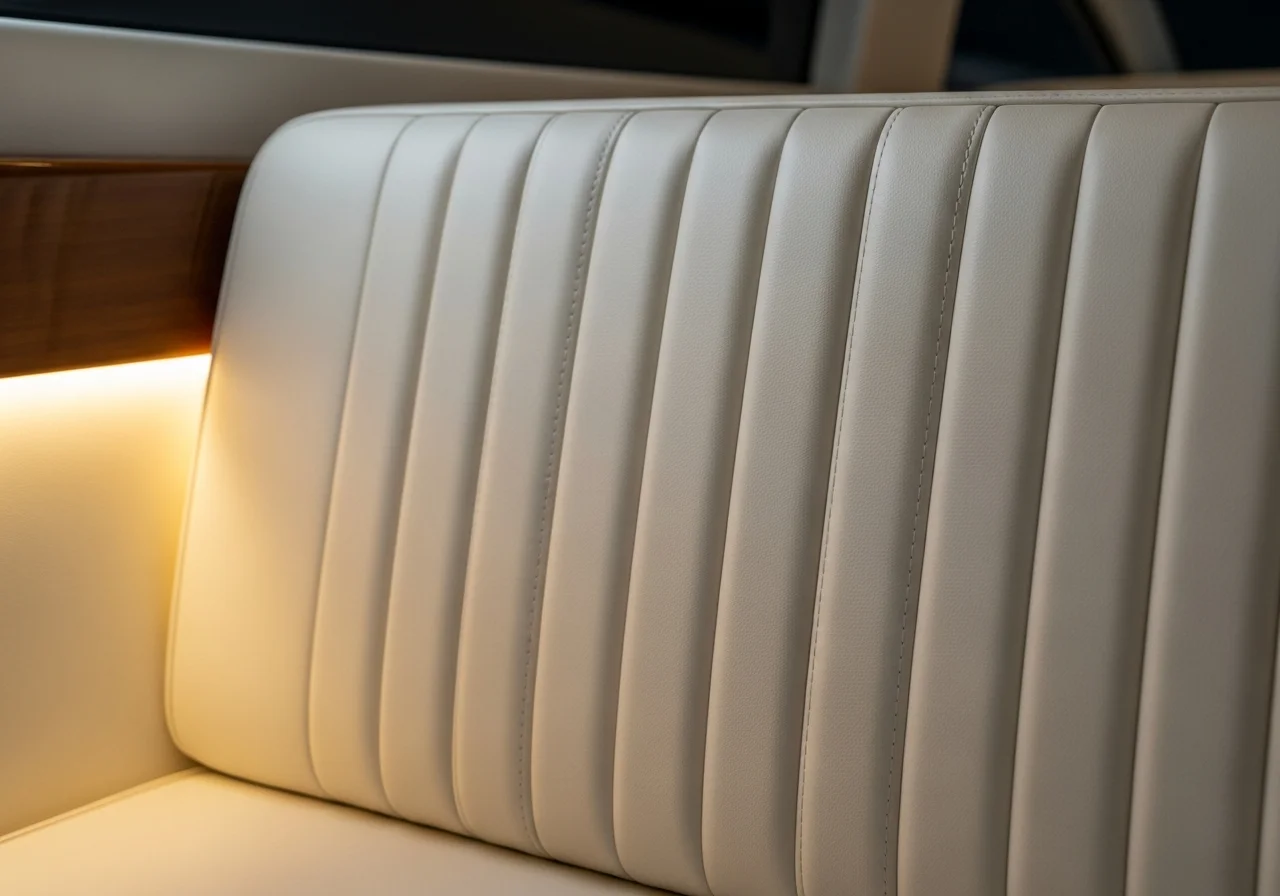
Pleated upholstery brings dimensional elegance to boat interiors through vertically or horizontally arranged fabric folds. This classic technique adds visual texture and can make seating appear more substantial. Pleats work particularly well as accent panels on seat backs or along the sides of cushions where they won’t interfere with seating comfort.
Traditional pleating creates a formal, sophisticated appearance suitable for classic boat styles, while contemporary interpretations might use wider pleats in unexpected orientations for a modern twist. The linear quality of pleated designs complements the inherent lines of boat architecture. Consider combining pleated panels with solid sections to create visual interest without overwhelming the space. Proper execution requires skilled craftsmanship to ensure pleats remain crisp and even despite marine conditions.
Monochromatic Schemes with Tonal Variation
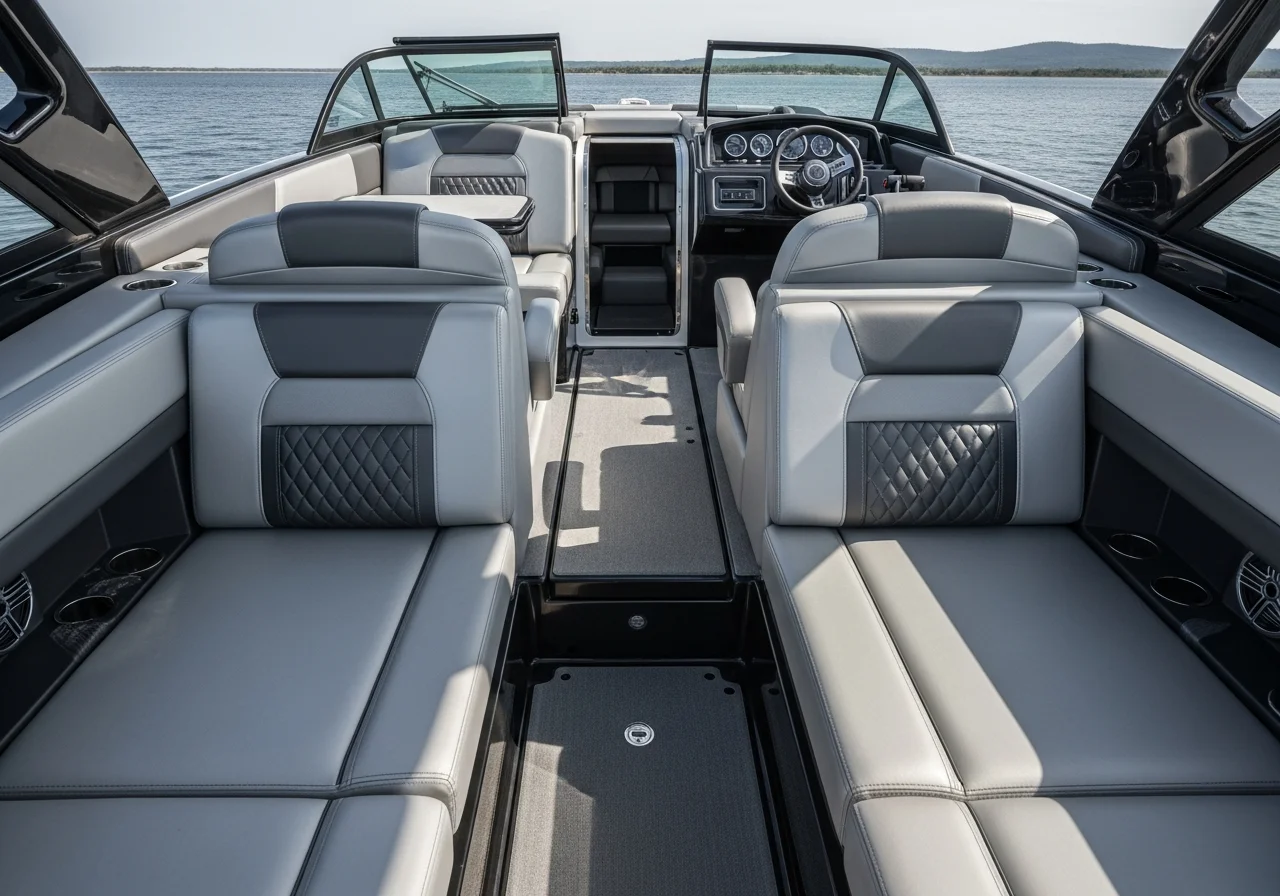
Monochromatic color schemes use variations of a single color to create sophisticated, harmonious interiors. This approach might employ light gray, medium gray, and charcoal throughout the boat, or various shades of blue from pale sky to deep navy. The subtle variations provide visual interest without the contrast of multi-color designs.
Monochromatic schemes work exceptionally well on boats where you want the upholstery to recede slightly, allowing architectural features, woodwork, or exterior color to take center stage. This approach also creates a sense of spaciousness on smaller vessels by eliminating visual fragmentation. Success with monochromatic upholstery depends on incorporating varied textures and finishes to prevent monotony. Mixing smooth and textured vinyls, incorporating subtle patterns, or using different stitching techniques all add necessary dimension to single-color schemes.
High-Tech Smart Textiles
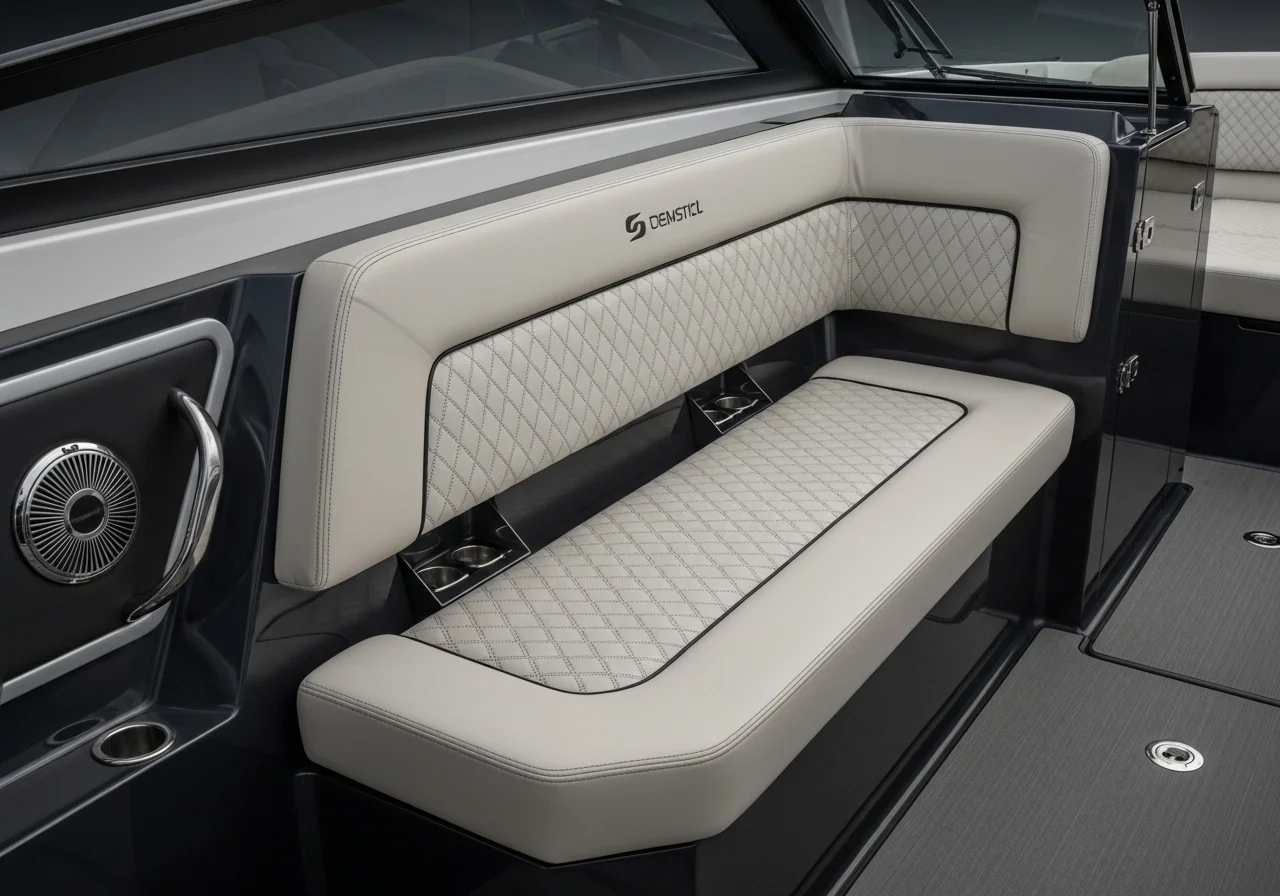
The cutting edge of marine upholstery includes smart textiles engineered with advanced properties beyond basic water resistance. Temperature-regulating fabrics help moderate heat absorption during sunny days, antimicrobial treatments inhibit bacteria and odor, and some materials now incorporate stain-fighting technology at the molecular level.
These high-performance fabrics represent significant investments but deliver exceptional value through extended lifespan and reduced maintenance. Some smart textiles even feature self-cleaning properties that cause liquids to bead and roll off without penetration. While often more expensive than traditional options, smart textiles appeal to boat owners who prioritize cutting-edge technology and minimal upkeep. As these materials become more widely available, they’re increasingly appearing in mid-range upholstery applications, not just luxury installations.
Custom Color Matching
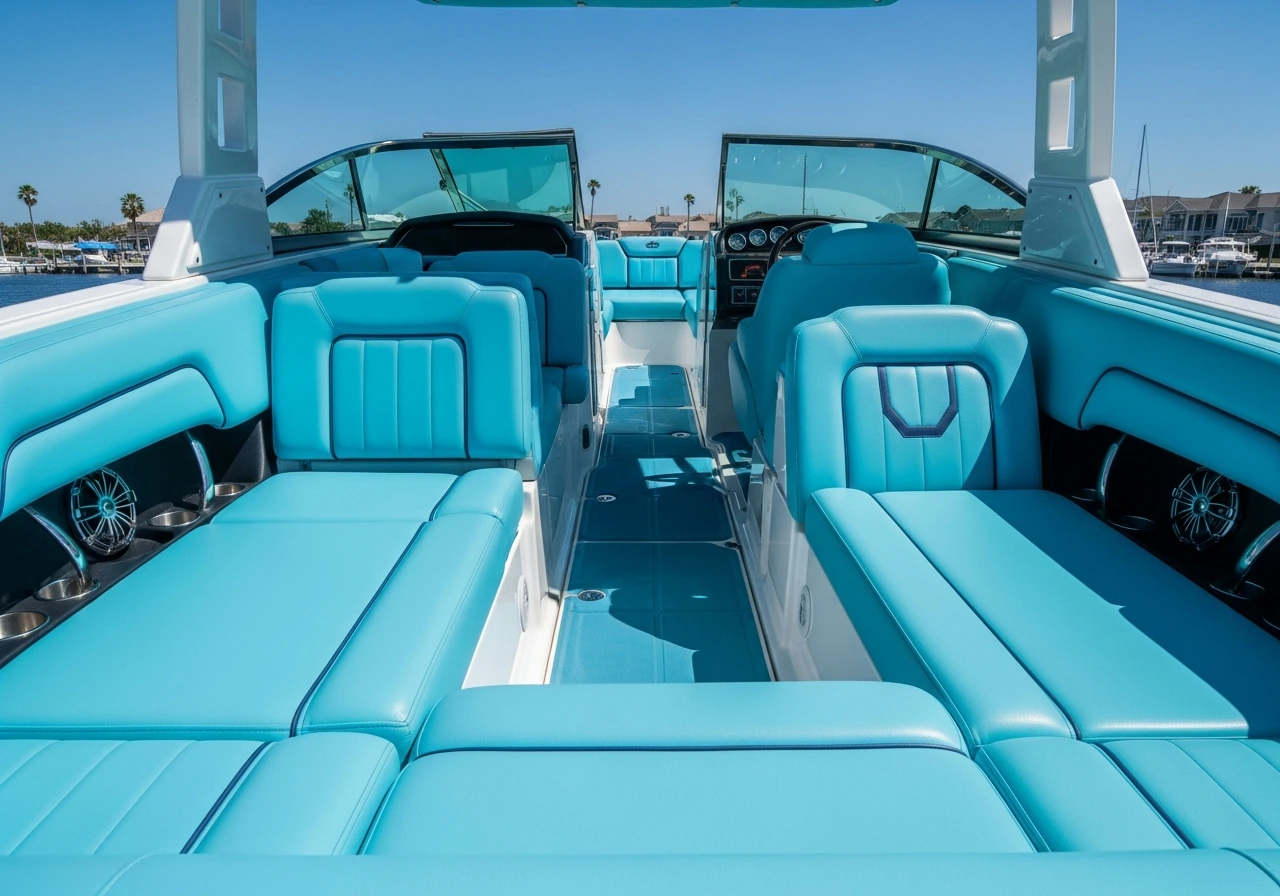
For boat owners seeking perfect coordination between hull color and interior upholstery, custom color matching provides the ultimate solution. Professional upholsterers can match virtually any color, whether you want upholstery that precisely echoes your hull shade or complements custom paint work with perfect harmony.
Custom color matching shines when working with unusual or signature colors that aren’t available in standard fabric lines. This approach ensures your interior feels intentionally designed rather than assembled from available options. The process typically involves providing fabric or paint samples to manufacturers who can then dye materials to match. While custom colors may involve longer lead times and higher costs, the results create a cohesive, professional appearance that clearly signals attention to detail. For more information visit Homeliaa.
Convertible Multi-Function Designs
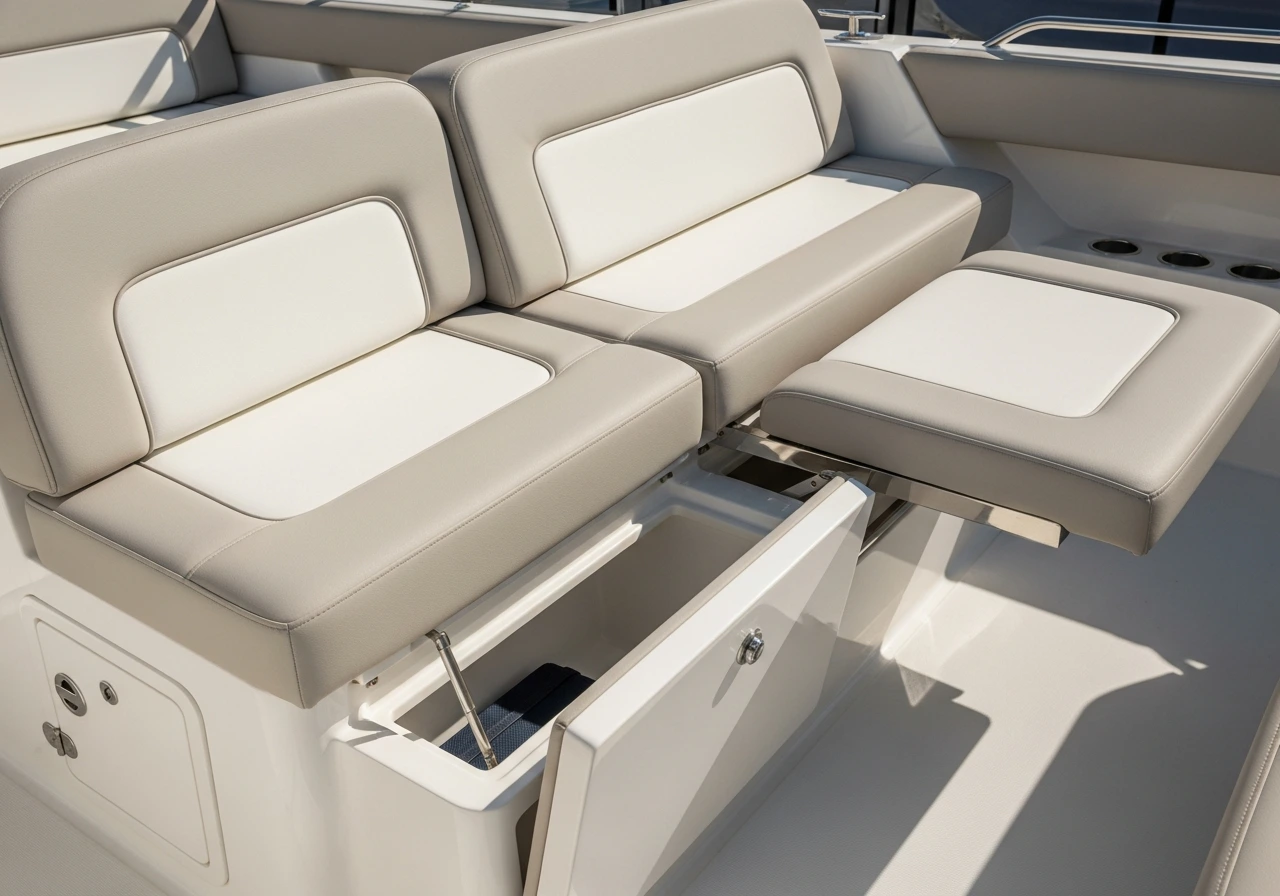
Modern boat upholstery increasingly incorporates convertible features that maximize limited space through intelligent design. Seats that fold down to create sun pads, bench backs that flip to provide forward or rear-facing configurations, and cushions with hidden storage compartments all represent the multi-function approach.
This practical design philosophy proves especially valuable on smaller boats where every square foot matters. Convertible upholstery requires robust hardware and precise engineering to ensure smooth operation and long-term reliability. The aesthetic challenge lies in concealing functional elements within clean design lines so the upholstery looks intentional rather than compromised. Well-executed convertible designs enhance boat versatility without sacrificing comfort or visual appeal.
Conclusion
Selecting boat upholstery involves balancing aesthetic preferences with practical marine requirements, but as these sixteen ideas demonstrate, you don’t have to sacrifice style for durability. Today’s marine fabrics and professional upholstery techniques deliver both stunning visual results and the resilience needed to withstand challenging marine environments.
Whether you’re drawn to classic vintage charm, contemporary minimalism, bold performance styling, or eco-conscious materials, there’s an upholstery approach that aligns with your vision and usage patterns. The most successful boat interiors reflect their owners’ personalities while serving the practical demands of life on the water.
As you consider your upholstery options, think beyond immediate aesthetics to long-term satisfaction. Quality materials and professional installation represent investments that pay dividends through years of enjoyment, easier maintenance, and better resale value. Your boat’s upholstery creates the environment where memories are made, so choose designs and materials that will enhance every moment you spend aboard. With thoughtful planning and quality execution, your boat’s interior can become a source of pride and comfort for seasons to come.
Frequently Asked Questions
What is the most durable material for boat upholstery?
Marine-grade vinyl remains the gold standard for boat upholstery durability. It offers excellent resistance to water, UV rays, mold, and mildew while being easy to clean and maintain. High-quality marine vinyl with UV inhibitors and antimicrobial treatments can last many years even under harsh conditions. Some newer options like solution-dyed acrylic fabrics also provide exceptional durability with added breathability.
How often should boat upholstery be replaced?
With proper care and maintenance, quality boat upholstery typically lasts between five to ten years, though this varies based on usage frequency, sun exposure, and maintenance practices. Signs that replacement is needed include significant fading, cracking, persistent mold, torn seams, or foam deterioration. Regular cleaning, UV protectant application, and using boat covers when not in use can significantly extend upholstery lifespan.
Can I mix different upholstery styles on one boat?
Yes, mixing styles can create visual interest when done thoughtfully. The key is maintaining cohesion through coordinated colors or complementary design elements. For example, you might use diamond quilting on the helm seats while choosing simpler designs for bench seating, or combine textured vinyl in high-use areas with smooth vinyl elsewhere. Ensure transitions between styles feel intentional rather than random.
What colors work best for boat upholstery?
Neutral colors like white, beige, gray, and navy remain popular because they resist showing dirt, coordinate easily with hull colors, and provide timeless appeal. However, the best color depends on your boat type and usage. Lighter colors reflect heat and create an open feel but may show stains more readily. Darker colors hide dirt better but absorb more heat. Many owners choose light base colors with darker or brighter accent colors for optimal balance.
Is custom boat upholstery worth the investment?
Custom upholstery typically costs more than off-the-shelf options but delivers superior fit, personalized design, and often better quality materials and construction. For boats you plan to keep long-term, custom upholstery represents a worthwhile investment that enhances comfort, aesthetics, and resale value. It’s particularly valuable when standard options don’t fit properly or when you want specific features like integrated storage, unique patterns, or precise color matching.