16+ Beautiful Thali Decoration Ideas for Every Occasion
Introduction
Thali Decoration Ideas In Indian culture, a decorated thali is far more than a simple plate. It is a symbol of devotion, love, celebration, and auspicious intention. Whether placed before a deity during a solemn puja, presented to a sibling on Raksha Bandhan, or carried during a wedding ritual, the thali holds a position of deep cultural and spiritual significance. The care and creativity poured into its decoration reflect the sincerity of the person preparing it.
Thali decoration is an art form with roots stretching across every region of India. From the intricate mirror work of Rajasthan to the floral simplicity of South Indian traditions, each style carries its own story, its own symbolism, and its own sensory beauty. Today, this art continues to evolve, blending traditional materials like gota patti, marigold flowers, and brass diyas with contemporary design sensibilities, giving every occasion a visual identity it deserves.
Whether you are a first time decorator looking for straightforward guidance or someone seeking fresh inspiration beyond the usual arrangements, this guide covers more than 16 beautiful thali decoration ideas organized by theme, technique, and occasion. Every idea here can be executed at home with accessible materials and a genuine spirit of celebration.
1.Flower Decoration Thali for a Classic and Timeless Look
Flower decoration is the most universally beloved approach to thali styling, and for good reason. Fresh flowers carry natural fragrance, vibrant color, and an organic beauty that no synthetic material can fully replicate. Marigolds are the most traditional choice and are considered deeply auspicious across Hindu rituals. Their warm orange and yellow tones pair beautifully with the silver or brass surface of a standard pooja thali.
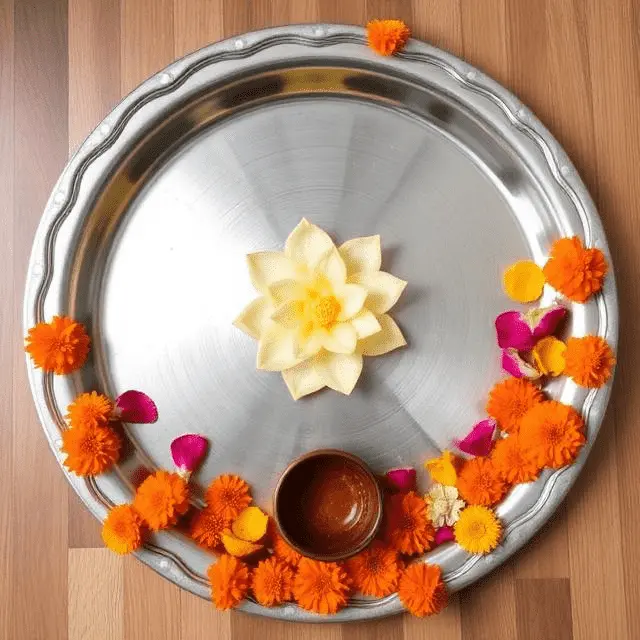
To create a flower decorated thali, begin by laying a clean base on the plate. Arrange marigold petals in a circular pattern along the outer rim, leaving the center clear for the diya and essential puja items. Rose petals, jasmine buds, and hibiscus blossoms can be added in alternating clusters to introduce color contrast and additional fragrance.
For occasions like Diwali or Navratri, consider mixing dried flower petals with fresh ones. Dried petals hold their shape longer and allow you to prepare the thali well in advance without worrying about wilting. A fresh lotus flower placed at the center, particularly during Lakshmi puja, carries powerful symbolic meaning and elevates the entire arrangement instantly.
2. Gota Patti Thali Decoration for a Royal Traditional Touch
Gota patti is a traditional gold or silver lace originating from Rajasthan and widely used across Indian festive decoration. Applying gota patti to the rim of a thali is one of the quickest and most effective ways to give it an opulent, regal quality. The metallic shimmer of the lace catches light beautifully, particularly in candlelit settings during evening pujas.
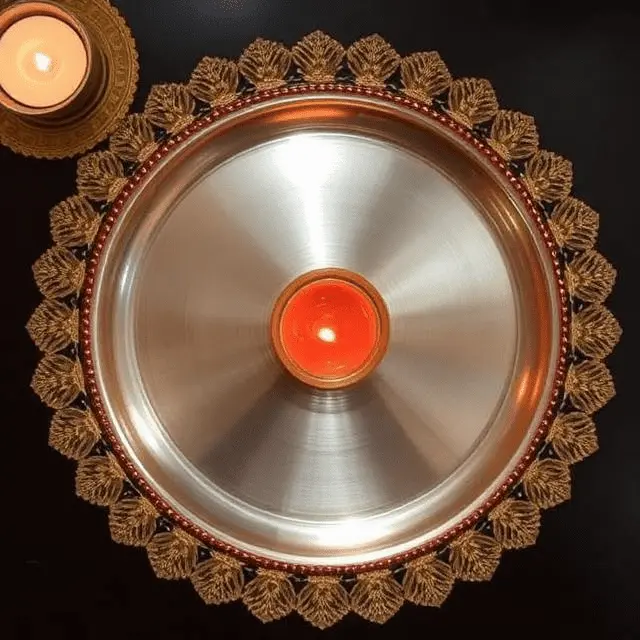
To apply gota patti, clean the thali surface thoroughly and use a strong fabric adhesive to attach the lace in circular rows along the border. You can layer multiple rows in alternating gold and silver tones for a richer, more textured look. Between the rows of gota patti, add thin mauli thread in red or orange to introduce color contrast.
This decoration style is particularly appropriate for weddings, Karwa Chauth, and Teej celebrations, where visual grandeur and cultural authenticity are both expected and appreciated. Gota patti thalis can be prepared days in advance and stored carefully, making them a practical as well as beautiful choice for busy festive seasons.
3.Mirror Work Thali Decoration for a Festive Sparkle
Mirror work, known in Hindi as shisha embroidery, has a long history in Indian crafts and brings an extraordinary celebratory quality to thali decoration. Small circular or square mirror pieces glued onto a velvet cloth base covering the thali create a surface that reflects candlelight in every direction, producing a genuinely magical visual effect.
To create a mirror work thali, begin by cutting a piece of velvet cloth in a deep color such as maroon, royal blue, or forest green to fit the surface of the thali. Glue the cloth firmly to the plate and allow it to dry completely. Then, using a strong craft adhesive, arrange the mirror pieces in geometric patterns, concentric circles, or freeform designs across the surface. Finish the edges with pearl strings or colored beads for a refined border.
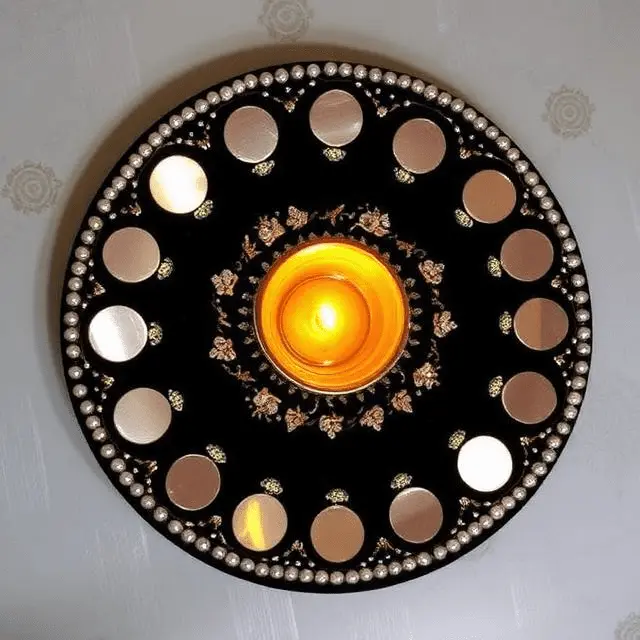
This decoration is ideal for weddings, housewarming ceremonies, and engagement rituals where the thali is also a decorative object that guests will admire and photograph. The combination of velvet, mirror, and bead creates an effect that looks expensive and intricate but is genuinely achievable with patience and basic craft supplies.
4.Mandala Art Thali Decoration for a Meditative Beauty
Mandala art, with its concentric circles, repeated geometric patterns, and radiating symmetry, translates beautifully onto the circular surface of a thali. Painting a mandala design directly onto a clean steel or brass thali creates a decoration that is both spiritually meaningful and visually sophisticated. The circular form of a thali and the circular nature of mandala composition complement each other naturally.
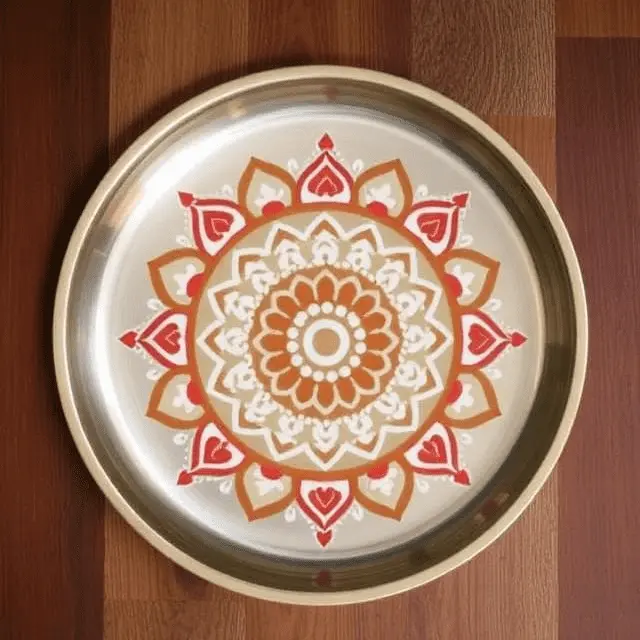
Use acrylic paints in white, gold, and deep red to paint the mandala, starting from the center and working outward in rings. Each ring can carry a different motif, dots, petals, arrowheads, or wave patterns. Once the paint has dried and sealed, the thali becomes a reusable decorative piece that can be brought out for every festival and puja throughout the year.
Mandala decorated thalis are especially suitable for occasions like Navratri, where spiritual depth and visual beauty are both central to the celebration. They also make thoughtful and lasting gifts for newly married couples or for someone setting up a new home and pooja space.
5. Banana Leaf Base Thali for an Eco Friendly and Auspicious Look
In South Indian and many traditional Hindu households, banana leaves hold deep auspicious significance. Lining the thali with a freshly cut banana leaf before arranging puja items on top creates a pure, natural, and visually striking base that connects the ritual to its ancient roots. The deep green of the leaf against the silver of the thali and the warm golds of brass diyas creates a color combination that is both simple and deeply beautiful.
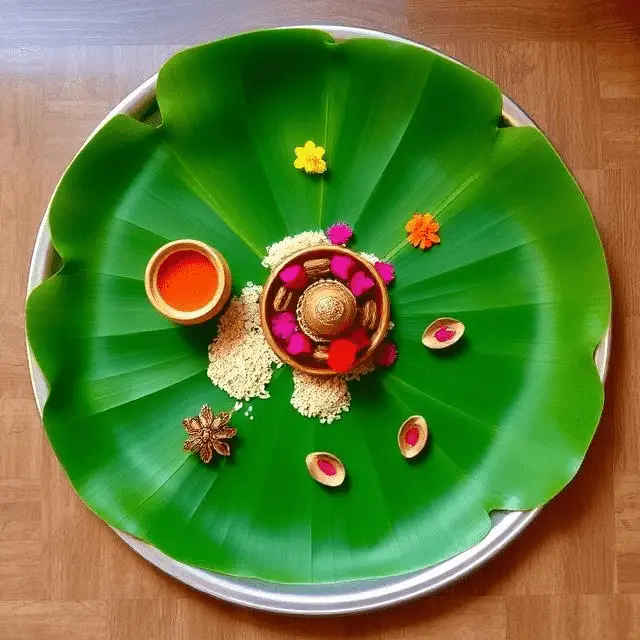
Place the banana leaf flat on the thali surface, trimming it to fit the shape of the plate. On top of the leaf, arrange the essentials: a painted wooden kalash, a brass diya, small bowls of kumkum and haldi, rice grains, and fresh flowers. Cowrie shells, traditionally associated with prosperity and abundance, can be scattered across the leaf for additional symbolic detail.
This decoration approach requires almost no craft materials and can be assembled quickly, making it one of the most accessible thali decoration ideas for everyday puja rituals as well as major festivals like Navratri and Ganesh Chaturthi.
6. Pearl and Bead Decoration Thali for an Elegant Festive Style
Strands of white pearls, colored glass beads, and crystal embellishments bring an understated elegance to thali decoration that works particularly well for weddings, naming ceremonies, and engagement functions. Unlike floral decoration, which must be done close to the time of the event, pearl and bead work can be glued into place on the thali well in advance and lasts across multiple uses.
Begin with a clean plate covered in a white or ivory velvet base. Use craft adhesive to arrange pearl strings along the outer rim and then work inward in loops, spirals, or geometric lines. Between the pearl rows, add individual crystal beads or small colored stones in the colors of the occasion. Gold beads for weddings, green for new beginnings, red for prosperity.
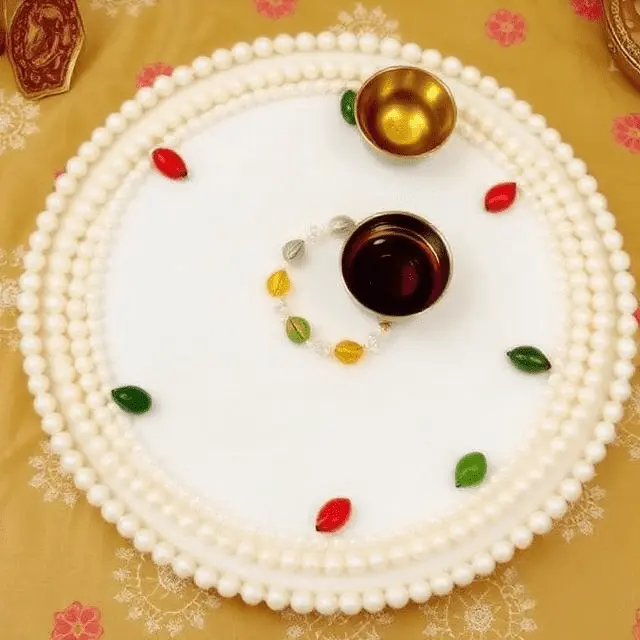
Pearl decorated thalis have a refined, bridal quality that makes them equally suitable as decorative display pieces and as functional ritual plates. Brides in many families receive a specially prepared pearl thali as part of their wedding trousseau, which is then passed down through generations as a cherished family object.
7. Swastik and Om Symbol Thali Decoration for Spiritual Significance
Among all thali decoration ideas, those incorporating sacred symbols carry the deepest spiritual intentionality. The Swastik, representing good fortune and prosperity, and the Om symbol, representing the sacred sound and energy of the universe, are the two most universally recognized auspicious motifs in Hindu tradition. Adding them to the thali surface transforms it from a decorative object into a spiritually charged offering.
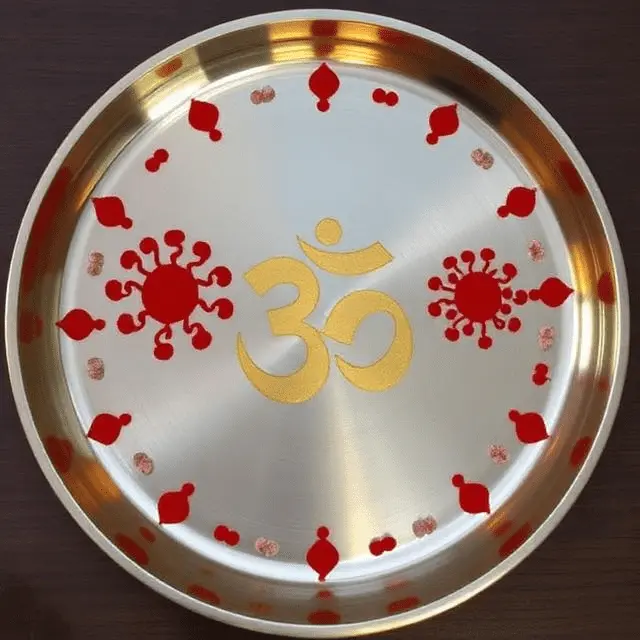
These symbols can be painted directly onto the thali in vermilion mixed with water, applied using red acrylic paint, or created using colored rangoli powder before the puja items are placed. Position the Swastik at the center of the thali and surround it with dots of kumkum and grains of unbroken rice, which are considered essential for auspicious rituals.
For a more permanent decoration, the symbols can be etched or painted in gold onto the thali surface using glass paint markers, which are widely available and easy to use. This creates a reusable thali that carries devotional meaning at every use throughout the year.
8.Rakhi Thali Decoration for Raksha Bandhan
Raksha Bandhan calls for a thali that reflects the warmth, joy, and deep affection of the bond between siblings. The essential items for a Rakhi thali include the rakhi thread itself, roli, akshat or unbroken rice, a diya, sweets such as laddoo or kaju barfi, and sandalwood paste. The decoration of the thali frames these elements in a way that communicates love and care.
For a traditional Rakhi thali, use a steel plate lined with bandhani fabric in red, maroon, or green. Bandhani is a tie dyed textile from Rajasthan and Gujarat that brings a vibrant, culturally rooted energy to the arrangement. Attach the fabric to the plate with adhesive, then place the puja essentials in organized positions across the surface, with the rakhi displayed prominently at the front.
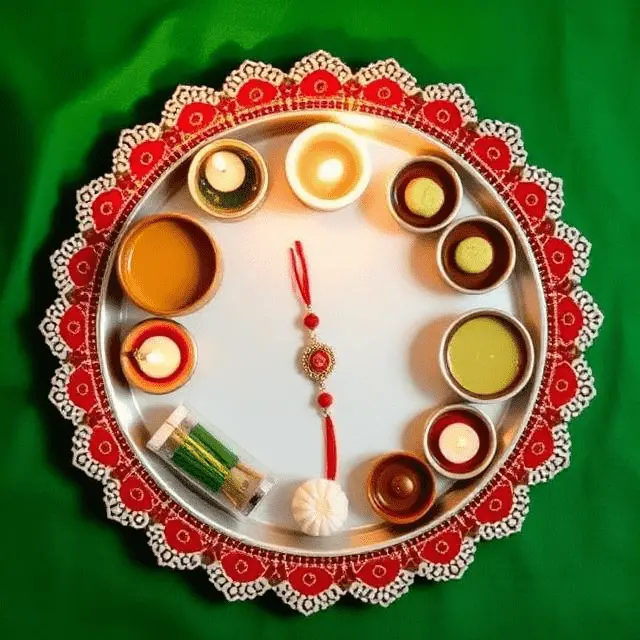
For a more contemporary Rakhi thali, use a minimalist approach with a white ceramic plate, white and gold gota patti trim, and a single marigold garland looped across the arrangement. Place the rakhi on a small cushion of rose petals at the center. This cleaner, more modern interpretation feels fresh while remaining deeply respectful of the tradition it honors.
9. Diwali Thali Decoration for Lakshmi Puja
Diwali is the festival of lights and abundance, and the thali prepared for Lakshmi puja on this night should reflect both qualities with full intention. The Diwali thali is typically the most elaborate of the year, carrying diyas, kumkum, haldi, akshat, sweets, coins, and flowers in a carefully orchestrated arrangement that honors Goddess Lakshmi and invites her blessings into the home.
Begin by applying a thin coat of oil across a plain steel thali and then dusting it with roli and haldi, swirling the powders with a fingertip to create a warm, earthy base. Add rows of gota patti along the rim and arrange small clay diyas painted with mirrors and colored paint around the perimeter. In the center, draw a Swastik using roli and surround it with marigold petals. Place a lotus flower if available, as it is the sacred symbol of Lakshmi herself.
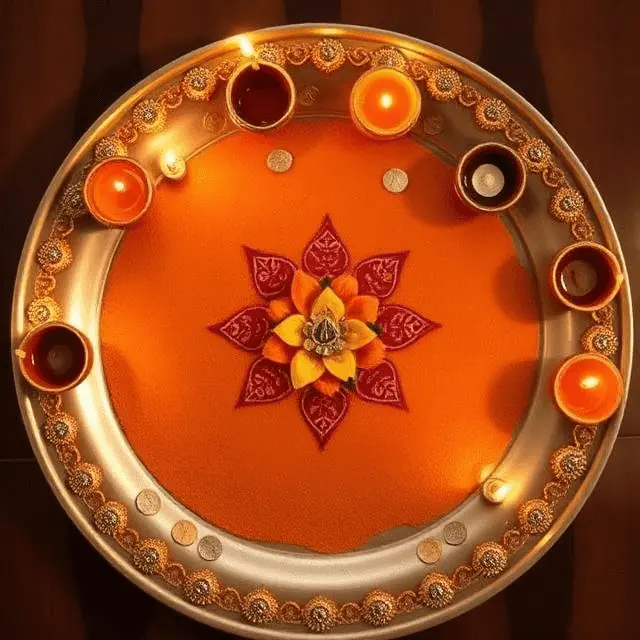
Small silver bowls holding kumkum, rice, and dry fruits such as almonds and pistachios add both color and substance to the Diwali thali. Two decorative bowls placed symmetrically near the center give the arrangement an organized, intentional quality. Light the diyas just before the puja begins and carry the thali with both hands as a mark of deep respect.
10. Karwa Chauth Thali Decoration for the Moonrise Ritual
Karwa Chauth is one of the most visually rich festivals in the North Indian calendar, and the thali prepared for the moonrise ritual is central to the occasion. The Karwa Chauth thali typically includes a karwa pot, a diya, roli, rice, sweets, fruit, and a sieve through which the wife first views the moon before viewing her husband’s face.
Decorate the Karwa Chauth thali with red and gold as the dominant colors, both of which carry the symbolism of love, auspiciousness, and marital happiness. Apply red velvet cloth to the base of the thali and trim the edge with gold gota patti. Arrange small rose petals across the surface and place the karwa pot at the back of the arrangement with a lit diya in front of it.
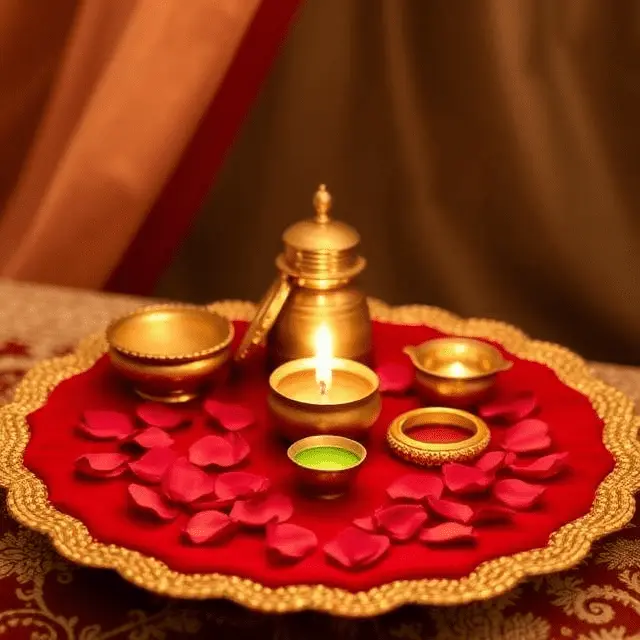
Adding a few bangles to the thali arrangement, in red, green, or gold, brings additional cultural resonance to the Karwa Chauth tradition, particularly in Rajasthani households where bangles hold special significance in the married woman’s ritual dress. https://www.instagram.com/popular/thali-decoration-design-ideas/
11. Wedding Thali Decoration for Sacred Ceremonies
Wedding rituals in Indian culture involve multiple stages of puja, each requiring a thoughtfully prepared thali. The wedding thali must communicate grandeur, spiritual purpose, and the gravity of the occasion while remaining functional enough for the priest and family members to use throughout the ceremony.
For a wedding thali, the base material should be substantial, either pure silver, brass, or high quality steel. Cover the thali with a brocade cloth in deep red or gold and attach it firmly with adhesive. Add decorative stones in emerald green, ruby red, and pearl white in patterns across the surface. Fringe the rim with a heavy gold tassel or thick mauli thread braided with gold thread.
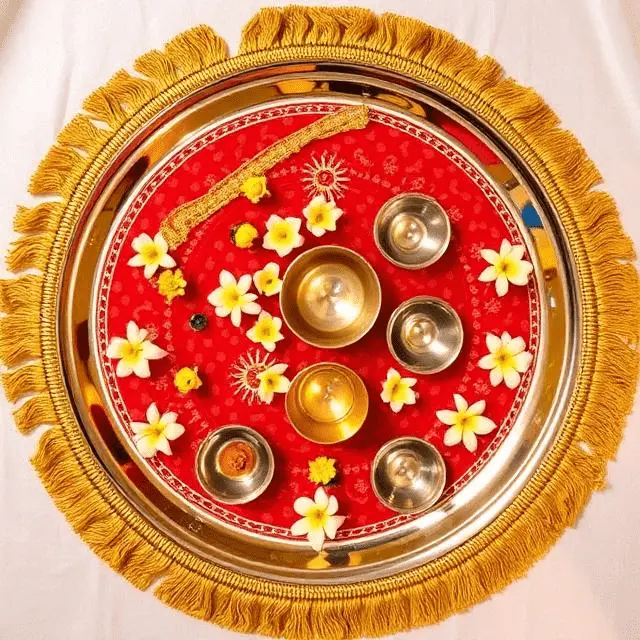
In the center of the wedding thali, place a set of small silver bowls containing kumkum, haldi, chawal, and sandalwood paste. Surround these with fresh jasmine flowers and a polished brass diya. The overall effect should feel ceremonially significant, like an object that belongs at the center of one of life’s most important moments, because that is precisely what it is.
12. Navratri Thali Decoration Inspired by Garba and Color
Navratri is a nine night festival of dance, devotion, and vibrant color, and the thali prepared for this occasion should carry the same joyful energy. A Navratri thali can be decorated with hand painted dancer motifs in the spirit of Garba, using sequins, beads, and mirrors to bring the dancer’s attire to life on the surface of the plate.
Alternatively, use the nine colors of Navratri as the organizing principle for the decoration. Paint each section of the thali a different color using fabric paint and apply glitter or mirror pieces within each section. This approach creates a thali that is simultaneously a piece of folk art and a functional devotional object.
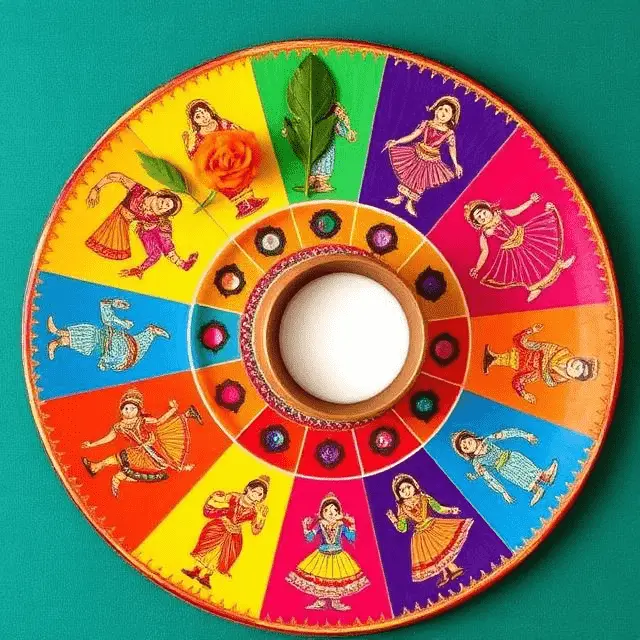
For the essential puja items on a Navratri thali, include marigold flowers, a brass diya, kumkum, haldi, and an image or small idol of Goddess Durga or Shakti. A small clay kalash filled with water and topped with a coconut and mango leaves completes the traditional Navratri arrangement with authentic detail.
13. Mica and Glitter Thali Decoration for a Contemporary Festive Look
For homemakers and decorators who prefer a more contemporary aesthetic, mica sheets and glitter offer a striking alternative to traditional craft materials. A silver mica sheet wrapped around the surface of a thali creates a reflective, shimmering base that glows beautifully under warm lighting. Over this base, apply cut glitter in red and gold to create floral or geometric patterns.
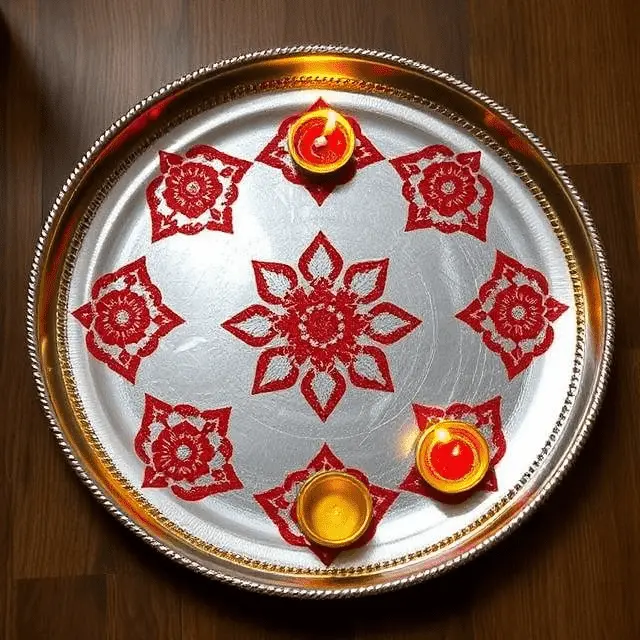
This decoration style bridges the gap between traditional Indian festive visual culture and the clean, modern aesthetic that many younger households prefer today. The result is a thali that photographs beautifully on social media while remaining fully appropriate for serious ritual use. Pair a mica decorated thali with matching resin coasters and brass diyas for a fully coordinated festive table setup.
14. Rajasthani Thali Decoration with Bandhej Fabric and Folk Motifs
Rajasthan has one of the richest decorative traditions in all of India, and its influence on thali decoration is both distinctive and deeply beautiful. A Rajasthani thali typically uses bandhej chunri fabric in bright fuchsia, saffron, or emerald as the base cloth. Over this, folk motifs such as elephants, peacocks, paisleys, and geometric borders are created using embellishments, sequins, and colored thread.
To make a Rajasthani thali, cut two pieces of bandhej fabric in contrasting colors to cover the thali in halves, creating a dual tone effect that is characteristic of Rajasthani textile design. Glue the fabric firmly and then apply embellishments in traditional folk patterns. Finish the rim with a woven thread border and small mirror pieces at intervals.
This type of thali is particularly well suited to festivals like Teej, Gangaur, and housewarming ceremonies in households with strong Rajasthani cultural roots. It can also serve as a beautiful decorative gift for a new bride entering her marital home for the first time.
15. Silver Thali Decoration for Auspicious Religious Ceremonies
Silver holds a uniquely elevated position in Hindu tradition. It is associated with the moon, with purity, and with the divine feminine energy of goddesses like Lakshmi and Durga. A silver thali, whether a genuine silver piece or a high quality silver plated version, carries an inherent sanctity that sets it apart from all other materials.
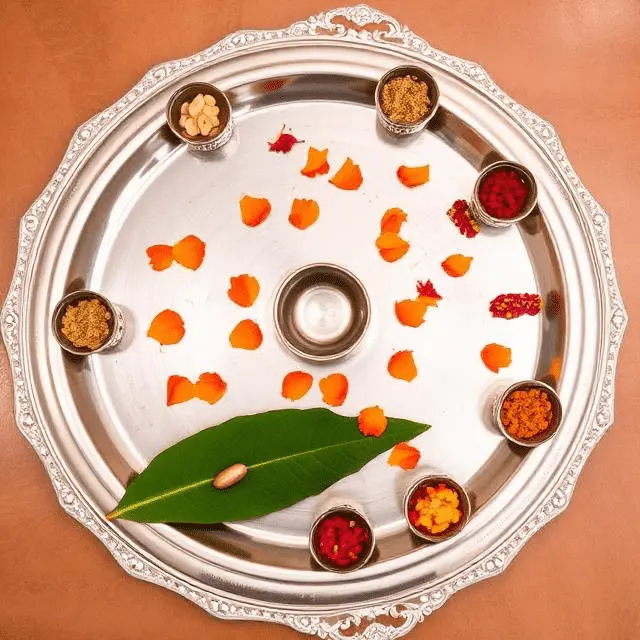
Decorate a silver thali by arranging small silverware bowls at the corners, each filled with roli, haldi, unbroken rice, and dried flowers. At the center, place a small silver diya or a brass diya polished to a mirror finish. Add a few marigold petals scattered across the silver surface and a betel leaf with a betel nut placed near the edge. The betel leaf, considered deeply auspicious in Hindu tradition, completes the arrangement with both beauty and meaning.
Silver thalis decorated in this manner are reserved for the most significant rituals: Satyanarayan puja, wedding ceremonies, new year worship, and the welcoming of a new life into the home. Their understated elegance communicates reverence through restraint.
16. Peacock Motif Thali Decoration for Artistic Expression
The peacock is one of the most beloved motifs in Indian decorative arts. As the national bird of India and a symbol considered sacred in Hindu culture, the peacock design brings both aesthetic beauty and spiritual resonance to a decorated thali. Peacock motifs can be painted, embroidered onto fabric bases, or constructed from beads and mirror pieces, depending on the technique and materials available.
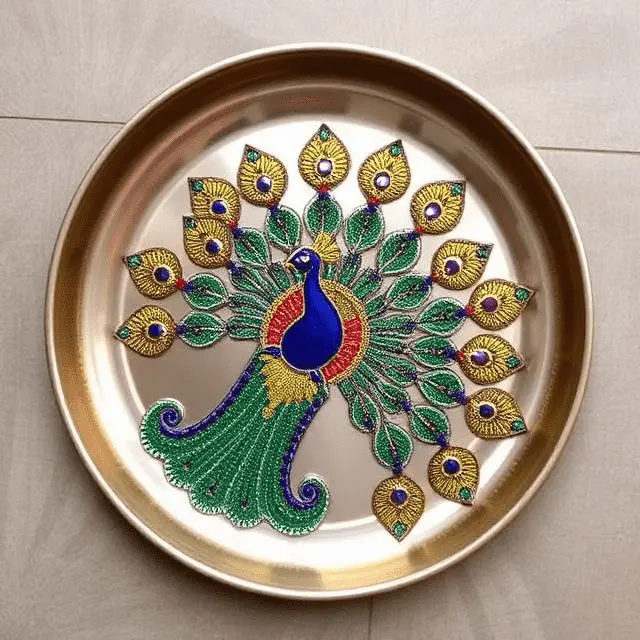
For a painted peacock thali, use a clean steel plate as the canvas and apply acrylic paints in deep blue, green, and gold to render a peacock with a spread tail across the surface. The fan of the tail naturally follows the circular shape of the thali, making it a design that fits the form with remarkable elegance. Once dried and sealed, this painted thali is both a lasting decorative piece and a functional puja plate.
17. Personalized Thali Decoration with Family Symbols and Handmade Details
The most meaningful thali is often the one made by hand with personal symbols and collective family input. Encouraging every family member to contribute a small element to the thali, whether a painted symbol, a sewn bead, or a pressed flower, creates an object that carries collective love and intention. This approach is particularly valuable when decorating thalis for significant family rituals such as a child’s first puja, a parent’s anniversary, or the celebration of a household milestone.
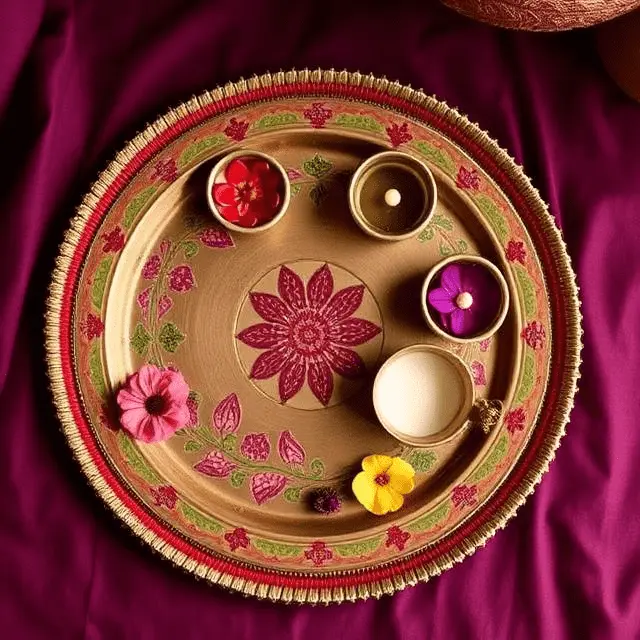
Use a base thali in any material and allow each family member to contribute their element. Bind these contributions together with a single unifying color scheme or material, perhaps a shared border of red mauli thread or a uniform layer of gold gota patti at the rim, so that the result feels cohesive rather than scattered. The act of making the thali together becomes as meaningful as the ritual it serves.
Conclusion
A decorated thali is one of the most intimate expressions of Indian cultural and devotional life. It carries the prayers of the person who made it, the traditions of the household it belongs to, and the beauty of a civilization that has always understood the power of visual beauty in spiritual practice. Whether you choose the timeless simplicity of a flower decorated aarti thali or the elaborate mirror work of a wedding plate, the effort you put into its preparation is itself a form of devotion.
The ideas in this guide span every occasion, every skill level, and every regional tradition. Start with the materials you have at hand, honor the symbols that matter to your practice, and allow the act of decoration to become as meaningful as the ceremony it prepares you for. A beautifully made thali reminds everyone present that this moment is special, that this ritual matters, and that the love behind it is real.
Frequently Asked Questions
What materials are most commonly used for thali decoration at home?
The most accessible and widely used materials include gota patti lace, marigold and rose petals, kumkum, haldi, roli, craft adhesive, velvet cloth, pearl beads, mirror pieces, acrylic paints, and brass or clay diyas. Most of these items are available at local craft stores, fabric markets, or online at very affordable prices.
Can artificial flowers be used for thali decoration instead of fresh ones?
Yes, artificial flowers are an excellent alternative, particularly for decorations that need to be prepared in advance or reused across multiple occasions. They hold their shape and color longer than fresh flowers and are increasingly available in realistic and beautiful designs. The only consideration is that they do not carry the natural fragrance that fresh marigold or jasmine provides.
How do I make a thali decoration last longer so it can be reused?
For durable and reusable thali decorations, use permanent craft adhesive to fix materials like gota patti, beads, fabric, and mirror pieces onto the thali surface. Avoid placing items that will spoil directly onto the permanent base. Instead, use small bowls or leaf liners to hold fresh flowers, Kumkum, and food items, keeping the decorated base clean and intact.
What colors are most auspicious for thali decoration in Hindu rituals?
Red is the most auspicious color in Hindu tradition and represents prosperity, energy, and devotion. Gold conveys wealth and divine blessing. White symbolizes purity. Yellow or saffron represents knowledge and the sacred. Silver is associated with the moon, purity, and goddess energy. Using these colors in combination creates a thali that is visually beautiful and spiritually aligned with the occasion.
Which thali decoration style is best for a wedding ceremony?
For wedding ceremonies, the most appropriate styles are mirror work on a velvet base, silver thali with small silverware bowls, brocade fabric with decorative stone embellishments, and gota patti with pearl bead arrangements. These styles communicate grandeur, tradition, and the gravity of the occasion while remaining functional enough for the priest and family to use throughout the ceremony.