18+ Stylish Wheelchair Accessible Kitchen Designs
Introduction
Wheelchair Accessible Kitchen Designs , kitchen is the most actively used room in any home. It is where daily life begins and ends, where independence is either quietly supported or silently taken away. For wheelchair users and people living with mobility challenges, a conventional kitchen layout can transform even the most basic cooking task into a source of physical strain and frustration. Counters set too high, cabinets out of reach, narrow walkways, and improperly placed appliances all represent real obstacles that a standard kitchen places in front of seated users every single day.
What many homeowners do not yet realize is that wheelchair accessible kitchen designs have evolved far beyond functional compromise. Today, these spaces are designed to be genuinely beautiful, thoughtfully organized, and completely usable by every member of a household. Guided by the Americans with Disabilities Act and the American National Standards Institute guidelines under ANSI A117.1, accessible kitchen design now represents one of the most refined and human-centered approaches to home renovation available.
This article presents 19 specific, stylish, and practical design ideas that transform any kitchen into a space where wheelchair users can cook, prepare meals, and enjoy the heart of their home with full independence. Whether you are planning a complete renovation or making targeted improvements, every idea presented here combines genuine functionality with modern design sensibility.
1.Open Floor Plans That Prioritize Free Movement
An open floor plan is the single most important structural decision in any wheelchair accessible kitchen. Without adequate space to navigate, every other design upgrade becomes limited in its usefulness. Doorways leading into the kitchen should be a minimum of 32 inches wide, though 36 inches is the strongly preferred standard for comfortable, independent navigation. Any passageway used from both sides, such as a galley-style corridor between two counters, must measure at least 40 inches across. In U-shaped kitchen layouts, interior clearance should reach 60 inches to accommodate a full wheelchair turning radius.

The turning radius guideline exists for a practical reason. A standard wheelchair requires a circular floor space of approximately 60 inches in diameter to complete a full rotation. Without this clearance, a user cannot turn around independently, which significantly reduces their ability to move between the cooking, preparation, and storage zones without assistance. Planning this space into the core layout of the kitchen, rather than treating it as an afterthought, is the foundation that every other design decision in an accessible kitchen is built upon.
2.Pocket Doors and Sliding Door Systems
Traditional hinged doors present a consistent challenge in wheelchair accessible kitchens.They require the user to move backward or sideways to avoid the swinging arc, which reduces floor clearance and increases the difficulty of entry and exit. Replacing standard hinged doors with pocket doors or sliding barn-style doors eliminates this problem entirely.
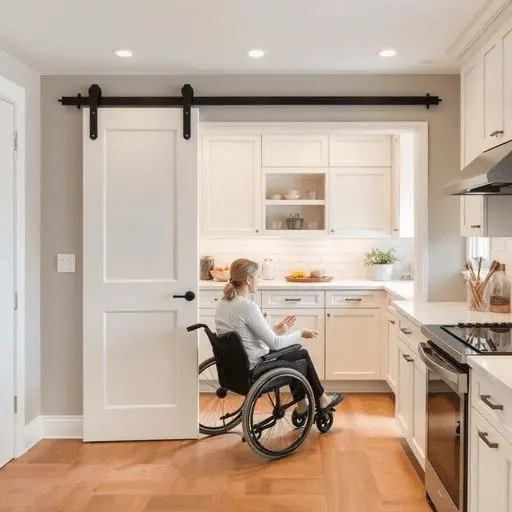
A pocket door slides horizontally into a cavity within the wall, making the full doorway width available for navigation with no clearance lost to door swing. Barn doors mounted on overhead tracks accomplish the same result with a more visible, design-forward aesthetic. Both options are available in a wide range of materials and finishes, making it easy to incorporate them into virtually any kitchen style. Removing thresholds between the kitchen and adjacent rooms is an equally important part of this design step, as even a small raised lip can create a significant obstacle for wheelchair wheels and increase the risk of tipping.
3.Lowered Countertops With Generous Knee Clearance
Standard kitchen countertops are installed at 36 inches above the finished floor, a height designed for the comfort of standing adults. For wheelchair users, this height is inaccessible for practical food preparation. ADA guidelines specify that accessible countertops should be set at no more than 34 inches, and many designers prefer a height of 28 to 30 inches for the primary preparation area, as this places the work surface well within the natural reach of a seated user.
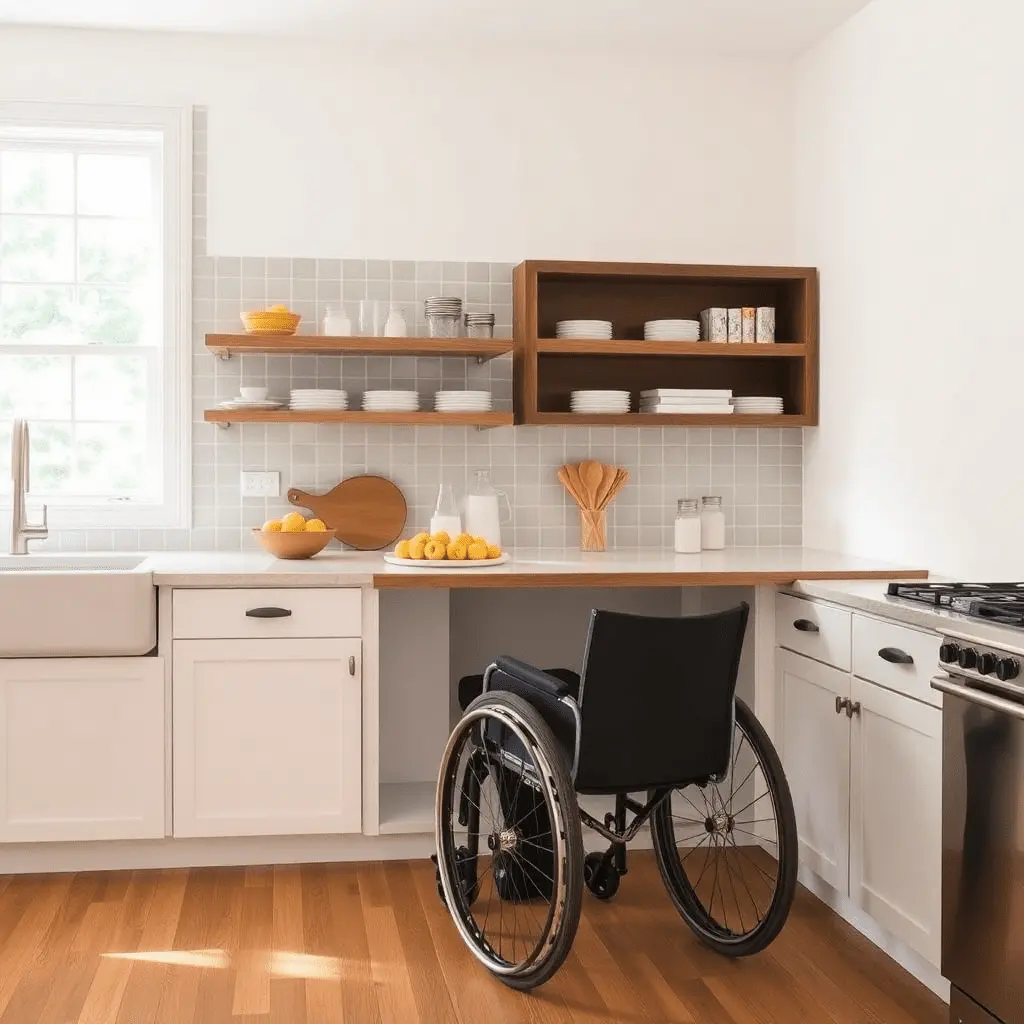
Equally important is the space beneath those countertops. For a wheelchair to pull directly up to a work surface, there must be knee clearance of at least 27 inches in height, 30 inches in width, and 19 inches in depth beneath the counter. This space should be free of cabinets, plumbing, or structural elements. Any exposed pipes or sharp edges within the knee clearance zone should be insulated and rounded to prevent injury, particularly for users with reduced sensation in their lower limbs. Including at least one section of open knee clearance countertop in every zone of the kitchen, including the preparation area and the sink, makes the entire space functionally accessible.
4.Height-Adjustable Countertops for Multi-User Households
In households where the kitchen is used by both wheelchair users and standing family members, fixed countertop heights inevitably compromise the experience for one group or the other. Height-adjustable countertops resolve this conflict elegantly. These systems use motorized mechanisms controlled by a wall-mounted panel or a wireless remote to raise or lower the entire work surface to any position within a preset range, typically between 28 and 36 inches.
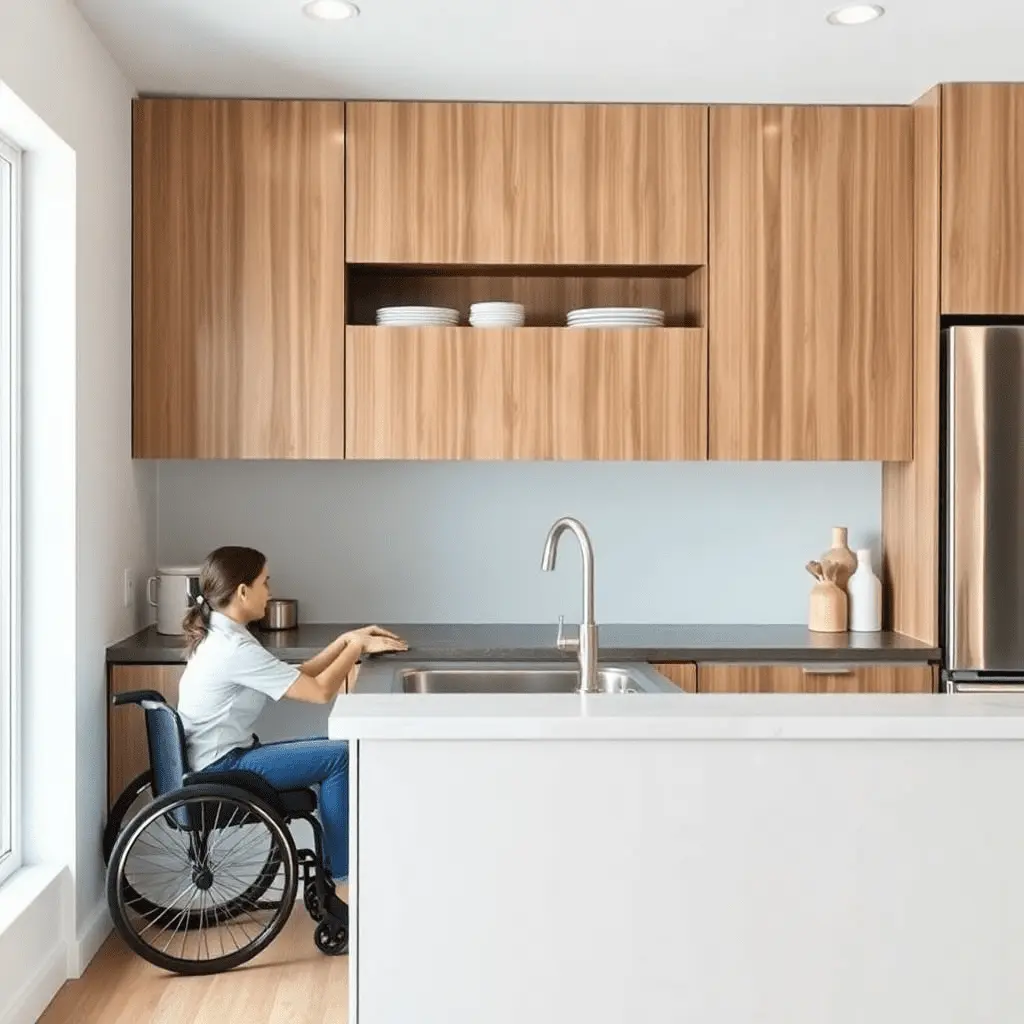
Some systems move the countertop along vertical tracks mounted to the wall, while others adjust the height of the cabinet base beneath the surface. Either approach delivers the same result: a kitchen that adapts to its user rather than requiring the user to adapt to the kitchen. These adjustable systems are available in materials and finishes that match any surrounding cabinetry, meaning they integrate visually without appearing clinical or institutional. They represent one of the most compelling examples of how accessibility and modern design now share the same direction.
5.Roll-Under Sinks Designed for Seated Use
The kitchen sink is one of the most frequently used fixtures in any home, and for wheelchair users, its design and placement can make or break the entire kitchen experience. A roll-under sink removes the cabinet from beneath the sink basin entirely, creating open knee clearance that allows a wheelchair to pull directly up to the fixture. This eliminates the need for leaning forward, reaching across a surface, or working from an awkward angle.
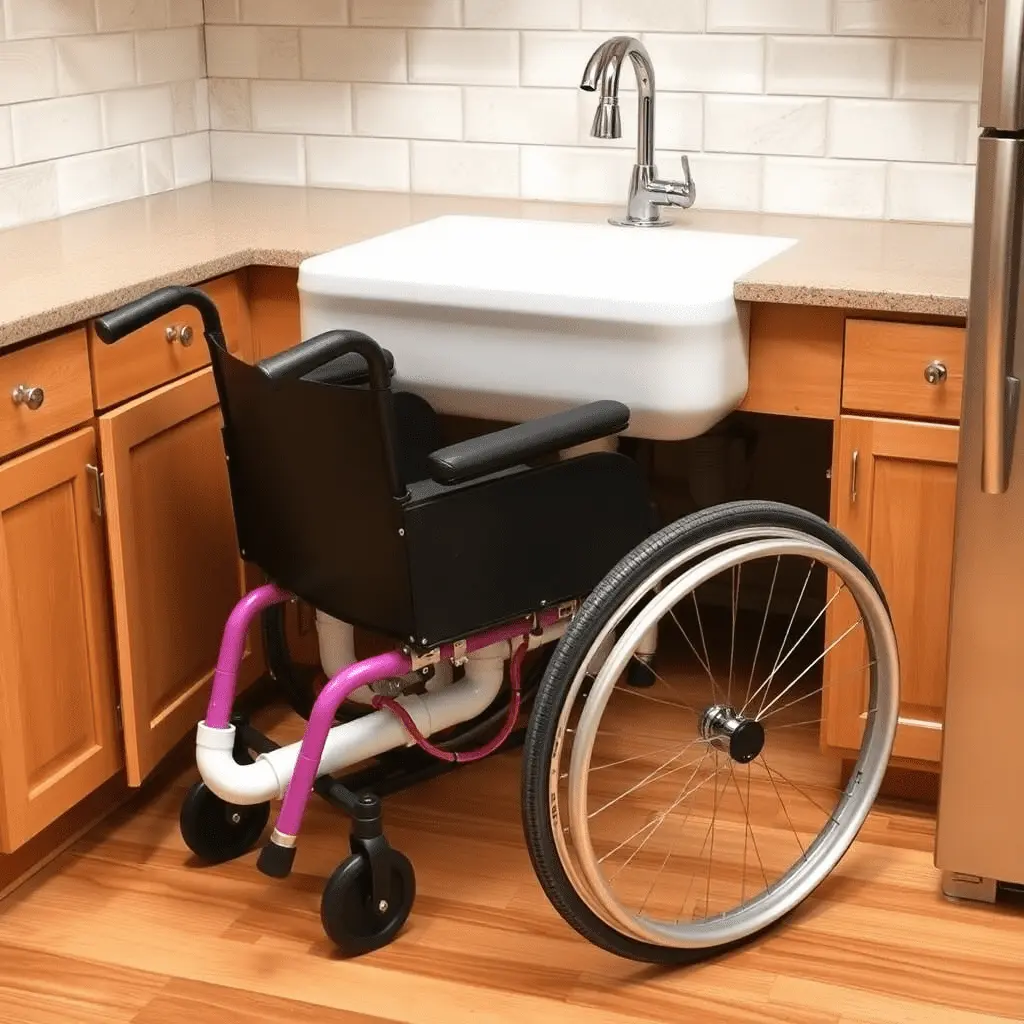
ADA standards specify that roll-under sinks should be installed with their rim no higher than 34 inches from the floor and should provide knee clearance of at least 29 inches in height and 30 inches in width beneath the basin. The sink itself should be shallow, ideally no more than five to six inches in depth, to keep the basin within comfortable reach from a seated position. The drain should be positioned toward the back of the basin rather than directly in the center, which preserves more usable knee space beneath. All plumbing beneath the sink should be insulated to prevent contact burns.
6.Touchless and Lever-Handle Faucets
The faucet is a detail that carries significant practical weight in a wheelchair accessible kitchen. Traditional two-handle faucets require gripping and rotating motion that can be difficult or painful for users with limited hand strength or dexterity. Lever-style single-handle faucets are a major improvement, as they can be operated with a single push or pull motion and require no gripping or twisting of the wrist.
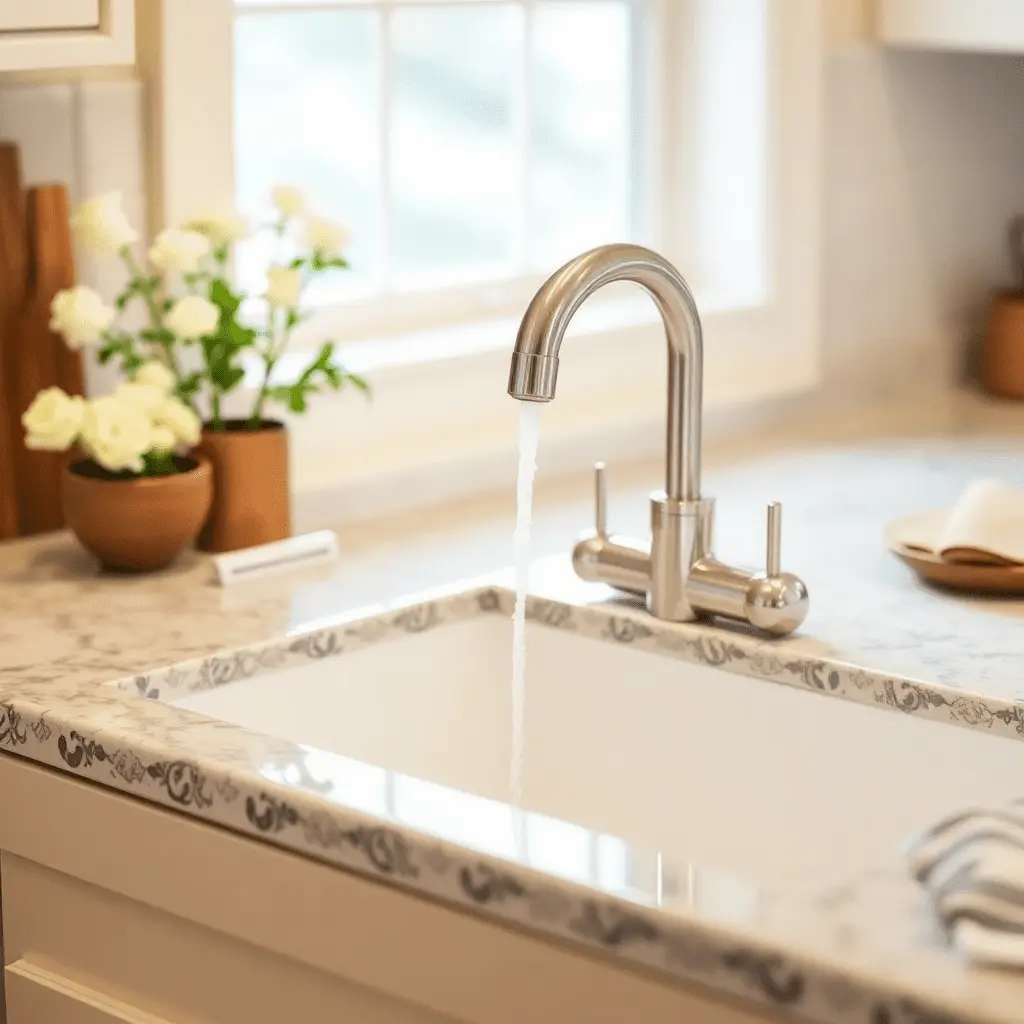
Touchless sensor faucets take accessibility a step further by activating the water flow through proximity detection alone. These faucets are particularly valuable for users who may have difficulty reaching the handle at all, and they reduce the risk of water being left running unintentionally. Positioning the faucet on the side of the sink rather than at the back shortens the reach required and is especially beneficial for users with a limited arm span. Anti-scald thermostatic devices integrated into the water supply line ensure that hot water temperatures remain within a safe range, protecting users who may have reduced sensitivity to heat in their hands or lap.
7.ADA-Compliant Cabinet Heights and Pull-Down Shelf Systems
Standard upper kitchen cabinets are typically mounted between 54 and 84 inches above the floor, a range that is almost entirely inaccessible for wheelchair users whose comfortable reach range is approximately 15 to 48 inches from the floor. The most practical solution for upper cabinet accessibility is the installation of pull-down shelf mechanisms.

These systems mount inside standard upper cabinets and allow an entire shelf to be lowered to counter height with a single smooth pull. Items stored at the back of the shelf become fully visible and reachable. Once the items are retrieved, the shelf slides back up into the cabinet. For base cabinets, the preferred accessible height is 32.5 inches rather than the standard 34.5 inches. Full-extension drawer slides bring the contents of deep drawers to the front edge for full visibility and reach from a seated position. Touch-release drawer fronts and doors with D-pull handles eliminate the need for gripping or pinching and can be operated with the back of a hand or a closed fist.
8.Pull-Out and Roll-Out Storage Solutions
Deep base cabinets are notoriously difficult to use from a seated position. Items stored at the back of a standard shelf require significant forward reach and are often invisible from a wheelchair. Pull-out shelves and roll-out trays transform these cabinets into genuinely practical storage by bringing the entire contents of the cabinet to the front of the opening with a single, easy pull.
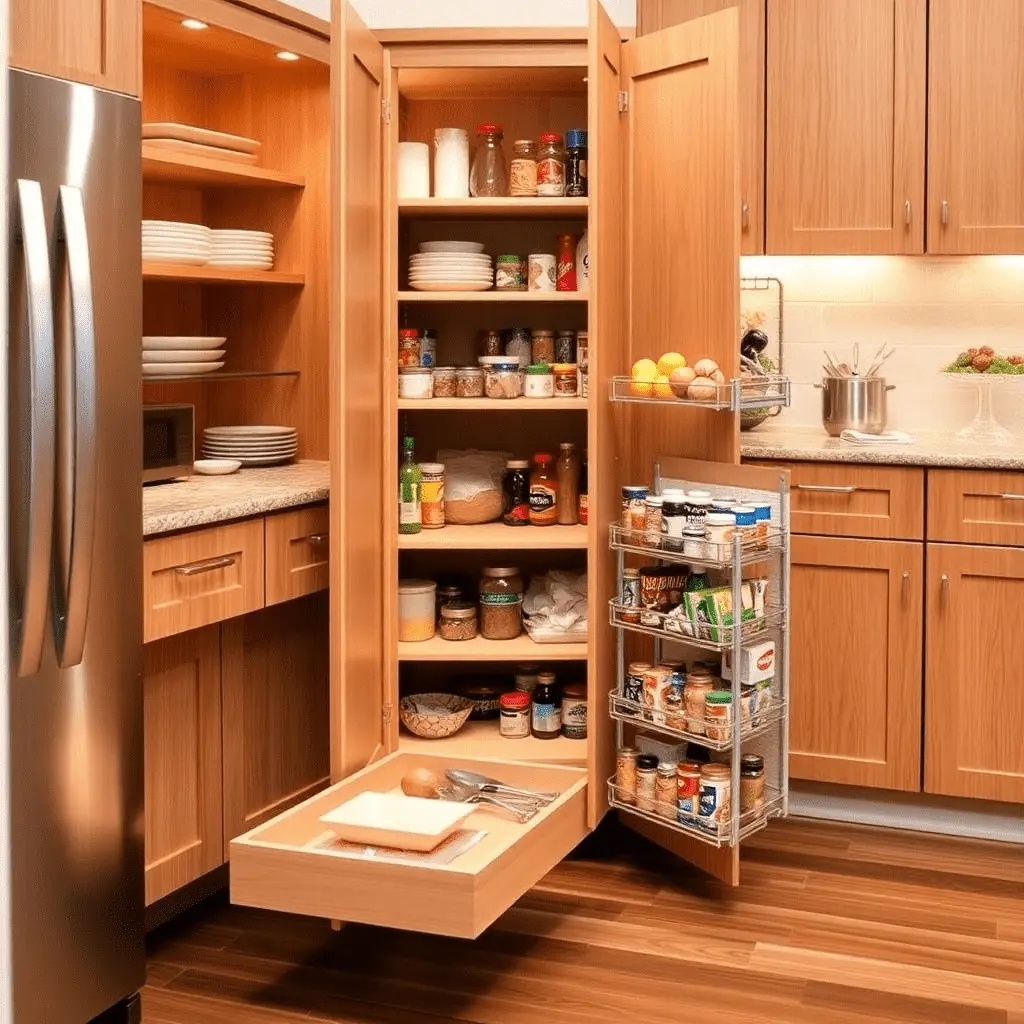
Pull-out pantry units installed beside the refrigerator or along a wall provide tall, narrow storage columns that keep every item visible and within reach. Base-mounted spice racks that pull outward keep frequently used ingredients at the front of the cabinet where they can be seen and accessed without any reaching. Corner cabinets equipped with lazy Susan turntable systems make the most of otherwise difficult-to-reach corner storage. Each of these solutions reduces the physical demand placed on the user during meal preparation while keeping the kitchen organized and visually clean.
9.Wall-Mounted Ovens at Accessible Heights
The placement and design of the oven is a critical safety consideration in any wheelchair accessible kitchen. A standard range with the oven below the cooktop places the oven cavity too low for comfortable access from a seated position and requires the user to reach down and pull hot food toward their lap, which is both physically difficult and genuinely dangerous.
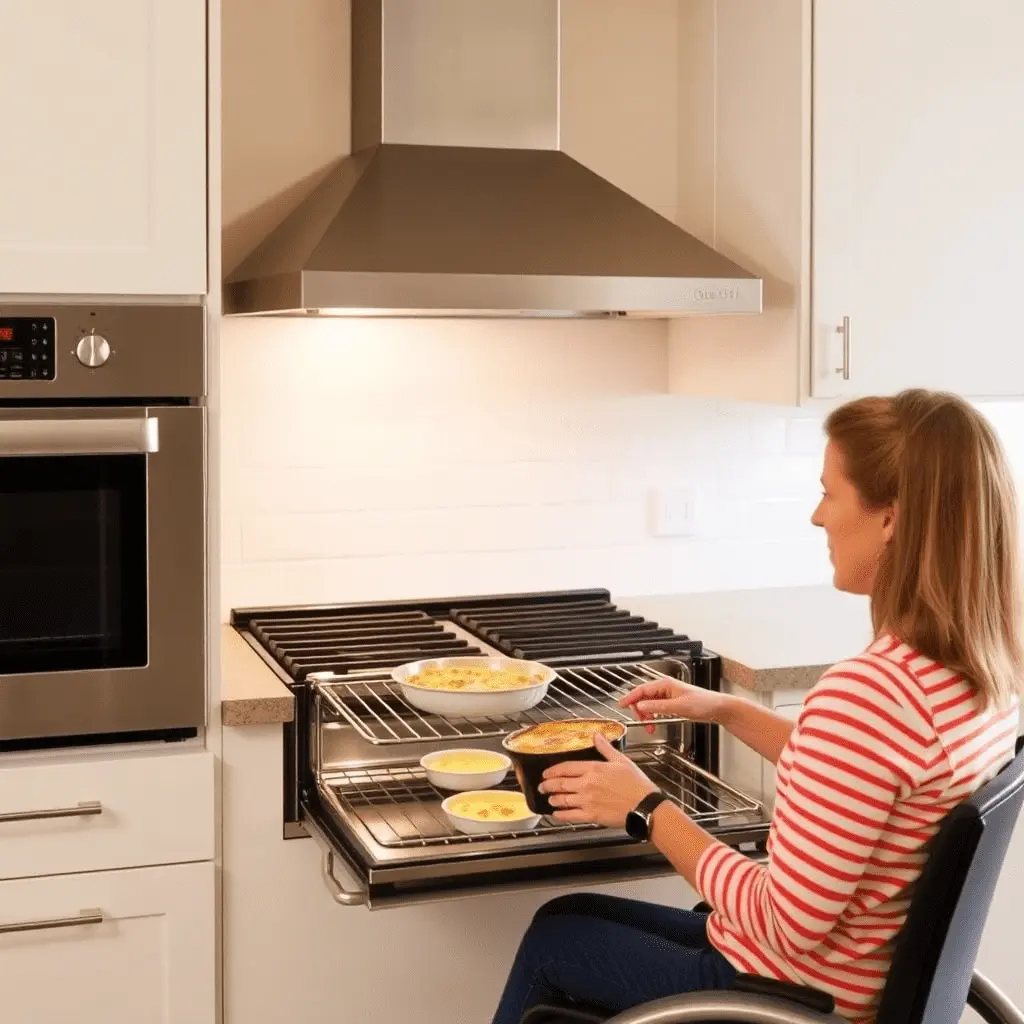
Wall-mounted ovens installed at a height where the oven floor sits approximately at counter level allow a wheelchair user to look directly into the oven interior and slide dishes in and out at a natural working height. Ovens with side-hinged doors rather than the traditional pull-down door style are strongly preferred, as they do not block the front of the oven when open. Models with retractable shelves or pull-out ledges directly below the oven door provide a safe, stable resting surface for hot dishes as they are removed from the oven. These small structural details reduce the risk of burns and make oven use genuinely safe for seated cooks.
10.Induction Cooktops with Front-Mounted Controls
The cooktop design in a wheelchair accessible kitchen serves two distinct priorities: safety and reach. Induction cooktops are the preferred choice for accessible kitchens because their surface remains cool to the touch outside the active cooking zone. This dramatically reduces the risk of contact burns for wheelchair users who may have their lap or forearms near the cooktop surface during cooking.
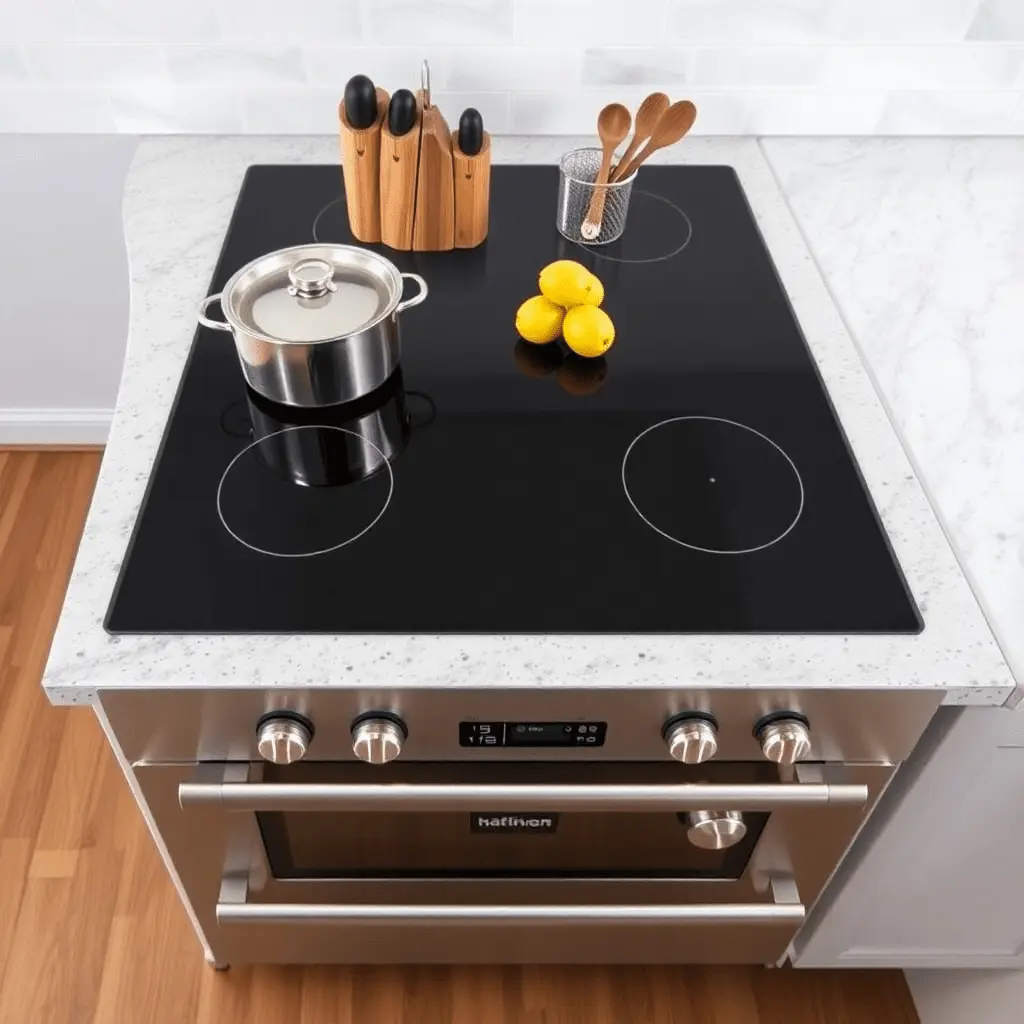
Front-mounted controls are essential on any cooktop intended for accessible use. When controls are located at the back of the cooktop, the user must reach across active burners to adjust heat settings, which creates a clear and serious safety hazard. Staggered burner arrangements, where burners are offset rather than arranged in a standard grid, also reduce the need to reach across the nearest burner to access those at the back. Side-mounted cooktop controls are an effective alternative to front placement and work particularly well for users with a shorter comfortable reach range.
11.French-Door Refrigerators and Drawer Freezers
Refrigerator design has a direct and meaningful impact on the daily experience of a wheelchair user in the kitchen. Single-door refrigerators require the user to back away from the appliance each time the door is opened, making it difficult to reach items inside the refrigerator while remaining in a working position. Side-by-side French-door refrigerators solve this by opening outward from a central hinge, creating wide access to the main compartment without requiring the user to back up or reposition.
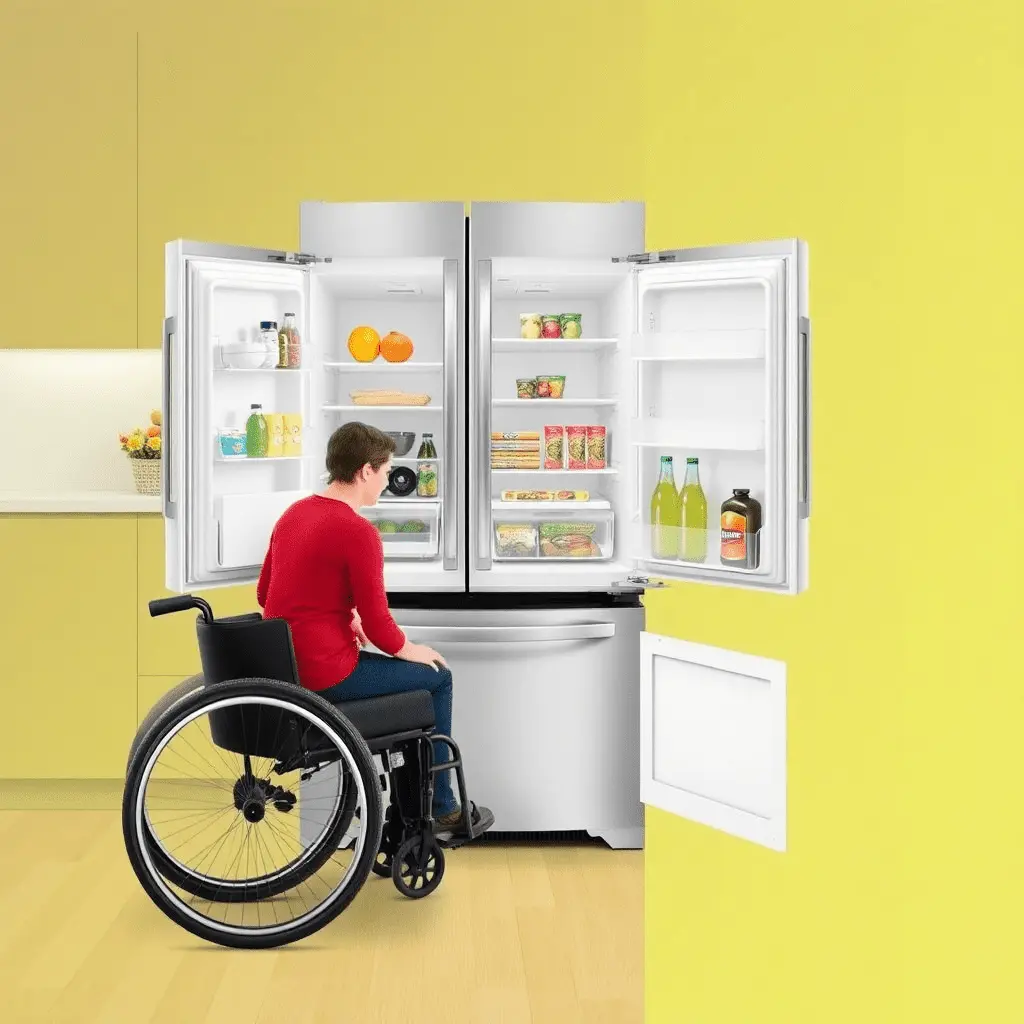
Bottom-mount freezer drawers place frozen items at a lower, more accessible level and allow the user to pull the drawer toward themselves for full visibility of its contents. Refrigerator models with interior LED lighting, adjustable shelves, and door bins positioned within the accessible reach range make it possible to locate and retrieve items independently. Choosing a refrigerator with a wide, easy-grip door handle compatible with one-handed operation rounds out the accessible design of this essential appliance.
12.Drawer-Style Dishwashers for Easy Loading
A standard dishwasher requires the user to reach down and forward to access the lower rack, which is both physically demanding and impractical from a wheelchair. Drawer-style dishwashers resolve this problem by opening outward and upward, bringing the dish rack to a height that is directly accessible from a seated position without requiring any bending or extended reach.
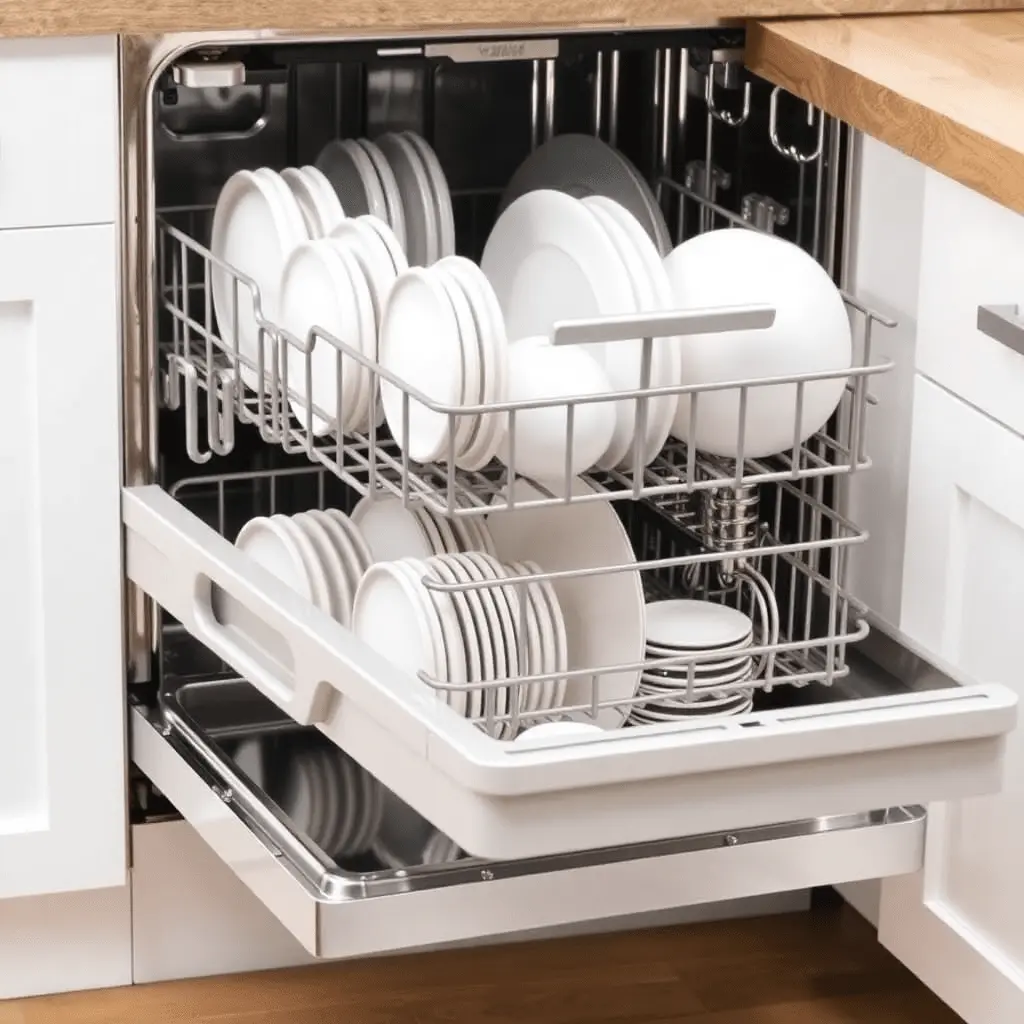
Single-drawer dishwasher units can be installed at counter height rather than at floor level, which places the entire appliance within the most comfortable reach range for a wheelchair user. This installation approach also makes loading and unloading dishes a quick, efficient task rather than a physically taxing one. Some households install two single-drawer units stacked one above the other, which provides the same total capacity as a full-size dishwasher while keeping both drawers accessible from a seated position.
13.Microwave Drawers Installed Below the Counter
An overhead microwave mounted above the range is one of the least accessible kitchen appliances that a wheelchair user can encounter. Reaching upward to a microwave that is mounted near ceiling height is both impractical and risky, as it requires the user to place hot food above their head when removing it.
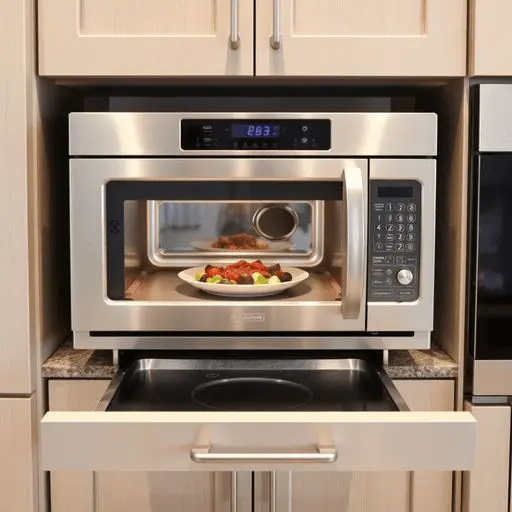
Microwave drawer units installed beneath the countertop are the ideal accessible alternative. These appliances open with a downward pull, bringing the interior cavity to a height that is directly visible and easily reachable from a seated position. The interior turntable and controls are positioned at the front of the drawer, which keeps all functions within reach. These units are available in stainless steel and various finish options that integrate seamlessly with surrounding cabinetry, maintaining the visual consistency of the kitchen design without appearing adaptive or clinical.
14.Anti-Slip Flooring and Threshold Removal
The floor surface in a wheelchair accessible kitchen must satisfy two functional requirements simultaneously. It must provide sufficient grip for wheelchair tires to prevent slipping during turns and stops, and it must be smooth enough that it does not create excessive rolling resistance that tires the user during normal kitchen navigation. Textured ceramic tile with grout lines satisfies both conditions and is widely regarded as the best flooring choice for accessible kitchens.
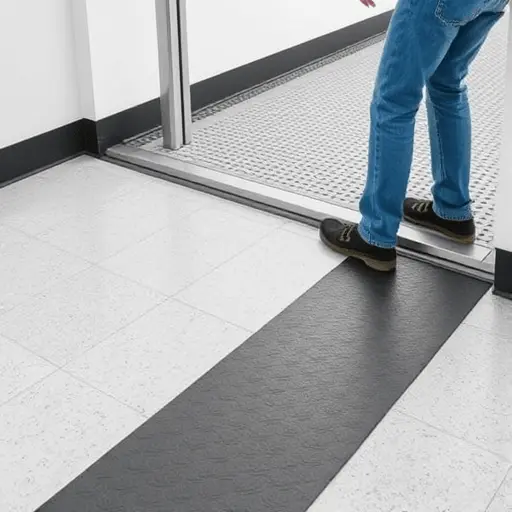
Polished stone, glossy vinyl, and smooth porcelain tiles, while visually appealing, can become dangerously slippery when wet and create rolling resistance that makes navigation physically demanding. All throw rugs, floor runners, and anti-fatigue mats should be removed entirely, as these are among the most common causes of wheelchair tipping incidents in residential kitchens. Any transitions between the kitchen floor and adjacent room floors should be eliminated or reduced to a flush, beveled edge to allow smooth passage between spaces.
15.Strategic Task Lighting and Cabinet Interior Illumination
Lighting in a wheelchair accessible kitchen requires a different approach than in a standard kitchen. Because a wheelchair user operates from a lower vantage point than a standing cook, overhead lighting that works well for standing users often leaves the work surface poorly lit from a seated perspective. Under-cabinet task lighting mounted at counter height directly illuminates the preparation surface and is one of the most practical lighting upgrades available.
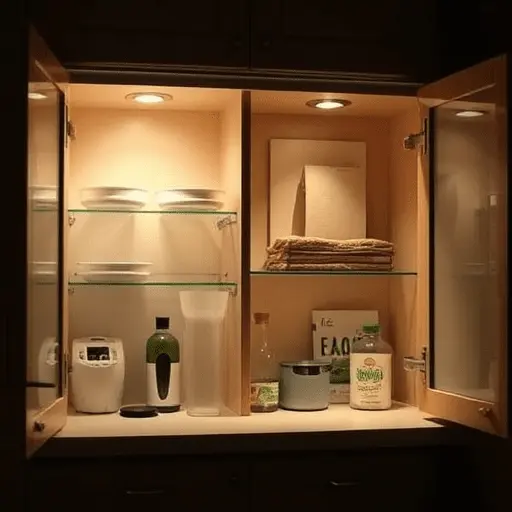
Interior cabinet lighting installed within drawers and base cabinets makes locating stored items significantly easier from the lower visual angle of a seated user. LED strip lights placed beneath cabinet toe kicks provide ambient floor-level illumination that helps define the kitchen space without creating glare. Motion-sensor light switches installed at 42 to 48 inches from the floor keep lighting controls within reach while eliminating the need to locate and operate switches while carrying items. Choosing light-colored finishes for walls, cabinet fronts, and countertops helps reflect both natural and artificial light throughout the space, improving overall visibility.
16.Accessible Electrical Outlets and Smart Controls
In a standard kitchen, electrical outlets are typically installed between 44 and 48 inches above the floor, which is within reach for wheelchair users. However, outlets placed directly above the countertop backsplash can become difficult to access when the counter is occupied with appliances and cooking equipment. Planning outlet placement thoughtfully, including outlets at the front edge of countertops and along the lower portions of the backsplash, ensures that small appliances can be used without difficulty.
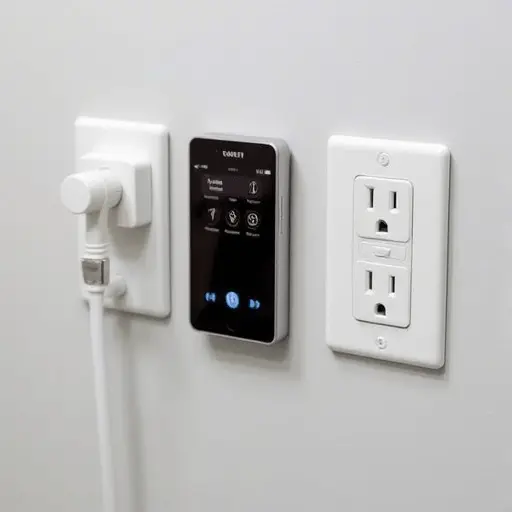
Smart home technology has introduced a range of voice-activated and app-controlled systems that reduce the physical demands of kitchen operation significantly. Smart faucets, app-controlled ovens, voice-activated lighting systems, and motorized cabinet systems all contribute to a kitchen that responds to the user with minimal physical interaction. These technologies are available at increasingly accessible price points and integrate with popular smart home platforms, making them practical options for most kitchen renovation projects.
17.Ergonomic Hardware and One-Hand Operable Fixtures
Cabinet hardware in a wheelchair accessible kitchen must be chosen with operational ease as the primary criterion. Knob-style hardware requires a pinching grip that is difficult for users with limited hand strength or dexterity. D-pull bar handles and cup pulls are far more practical, as they can be grasped with an open hand or hooked with a finger without requiring a precision grip.
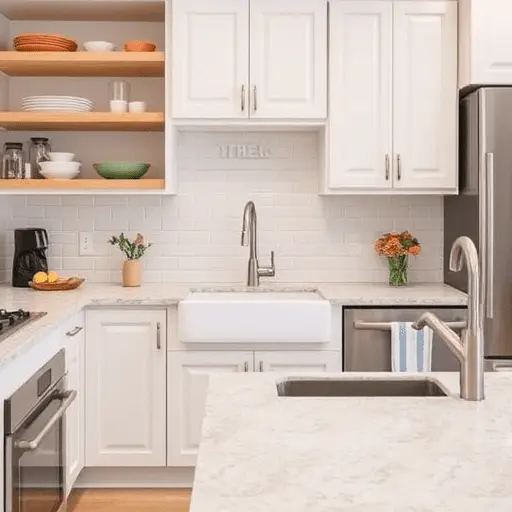
All controls, handles, and hardware throughout the kitchen should be operable with one hand and should require no simultaneous twisting and pulling. Lever-action faucet handles, push-to-open cabinet doors, and magnetic drawer catches that release with a light touch all reduce the physical effort required to operate the kitchen. A useful test for evaluating the accessibility of any piece of hardware is to attempt to operate it using a closed fist. If the motion is possible with a closed fist, the hardware is accessible.
18.Thoughtful Appliance Placement and the Single-Wall Layout
The traditional kitchen work triangle, which places the sink, refrigerator, and cooktop at three separate points of a triangular path, was designed for standing users who can carry heavy items across the kitchen with ease. For wheelchair users, this layout creates significant challenges. Moving a full pot of hot water from the cooktop to the sink, for example, requires carrying a heavy and dangerous load across an open floor path.
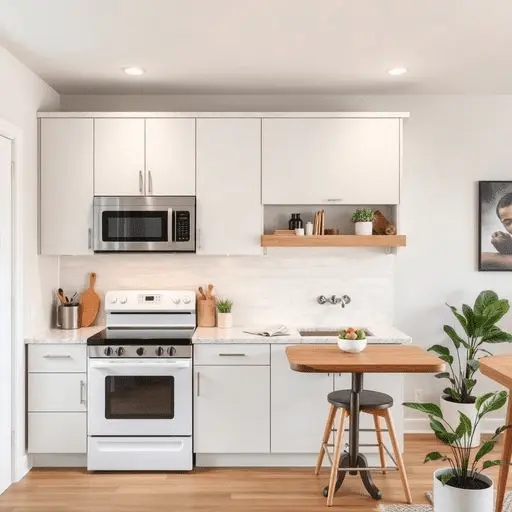
Positioning the sink and cooktop on the same wall or counter run greatly reduces the distance that hot, heavy, or full containers need to be transported during cooking. A side-by-side placement of the preparation counter, cooktop, and sink along a single continuous work surface is considered the most efficient and safest layout for an accessible kitchen. This arrangement minimizes rolling distance during cooking, keeps all primary work zones within a compact area, and reduces the number of direction changes required during a typical meal preparation session. https://casaelys.com/wheelchair-accessible-kitchen-ideas/
19.Personalized Design Elements That Reflect Individual Style
Accessible kitchen design should never feel like a concession. Every practical modification covered in this article can be executed in materials, finishes, and styles that reflect genuine personal taste. Handleless flat-front cabinetry in matte white or deep navy creates a clean, modern aesthetic while remaining fully compatible with accessible hardware. Quartz countertops in any color palette are available at accessible heights. Natural wood veneer cabinetry brings warmth and character to a space that might otherwise feel clinical.

The most important insight in accessible kitchen design is that the principles driving it, namely efficiency, reach, organization, and safety, are the same principles that make any kitchen excellent. When these principles are applied with care and creativity, the result is a kitchen that does not look accessible. It simply looks exceptionally well designed. The wheelchair user who moves through that kitchen moves through it with independence, confidence, and the quiet dignity that every person deserves in their own home.
Conclusion
A wheelchair accessible kitchen is not a scaled-down version of a real kitchen. It is a kitchen that has been designed with genuine intelligence, built around the actual needs of the person who uses it every day. The 19 design approaches presented in this article represent a comprehensive and practical framework for creating a kitchen that serves wheelchair users and the entire household equally well. From the width of the doorway to the placement of the faucet, from the height of the countertop to the type of flooring underfoot, every decision made in an accessible kitchen carries real meaning. The reward for making those decisions thoughtfully is a space that supports full independence, promotes safety, and stands as evidence that great design and inclusive design are exactly the same thing.
Frequently Asked Questions
1.What is the minimum counter height required in a wheelchair accessible kitchen?
ADA guidelines specify that countertops in an accessible kitchen should be no higher than 34 inches from the finished floor. For primary food preparation areas, a height of 28 to 30 inches is preferred. Knee clearance of at least 27 inches in height and 30 inches in width must be maintained beneath the counter to allow a wheelchair to pull directly up to the work surface.
2.How wide do kitchen pathways need to be for wheelchair users?
Pass-through kitchen aisles that have counters or appliances on both sides must be at least 40 inches wide. U-shaped kitchen layouts should provide 60 inches of interior clearance to allow a full wheelchair turning radius. Doorways should be a minimum of 32 inches wide, with 36 to 42 inches being the recommended standard for comfortable independent access.
3.What type of sink is best for a wheelchair accessible kitchen?
A roll-under sink with open knee clearance beneath the basin is the most practical and widely recommended option. The sink rim should be set no higher than 34 inches from the floor, the basin should be no deeper than five to six inches, and all plumbing beneath the sink should be insulated to prevent contact burns. A single-lever or touchless faucet mounted on the side of the basin completes the accessible sink setup.
4.Which appliances are most important to replace in a wheelchair accessible kitchen remodel?
Wall-mounted ovens with side-hinged doors, induction cooktops with front-mounted controls, French-door refrigerators with bottom freezer drawers, drawer-style dishwashers, and under-counter microwave drawer units are the five most impactful appliance upgrades for a wheelchair accessible kitchen. Each of these reduces reach requirements and minimizes safety risks for seated cooks.
5.Can a wheelchair accessible kitchen still look stylish and modern?
Absolutely. Modern accessible kitchens are designed with the same materials, finishes, and aesthetic options available in any high-end kitchen renovation. Height-adjustable countertops, flat-front cabinetry, quartz surfaces, and integrated smart appliances all combine functional accessibility with genuine visual appeal. Accessibility and design quality are fully compatible, and the best accessible kitchens demonstrate this clearly.