
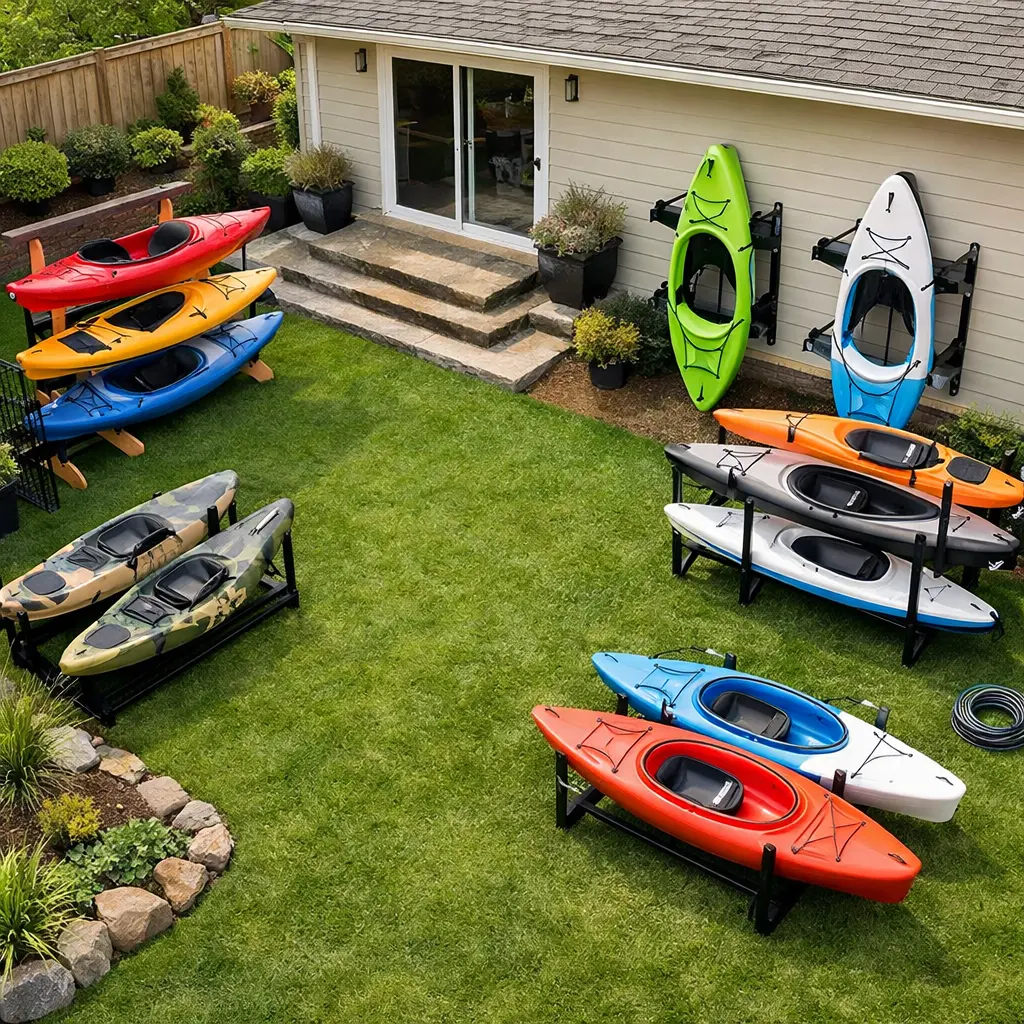
20 Outdoor Kayak Storage Ideas for Small Spaces
Owning a kayak is one of the most rewarding decisions an outdoor enthusiast can make. The open water, the rhythm of the paddle, the sense of freedom on a calm morning lake or a winding river channel all make every outing worth it. But the moment you return home, reality sets in fast. Where exactly do you put a 10-foot, 12-foot, or even longer kayak when you live on a modest property, a small lot, or an urban home with minimal yard space?
Improper storage does real damage. Leaving a kayak on bare ground leads to hull warping, moisture intrusion, and accelerated degradation of the material whether it is polyethylene, fiberglass, or composite. Prolonged exposure to direct sunlight causes UV damage that makes even quality kayaks brittle and faded within a few seasons. Critters including spiders, rodents, and insects have a well-documented habit of making homes inside cockpits left unprotected outdoors.
The good news is that small outdoor spaces are far from a dead end. With creative thinking, the right hardware, and an understanding of your available footprint, you can store your kayak safely, securely, and without sacrificing every square inch of your yard or patio. This article presents 20 practical outdoor kayak storage ideas designed specifically for small spaces, covering options that range from budget-friendly DIY builds to smart commercial solutions that protect your investment for years to come.
1. Wall-Mounted Kayak Rack on an Exterior Wall
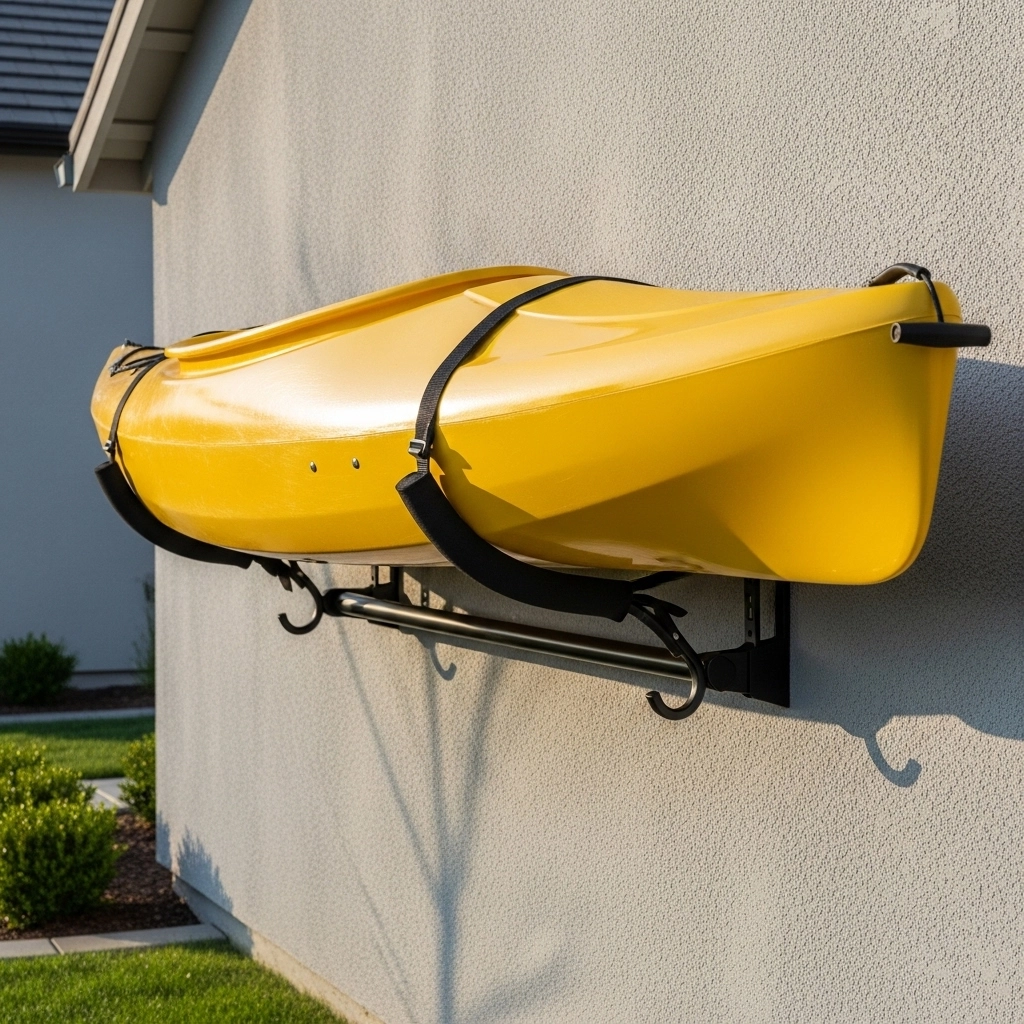
One of the most popular and effective outdoor kayak storage ideas is mounting a rack directly onto an exterior wall of your home, garage, or shed. Wall-mounted racks use vertical surface area rather than precious floor or ground space. You position the kayak horizontally along the wall using padded J-hooks or cradle arms, keeping the hull evenly supported and off the ground entirely. Make sure the wall you choose is structurally solid and that you anchor the hardware into studs or masonry.
2. Freestanding Outdoor Kayak Rack
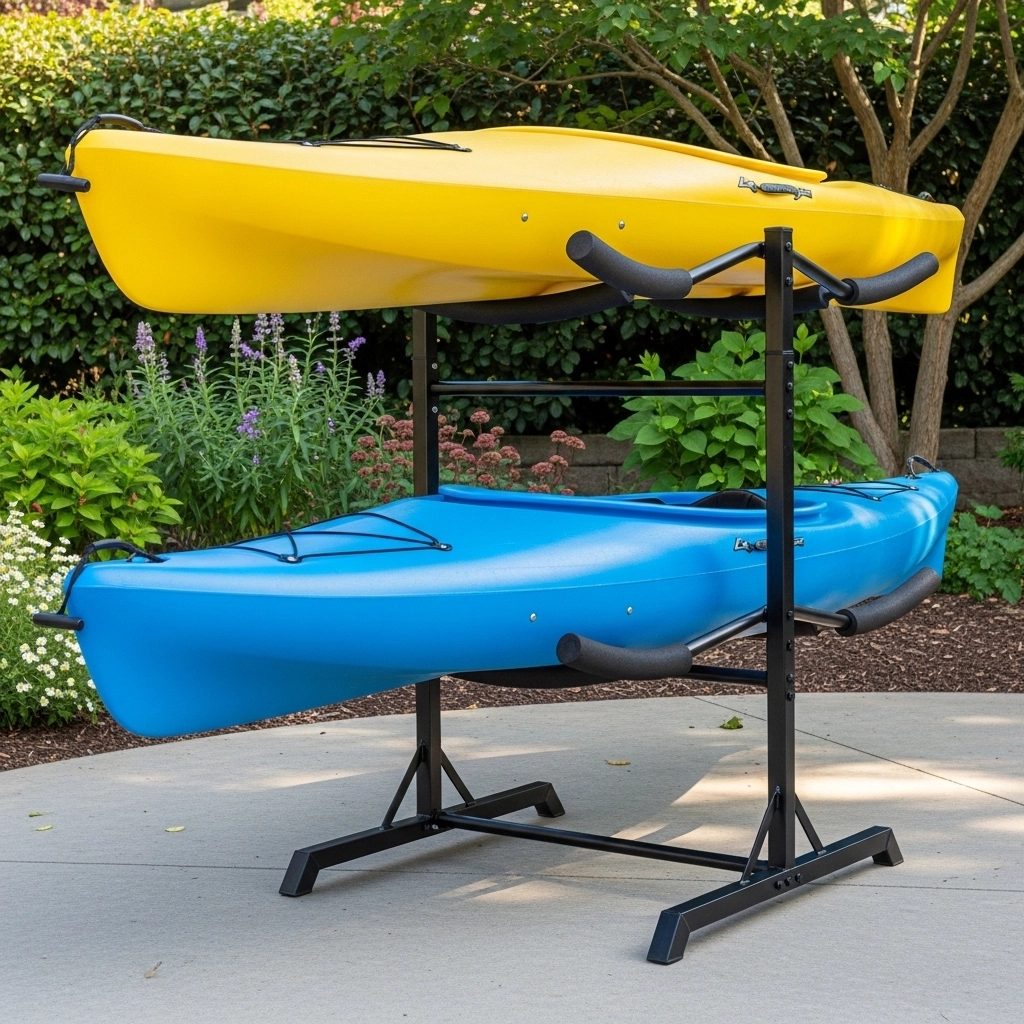
A freestanding rack is a versatile option for backyards, patios, and driveways where wall mounting is not possible. These racks are typically made from powder-coated steel or aluminum, making them weather-resistant enough for permanent outdoor placement. Many freestanding designs are adjustable, allowing you to store one or two kayaks in a compact footprint. Look for models with foam-padded arms to prevent scratches and pressure points on the hull.
3. Vertical Storage with a Ground Stand
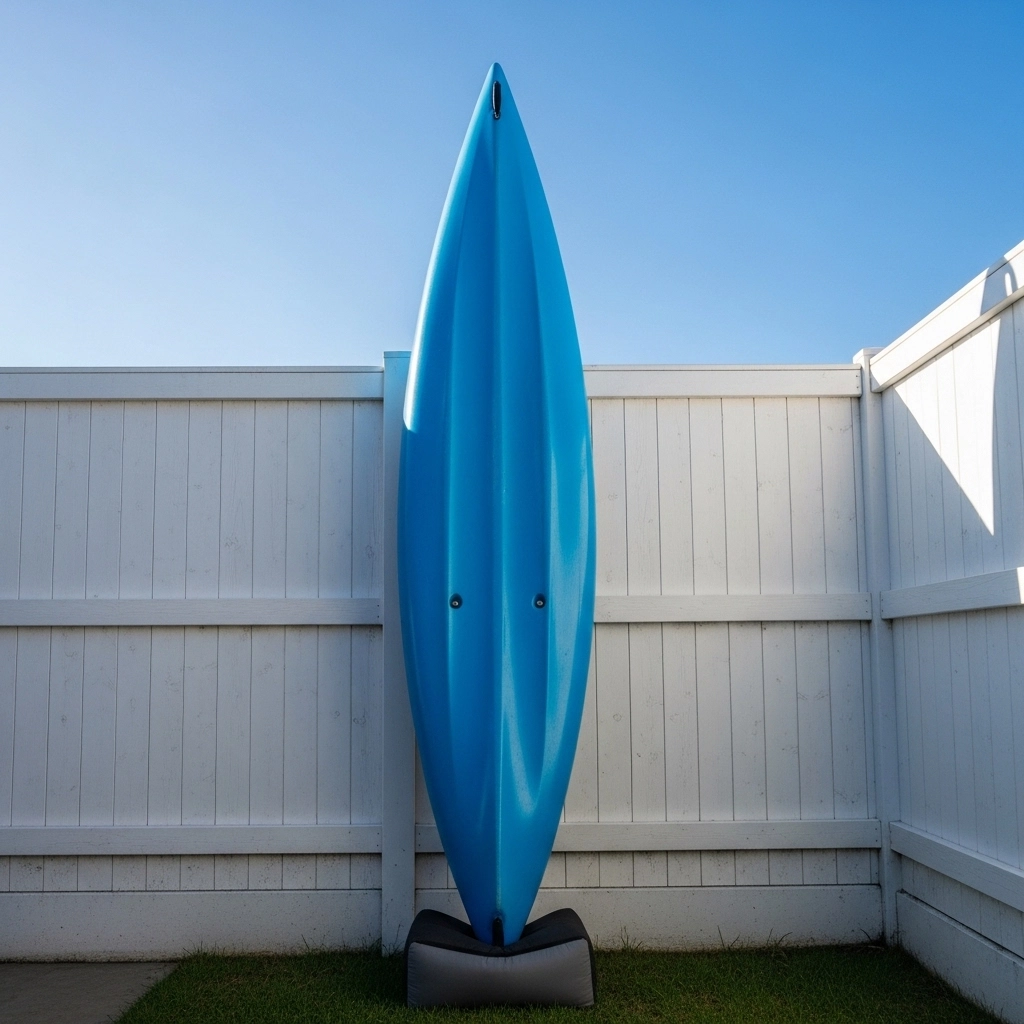
Vertical kayak storage means standing the kayak upright on its stern rather than laying it flat. This approach requires significantly less horizontal space, making it an excellent fit for narrow side yards, tight fence lines, or small patios. A padded nose stand cradles the bow end while a wall hook or bracket steadies the upper portion of the kayak. Always confirm that your ceiling height or available clearance accommodates the kayak’s full length before committing to this method.
4. Under-Deck Storage
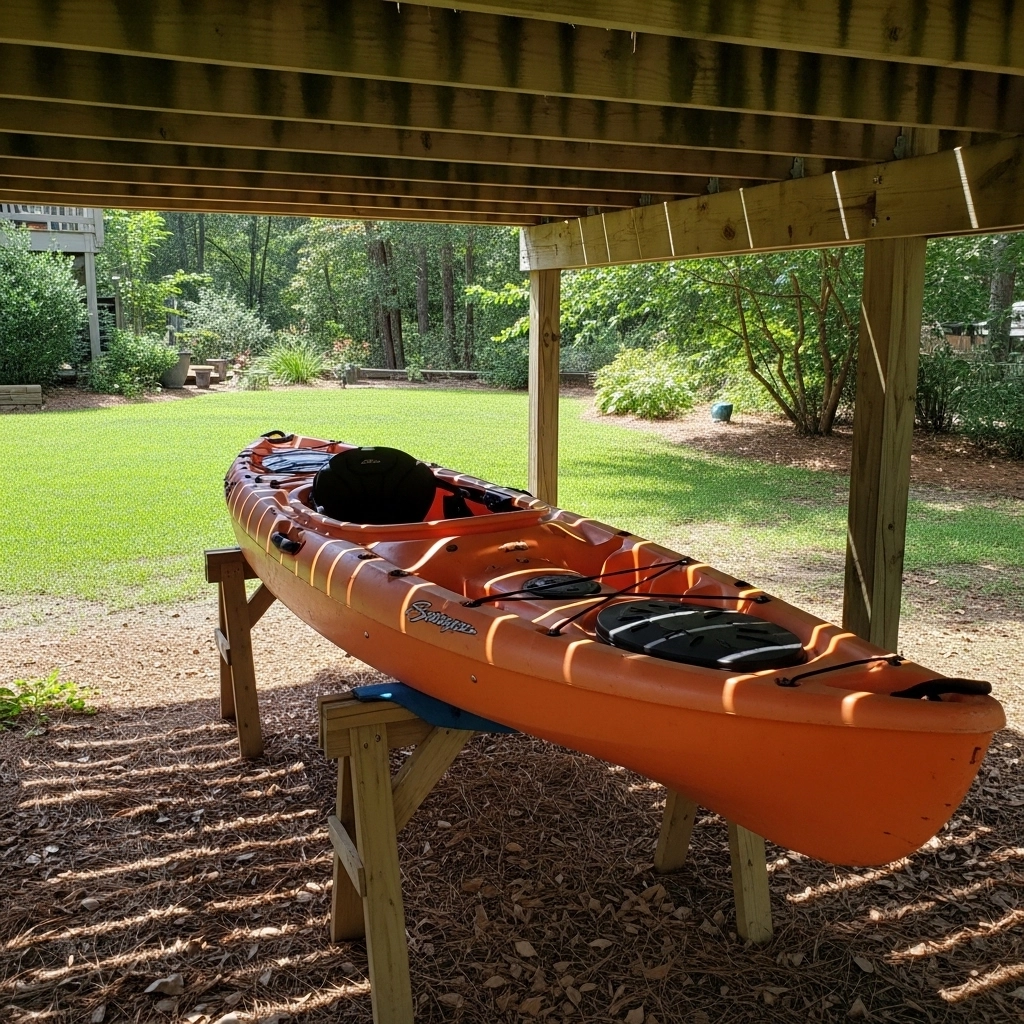
If your home has a raised deck or porch, the space underneath it is a largely untapped storage opportunity. Positioning a simple rack or cradle system beneath the deck shelters the kayak from rain and direct sun without requiring any additional structure. The natural overhang acts as a roof. Use treated lumber or rust-resistant metal hardware for any brackets you install in this semi-exposed environment, and ensure adequate airflow to prevent moisture buildup.
5. DIY PVC Pipe Kayak Rack
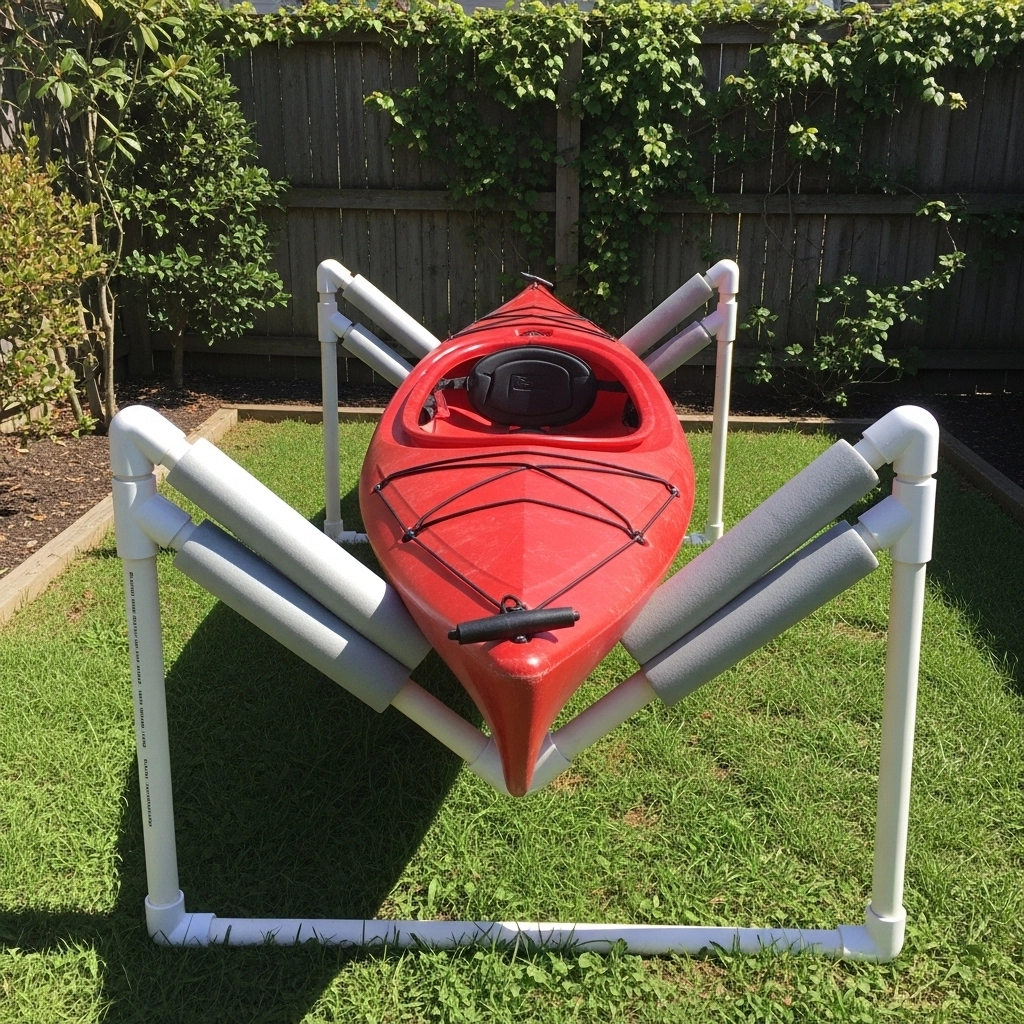
A PVC pipe kayak rack is one of the most accessible and affordable DIY outdoor kayak storage ideas available. You need standard PVC pipe sections, elbow fittings, T-shaped joints, PVC cement, and foam pipe insulation to pad the contact points. The whole structure can be assembled in an afternoon and customized to fit virtually any kayak size or yard layout. PVC is naturally weather-resistant and lightweight, and the material cost is typically modest compared to commercial racks.
6. Tarp Shelter Over a Ground Stand
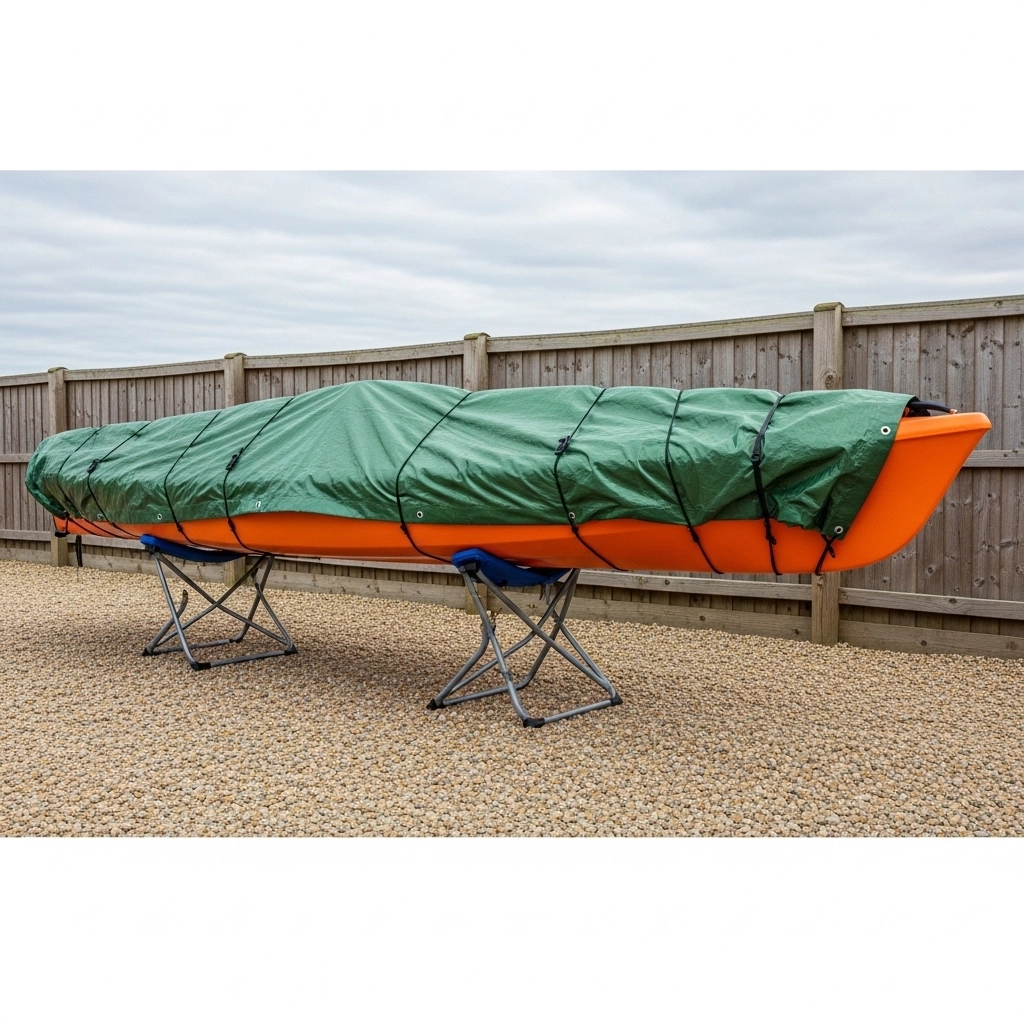
When you need the simplest possible outdoor kayak storage solution, a pair of folding kayak stands combined with a heavy-duty waterproof tarp provides surprisingly effective protection. Place the kayak on the stands, drape the tarp fully over it, and secure the edges with bungee cords or tie-down straps. Critically, suspend the tarp so it sits slightly above the hull rather than resting directly on it, because direct contact traps moisture and promotes mold growth over time.
7. Lean-to Kayak Shelter
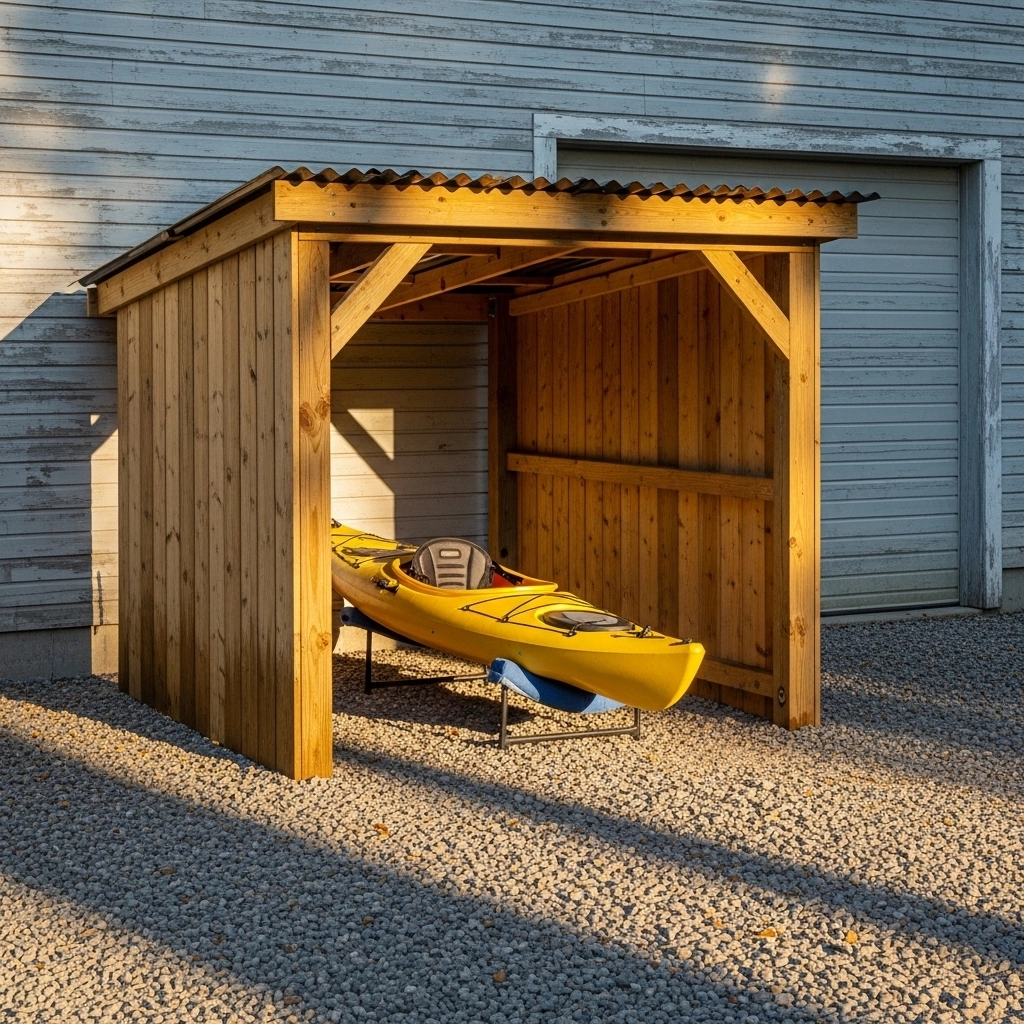
A lean-to shelter is a small, one-sided roofed structure built against an existing fence, wall, or garage exterior. It provides permanent overhead coverage and can be designed to fit the precise length and width of your kayak. Lean-to shelters made from pressure-treated lumber and corrugated metal or polycarbonate roofing panels are durable, weather-resistant, and can be built affordably with basic carpentry skills. The enclosed design also deters theft more effectively than an open rack.
8. Fence-Mounted Bracket System
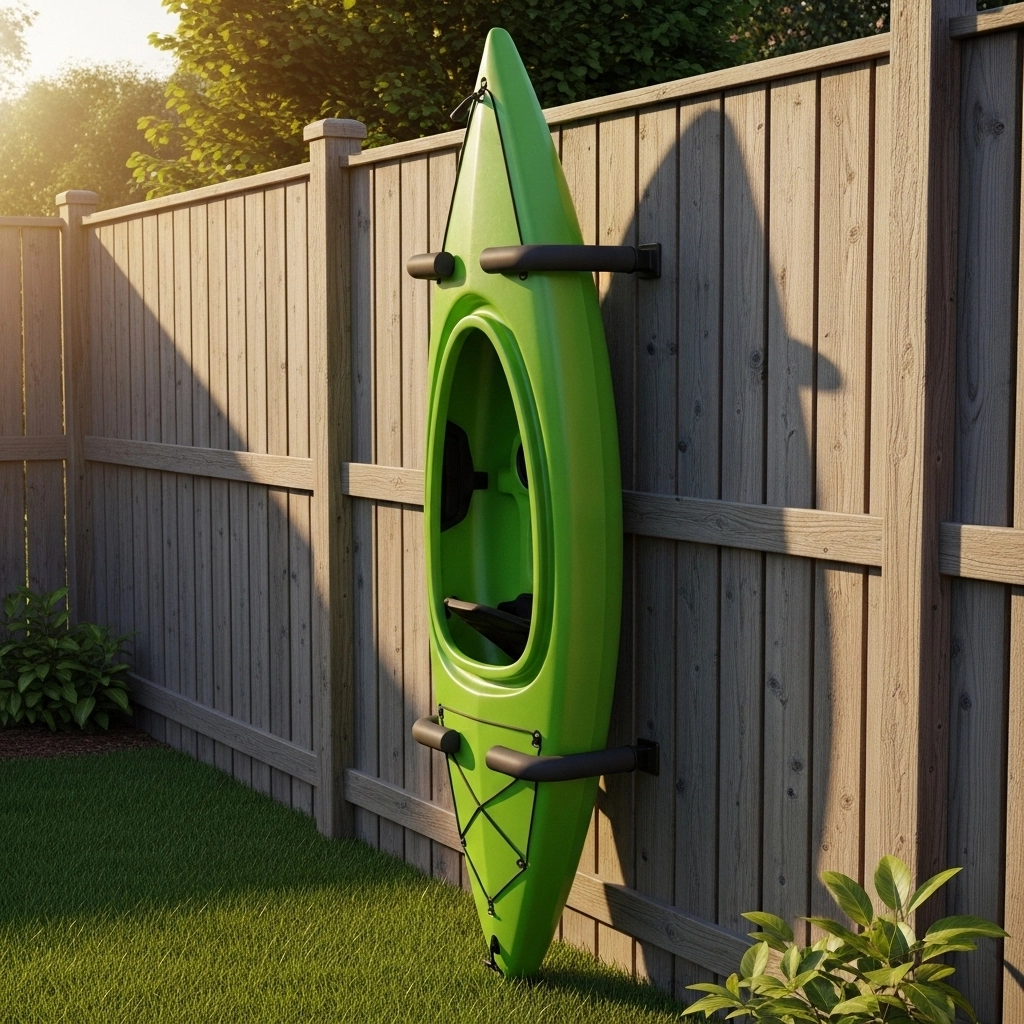
A sturdy wooden or metal fence can serve as a mounting surface for kayak storage brackets. Paddle-shaped brackets or simple padded arms bolt directly to fence boards, positioning the kayak horizontally along the fence line. This approach uses boundary space that is otherwise ignored and keeps the kayak tight against the perimeter of your property, leaving the interior yard open. Confirm that your fence posts are in good condition and capable of bearing the kayak’s weight before installation.
9. Overhead Pulley Hoist Under a Carport
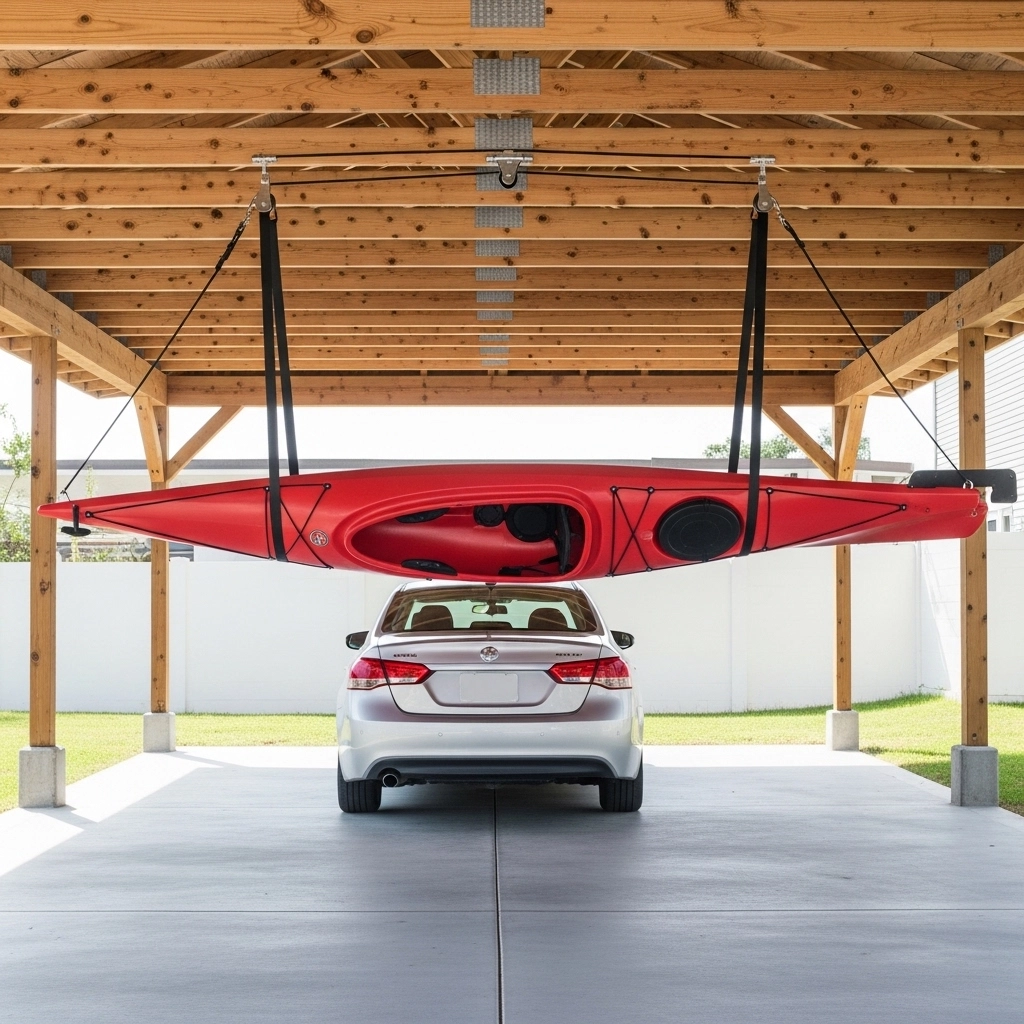
A carport’s overhead framework offers excellent anchor points for a pulley hoist system. The kayak is lifted off the ground using wide nylon straps and a rope-and-pulley mechanism, then secured at ceiling height when not in use. You can park your vehicle or store other equipment in the space below. Choose a hoist system with broad straps rather than thin rope to distribute the weight across the hull without creating pressure points that deform the keel over time.
10. Shed Storage with a Wall Rack Inside
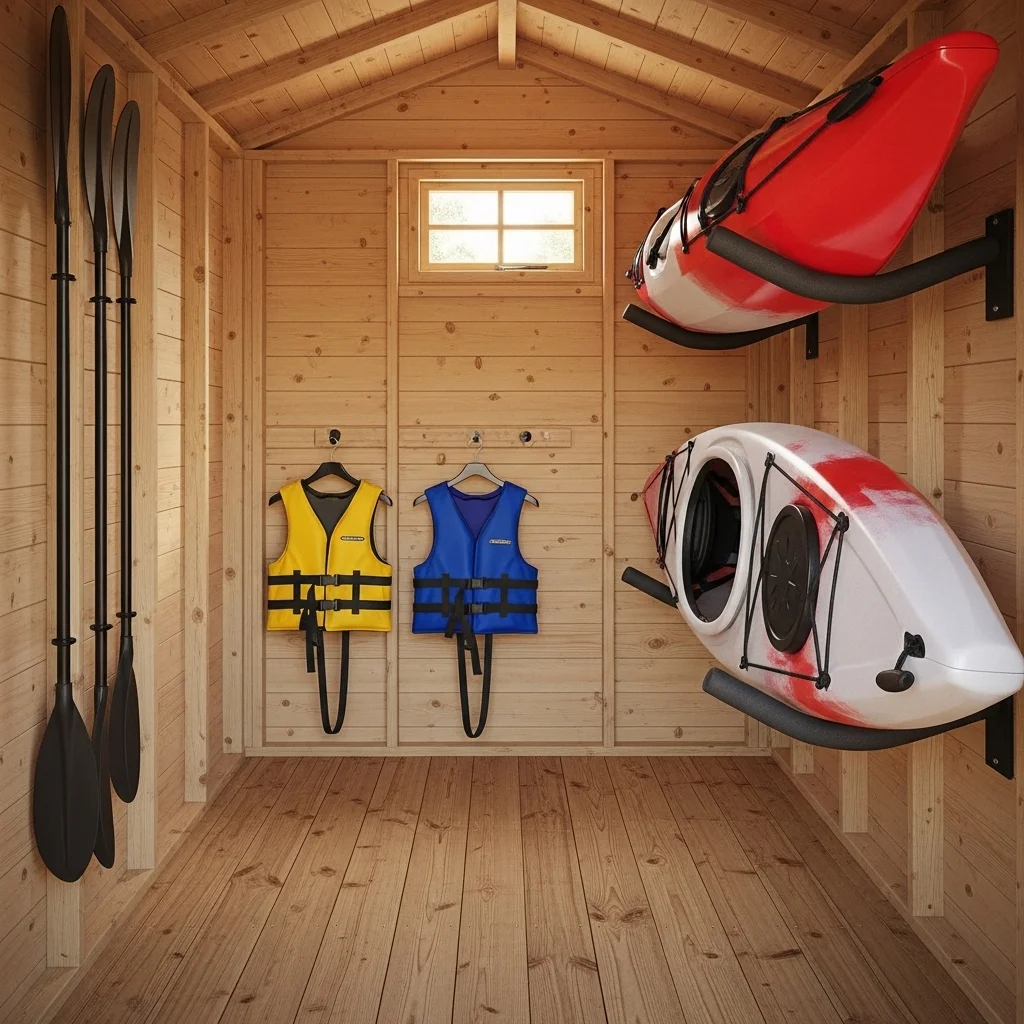
A dedicated outdoor storage shed solves multiple problems at once. It keeps the kayak sheltered from all weather, provides security from theft, and removes the need to protect the hull from UV exposure. Wall-mounted racks inside the shed hold the kayak horizontally while keeping the floor clear for paddles, life vests, and other gear. Prefabricated metal sheds with sloped roofs and ventilation panels are widely available and require minimal assembly.
11. Two-by-Four Lumber DIY Wall Rack
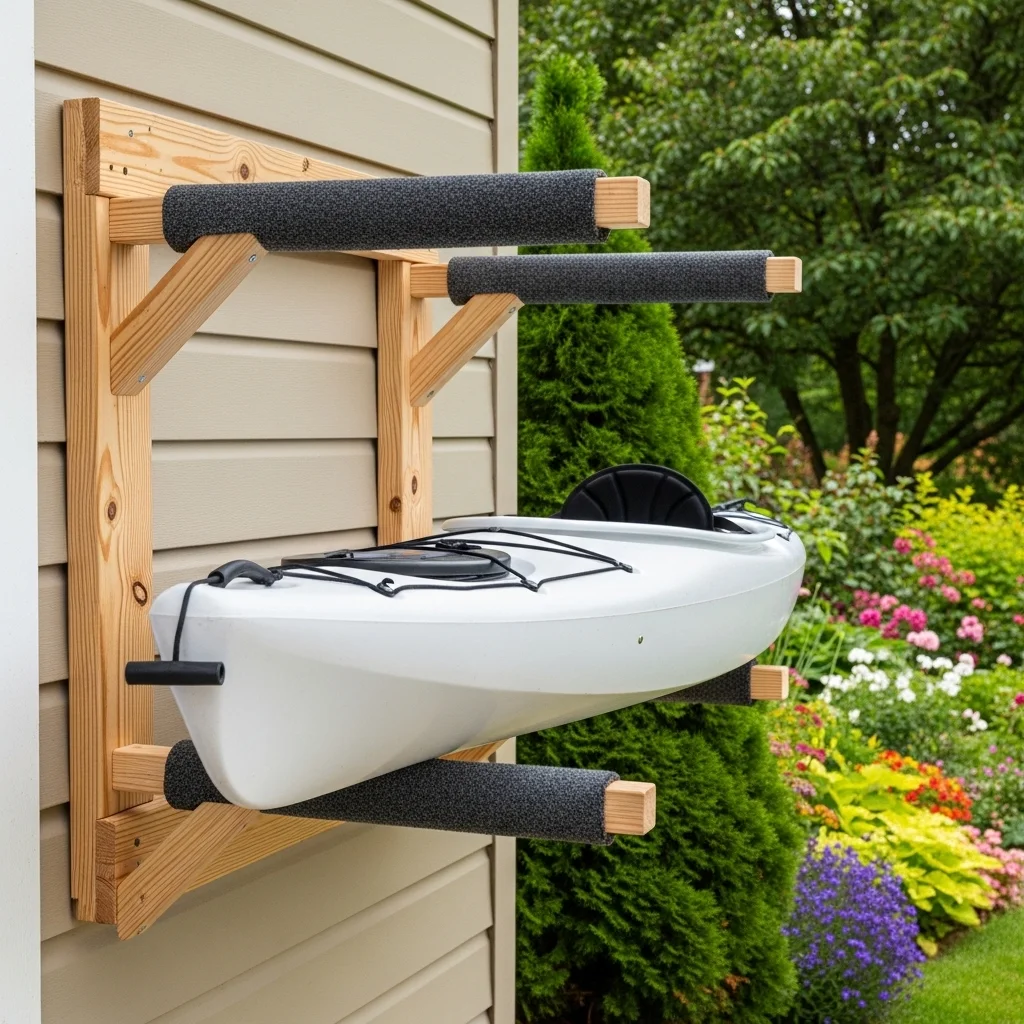
Building a wall rack from standard two-by-four lumber is a classic DIY approach that produces a strong and durable storage solution at a fraction of the cost of commercial alternatives. The basic design uses two horizontal arms mounted at the appropriate distance apart to support the hull at its widest points, with carpet or foam padding wrapped around the contact surfaces. This type of rack is sturdy enough for long-term outdoor use when treated with exterior-grade paint or wood sealant.
12. Ceiling-Height Overhead Rack Under a Patio Cover
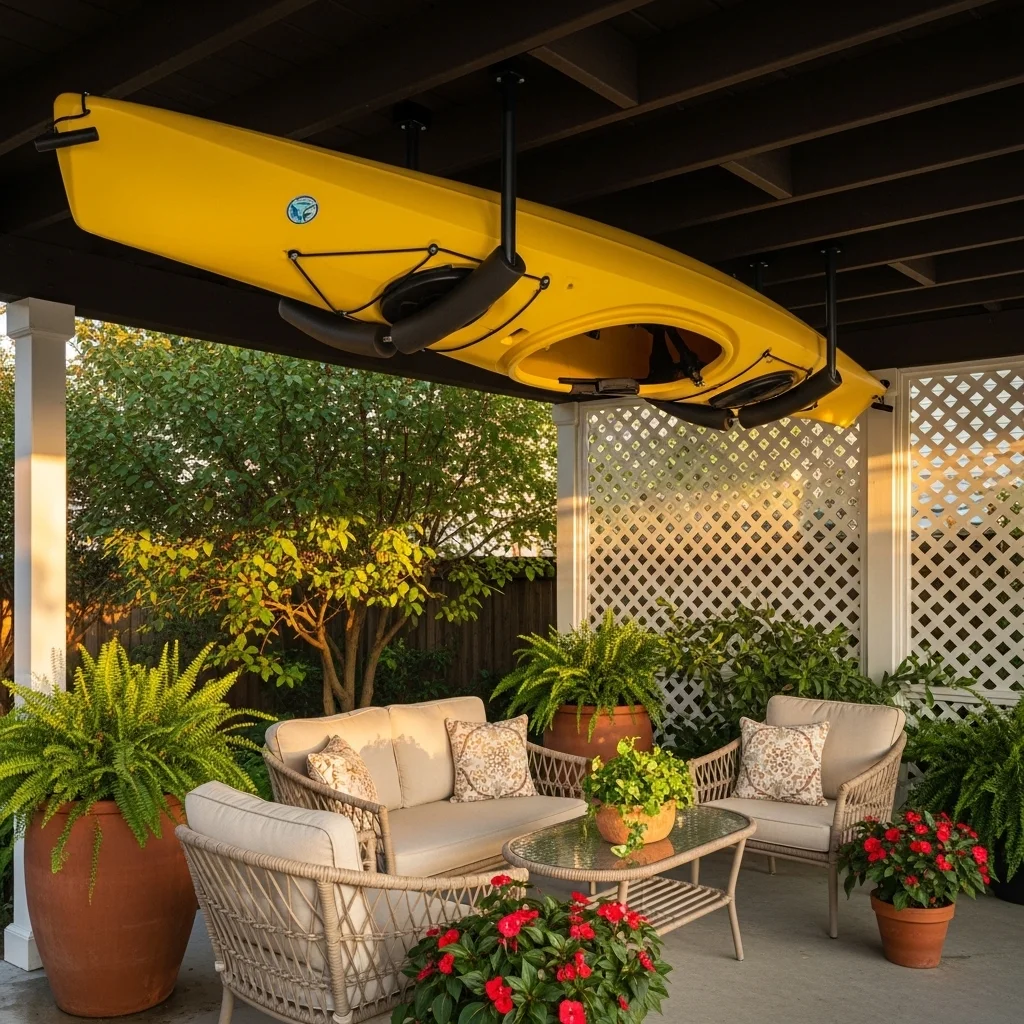
A covered patio with adequate ceiling height is an excellent location for an overhead kayak rack. Commercial models designed for this purpose use two horizontal arms suspended from the ceiling framework, with foam-padded cradles that cup the hull on each side. The kayak hangs securely above head level, leaving the patio floor completely free for furniture, grills, and foot traffic. This is a particularly elegant solution for homeowners who want outdoor kayak storage that blends into a well-organized patio setup.
13. Side Yard Horizontal Ground Rack
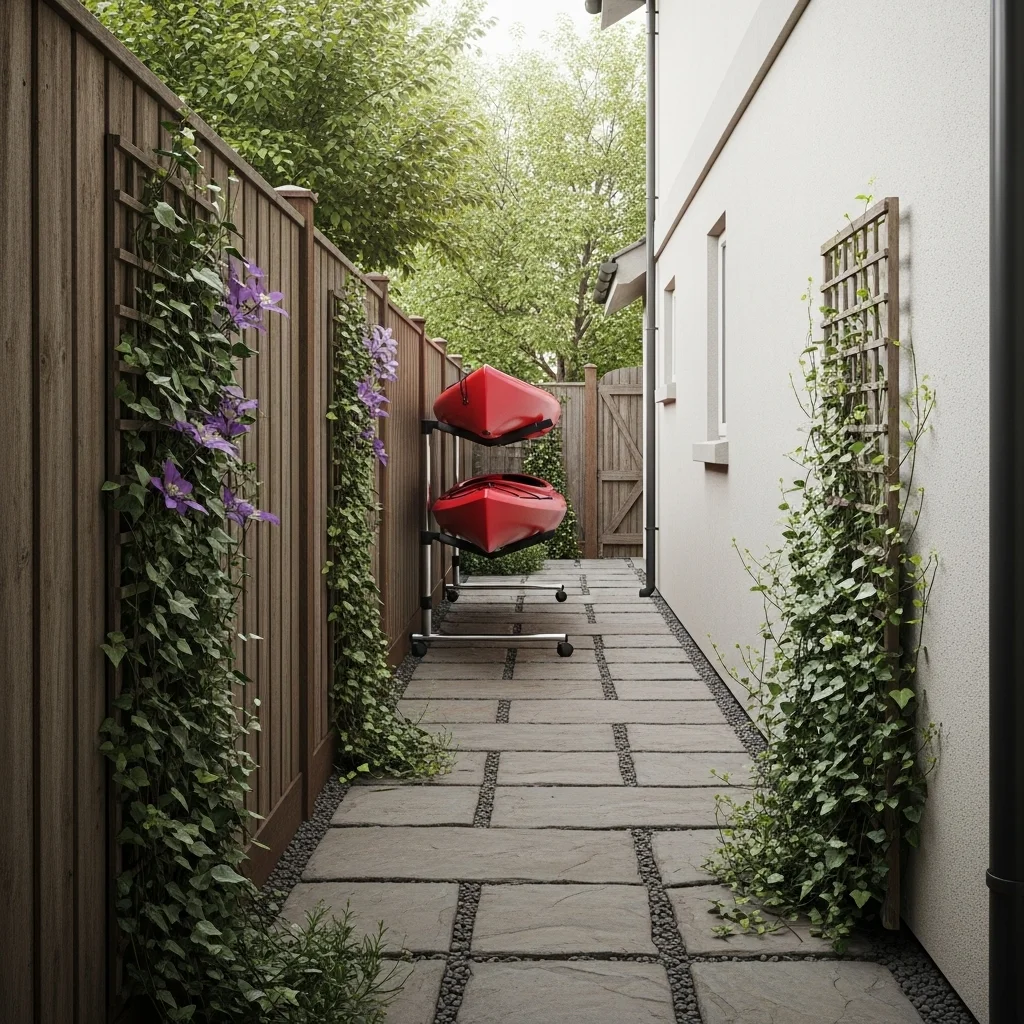
Narrow side yards running between a house and a fence line are often overlooked but can comfortably accommodate a horizontal kayak rack. A low-profile freestanding rack places the kayak at a manageable height, making loading and unloading straightforward. Choose a compact rack with a minimal footprint so that the side yard passageway remains accessible. Add a fitted kayak cover to protect against sun and rain in this typically open, exposed location. For more insights visit Homeliaa.
14. Inflatable Kayak Storage Solution
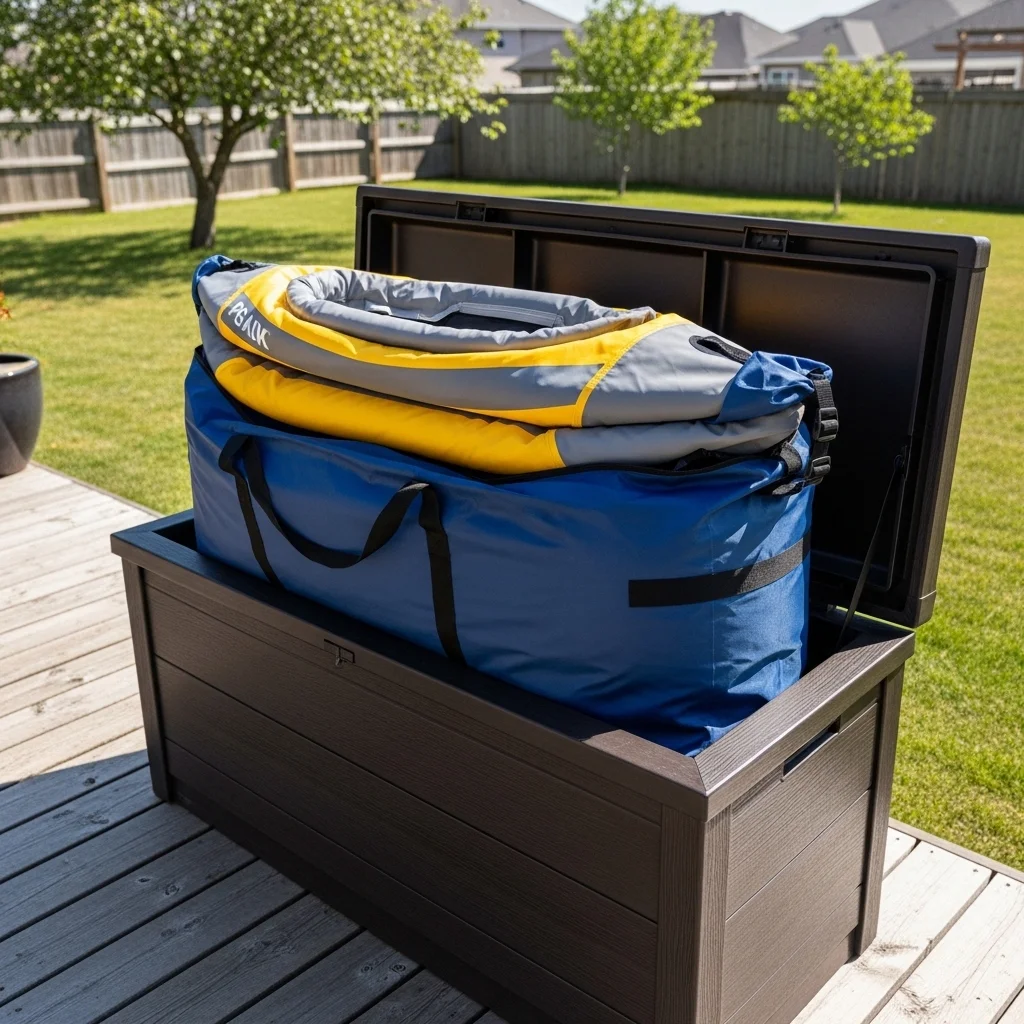
Inflatable kayaks offer a significant storage advantage because they deflate and fold down to a fraction of their paddling size. A waterproof storage bag stored in a small outdoor bin or deck box is all you need. For owners of inflatable models, a deck box with a locking lid placed on a patio or balcony provides weather protection, security, and easy access in a footprint roughly the size of a cooler. This approach eliminates the rack requirement entirely.
15. Kayak Storage Locker or Deck Box
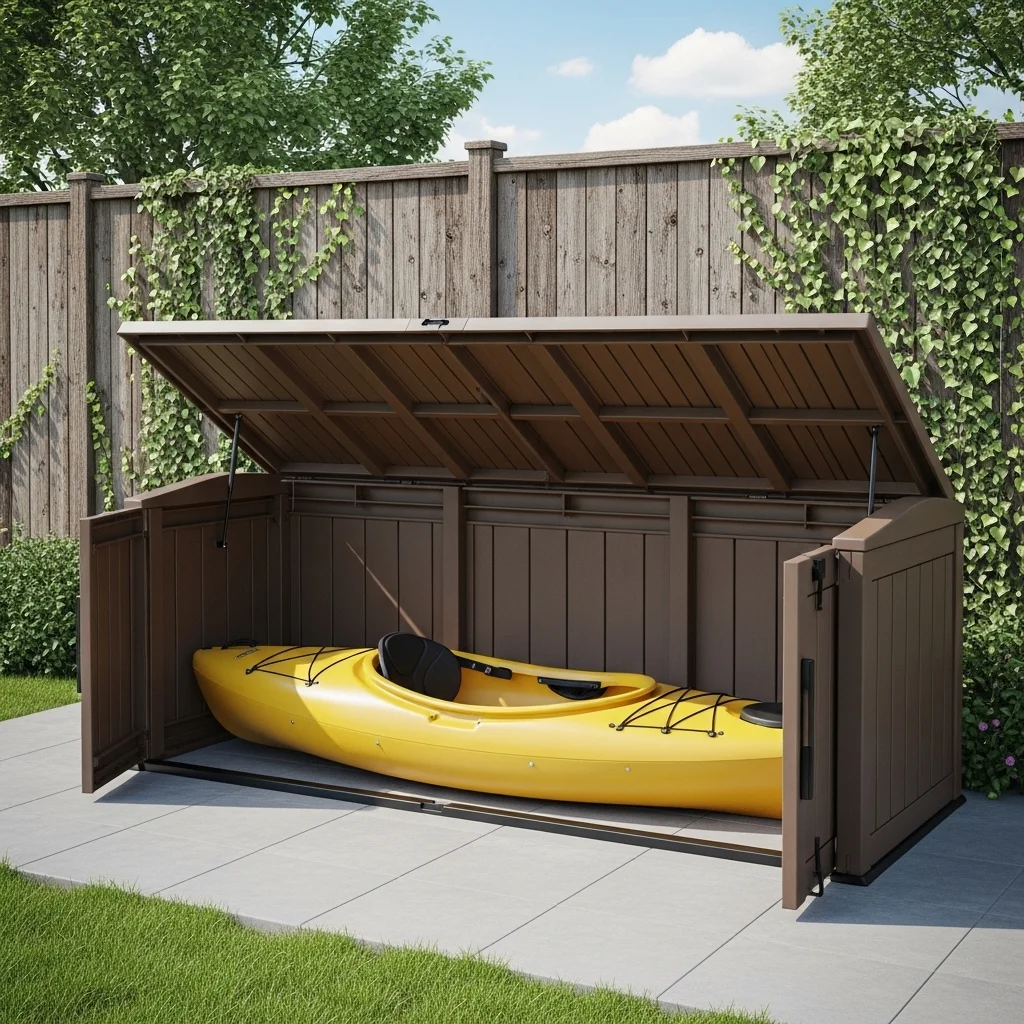
Purpose-built outdoor kayak storage lockers and oversized deck boxes are designed to house kayaks and paddling gear in a sealed, lockable enclosure. These units are made from UV-resistant polyethylene or resin and require no installation beyond placing them in a stable, level location. They protect against UV degradation, moisture, and opportunistic theft far better than an open rack covered with a tarp. For inflatable kayaks or folding kayaks, a large deck box is one of the cleanest and most secure options on the market.
16. Kayak Stored Under a Staircase Overhang
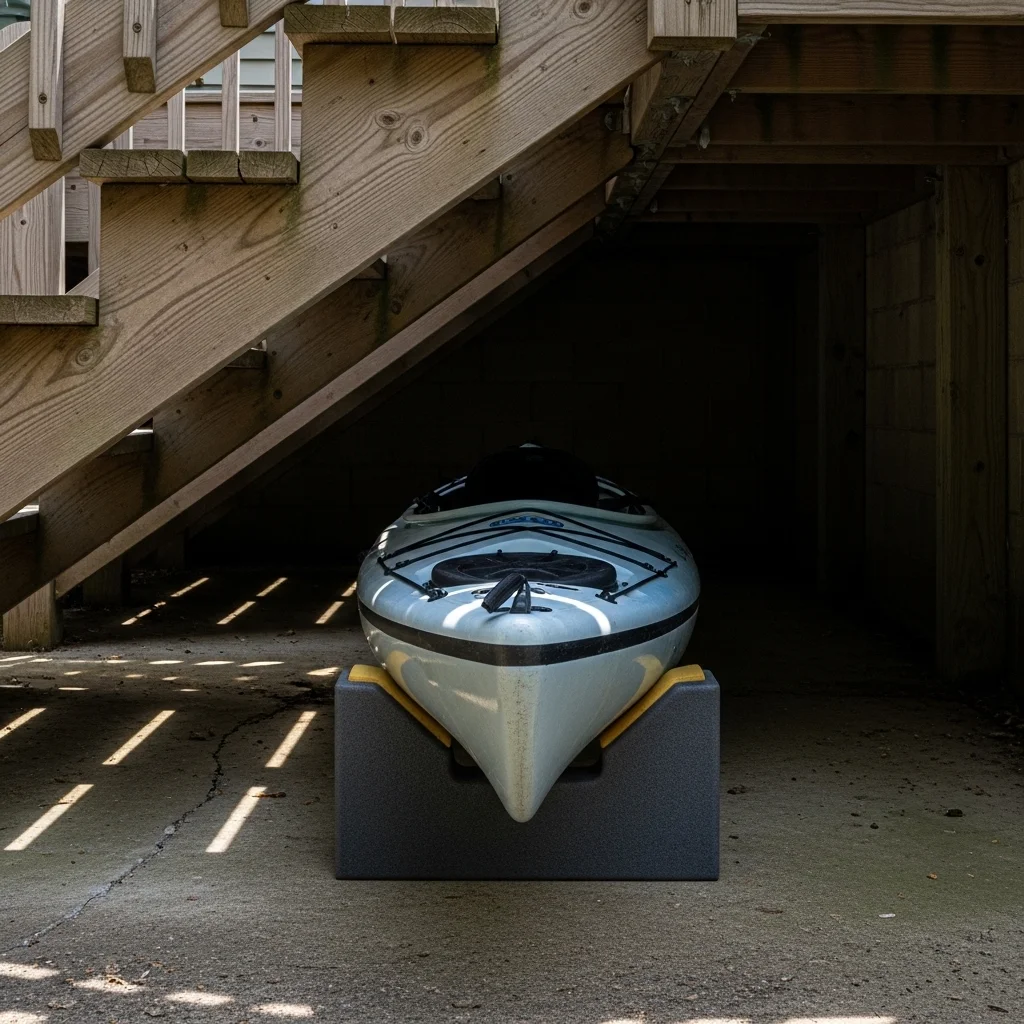
Outdoor staircases with open risers or landing overhangs create sheltered alcoves that are perfectly proportioned for kayak storage. Sliding a kayak on a pair of foam blocks or a simple cradle into this space takes advantage of an architectural feature that most homeowners overlook entirely. The staircase framing above provides weather protection while the space itself is typically too awkward for any other storage purpose, making this a genuinely efficient use of dead space.
17. Tree Canopy Natural Shade Rack
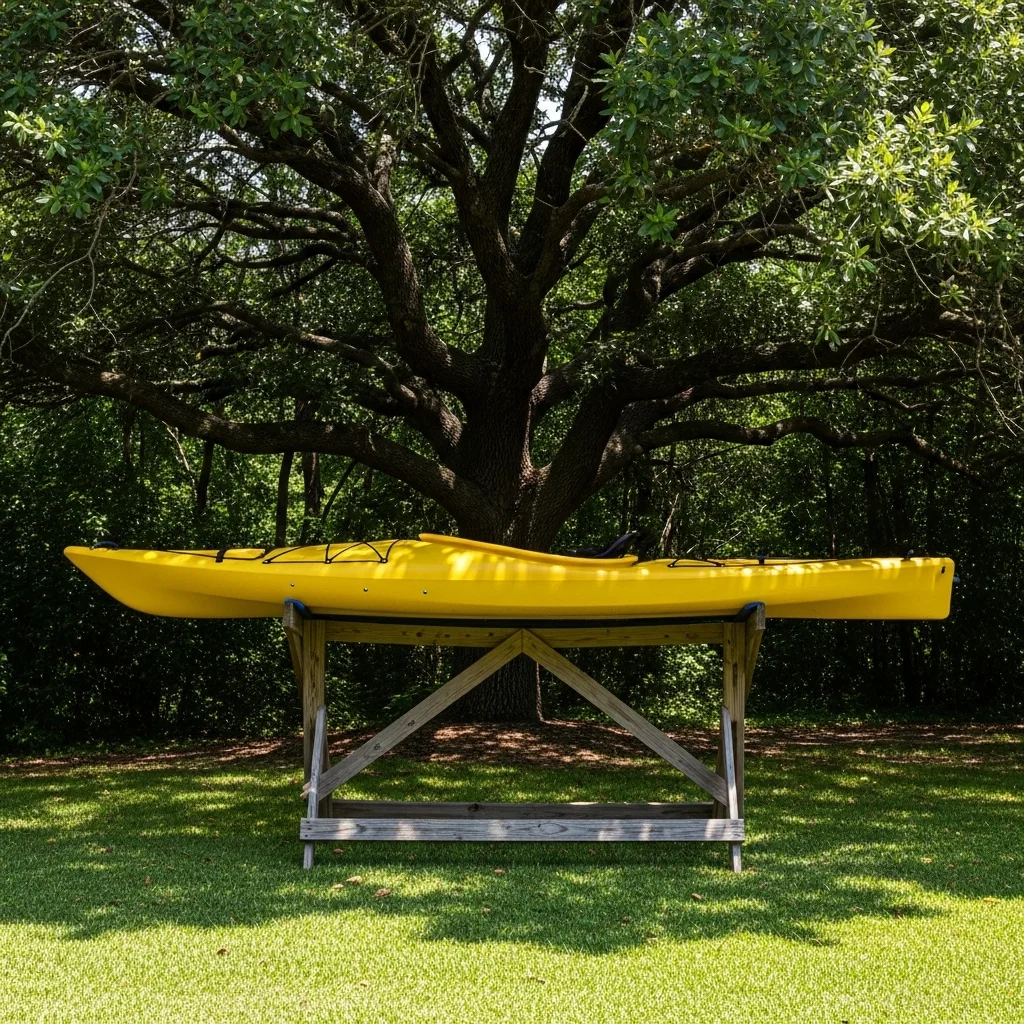
In yards with mature trees, positioning a kayak rack beneath a dense canopy takes advantage of natural UV and precipitation protection. A freestanding rack placed under a large oak or evergreen reduces direct sun exposure considerably, extending the life of the hull material without any additional shielding required. Combine this natural shade positioning with a breathable kayak cover during winter months for well-rounded year-round protection.
18. Kayak Stored Vertically Against a Shed Exterior
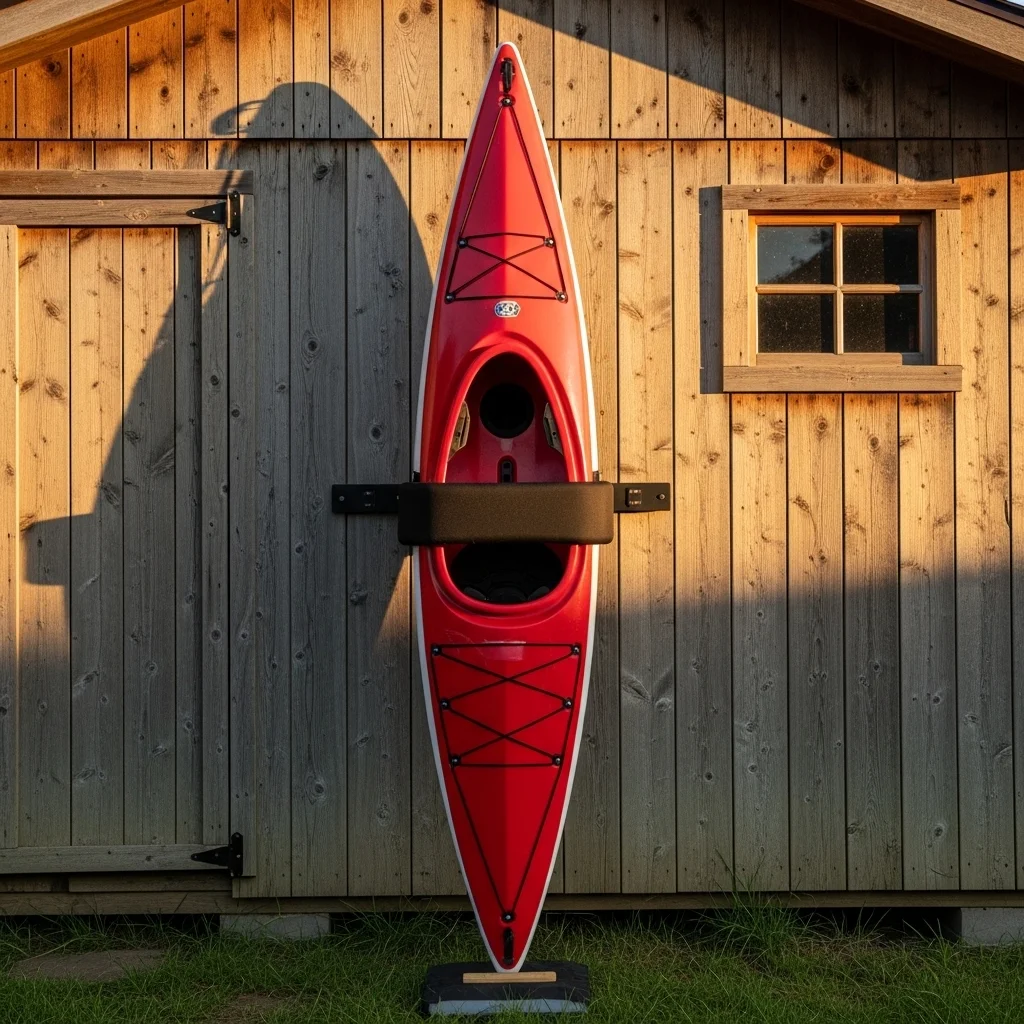
The exterior wall of an outdoor shed is a solid and stable surface for vertical kayak storage. A padded wall mount at approximately mid-height holds the kayak’s midsection while a rubber-footed ground cradle supports the stern. The stern cradle keeps the tip off bare ground, preventing moisture absorption and hull pressure. This configuration takes up a very small horizontal footprint, typically less than two feet of wall clearance, and blends naturally into the visual landscape of a backyard utility area.
19. Lockable Cable Security System for Outdoor Racks
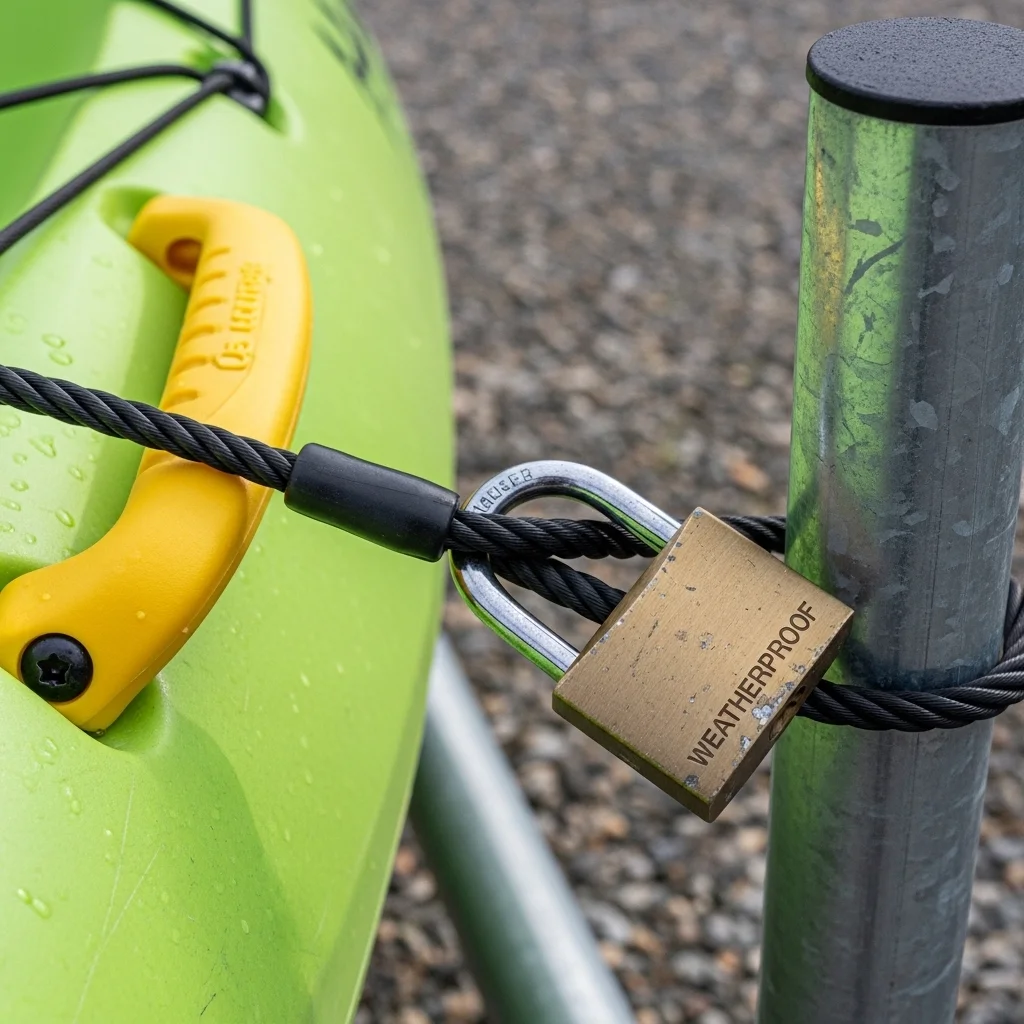
Security deserves its own consideration in any outdoor kayak storage setup. A heavy-duty vinyl-coated steel cable threaded through the kayak’s grab loops and locked to an anchor point on the rack or a fixed structure prevents opportunistic theft without requiring an expensive enclosure. Pair the cable lock with a weather-resistant padlock rated for outdoor use. This inexpensive addition transforms any open outdoor rack from a convenient target into a far less appealing one.
20. Seasonal Cover Rotation System
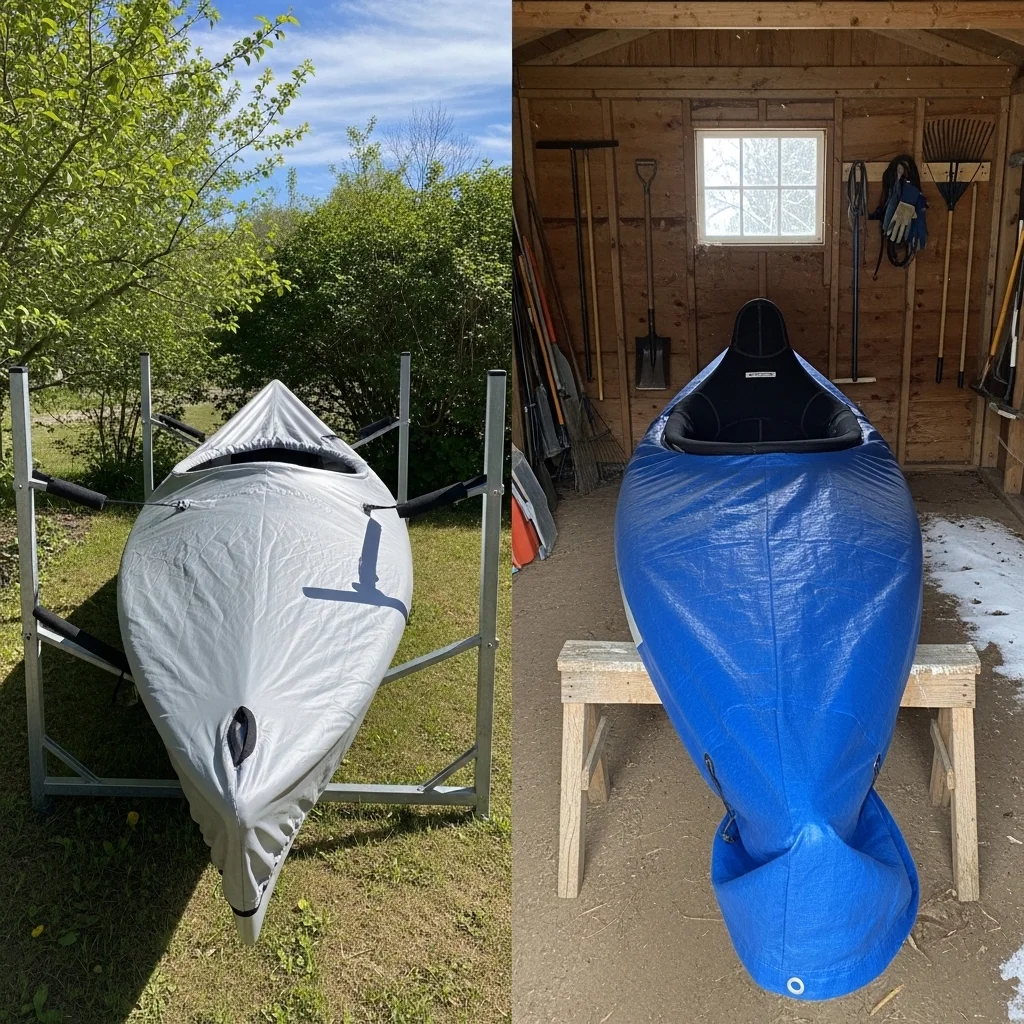
For paddlers in climates with distinct seasons, a seasonal rotation system combines multiple storage strategies throughout the year. During active paddling months, the kayak lives on an accessible outdoor rack with a UV-resistant cover. When the season ends, the kayak moves into a shed, under a deck, or into a covered lean-to where it is cleaned, treated with UV protectant, and sealed in a cockpit cover for winter. This rotation approach minimizes weather exposure during the most damaging seasons while maintaining easy access during peak paddling periods.
Conclusion
Finding the right outdoor kayak storage solution for a small space is entirely achievable with the right approach. The 20 ideas covered in this article span every budget, skill level, and space constraint imaginable, from a simple folding stand under a tarp to a purpose-built lean-to shelter or a pulley hoist under a carport. The consistent principles underlying all of these solutions are the same: keep the kayak elevated off the ground, distribute its weight evenly, protect it from direct UV exposure and moisture, and secure it against theft.
A kayak is a meaningful investment in the quality of your outdoor life. Treating its storage as seriously as you treat its maintenance and outfitting will ensure that it performs well, looks good, and lasts through many seasons of paddling. Start with the space you have, identify which of these ideas fits your property and budget most naturally, and make a plan. Your kayak will thank you every time you pull it down ready to paddle.
Frequently Asked Questions
1. Can I store my kayak outside year-round?
Yes, but it requires consistent protection. Use a UV-resistant kayak cover, elevate the hull off the ground with a rack or cradle, and position the kayak in shade or under a shelter whenever possible. In freezing climates, bring the kayak into a shed or covered space during winter to prevent temperature-related hull damage.
2. What is the best way to store a kayak in a small backyard?
A wall-mounted rack on an exterior fence or garage wall is typically the most space-efficient option for a small backyard. Alternatively, a compact freestanding rack positioned along a fence line or in a side yard keeps the main outdoor area clear.
3. How do I protect my kayak from UV damage when stored outdoors?
Use a high-quality UV-resistant kayak cover that fully encloses the hull. Position the kayak in a shaded area under a tree, deck, or lean-to structure, and apply a UV protectant spray to the hull surface at the start and end of each paddling season.
4. Is it safe to store a kayak vertically?
Yes, provided the stern is cradled in a padded base and the midsection is supported by a wall bracket. Vertical storage is one of the most space-saving approaches available and is suitable for most hard-shell kayak designs.
5. How can I secure my outdoor kayak against theft?
Thread a heavy-duty steel cable through the kayak’s grab handle or scupper holes and attach it with a weatherproof padlock to a fixed anchor point such as a wall bracket, rack post, or ground anchor. This deters casual theft effectively and adds minimal cost to any outdoor storage setup.