18 Stunning Wood Slat TV Wall Ideas for Any Room
There are walls that simply hold a television, and then there are walls that transform an entire room. A wood slat TV wall belongs firmly in the second category. Over the past few years, this design trend has moved from high end showrooms and architecture magazines into everyday homes, and for very good reason. The combination of natural texture, architectural depth, and warm visual character makes wood slat paneling one of the most rewarding upgrades a homeowner can make. Whether your space is a compact apartment living room, a spacious master bedroom, or an open plan family area, a wood slat TV wall has the power to anchor the room, elevate the look of your mounted television, and create a feature that people immediately notice when they walk in.
This article walks you through 18 stunning wood slat TV wall ideas that cover a wide range of styles, room types, and budgets. From sleek minimalist arrangements to bold dark walnut statements, each idea is designed to help you envision what this treatment could look like in your own home.
1. Floor to Ceiling Vertical Slats in a Neutral Living Room
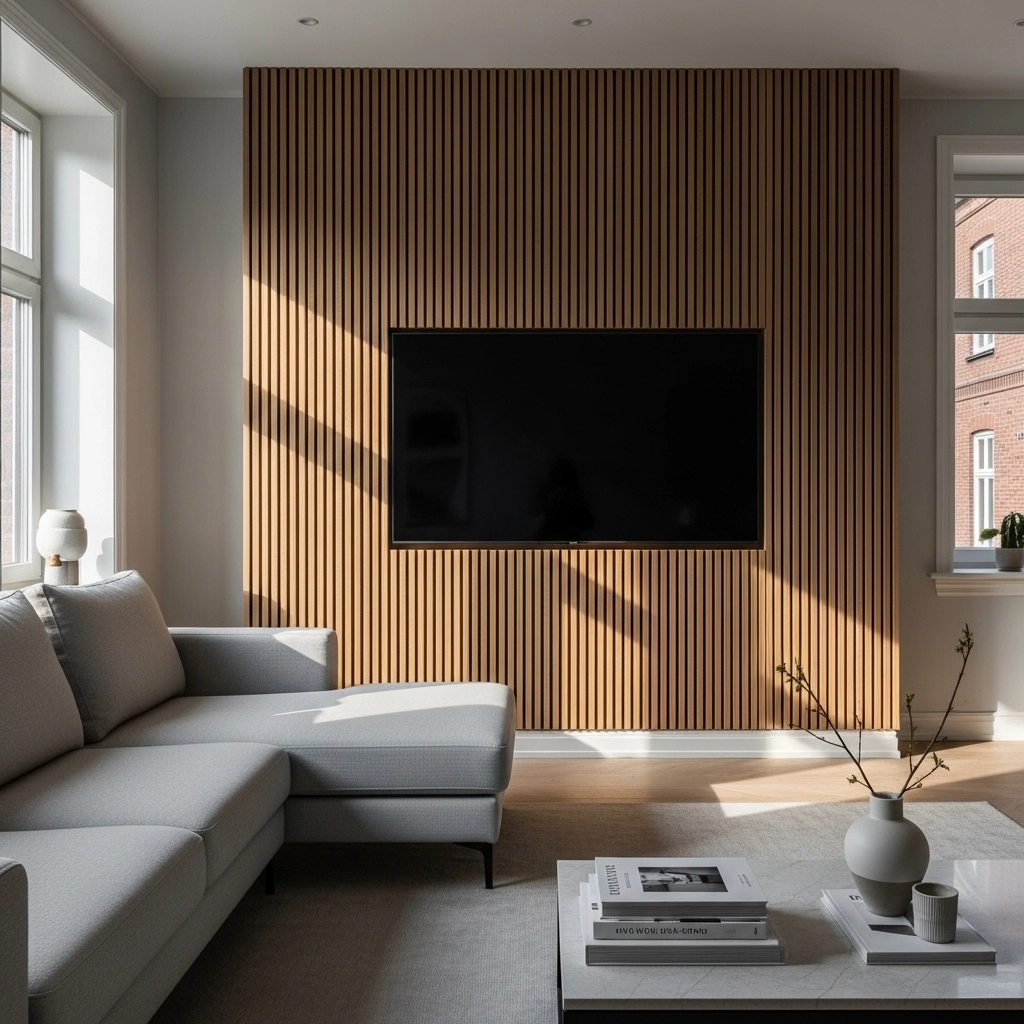
Vertical slats running from floor to ceiling are one of the most powerful applications of this design. The upward lines draw the eye toward the ceiling, making the room feel taller and more expansive. In a neutral living room with white or light gray walls, natural oak slats create a warm focal point behind the TV without overwhelming the space. The television sits comfortably within the composition rather than looking like an afterthought.
2. Dark Walnut Slats with a Recessed TV Niche
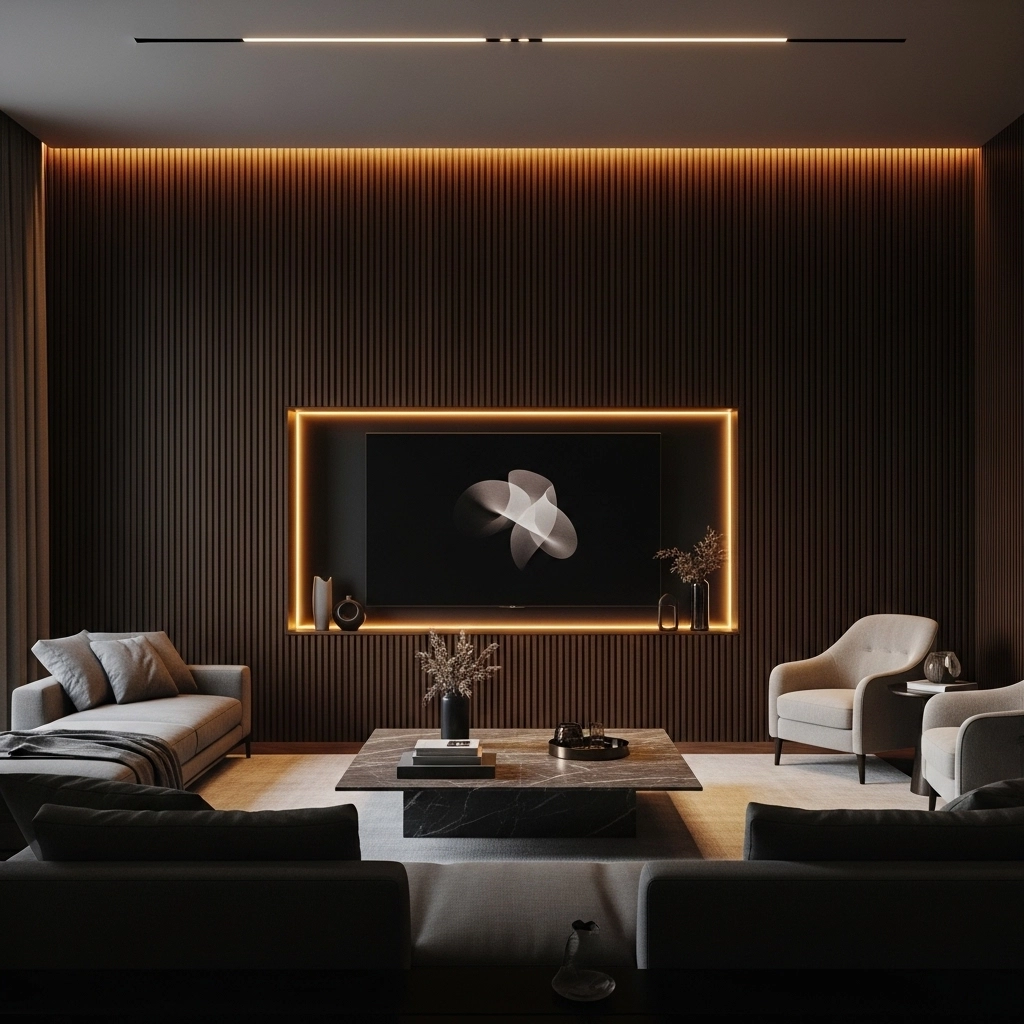
For homeowners who love a dramatic, moody interior, dark walnut slat panels paired with a built in TV niche deliver sophistication at a high level. The deep brown tones of walnut create rich contrast against lighter furnishings and flooring. By recessing the television slightly into the wall, the screen becomes part of the architecture rather than simply mounted on top of it.
3. Horizontal Slat Wall for a Wide Room Feel
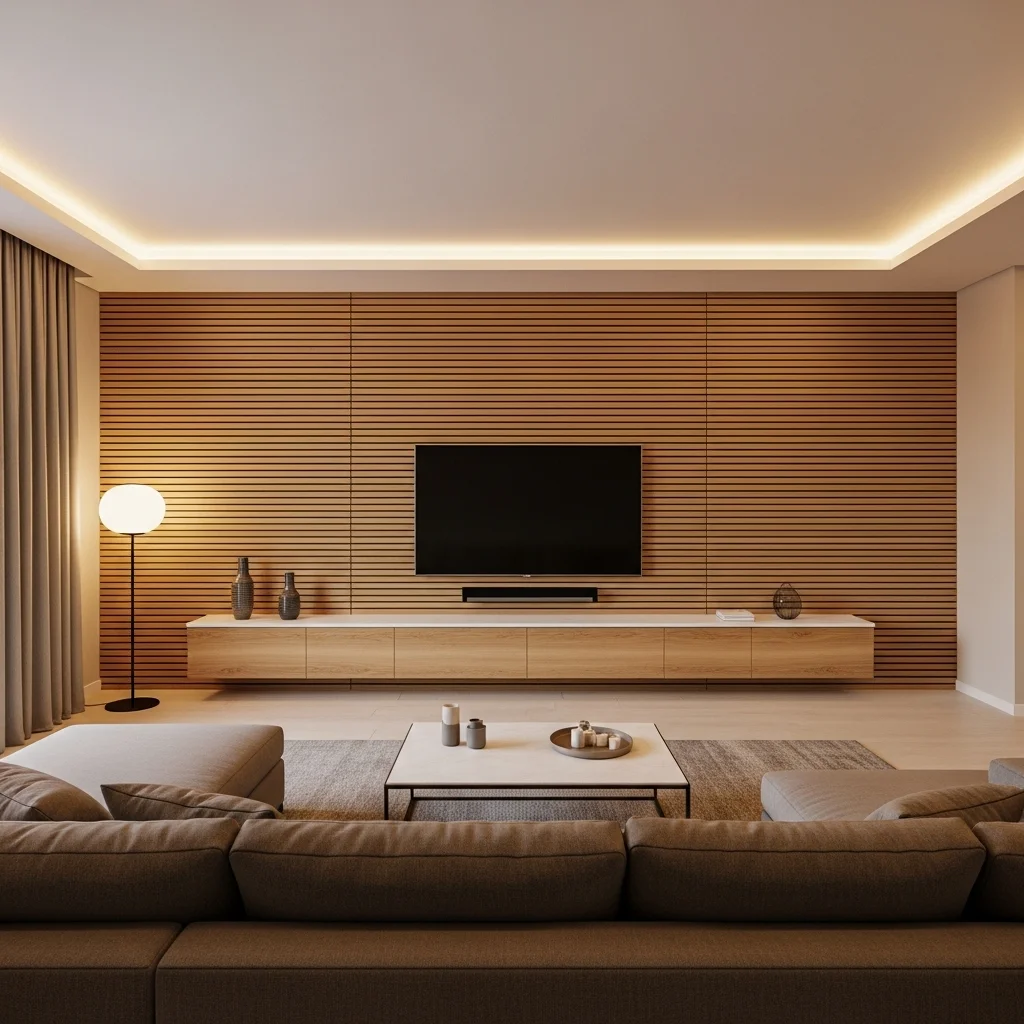
While vertical slats emphasize height, horizontal slat arrangements do the opposite in the most flattering way possible. They make a room appear wider and more expansive, which is particularly useful in narrow living rooms or bedrooms. A horizontal wood slat TV wall with a warm honey oak finish and floating media unit beneath it creates a cohesive, furniture quality look that feels intentional from every angle.
4. Light Ash Slats for a Scandinavian Inspired Space
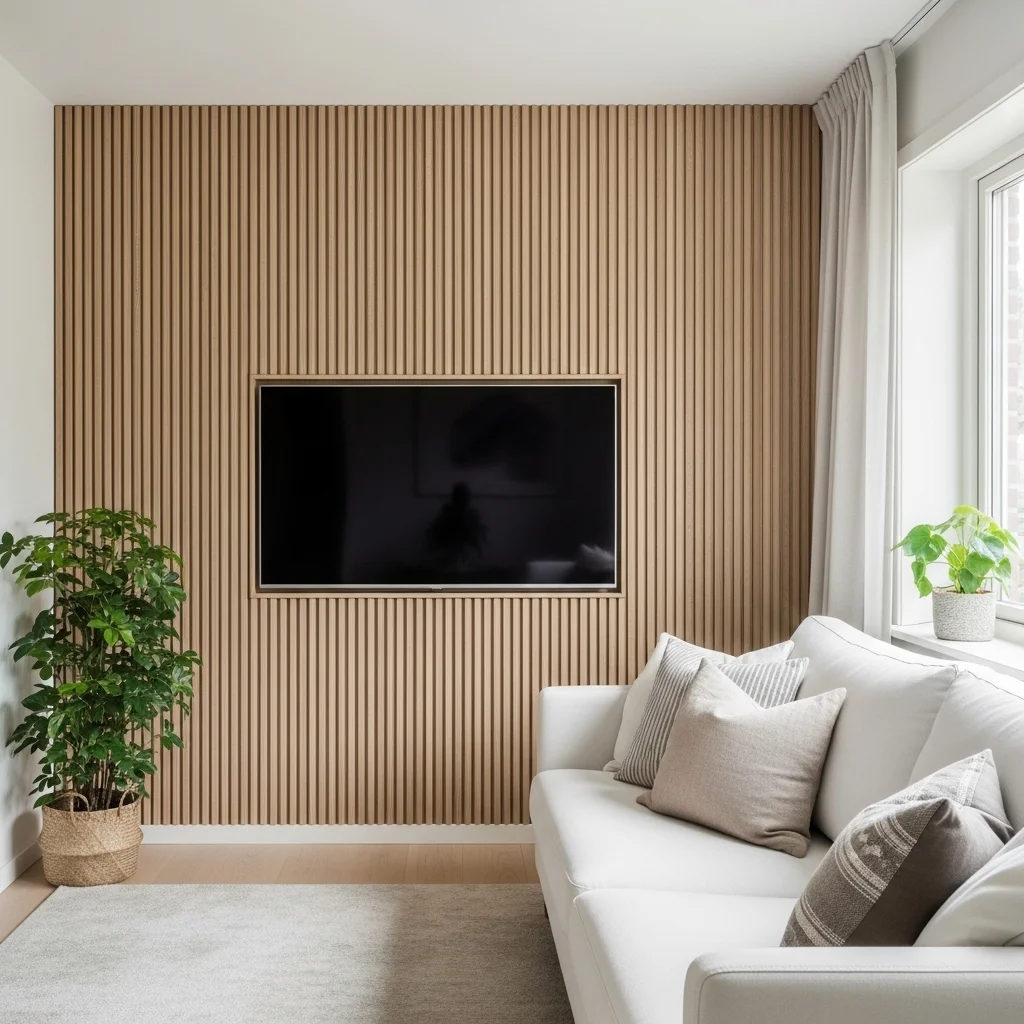
The Scandinavian design philosophy, centered on simplicity, functionality, and natural materials, finds its perfect expression in light ash wood slat walls. These pale, smooth grained panels bring warmth without heaviness. Paired with simple white furniture, linen textiles, and a wall mounted television, a light ash slat wall creates a serene and quietly sophisticated space that never goes out of style.
5. Japandi Style with Narrow Black Slats
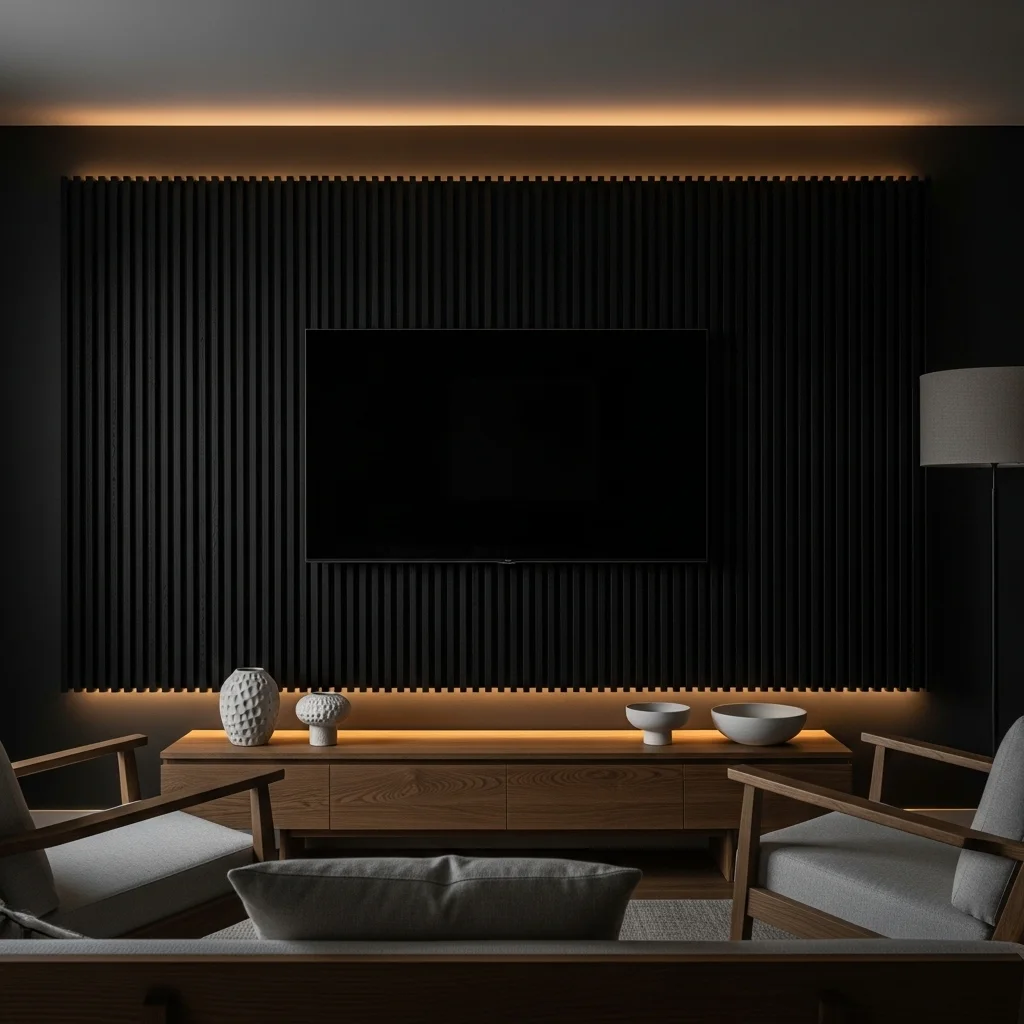
The Japandi aesthetic, a blend of Japanese and Scandinavian sensibilities, has become one of the most admired interior design movements in recent years. Narrow, evenly spaced black stained slats set against a dark background create extraordinary geometric depth and visual tension. This approach suits living rooms and bedrooms where the goal is a curated, intentional environment with a strong sense of calm.
6. Wood Slat Wall with Integrated Ambient Lighting
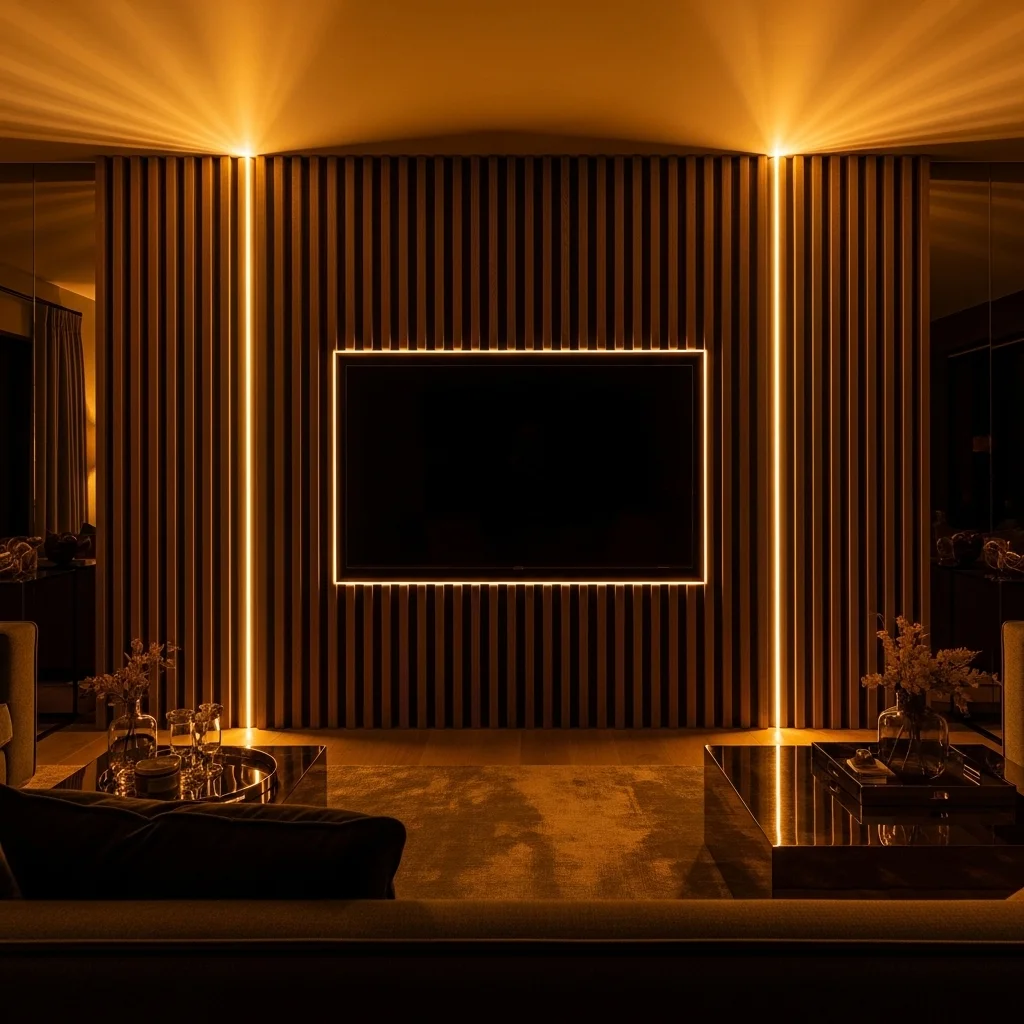
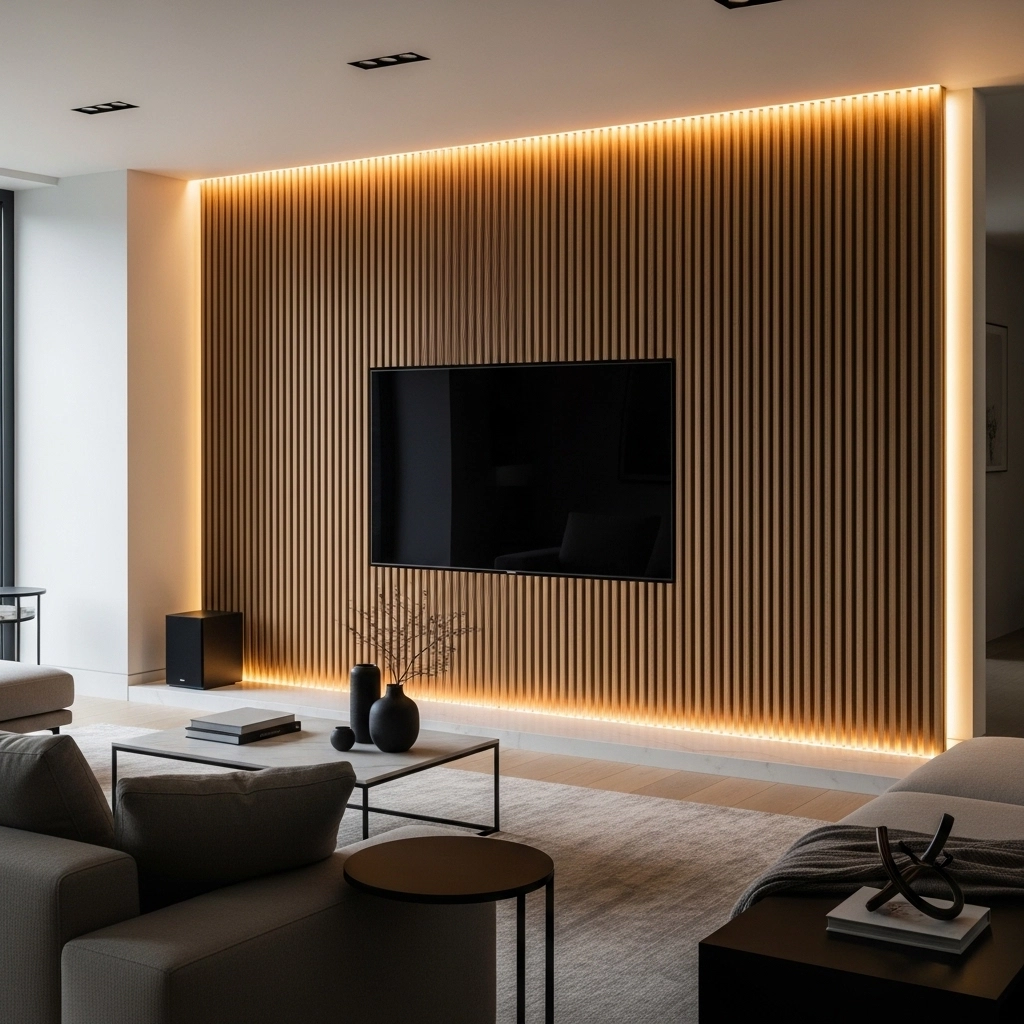
One of the most transformative upgrades you can make to a wood slat TV wall is adding integrated lighting. LED strip lights placed behind the slats or along the edges create a soft, diffused glow that elevates the entire composition, particularly in the evening. This backlighting technique reduces eye strain during television viewing and adds a layer of atmosphere that ordinary walls simply cannot achieve.
7. Reclaimed Wood Slats for a Rustic Character Wall
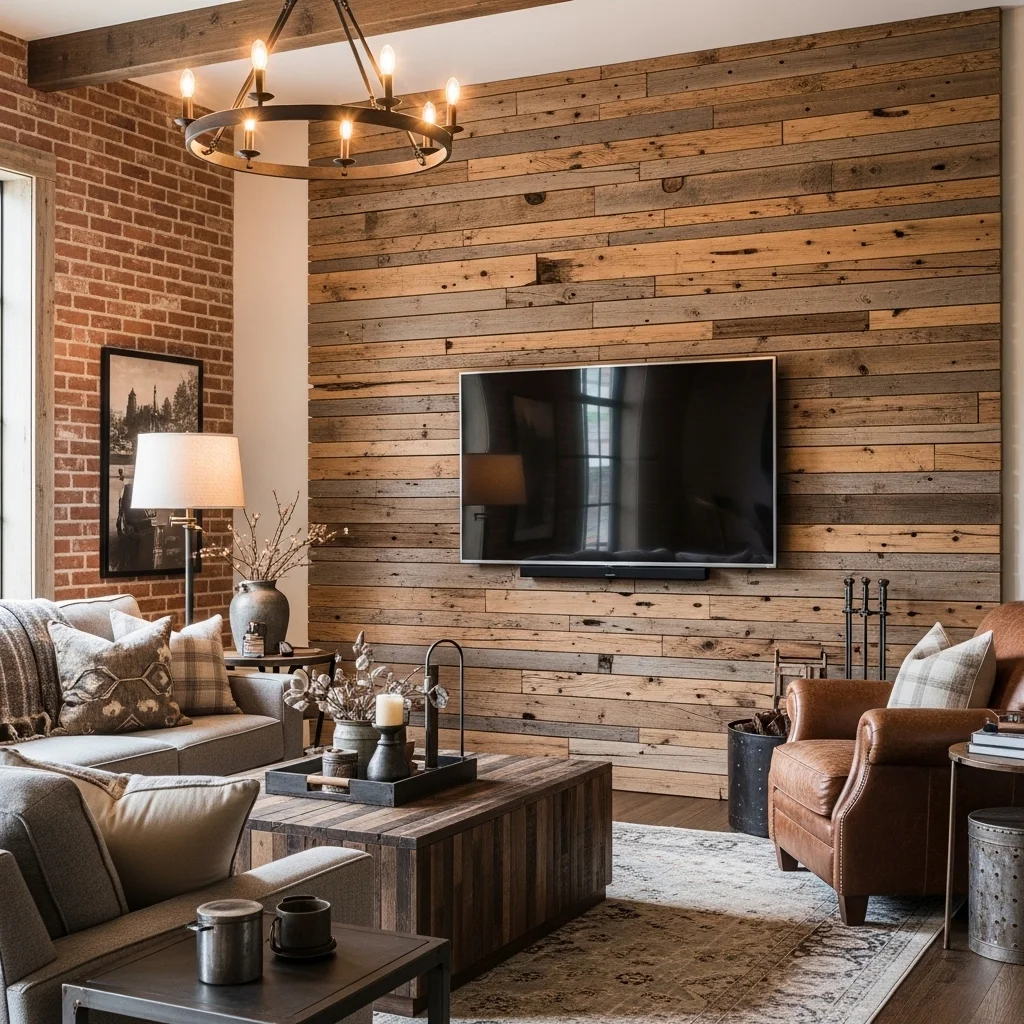
Reclaimed wood brings something that no new material can replicate, which is history. The natural imperfections, weathered grain, and tonal variation of reclaimed timber slats give a TV wall authentic character and warmth. This approach works beautifully in homes with exposed brick, industrial style furniture, or farmhouse influenced decor. Each plank tells a small story, and together they create a backdrop full of depth and personality.
8. Full Wall White Oak Slats in an Open Plan Space
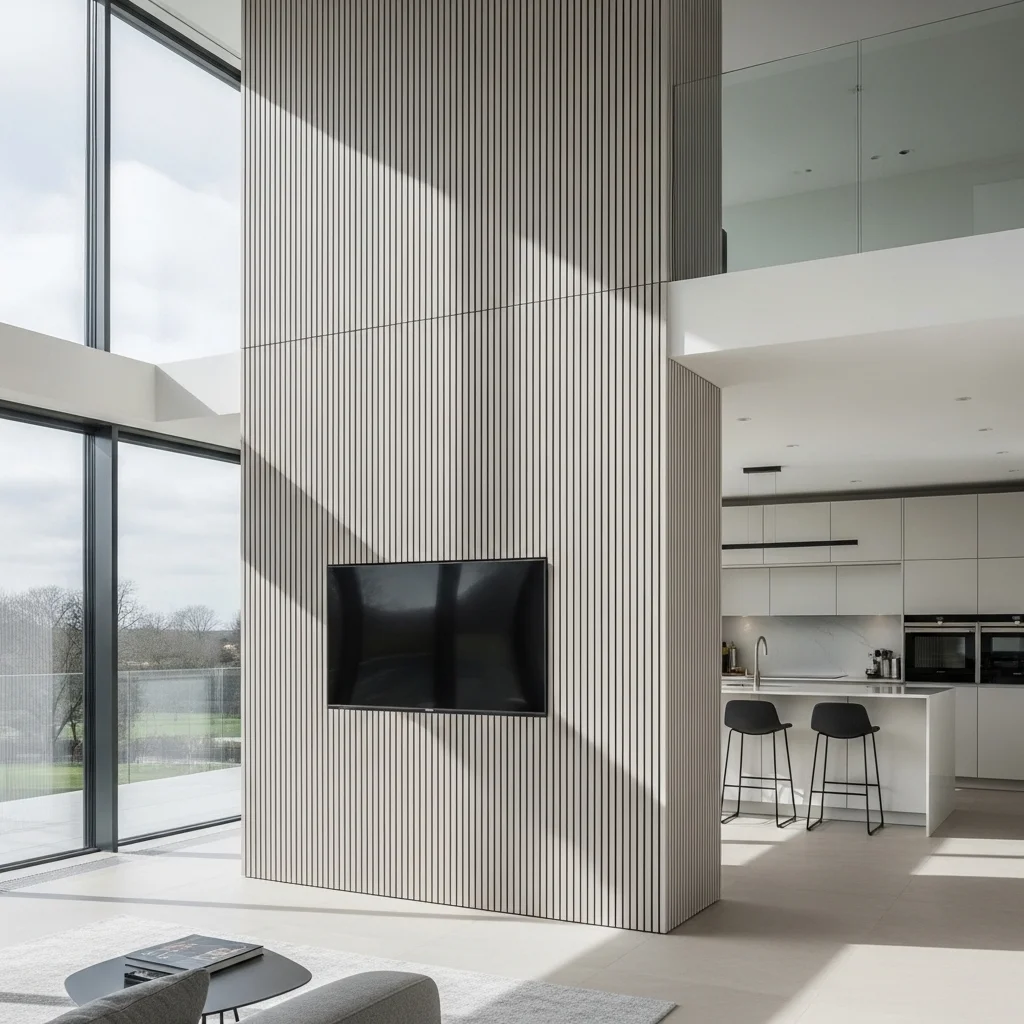
Open plan living areas benefit greatly from a defined focal point, and a full wall white oak slat treatment behind the television provides exactly that. White oak offers a light, warm tone with a fine, consistent grain that looks refined and clean. In an open plan kitchen and living area, this treatment creates a visual anchor that organizes the space and gives it a sense of structure without the need for partition walls.
9. Two Tone Slat Wall with Contrasting Wood Finishes
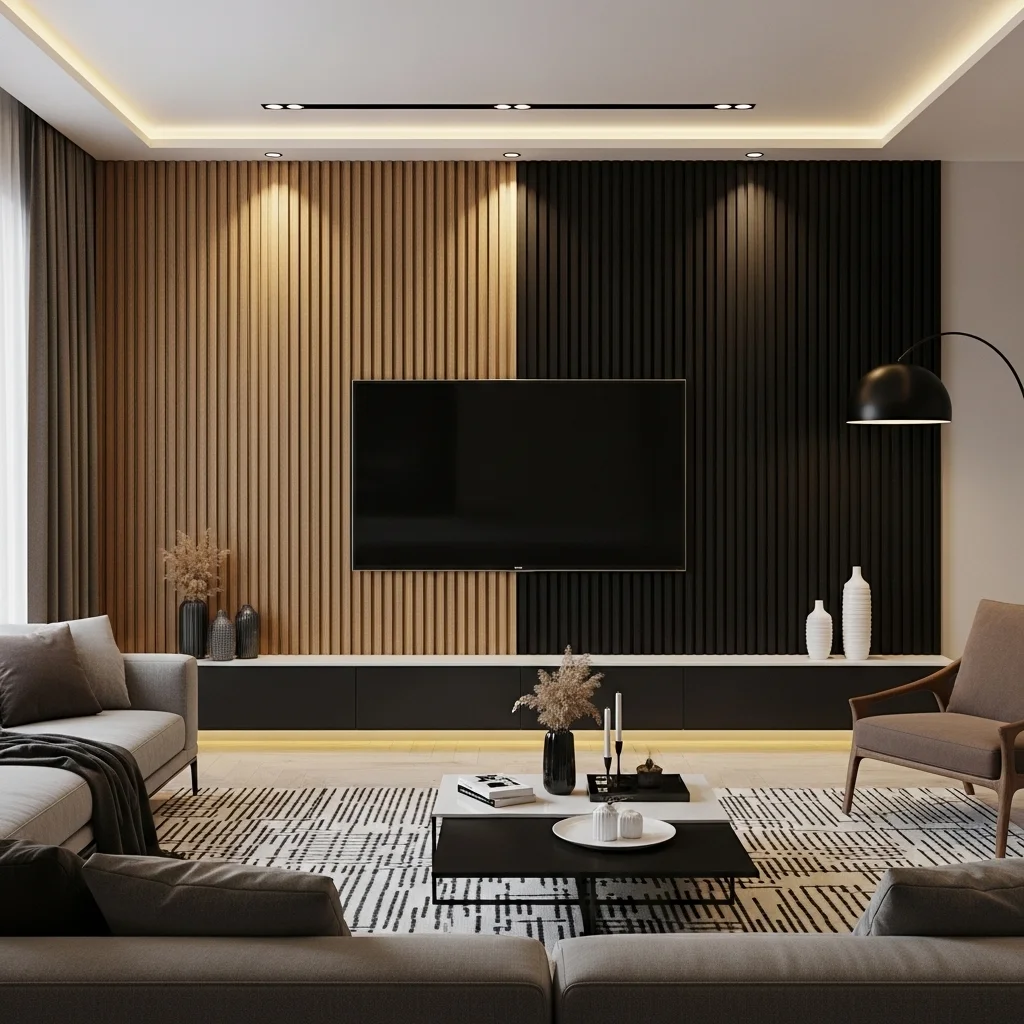
Mixing two different wood tones or finishes on a single slat wall adds visual complexity and a custom, bespoke quality to the design. For example, alternating between natural oak and dark espresso slats creates a striped effect that is both modern and dynamic. This two tone approach works especially well in larger living rooms where a single uniform tone might feel flat across a wide expanse of wall.
10. Wood Slats with Built In Floating Shelves
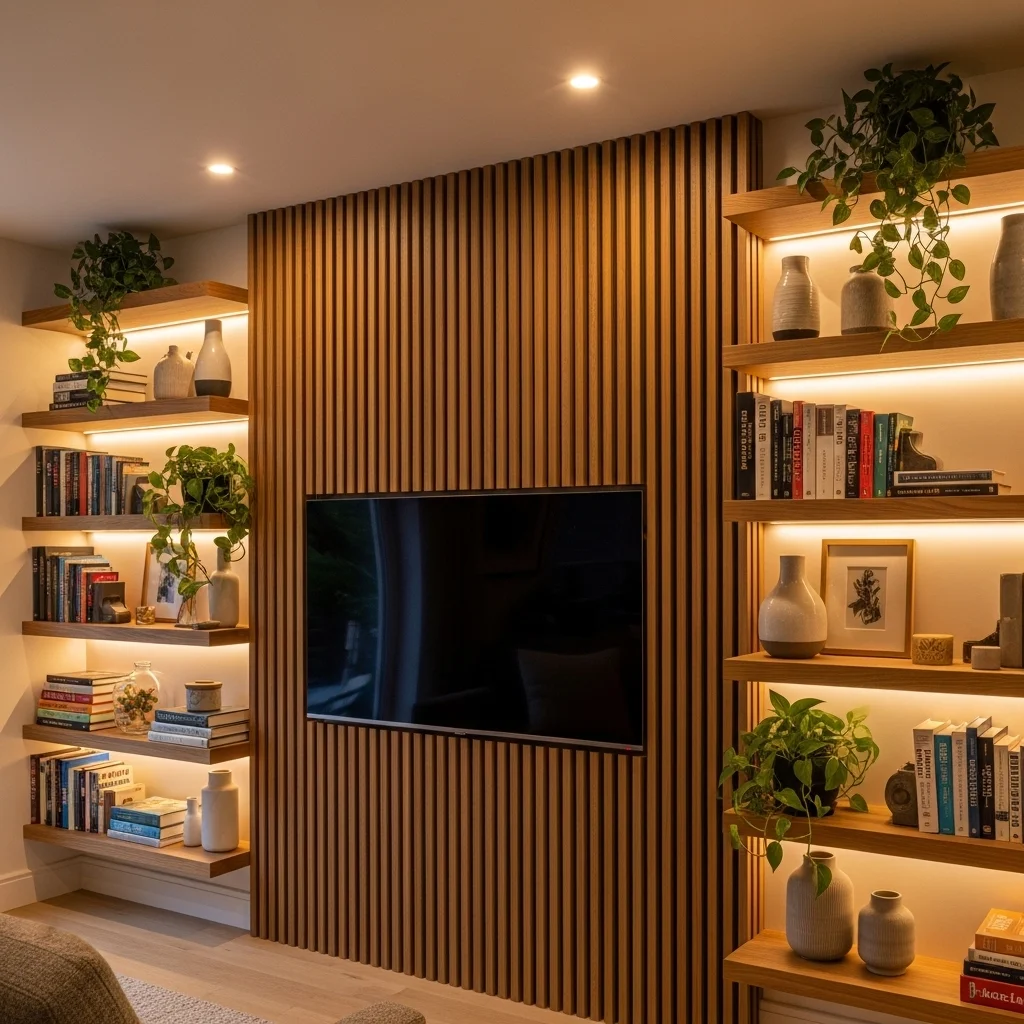
Combining a wood slat backdrop with floating shelves transforms a TV wall into a fully functional display system. The slats provide visual continuity behind both the television and the shelving, making the entire wall feel like a single designed unit. Books, plants, decorative objects, and audio components can all be organized on the shelves while the slat background unifies everything with natural texture.
11. Bedroom Feature Wall with Warm Mahogany Slats
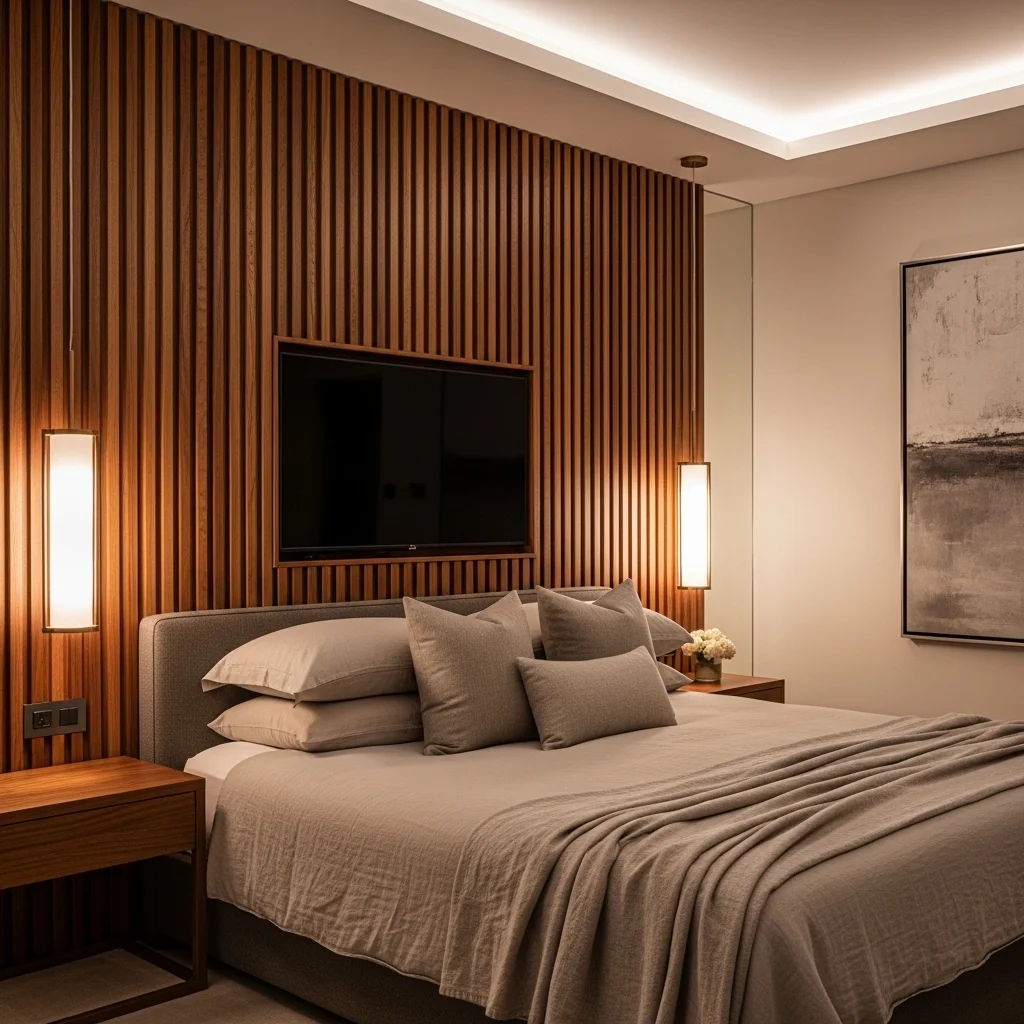
The bedroom is not a space most people immediately associate with wood slat walls, but the results can be spectacular. A warm mahogany or deep brown slat wall running behind the bed and television creates an intimate, hotel suite quality atmosphere. The rich tones promote a sense of coziness and rest while giving the room a strong focal point that makes the furniture arrangement feel deliberate and polished.
12. Acoustic Wood Slat Panels for a Home Theater Room
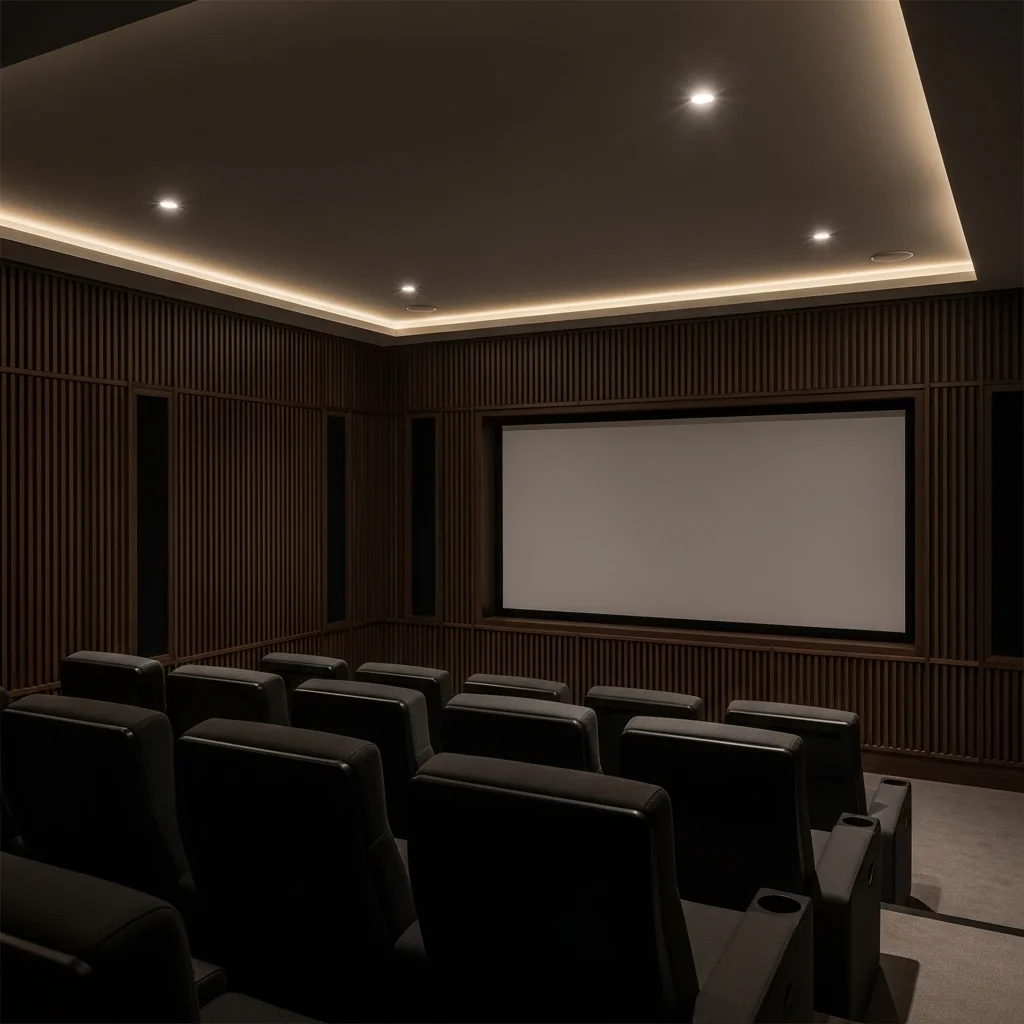
For dedicated home theater spaces, acoustic wood slat panels serve both a visual and a functional purpose. These panels, typically constructed with solid wood slats mounted on a sound absorbing felt backing, reduce echo and ambient noise within the room. The result is cleaner sound during movie viewing and a more immersive experience overall. Acoustic slat walls are one of the few interior design choices that genuinely improve the performance of your entertainment setup alongside its appearance.
13. Diagonal Slat Pattern for a Contemporary Statement
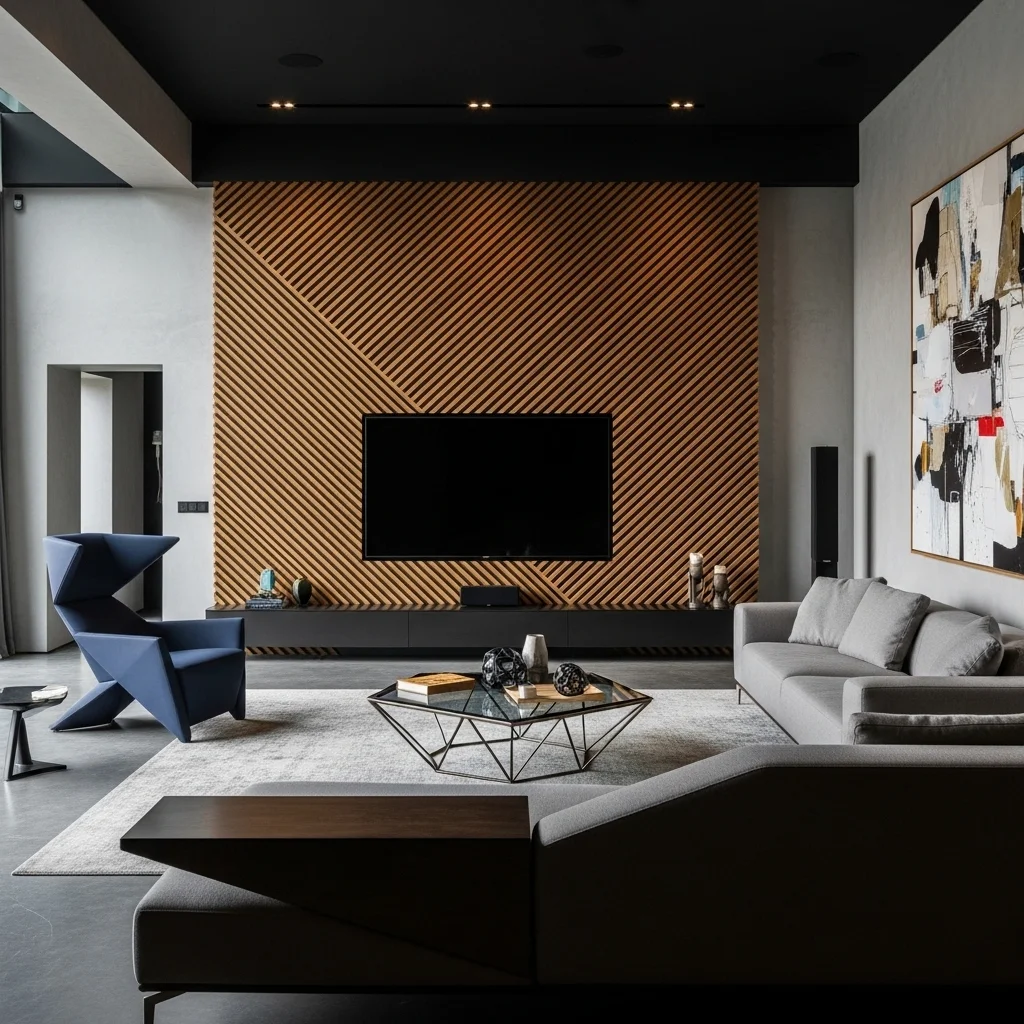
For those who want something less conventional, diagonal or chevron arranged slats offer a bold departure from standard horizontal or vertical installations. A diagonal slat pattern on a TV wall creates movement and energy in the room, making it a strong conversation piece. This design works particularly well in modern homes with angular architecture and contemporary furniture.
14. Painted Wood Slats for a Customized Color Story
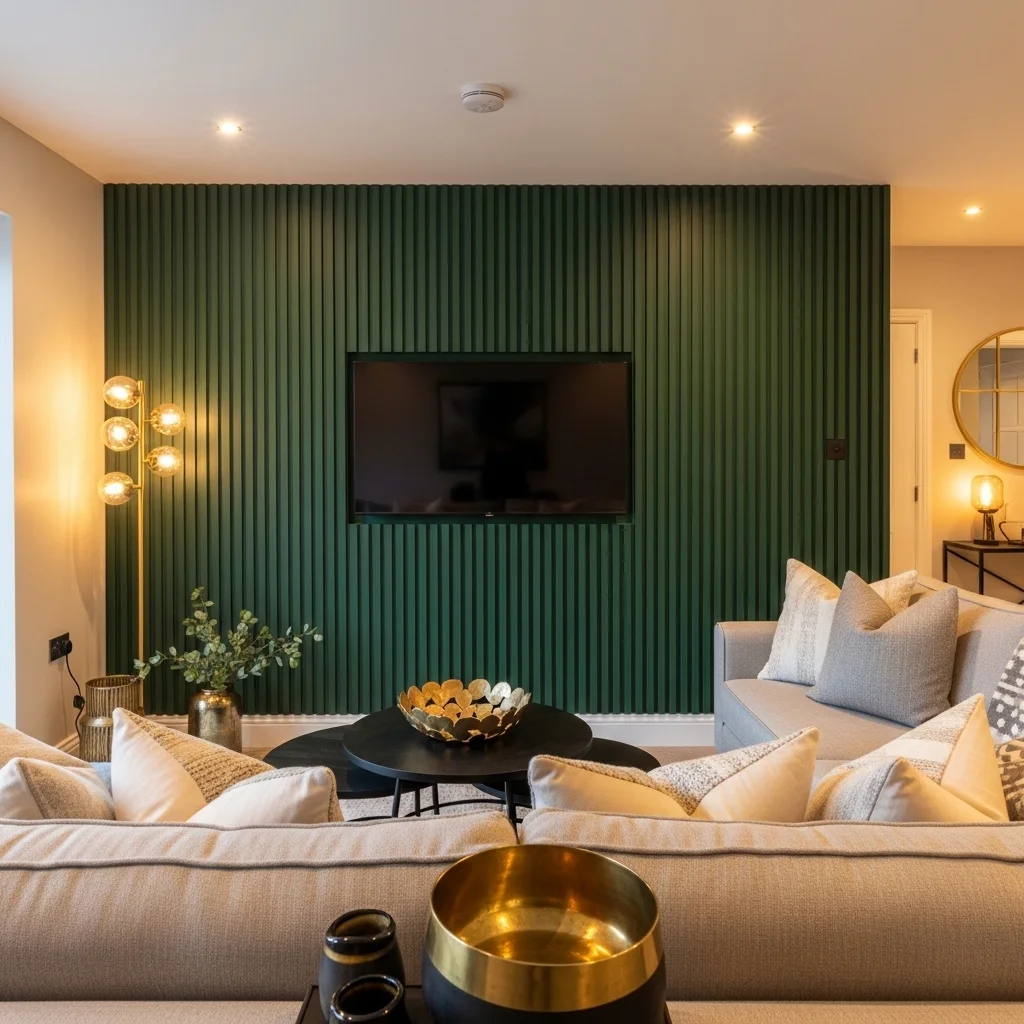
Not every wood slat TV wall needs to celebrate natural wood tones. Painting slats in a deep navy, forest green, terracotta, or matte black opens up entirely new design directions. Painted slats bring the texture and depth of a slat wall while allowing the color to do the decorative work. This is an excellent option for renters or homeowners who want to coordinate the wall precisely with their existing palette.
15. Slat Wall with Hidden Cable Management
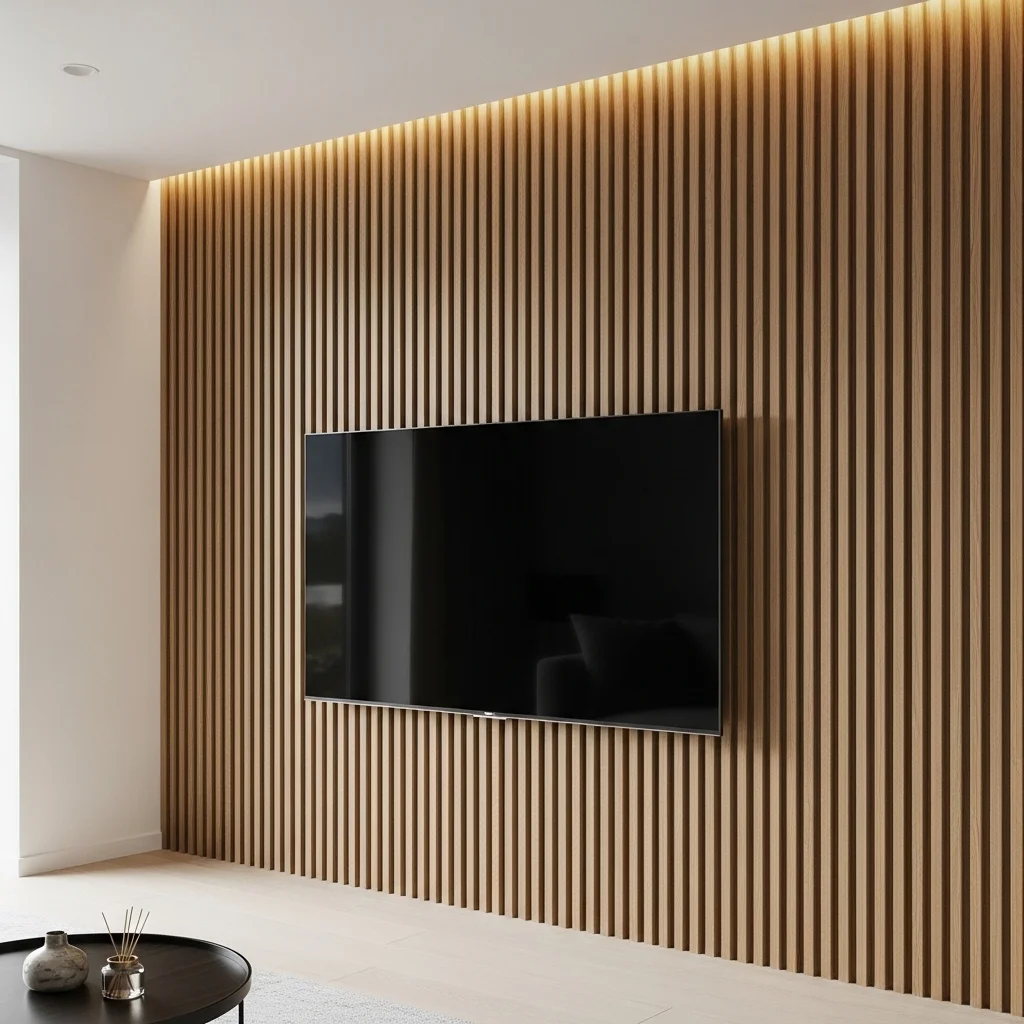
One of the practical challenges of any TV wall is cable management. A well designed wood slat installation can elegantly conceal every cable and wire behind the panels, creating a perfectly clean surface where only the screen is visible. Planning the cable routing before installation is essential, but the payoff is a wall that looks professionally finished and completely uncluttered regardless of how many devices are connected.
16. Mixed Material Wall with Wood Slats and Concrete Panels
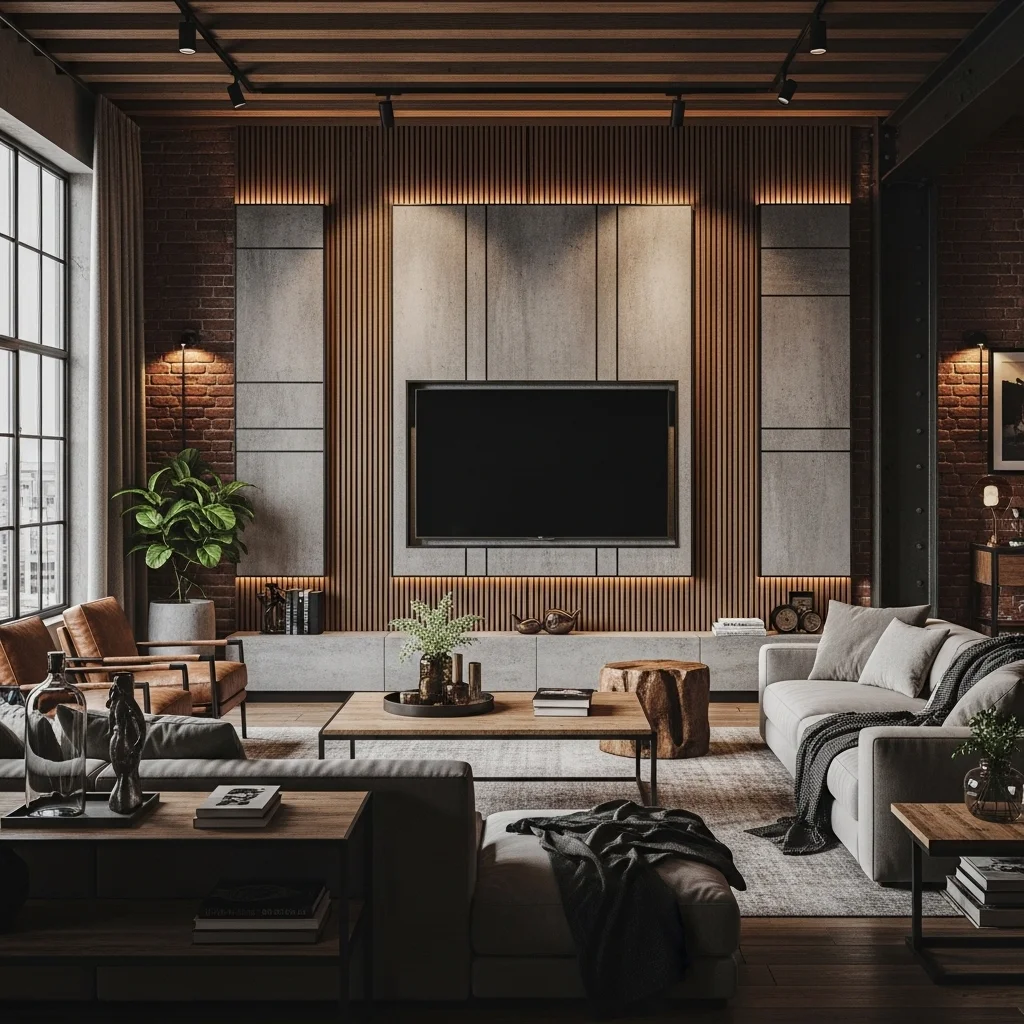
Combining wood slats with concrete effect panels or stone cladding creates a rich, layered texture story on a TV wall. The natural warmth of timber contrasts beautifully with the cool, industrial quality of concrete. This mixed material approach suits homes with an urban loft aesthetic or those that blend industrial and organic design elements. The television becomes a central element within a wall that functions almost like an architectural installation.
17. Narrow Slat Wall Panel Behind a Floating TV Console
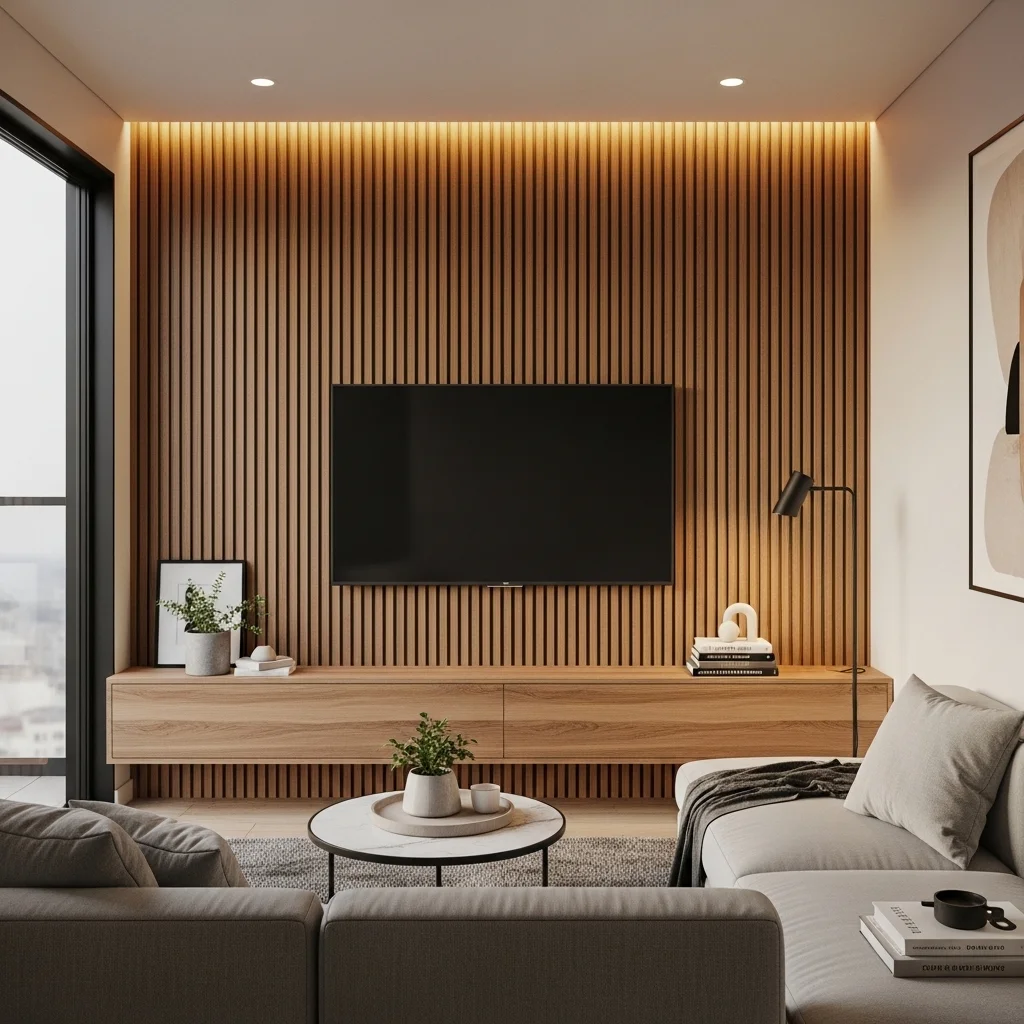
Not every wood slat TV wall needs to cover the entire wall from edge to edge. A carefully scaled panel positioned directly behind the television and a floating console below it can be equally impactful. This more restrained approach suits smaller rooms or situations where only a section of wall is available for treatment. The result is a framed, intentional look that draws the eye without dominating the entire room.
18. Japandi Meets Mid Century Modern with Teak Slats
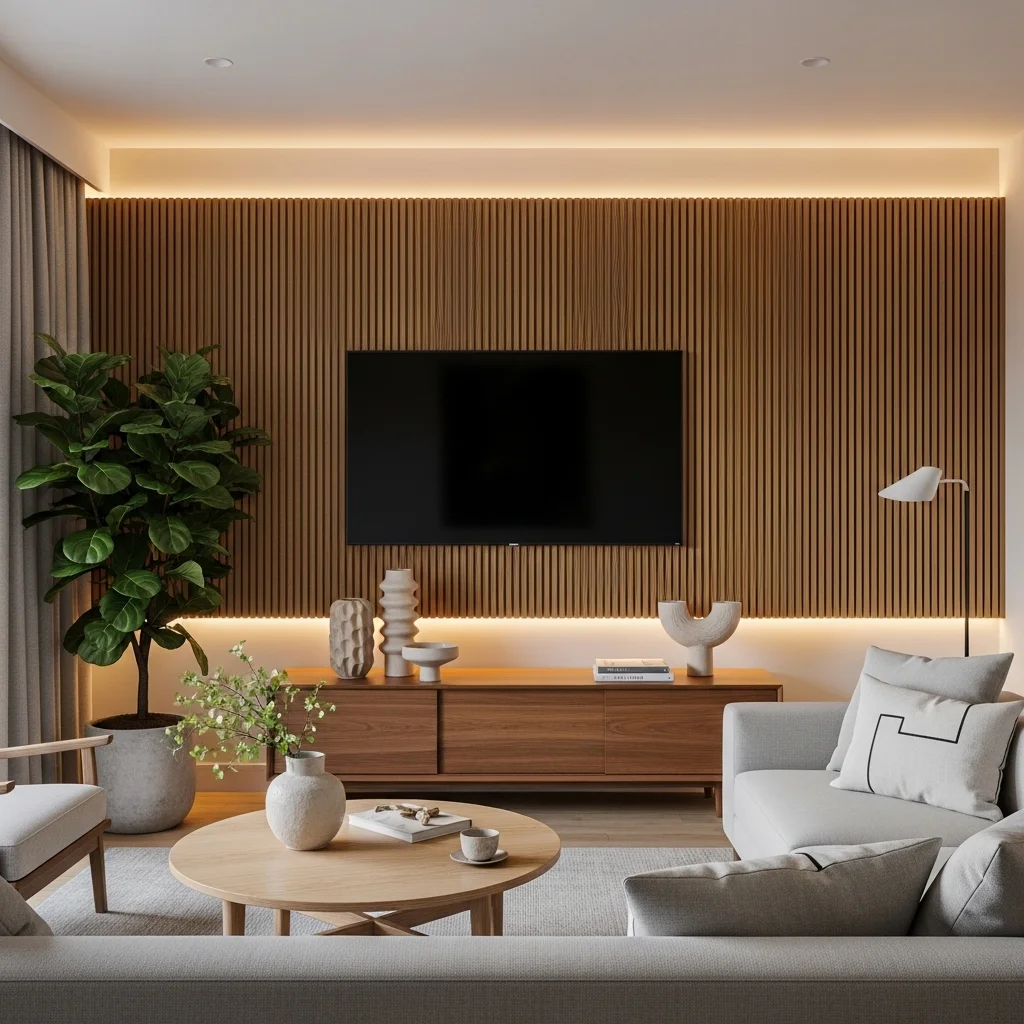
Teak wood brings a golden warmth and tight grain pattern that sits beautifully between mid century modern and Japandi design traditions. A teak slat TV wall paired with low profile furniture, ceramic accessories, and warm ambient lighting creates a space that feels both timeless and deeply considered. This is one of the most elevated expressions of the wood slat TV wall concept, and it suits living rooms, studies, and bedrooms with equal elegance.
Choosing the Right Slat Orientation for Your Room
The direction in which slats run has a significant impact on how a room feels. Vertical slats draw attention upward, lending height and formality to a space. They are particularly effective in rooms with lower ceilings where the goal is to create a sense of elevation. Horizontal slats, by contrast, stretch the eye sideways, making narrow or compact rooms feel broader and more relaxed. The choice between the two should be guided by the proportions and the existing energy of your room.
Wood Species and Finish Options to Consider
The species of wood you select determines a large portion of the final character of your wall. Oak in its various forms, from white oak to natural oak to washed oak, is the most widely used due to its fine grain, versatility, and availability. Walnut delivers depth and richness for more dramatic interiors. Ash offers a pale, contemporary look suited to Scandinavian and minimalist schemes. Teak and mahogany bring warmth and tradition. For those who prefer a more affordable route, oak veneer MDF panels replicate the appearance of solid wood convincingly while remaining lightweight and easy to cut.
Installation Essentials for a Professional Result
A successful wood slat TV wall begins with thorough preparation. The wall surface needs to be clean, flat, and level before any installation begins. Panels can be attached using construction adhesive, screws, or a combination of both depending on the weight and material. Planning the cable routing before panels go up is essential for a clean finish. When mounting the television onto a slat wall, it is important to drill through the panels and into the structural wall behind them to ensure the bracket is securely anchored.
Conclusion
A wood slat TV wall is one of those rare design decisions that improves a room on every level simultaneously. It adds texture, warmth, and architectural interest. It makes a mounted television look intentional and considered rather than simply functional. It adapts to virtually every interior style from minimalist to rustic to contemporary. And perhaps most importantly, it transforms an ordinary wall into the defining feature of a room. Whether you draw inspiration from one of these 18 ideas or combine elements from several of them, the result will be a space that feels more finished, more personal, and more alive than it did before.
Frequently Asked Questions
Q1. What is a wood slat TV wall?
A wood slat TV wall is a feature wall created by installing evenly spaced strips of wood, typically mounted vertically or horizontally, directly behind a wall mounted television. It serves as both a decorative backdrop and an architectural focal point in the room.
Q2. Can I install a wood slat TV wall myself?
Yes, many homeowners complete this as a DIY project. Pre made slat panels with adhesive or screw based installation are available and relatively straightforward to fit. Careful preparation of the wall surface, accurate measurement, and proper cable planning before installation are the most important steps.
Q3. Do wood slat walls help with sound quality?
Acoustic wood slat panels, which include a sound absorbing felt backing, can meaningfully reduce echo and ambient noise in a room. This makes them a practical as well as decorative choice for home theater rooms and open plan living spaces.
Q4. What wood finish works best for a TV wall?
Oak is the most popular choice due to its versatility, but the best finish depends on your interior style. Light finishes such as white oak or ash suit Scandinavian and minimalist interiors. Dark tones such as walnut or mahogany work well in moody, dramatic, or mid century modern spaces.
Q5. How do I hide cables on a wood slat TV wall?
Cable management should be planned before installation. Most installers run cables through the wall cavity or along the back of the slat panels before securing them. Some panel systems include channels or gaps specifically designed to conceal wiring neatly within the finished wall.