15 Creative Floating Shelf Ideas Around the TV
Introduction
The television is the natural focal point of most living rooms, yet for many homeowners it presents a persistent design challenge. A large flat screen mounted on a blank wall can feel cold, disconnected, and unfinished, like a picture frame with nothing around it to give it meaning or context. That problem has a surprisingly elegant solution: floating shelves.
Floating shelves installed around the television do far more than add storage. They frame the screen, draw the wall into the broader design of the room, introduce personality through carefully chosen decor, and make the entire entertainment area feel intentional rather than accidental. Interior designers refer to this as solving the black box effect, and floating shelves are one of the most accessible and rewarding ways to do it.
Whether you are working with a small apartment living room, a spacious open-plan family space, or a bedroom wall, the right shelf arrangement can completely transform how your television sits in the room. This guide walks through 15 creative floating shelf ideas around the TV, covering layouts, materials, styling approaches, and practical considerations that will help you create a TV wall you are genuinely proud of.
1. Single Shelf Directly Below the TV
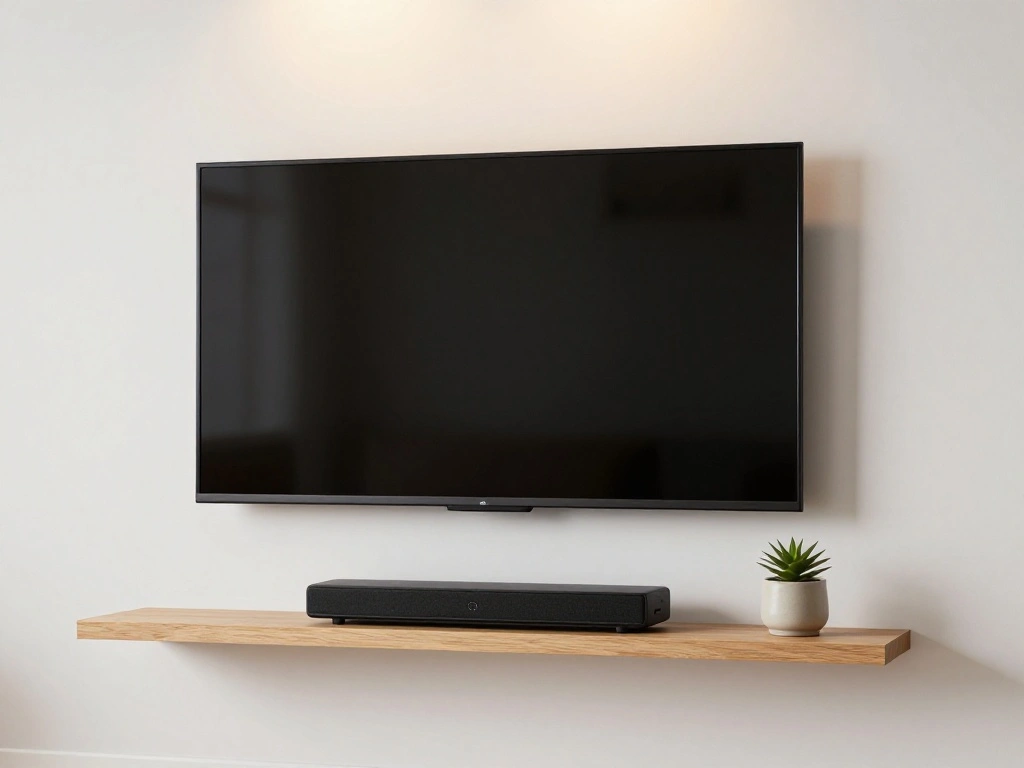
The simplest and most practical place to start is a single floating shelf positioned directly beneath the television. This shelf replaces the need for a bulky media console entirely, freeing up the floor and giving the room a lighter, more open feel. A shelf at this position is used to house the essential media devices: a streaming box, a game console, a soundbar, or a small collection of remotes. When styled with one or two decorative pieces alongside the technology, it shifts from purely functional to visually considered. This approach works especially well in smaller living rooms where floor space is genuinely precious.
2. Single Shelf Above the TV as a Design Element
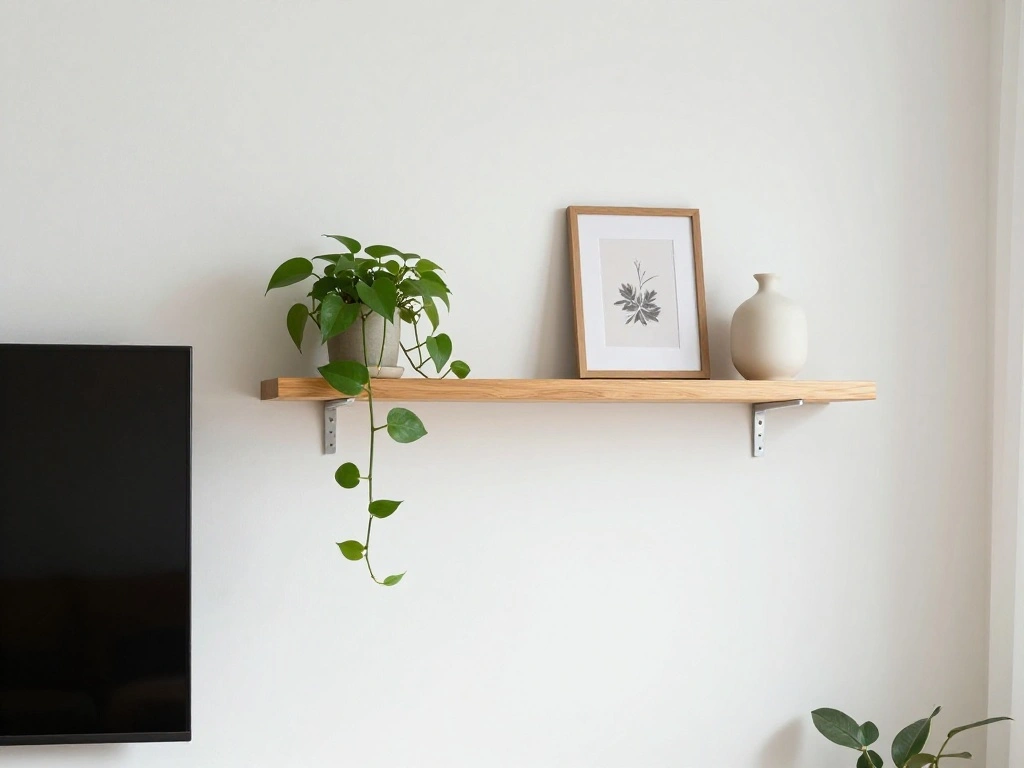
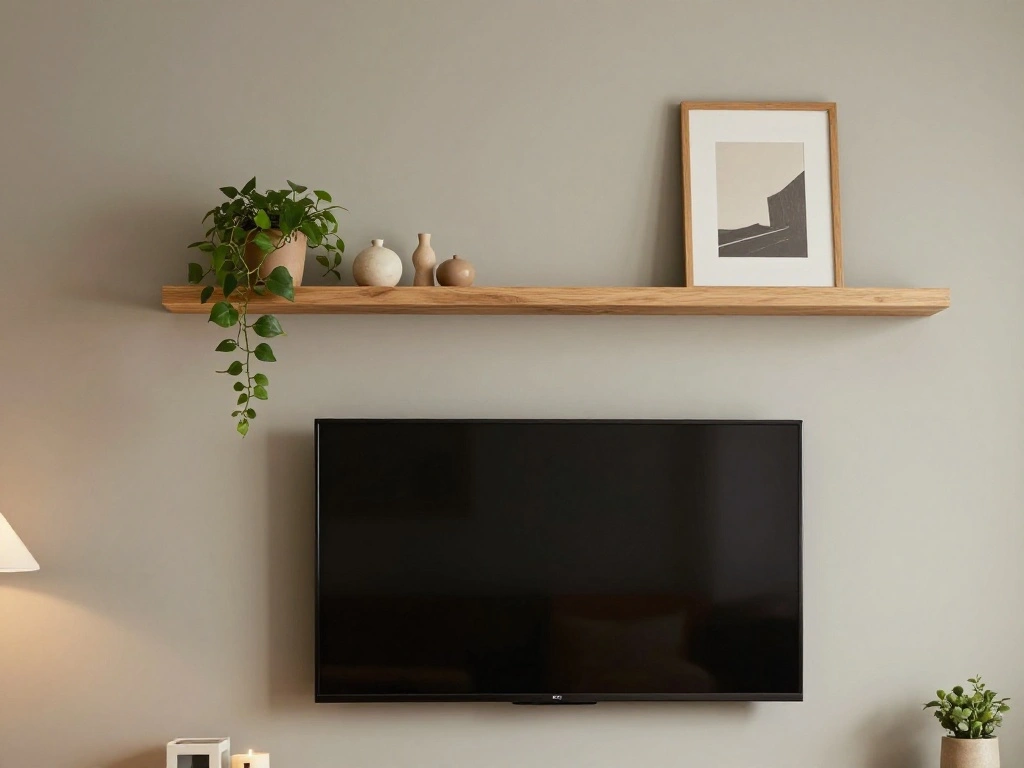
A single shelf positioned six to ten inches above the top of the television screen changes the visual dynamic of the entire wall. At this height, the shelf does not serve as storage in the traditional sense. Instead, it functions as a design element, a horizontal line that draws the eye upward and gives the wall a sense of deliberate composition. Style it with a small framed print, a trailing plant, a ceramic vase, or a combination of objects at varied heights. Keep it uncluttered. The goal is to give the wall a sense of being curated rather than decorated, and restraint is the key principle here.
3. Two Shelves Stacked Above the TV
For homeowners who want more display space above the screen without flanking the sides, two shelves stacked above the television is an excellent approach. Position the lower shelf about eight inches above the TV and the upper shelf roughly ten to twelve inches above that. This creates a visual tower of layered interest that draws the eye up and fills what is typically an awkward expanse of blank wall. Use the lower shelf for smaller, more delicate items and the upper shelf for slightly taller pieces such as framed art leaned against the wall or a small potted plant. The variation in height between shelves keeps the arrangement from feeling rigid.
4. Symmetrical Flanking Shelves on Either Side
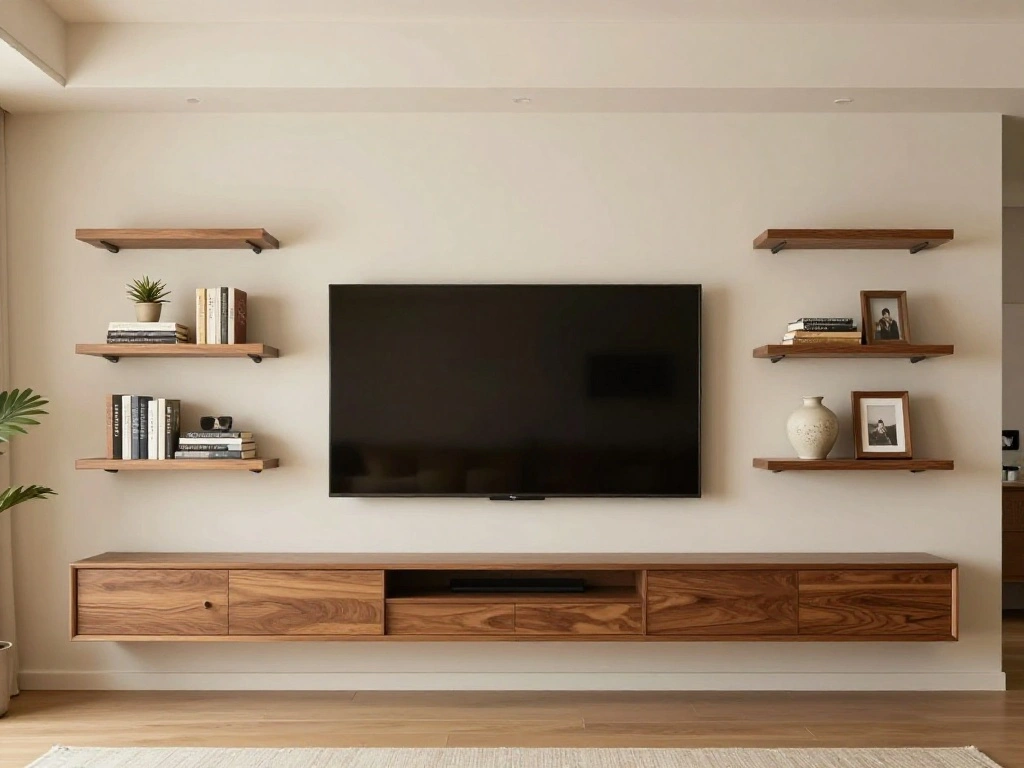
One of the most classic and consistently effective floating shelf arrangements is a pair of shelves installed symmetrically on either side of the television. This configuration creates the appearance of a built-in entertainment unit without the cost or permanence of custom cabinetry. The key to success is maintaining equal shelf lengths on both sides, consistent heights, and similar spacing. Style the two sides with mirror-image arrangements in terms of overall height and visual weight, while allowing the actual objects to differ slightly to avoid a look that feels too formal or staged. This layout works particularly well on wide walls where the television alone would appear lost.
Choosing the Right Shelf Length for Flanking
When sizing flanking shelves, each shelf should extend at least as far from the edge of the television as the television is wide. A fifty-five inch television, for example, benefits from flanking shelves that reach at least eighteen to twenty-four inches outward from each side of the screen. This creates a proportional frame around the TV rather than shelves that appear squeezed or disproportionate.
5. Asymmetrical Staggered Shelves for a Contemporary Look
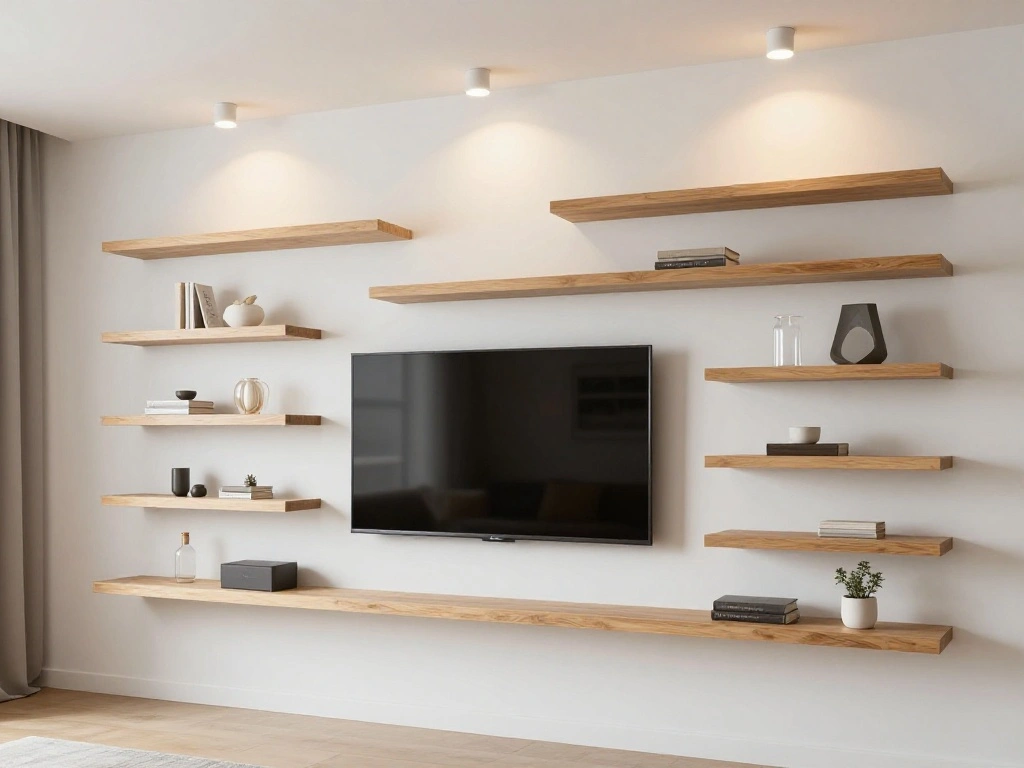
Where symmetry feels too traditional, an asymmetrical staggered arrangement introduces a more dynamic, modern energy. In this layout, shelves are placed at varying heights and possibly varying lengths on either side of or above the television, creating a sense of movement across the wall. No two shelves align perfectly, and that deliberate imbalance is precisely the point. Asymmetrical arrangements suit eclectic, contemporary, and Scandinavian-inspired interiors particularly well. The visual interest they generate means the wall can carry fewer decorative objects overall, keeping the look clean despite the irregular configuration.
6. Full Surround Arrangement with Shelves on All Sides
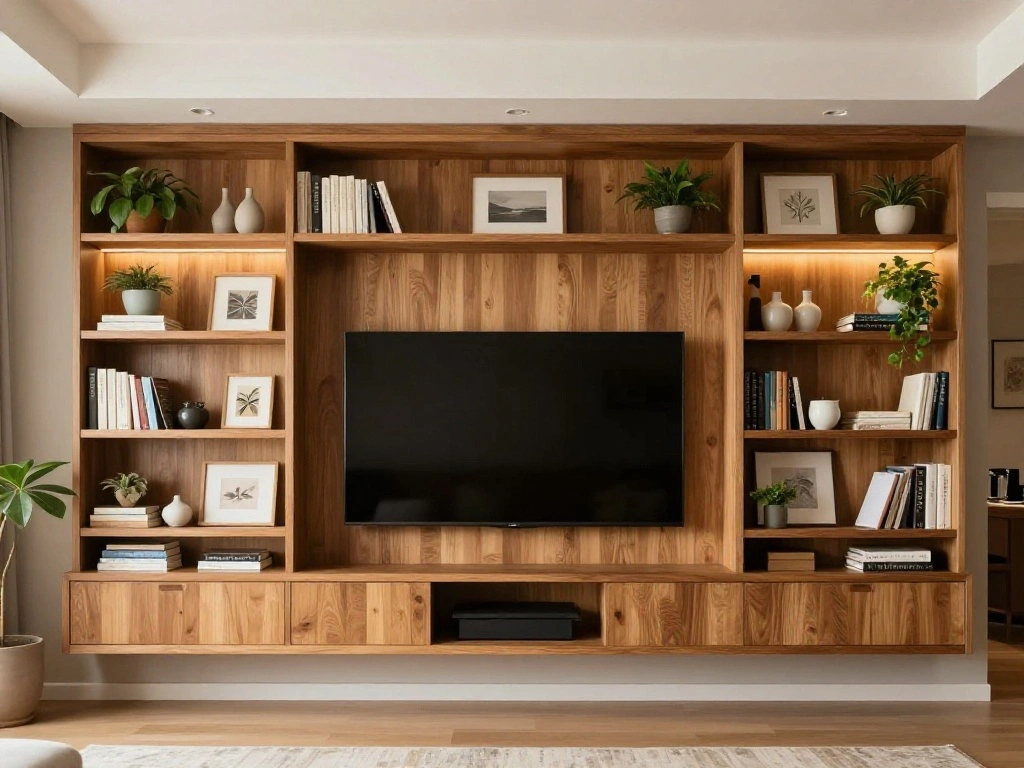
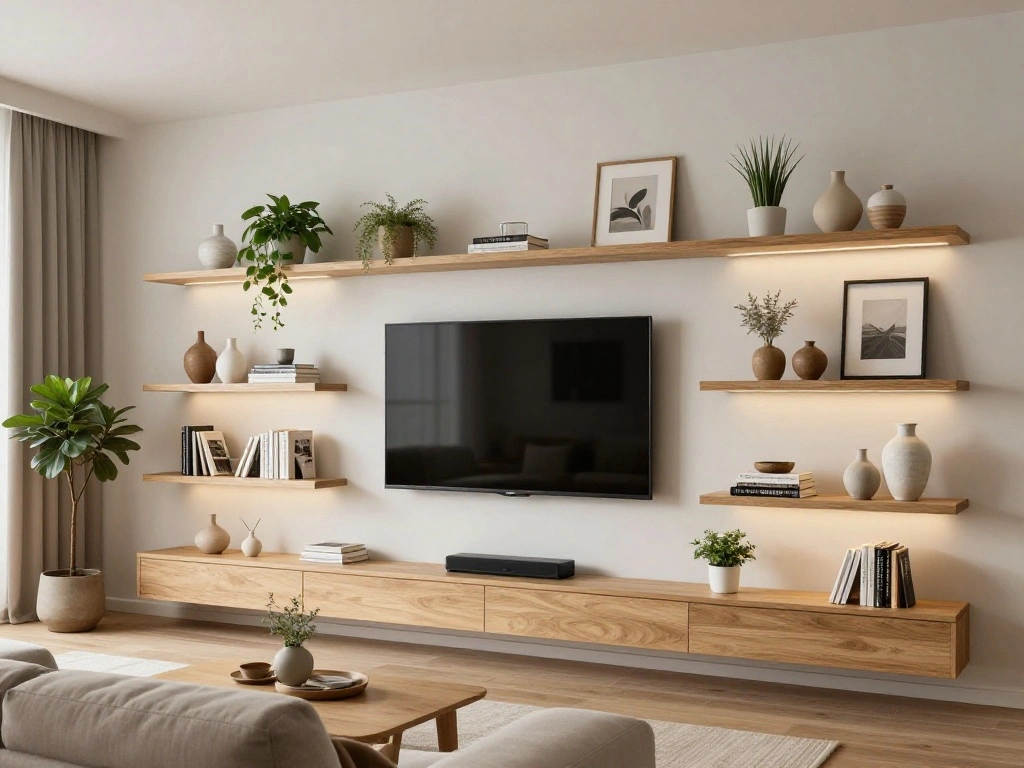
For maximum impact and the most built-in appearance, a full surround shelf arrangement places shelves both above and on both sides of the television, essentially creating a custom framework around the screen. This is the closest a floating shelf installation comes to a true built-in media wall, and when executed well, it is genuinely impressive. The television becomes an inset element rather than a standalone object, integrated into a composed arrangement of display surfaces. This configuration requires careful planning to ensure proportions remain balanced, and it benefits enormously from consistent shelf depth, color, and material throughout.
7. Wooden Floating Shelves for Warmth and Natural Texture
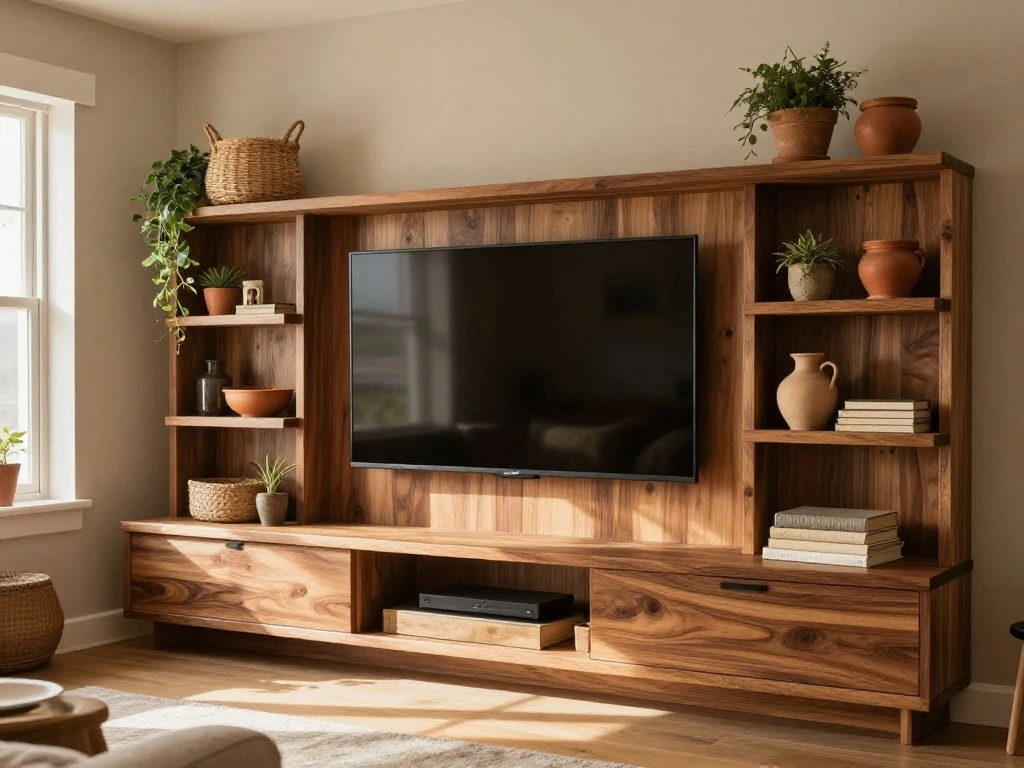
The material choice for floating shelves around the TV has a significant impact on the mood of the room. Wooden floating shelves, whether in light oak, warm walnut, natural pine, or painted timber, introduce a warmth and organic texture that counterbalances the hard technological presence of a flat screen. In living rooms that lean toward farmhouse, rustic, Japandi, or mid-century modern aesthetics, wood shelves feel deeply appropriate. They also pair well with plants, ceramic vessels, and woven baskets in ways that more industrial materials do not. If the room already has wood accents in coffee tables, flooring, or furniture, matching or complementing that finish through the shelf material ties the entire space together.
8. Floating Shelves with Integrated LED Strip Lighting
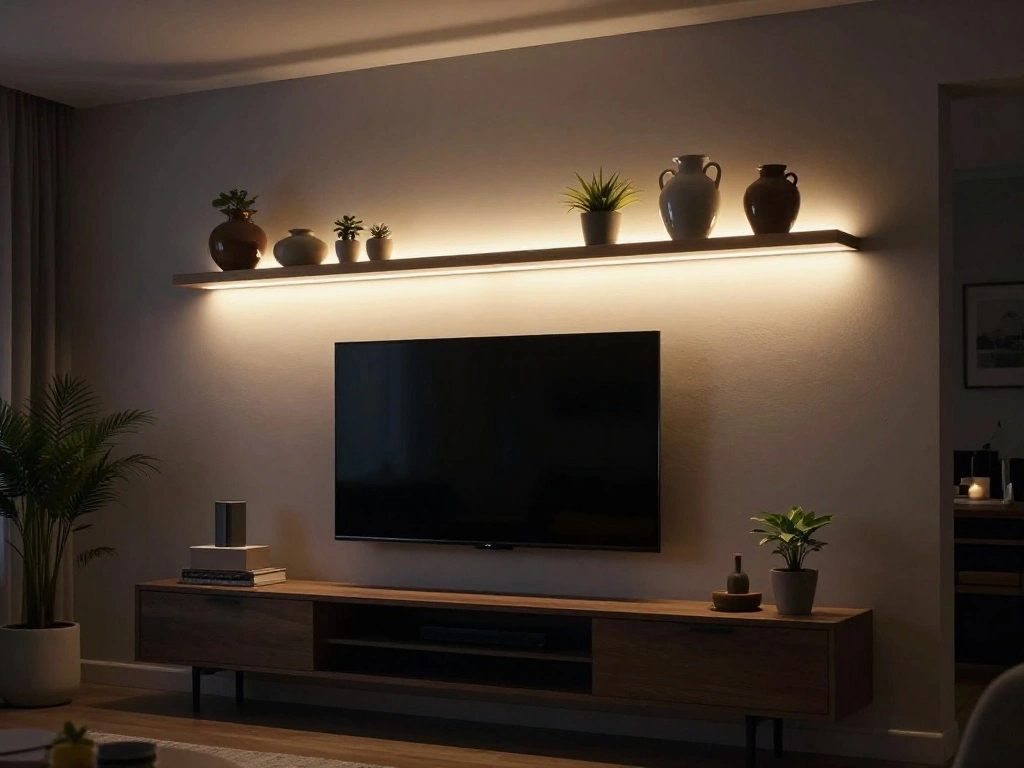
Adding LED strip lighting beneath floating shelves transforms a practical storage arrangement into an atmospheric feature. The soft glow that falls from the underside of each shelf adds warmth to the display objects below and contributes to the ambient lighting of the entire room during evening hours. LED strips in warm white tones work well for living rooms that favor a cozy, relaxed atmosphere, while cool white or colour-changing LED strips suit more contemporary or playful spaces. This idea works particularly well when combined with stacked shelves above the television, where the layered glow creates a sense of depth and dimension across the wall.
9. Plants and Greenery on Shelves Around the TV
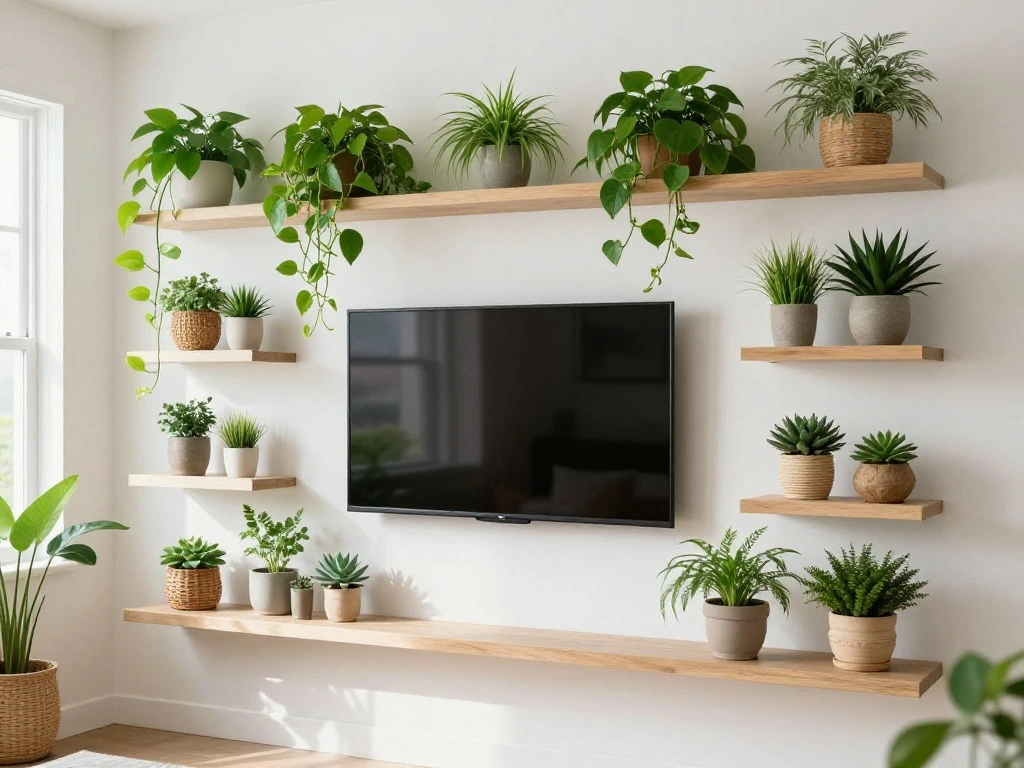
Introducing plants to the floating shelves around the television is one of the most effective ways to soften what can otherwise be a very hard, technology-dominated wall. Trailing plants such as pothos or string of pearls draped over the edge of a shelf bring a sense of organic movement that no inanimate object can replicate. Compact plants such as succulents, air plants, or small-leafed tropical varieties work well on narrower shelves where depth is limited. The presence of greenery signals that the wall is a living part of the home rather than a purely functional entertainment setup, and it consistently photographs beautifully for those who care about how their home appears in pictures.
10. Books as Styling Elements on TV Shelves
Books are one of the most underrated styling tools for floating shelves around the television. A thoughtfully arranged row of books in coordinated spine colors, a stack of coffee table books laid flat as a base for a small sculpture, or a combination of standing and stacked volumes creates both visual weight and a sense of personal history on the shelf. Books also solve the practical challenge of filling shelf space without resorting to excessive decorative objects. In living rooms that incorporate a library or reading corner as part of the overall design, books on the TV wall shelves reinforce that theme and give the entire space a more considered, layered quality.
11. Minimalist Floating Shelf Styling for Clean Spaces
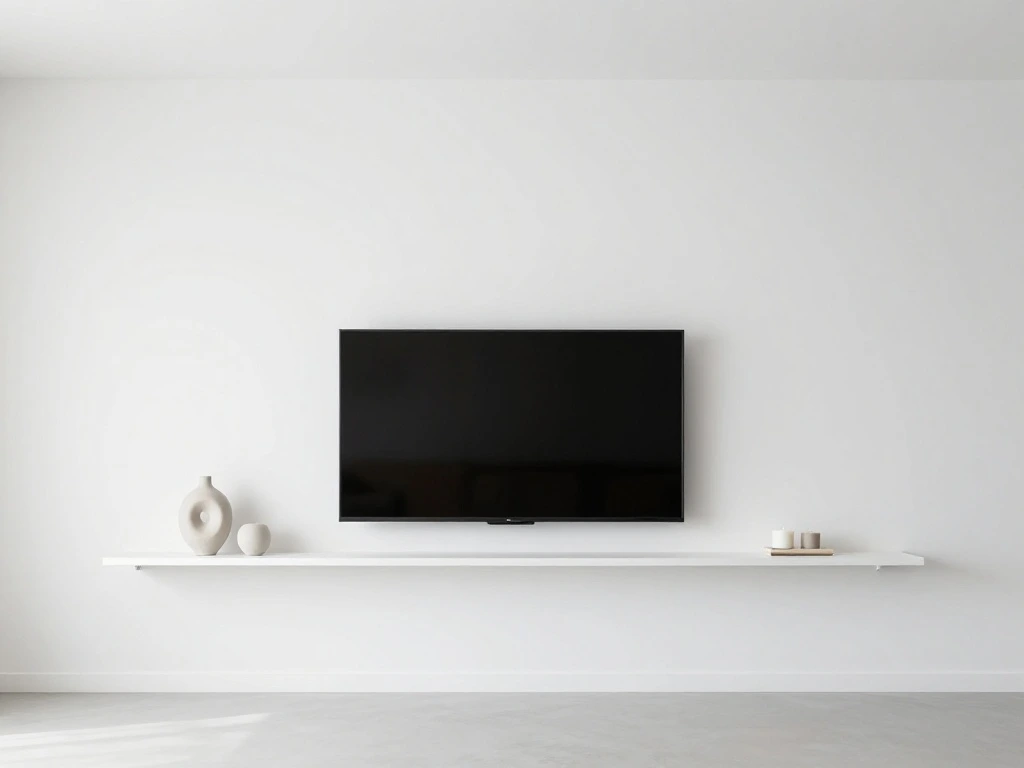
For homes that embrace minimalism, the floating shelf arrangement around the TV should reflect that same discipline. Rather than filling every available surface, a minimalist approach places one or two highly intentional objects on each shelf, leaving generous negative space around them. A single sculptural vase, one small framed print, a candle in a clean holder, or a solitary trailing plant communicates confidence in the design rather than an anxiety to fill space. The shelves themselves should be sleek and thin profiled, in a finish that closely matches the wall color so they appear to float with as little visual interruption as possible.
12. Gallery Wall Combined with Floating Shelves
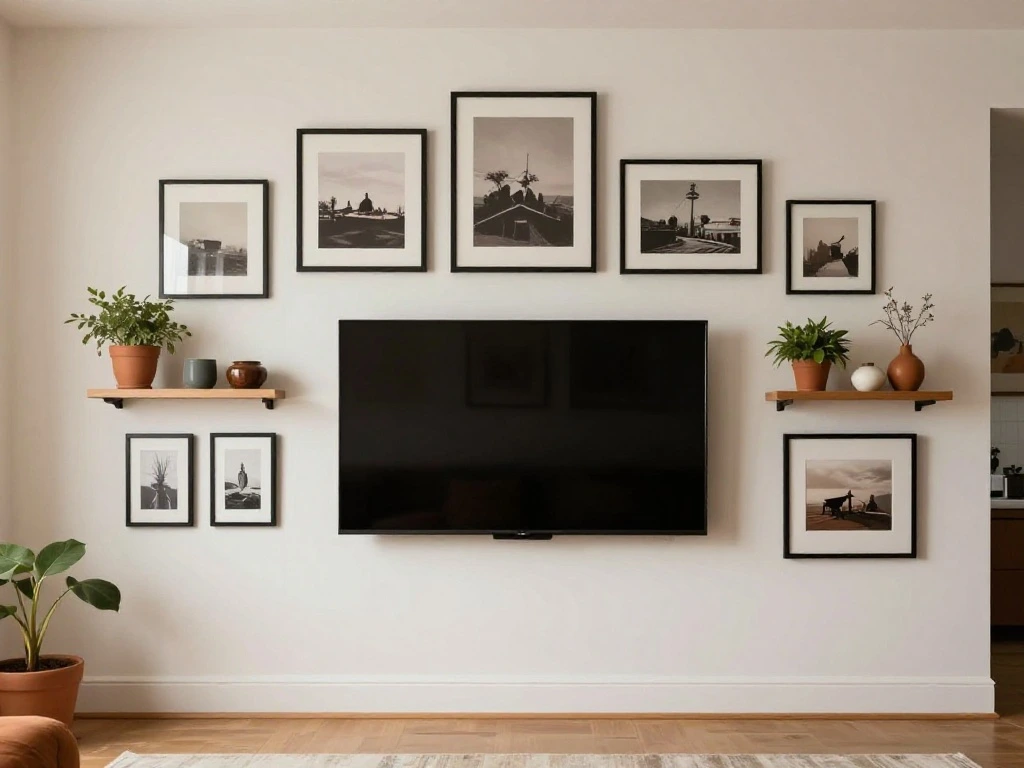
Combining a gallery wall with floating shelves around the television is a creative approach that turns the entire TV wall into a richly layered visual experience. In this configuration, framed prints, photographs, or artwork are hung at intervals around the television while floating shelves occupy other sections of the wall, creating a composition that is part gallery, part storage, and entirely decorative. The challenge with this approach is maintaining visual cohesion. Choosing a limited color palette for both the frames and the shelf objects ensures the wall reads as a composed whole rather than a collection of unrelated elements.
13. Floating Shelves with Hidden Cable Management
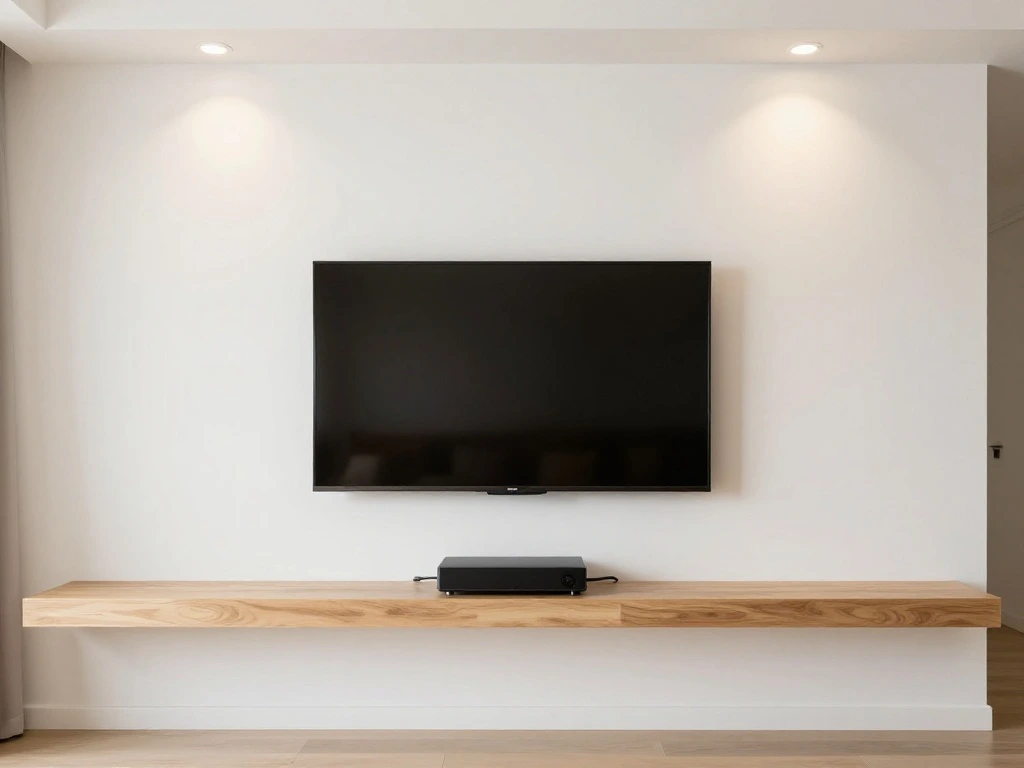
One of the practical concerns that comes with any TV wall design is the presence of cables. A beautifully arranged set of floating shelves is significantly diminished by a bundle of visible cords running down the wall. Concealing cables within the wall itself is the most permanent solution, but it requires professional work. A more accessible alternative is using cable management channels or raceways that are painted to match the wall color, making them nearly invisible from a normal viewing distance. Planning the cable route before installing the shelves ensures that the management solution can be integrated cleanly into the overall setup rather than added as an afterthought.
14. Floating Shelves Around the TV in the Bedroom
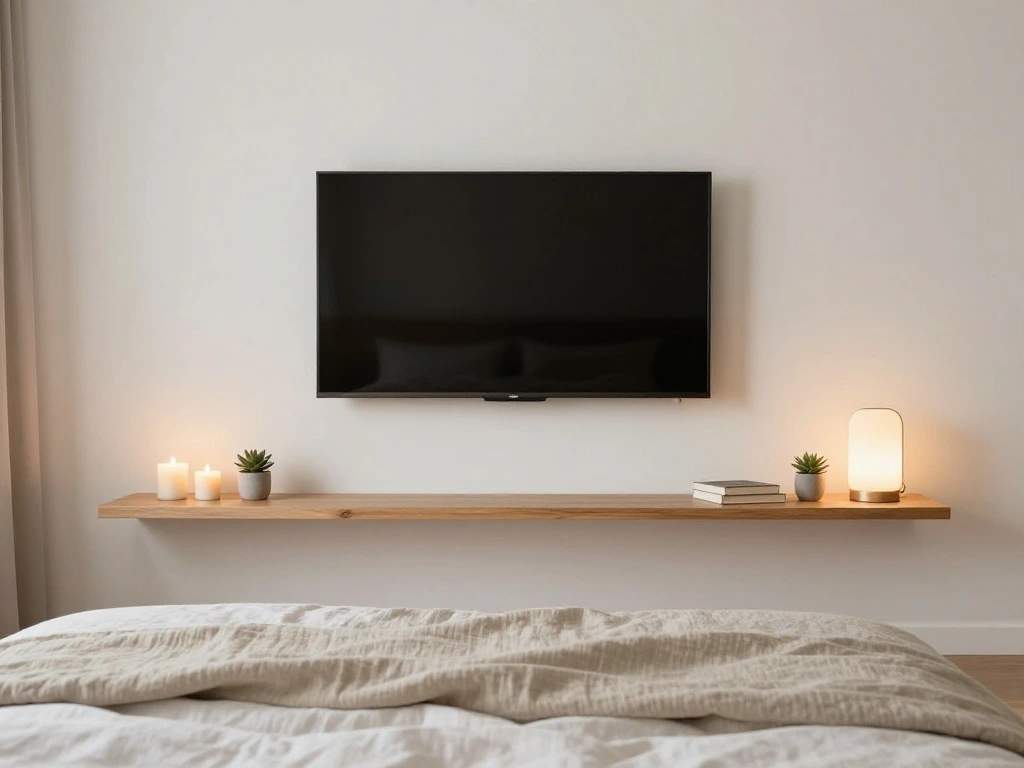
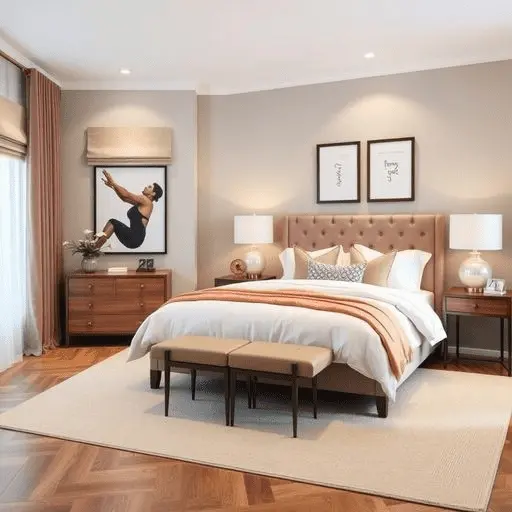
The television in a bedroom presents a slightly different set of design challenges than the living room. Space is typically more limited, and the overall aesthetic goal is usually calm and restful rather than bold and expressive. A single floating shelf below the bedroom television replaces the need for a dresser or media unit, keeping the floor clear and the room feeling spacious. Flanking shelves positioned at nightstand height on either side of the TV can serve both display and functional purposes, holding a lamp, a book, a phone charger, or a small plant. In the bedroom, the shelf styling should lean toward the calming and personal rather than the decorative and complex.
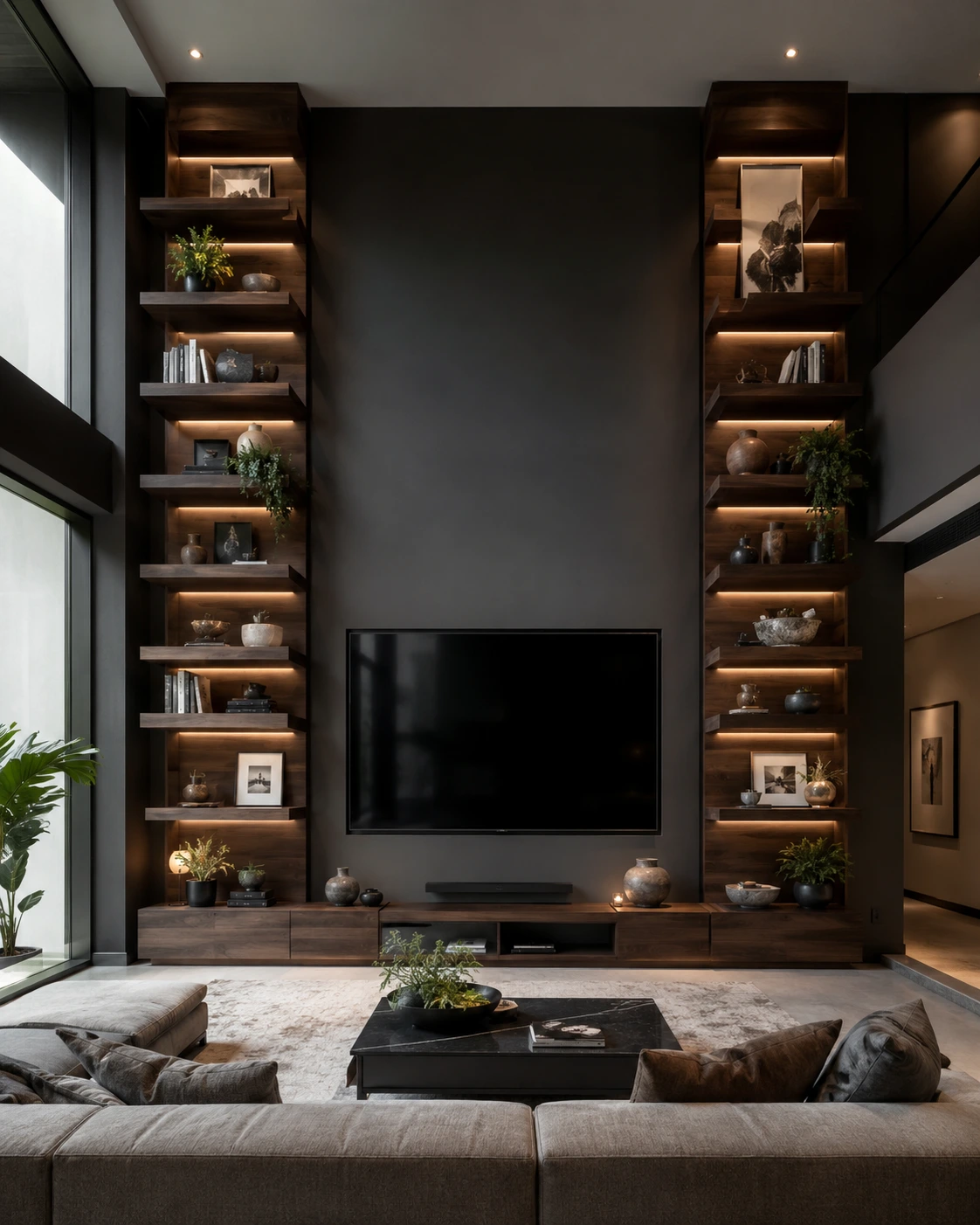
15. Floor-to-Ceiling Shelf Columns Flanking the TV
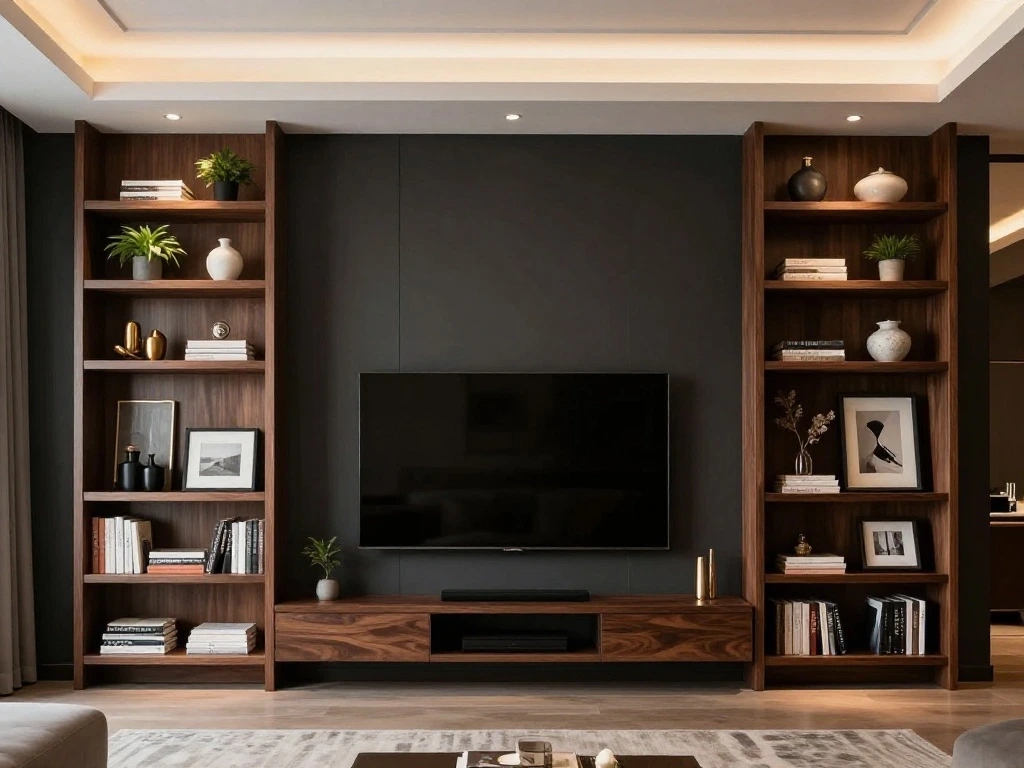
The most architecturally ambitious floating shelf idea for around the television is a pair of vertical shelf columns that run from near the floor to close to the ceiling on either side of the screen. These columns of shelves give the wall the appearance of a custom built-in unit and create an enormous amount of display and storage space without requiring the weight or cost of actual cabinetry. The television sits at eye level within this vertical framework, appearing inset and intentional rather than mounted and isolated. This configuration works best in rooms with high ceilings and wide walls, where the vertical scale is both appropriate and visually exciting. Vary the objects on each shelf level to prevent the arrangement from looking like a storage rack, mixing books, plants, ceramics, and framed prints across the full height of the display.
Conclusion
Floating shelves around the television are one of the most rewarding investments a homeowner can make in the look and feel of their living space. They do not require a large budget, a professional installation team, or a complete room renovation. What they do require is thoughtful planning, careful proportioning, and a considered approach to how the shelves are styled once they are in place.
The fifteen ideas explored in this article range from the beautifully simple, a single shelf below the screen, to the architecturally bold, floor-to-ceiling shelf columns that flank the television like a custom built-in. Between those two extremes lies a wide and rewarding spectrum of possibilities suited to every room size, design style, and personal taste.
The right floating shelf idea for your television is ultimately the one that makes the wall feel complete, the room feel intentional, and the television feel like a natural part of a home that has been designed with care. Start with the arrangement that fits your space, choose materials that complement your existing decor, and allow the styling to evolve naturally over time. A well-planned TV wall with floating shelves is one of those home design decisions that rewards you every single day.
Frequently Asked Questions
Q1. How high should floating shelves be placed above the TV?
A shelf placed directly above the television should sit approximately six to ten inches above the top edge of the screen. This gap prevents a cramped appearance and ensures the shelf reads as a deliberate design element rather than an afterthought. If stacking multiple shelves above the TV, maintain ten to twelve inches of spacing between each shelf for visual breathing room.
Q2. What is the ideal depth for floating shelves around a TV?
For shelves used primarily for decor and small accessories, a depth of eight inches is sufficient and keeps the shelves from protruding too far from the wall. If the shelves need to hold media devices, game consoles, or a soundbar, a depth of ten inches provides the extra space those items require. Avoid going deeper than twelve inches, as shelves at that depth can begin to feel heavy and furniture-like rather than sleek and floating.
Q3. How do I style floating shelves around the TV without making them look cluttered?
The key principle is restraint. Choose a small number of objects for each shelf and allow negative space between them. Vary the heights and textures of the objects you display, combining something tall, something low, and something trailing or organic such as a plant. Keep the color palette of the shelf objects consistent with the broader color scheme of the room, and resist the urge to fill every inch of available shelf surface.
Q4. What materials work best for floating shelves in a living room TV wall?
Wood is the most versatile and widely loved material for living room floating shelves because it adds warmth and works across multiple design styles. Painted MDF shelves in a color that matches the wall create a seamless, barely-there look that suits minimalist spaces. Glass shelves are elegant and light-looking but require careful styling to avoid appearing sparse. The best material is ultimately the one that complements the existing finishes and furniture in your room.
Q5. Can floating shelves hold media equipment as well as decorative items?
Yes, provided the shelves are correctly installed with appropriate weight-rated brackets secured into wall studs. A properly installed floating shelf can comfortably hold a streaming device, a game console, or a small soundbar alongside decorative items. Always check the weight capacity rating of the shelf and its brackets before loading them with heavy electronics, and ensure the installation is secured into studs rather than drywall anchors alone for maximum stability.