13 Composite Deck Design Ideas for Outdoor Living
A deck is more than a flat surface attached Composite Deck Design Ideas to the back of a house. It is an extension of the home, a place where mornings start with coffee and evenings end with conversation. Over the past decade, composite decking has become the material of choice for homeowners who want that outdoor living space without the constant sanding, staining, and splinters that come with traditional wood. If you have been searching for pictures of composite deck ideas to help you plan your own project, you are in the right place. This guide walks through thirteen composite deck design ideas that cover Composite Deck Design Ideas layout, pattern, color, and function, along with practical insight on how to choose the right approach for your home.
Composite decking earned its popularity for good reason. It resists fading, staining, rotting, and insect damage, and it holds up to rain, sun, and snow far longer than natural wood. That durability means designers and homeowners can focus less on maintenance and more on creativity. Boards now come in dozens of colors and finis
1. Classic Straight-Board Layout
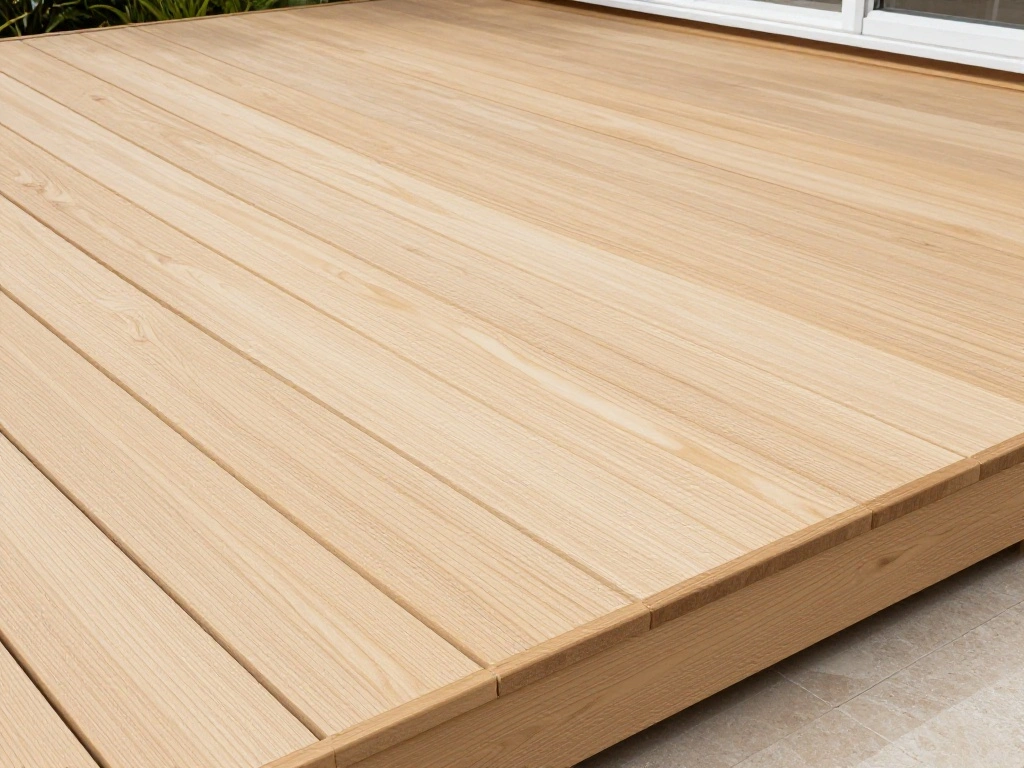
The simplest approach is often the most timeless. Laying composite boards in a single direction, parallel to the house, gives a clean and orderly look that suits nearly any home style. This layout is also the most budget-friendly since it requires no extra framing or specialty cuts. For homeowners who want a low-maintenance deck without added complexity, a straight-board layout paired with a contrasting border is a reliable starting point.
2. Diagonal Board Placement
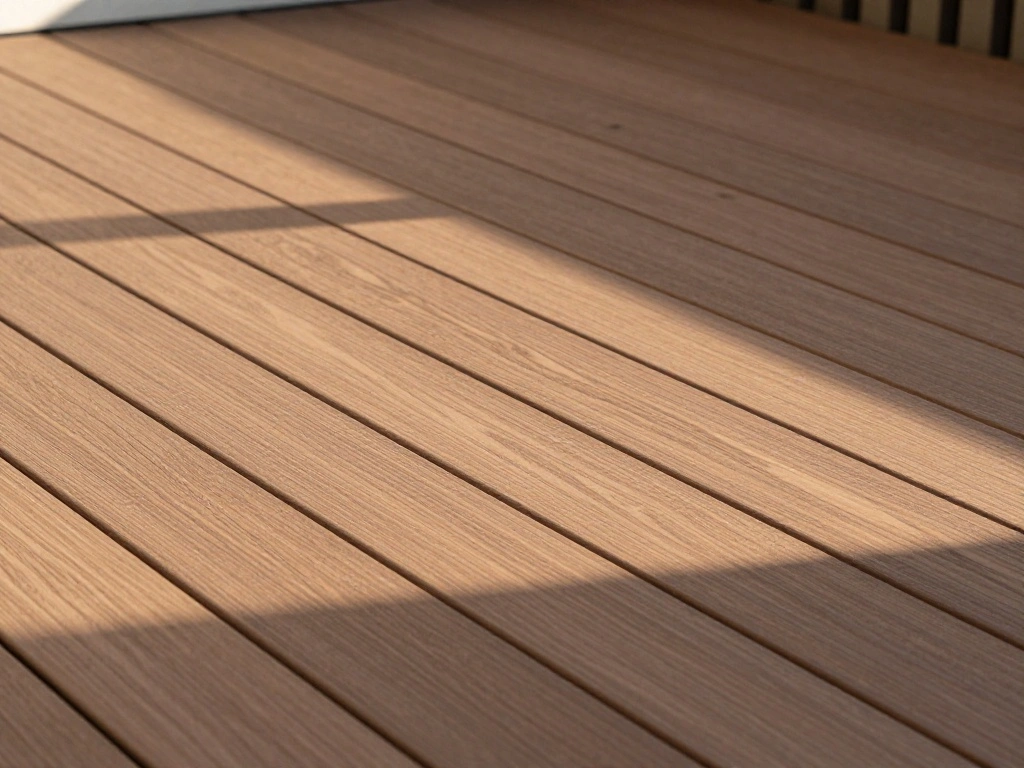
Setting boards at a 45-degree angle instantly changes the character of a deck. Diagonal placement adds movement and visually expands smaller Composite Deck Design Ideas spaces, making it a favorite for compact backyards or narrow decks. While it requires slightly more framing work and material to account for angled cuts, the payoff in visual interest is significant, especially on decks under 300 square feet.
3. Herringbone Pattern
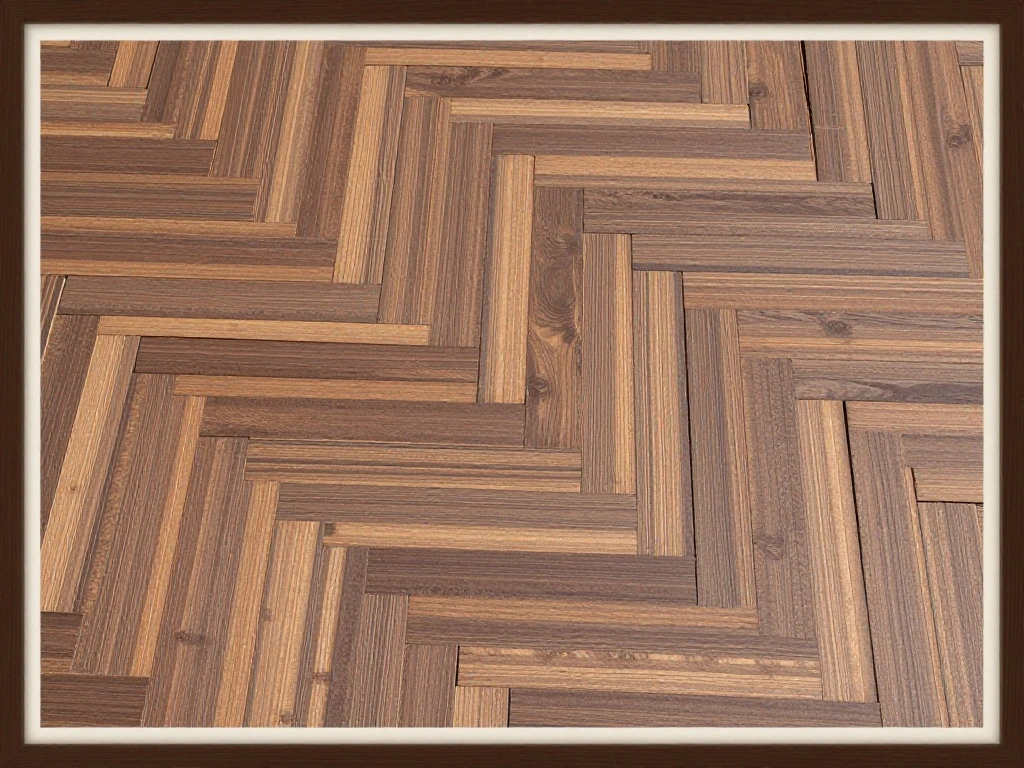
Herringbone is one of the most striking Composite Deck Design Ideas composite decking patterns available today. Boards are laid in a zig-zag formation that creates a woven, basketweave effect. It works especially well as a focal point near a seating area or entryway, and it pairs beautifully with a picture-frame border to contain the pattern. Herringbone does require custom blocking beneath the boards, so it is best planned early with your builder rather than added as an afterthought.
4. Chevron Design
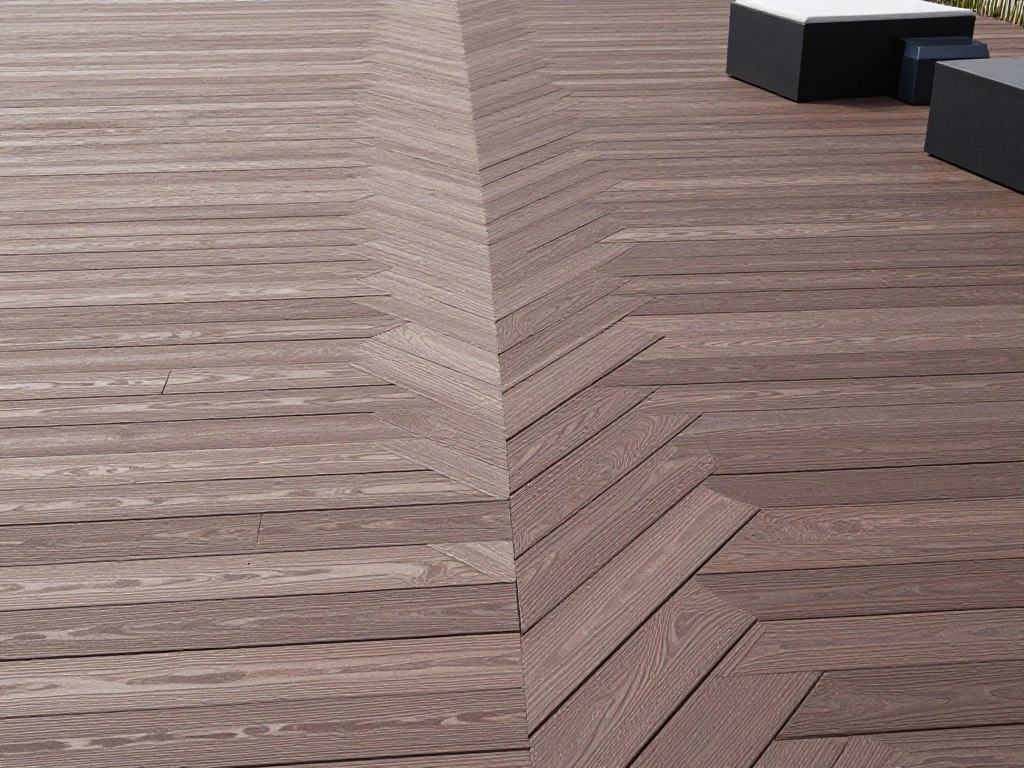
Similar to herringbone but sharper in appearance, chevron patterns bring boards together at a point to form a V shape across the deck surface. This design works particularly well on large, open decks where there is enough room for the pattern to read clearly from a distance. Chevron layouts are often used in modern and contemporary outdoor spaces paired with minimalist furniture.
5. Multi-Level Deck Platforms
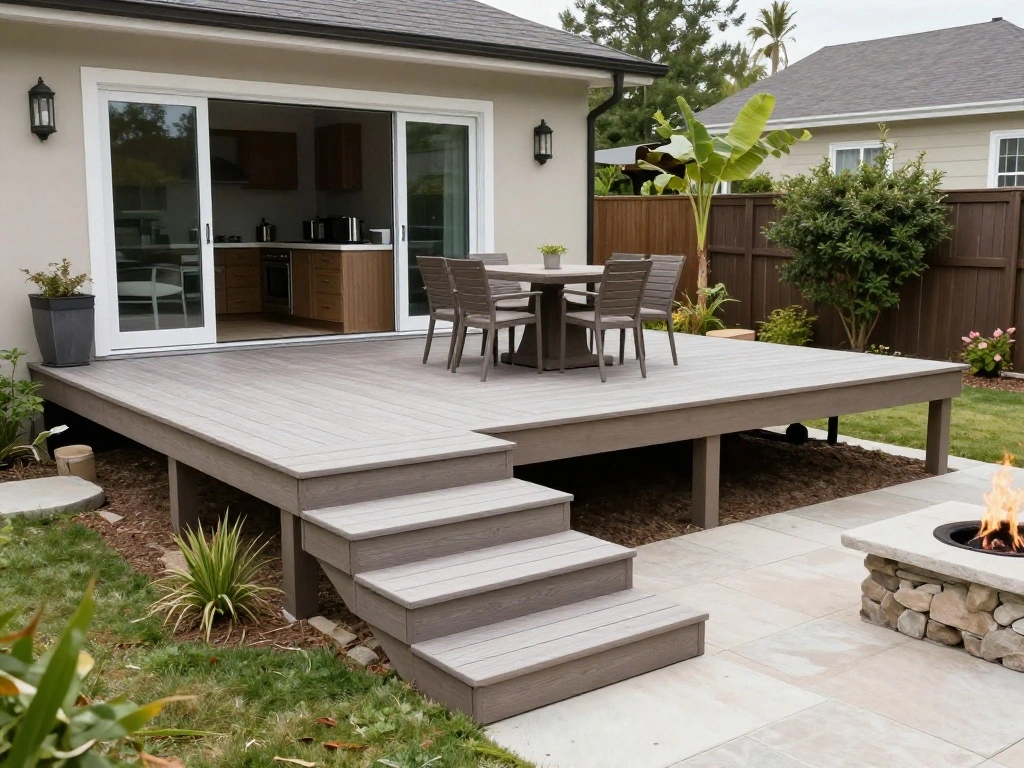
For sloped yards or larger properties, a multi-level Composite Deck Design Ideas deck creates distinct zones without the need for walls or fencing. One level might serve as a dining area near the kitchen door, while a lower level steps down toward the yard for lounging or a fire pit. Multi-level designs also allow for creative transitions, such as changing board color or direction between levels to visually separate each space.
6. Deck Inlays as a Focal Point
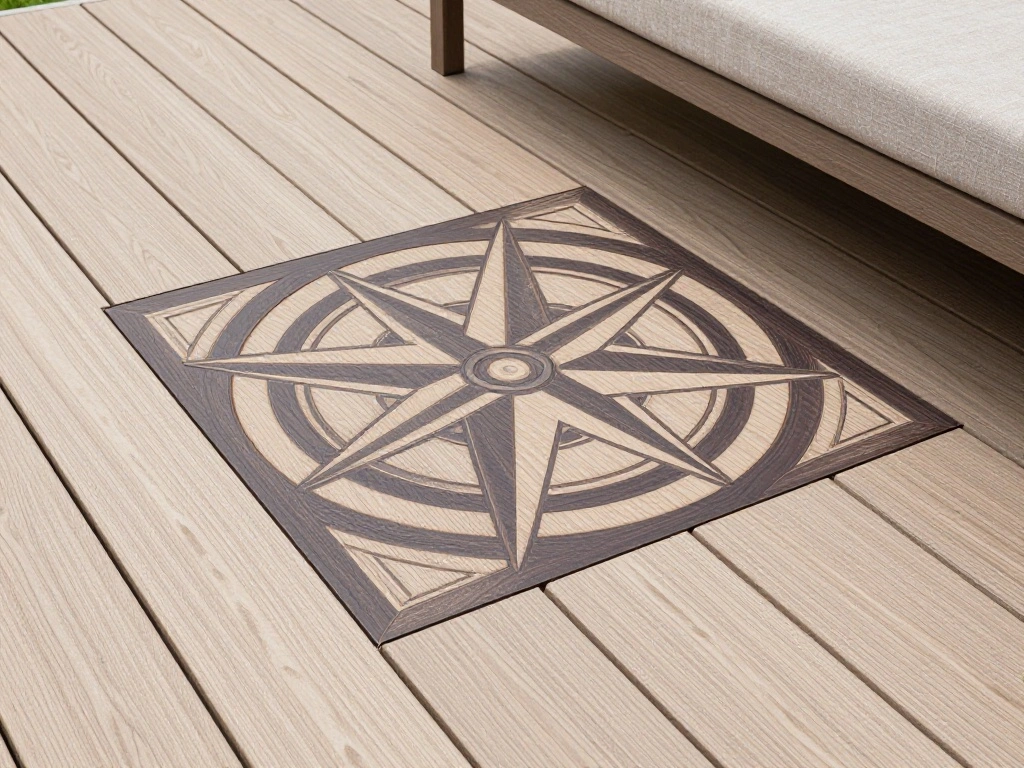
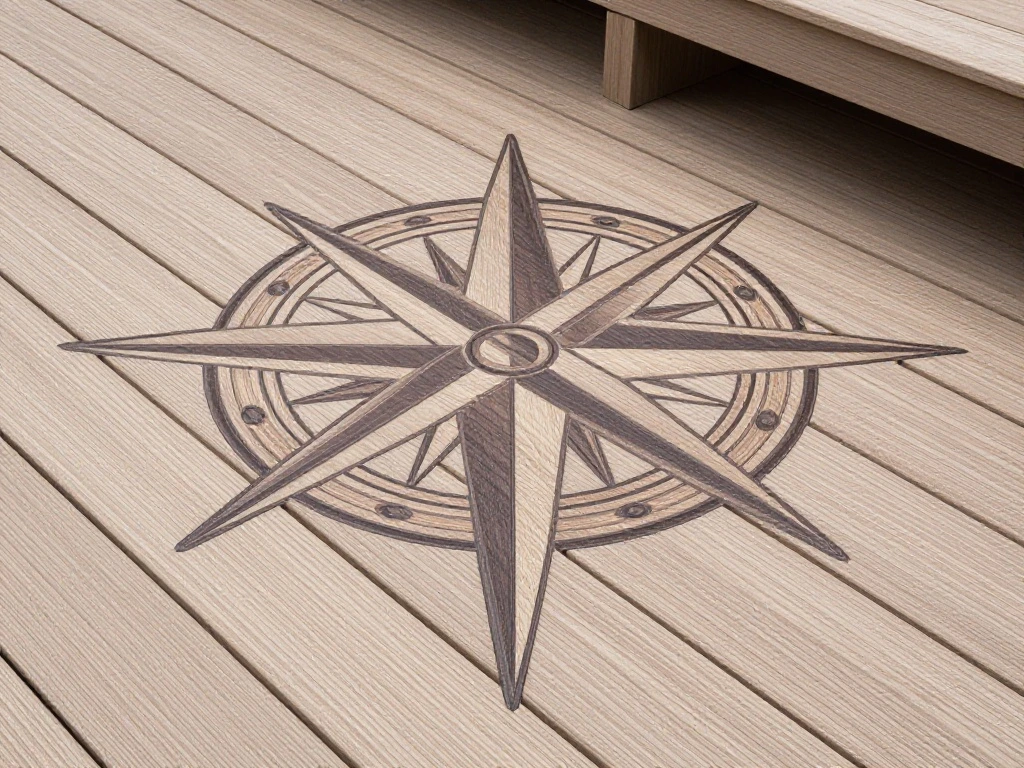
A deck inlay is a section of decking set apart by a contrasting color, pattern, or material. Inlays are often placed at the center of a deck or within a seating nook, and they double as a practical solution when a single board cannot span the full length of the deck. Popular inlay shapes include compass roses, diamonds, and simple geometric borders. Because inlays require custom framing, they are best suited to larger decks with a clear focal area.
7. Two-Tone Color Combinations
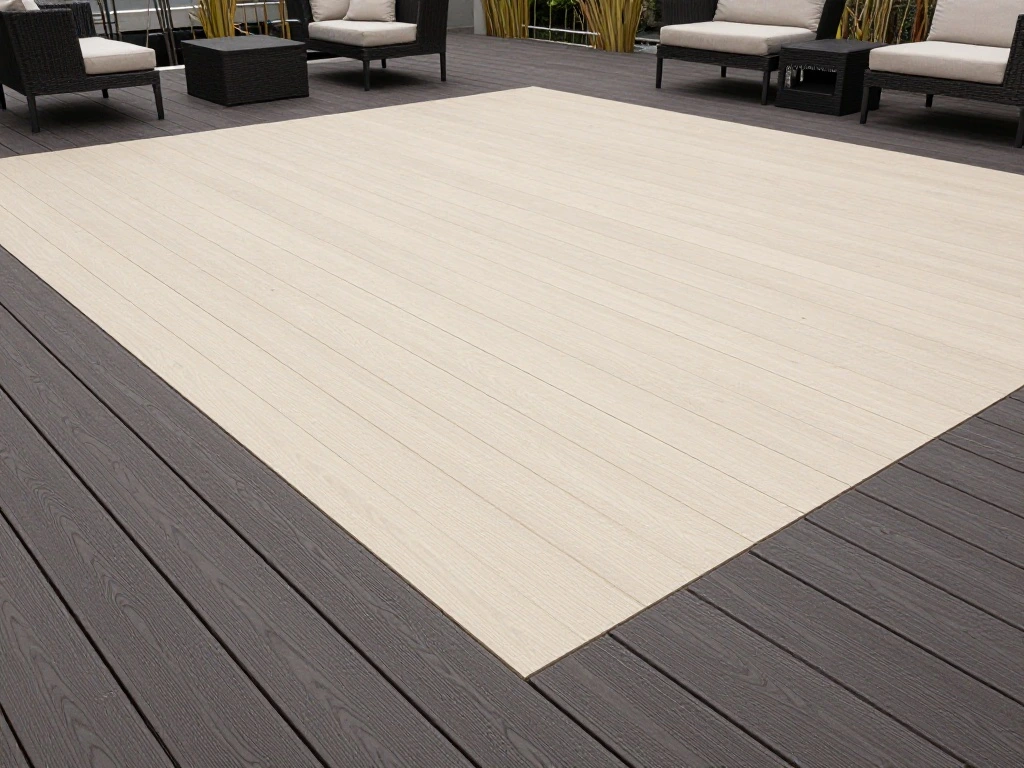
Mixing two composite board colors is one of the highest-impact, lowest-cost upgrades available. A common approach pairs a darker border with a lighter field, or alternates two tones across the deck to create subtle contrast. Designers generally recommend limiting a deck to two or three colors at most, since four or more can start to feel visually busy rather than intentional.
8. Built-In Bench Seating
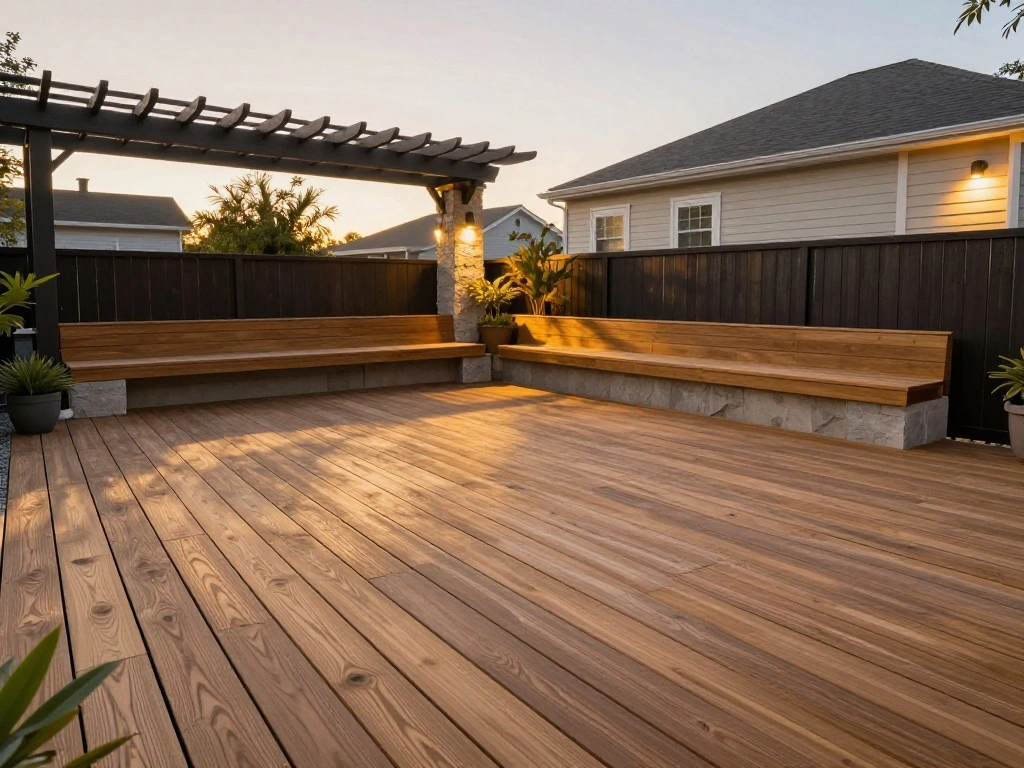
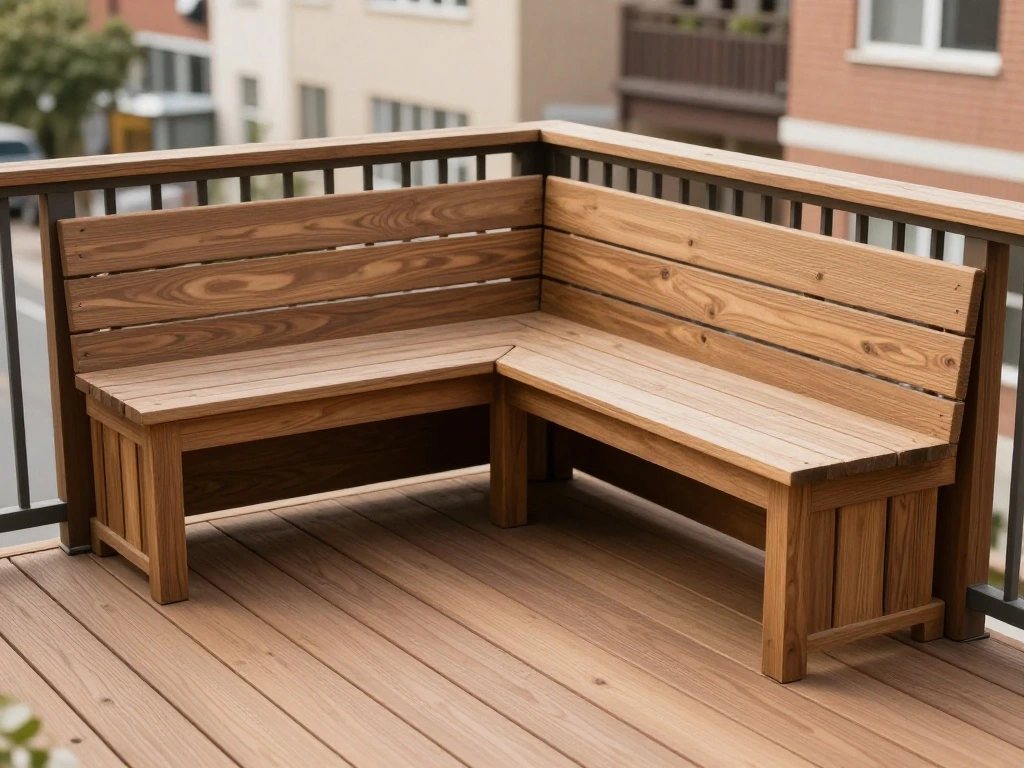
Built-in benches along the perimeter of a deck free Composite Deck Design Ideas up floor space that would otherwise be taken by bulky furniture. This works especially well on smaller urban decks where every square foot matters. A well-built composite bench can last as long as the deck itself, and it eliminates the need to store or replace outdoor furniture cushions and frames over the years.
9. Outdoor Kitchen and Dining Extension
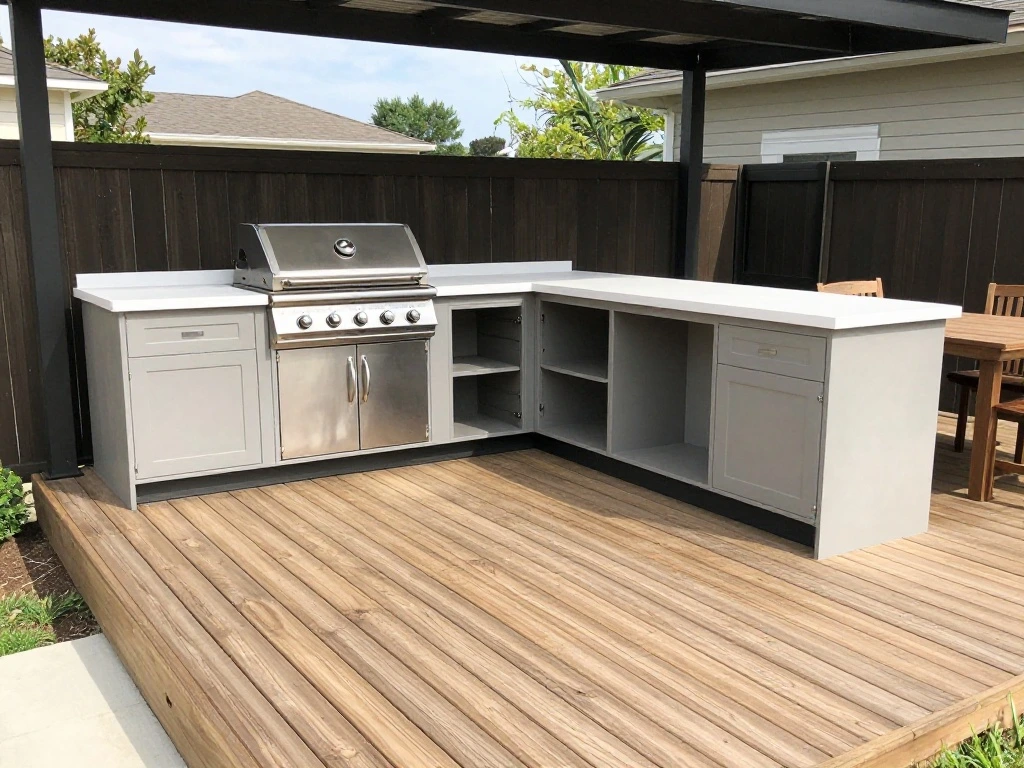
For homeowners who entertain often, extending the deck to include a built-in kitchen area transforms the space into a true outdoor living room. A grill station, countertop, and storage cabinets set into the composite deck create a natural gathering point. Pairing this with a covered structure overhead allows the kitchen to be used comfortably in both sun and light rain.
10. Covered Structures and Pergolas
Adding a pergola or a partial roof over part of the deck extends the number of hours the space can be used each day. A shaded seating or dining area Composite Deck Design Ideas stays comfortable even during the hottest part of summer, while an open section nearby can still be used for sunbathing or stargazing in the evening. Composite decking under a covered structure also tends to stay cooler underfoot compared to open, sun-exposed boards.
11. Poolside Composite Decking
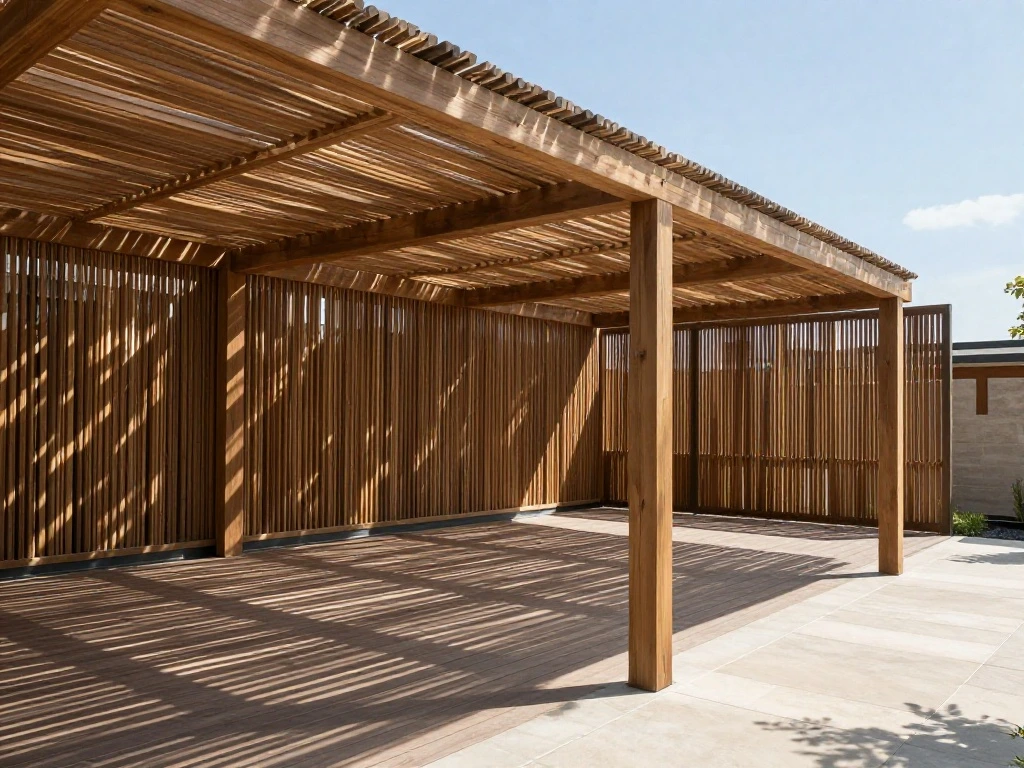
Composite decking has become a favorite choice around pools because of its slip resistance and moisture tolerance. Textured, grooved boards provide Composite Deck Design Ideas secure footing even when wet, Composite Deck Design Ideas and the material will not splinter the way wood can after years of pool exposure. Changing board direction around the pool edge, such as running boards diagonally along the long sides and perpendicular across the short ends, helps define the space and reduces the visual length of a rectangular pool.
12. Fire Pit and Cozy Lounge Areas
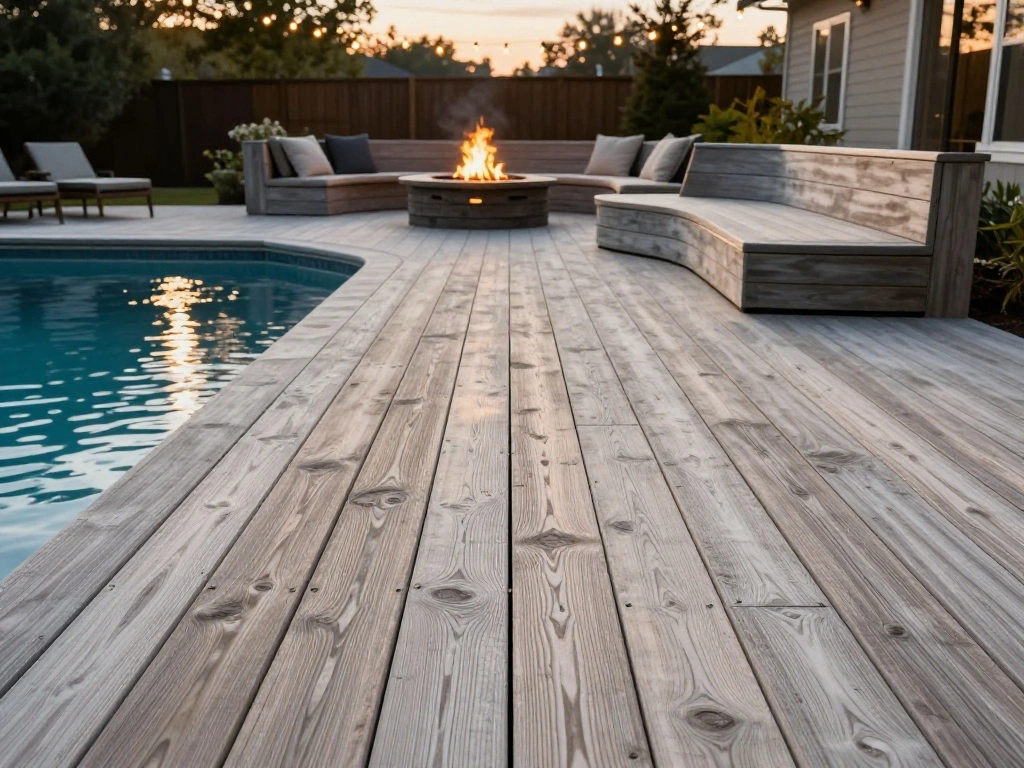
A built-in or freestanding fire pit paired with comfortable seating turns a deck into a year-round gathering spot. Composite decking handles the heat Composite Deck Design Ideas exposure near a properly installed fire feature far better than untreated wood, and the low-maintenance surface means less worry about ash or spark damage. String lights or post-cap lighting around the fire pit area add ambiance for evening use.
13. Curved and Rounded Deck Details
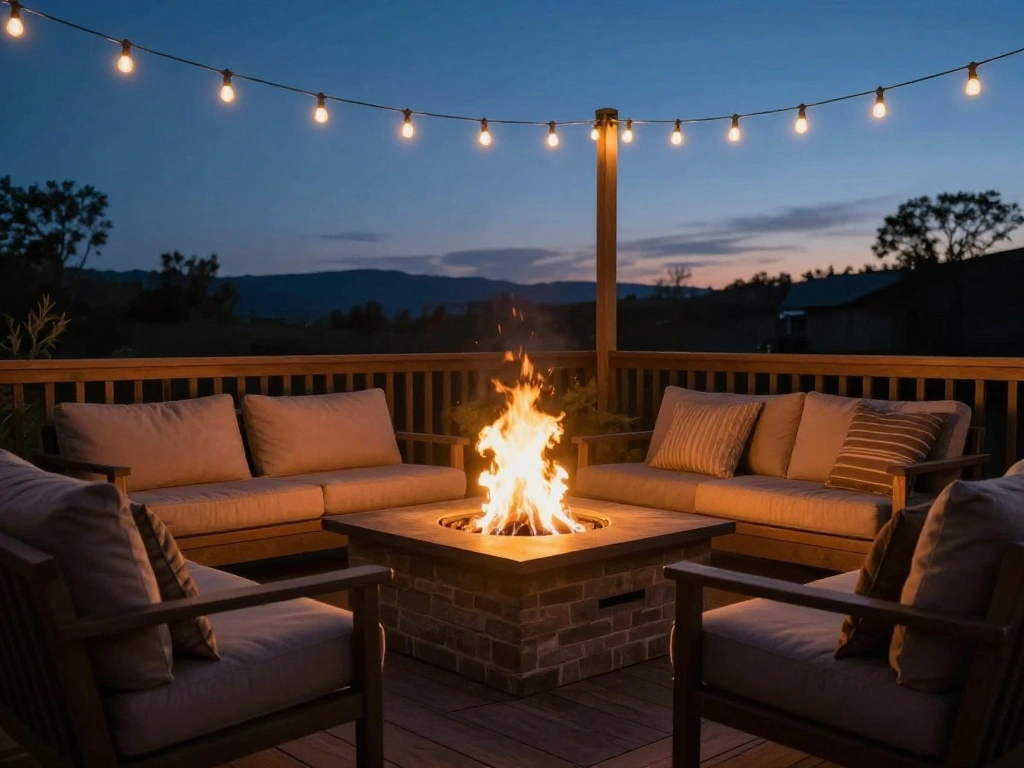
Not every deck needs to follow straight lines. Curved edges, rounded benches, and circular dining nooks soften the overall look of a composite deck and create a more organic feel. While curves require more precise cutting and planning, composite boards can be shaped to follow gentle curves without cracking, making this a design worth considering for homeowners who want their deck to feel less rigid and more like a natural Composite Deck Design Ideas extension of the landscape.
How to Choose the Right Composite Deck Design for Your Home
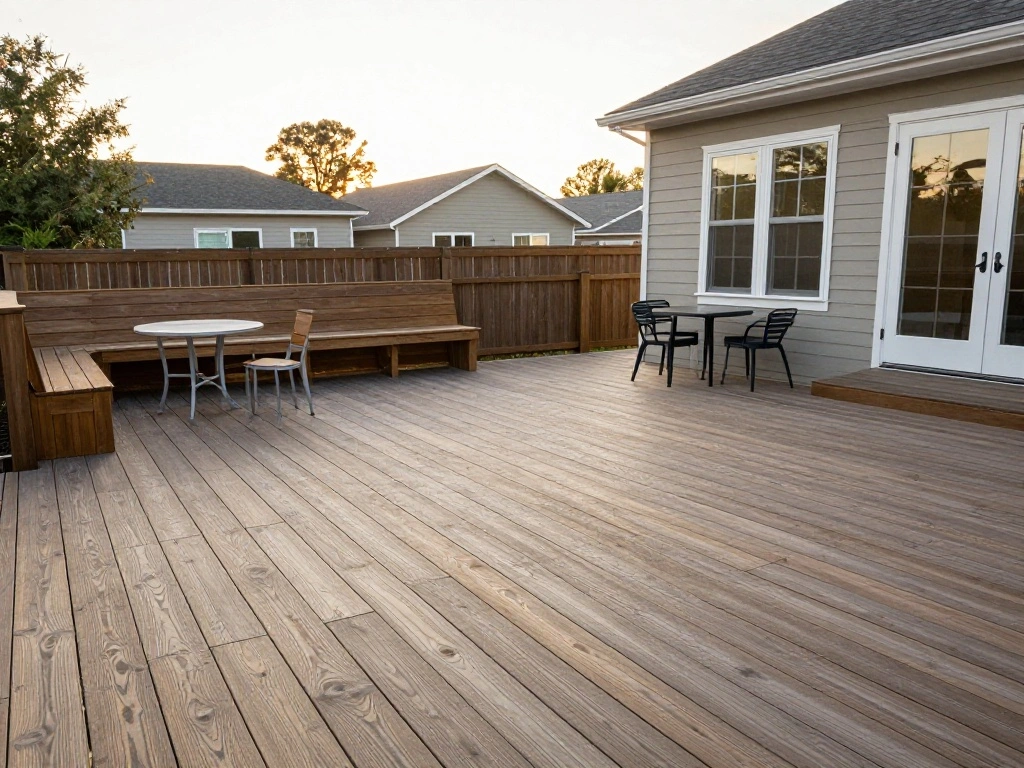
With so many composite deck design ideas available, narrowing down the right fit comes down to a few key questions. First, consider the size and shape of your space. Diagonal and herringbone patterns shine on larger decks, while straight layouts with built-in benches often make more sense for smaller footprints. Second, think Composite Deck Design Ideas about how you actually plan to use the deck. A family that entertains often will benefit more from an outdoor kitchen and multi-level layout than a couple looking for a quiet reading nook.
Frequently Asked Questions
1. What is the most popular composite deck design pattern right now?
Herringbone and diagonal board layouts are among the most requested patterns today because they add visual interest without requiring major changes to a standard deck footprint.
2. Is composite decking a good choice for a pool deck?
Yes. Textured, grooved composite boards offer strong slip resistance and hold up well to constant moisture and sun exposure, making them a practical option around pools.
3. How many colors should I use on a composite deck?
Most designers recommend sticking to two or three colors at most. Using four or more colors can make the deck feel visually cluttered rather than intentional.
4. Do patterned layouts like herringbone cost more than a standard deck?
Yes. Complex patterns typically require additional framing and material, often adding twenty five to fifty percent to the cost compared to a straight-board layout.
5. Can composite decking be curved or shaped for rounded designs?
Composite boards can be cut and shaped to follow gentle curves, allowing for rounded benches, dining nooks, or deck edges without cracking or splintering.