20 Snapdragon Flower Ideas for a Colorful Garden Design
Introduction
Few flowers bring the kind of reliable, season-long color that snapdragons deliver. Known botanically as Antirrhinum majus, these cottage garden staples have been gracing garden beds, borders, and window boxes for centuries, and their popularity shows no signs of slowing. With a blooming range spanning from the cool days of early spring well into the frosts of autumn, and a color palette that covers nearly every shade imaginable except true blue, snapdragons are one of the most versatile tools in any gardener’s repertoire.
Whether you are working with a modest front yard, a sprawling cottage garden, or a compact balcony, there is a snapdragon idea suited perfectly to your space. They come in dwarf forms that nestle neatly at the front of a border, intermediate types that hold their own in mixed beds, and tall cut-flower varieties that can reach three feet or more, adding bold vertical interest wherever they grow. Modern breeding has also introduced trailing varieties ideal for hanging baskets, as well as heat-tolerant hybrids that continue blooming even through warm summer stretches.
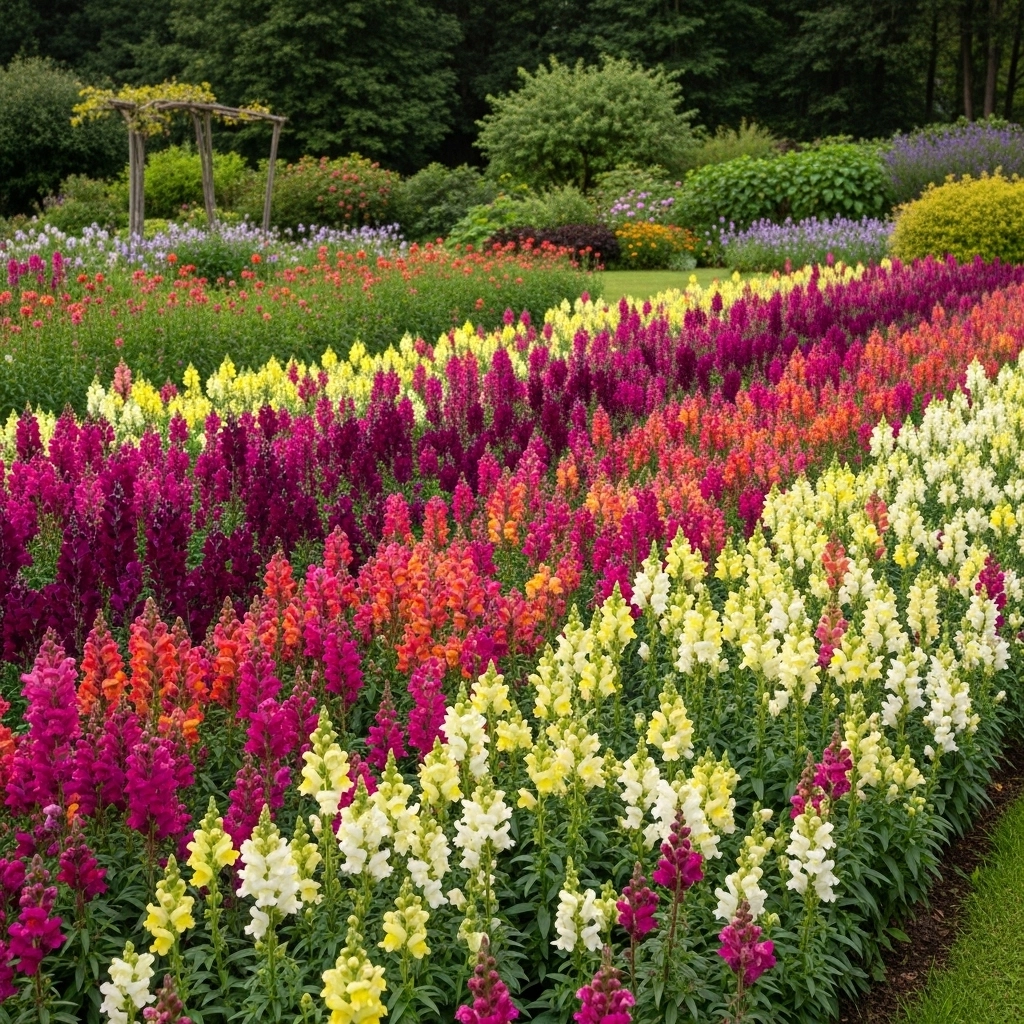
This article explores 20 creative snapdragon ideas to help you design a colorful, visually dynamic garden that performs from the first warm weeks of spring through the final days of fall. Each idea is grounded in practical growing knowledge and thoughtful design principles, so you can put these suggestions to work in your own outdoor space right away.
1. Classic Rainbow Border
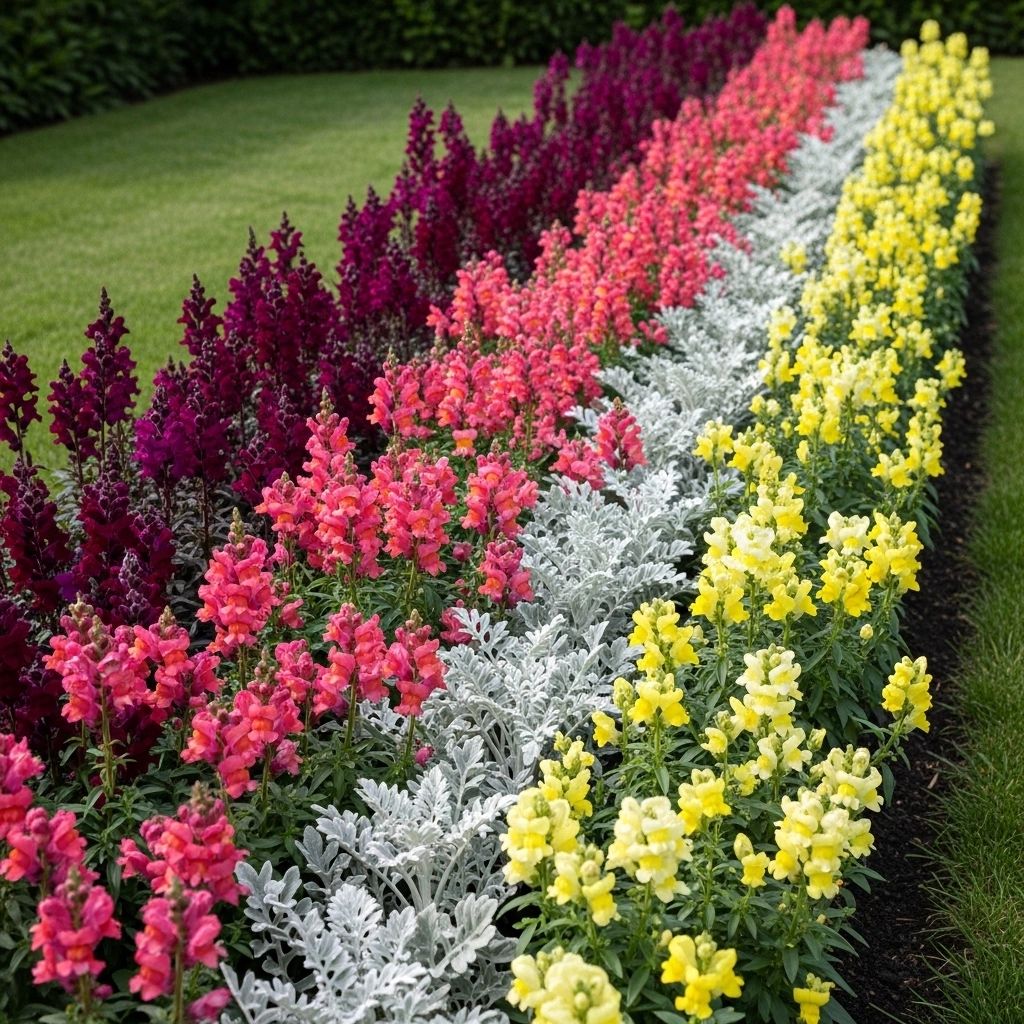
One of the most striking ways to use snapdragons is to plant them in a graduated color sequence along a garden border. Arrange them so colors transition from deep purples and burgundies at one end, through warm pinks and corals, into bright oranges and yellows, and then out to clean whites at the other end. This living color gradient creates a naturally flowing visual that draws the eye along the full length of the bed. Use tall varieties at the back, intermediate types in the middle, and dwarf forms at the front edge for added depth. Dusty miller planted between color zones acts as a silver buffer that prevents the colors from competing with one another.
2. Cottage Garden Charm
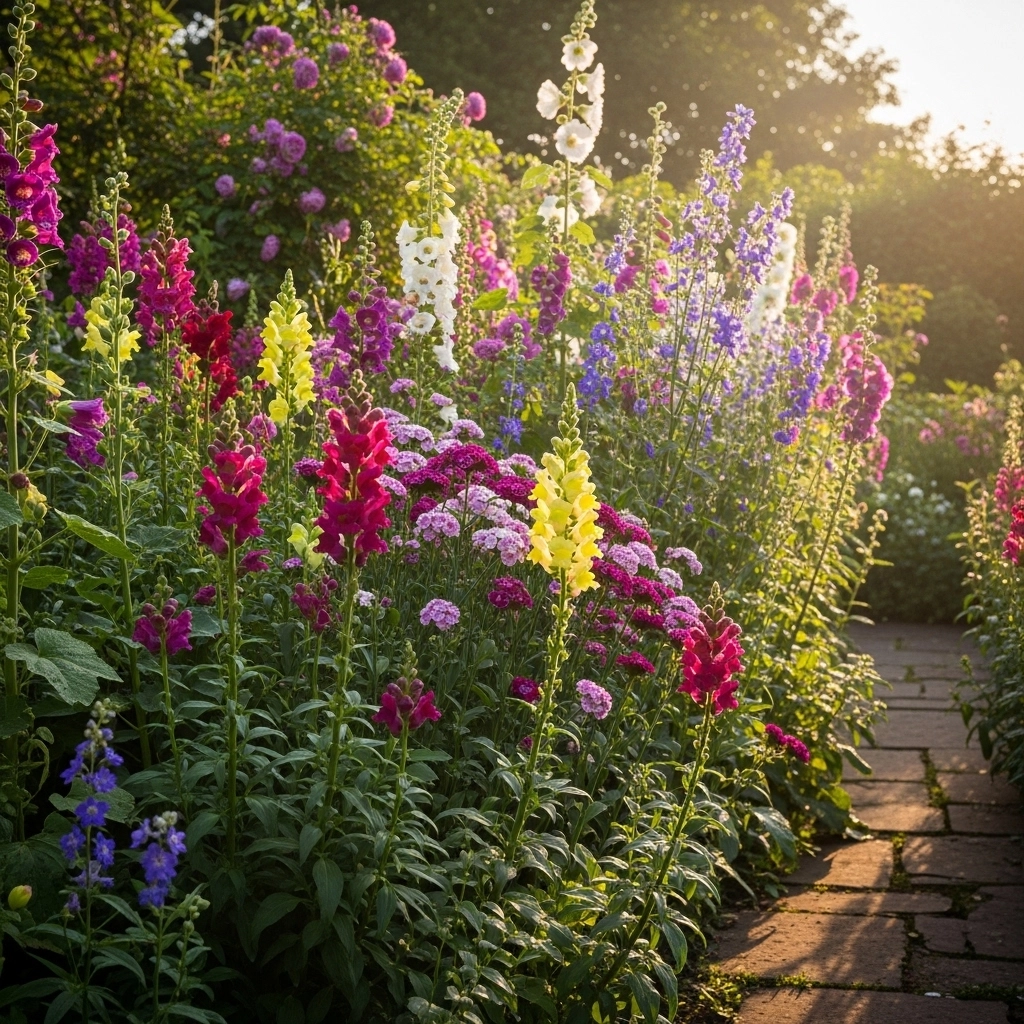
Snapdragons are quintessential cottage garden flowers, and pairing them with other old-fashioned bloomers creates exactly the kind of relaxed, romantic planting that this style demands. Combine tall Rocket series snapdragons with foxgloves, hollyhocks, and larkspur for a planting that feels both spontaneous and lushly composed. The vertical spikes of snapdragons work beautifully alongside the softer, rounder forms of roses and sweet William. Allow some plants to self-seed so volunteers return each spring, deepening the naturalistic effect over time.
3. Monochromatic White Garden
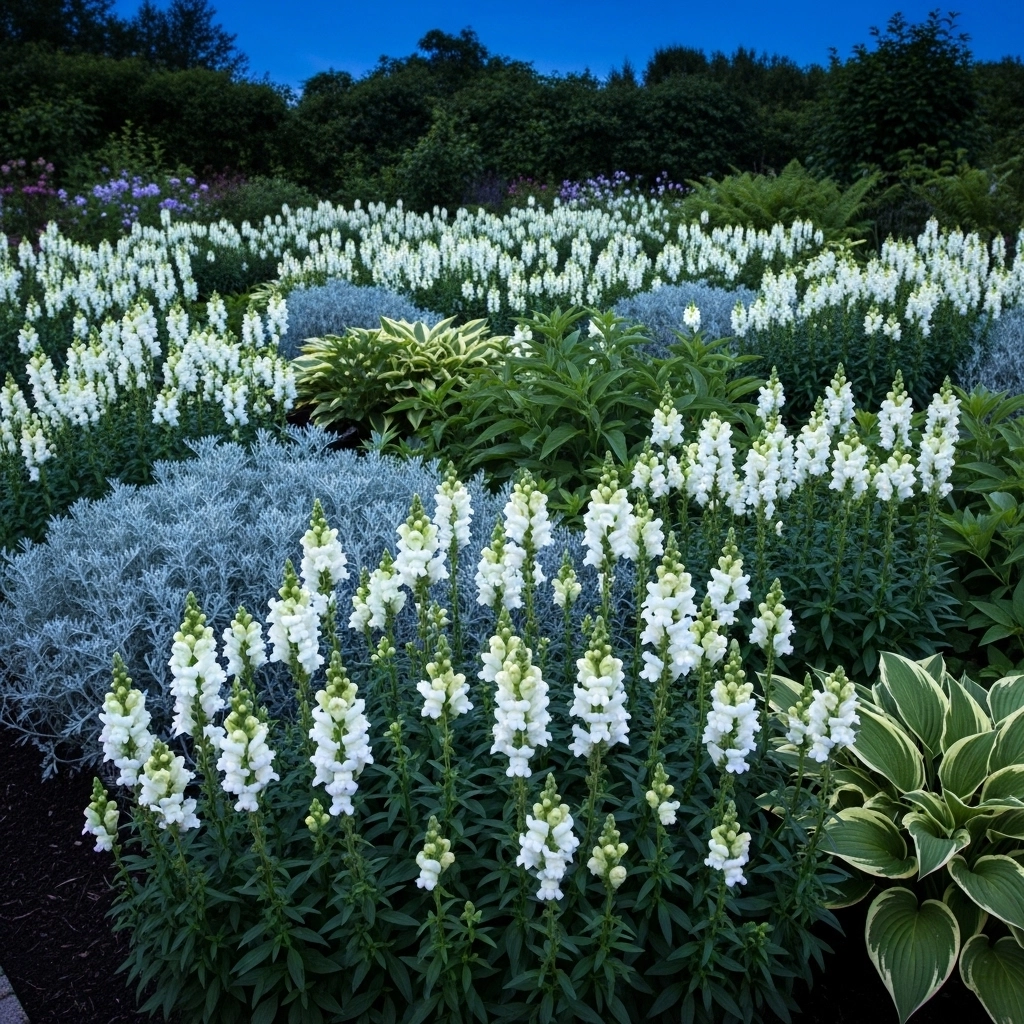
A garden planted entirely in white snapdragons creates an ethereal, almost luminous effect, particularly in the early evening when the blooms seem to glow against the darkening foliage behind them. This moon garden approach works best when you mix snapdragon varieties of different heights so that the white forms a layered, three-dimensional display. Pair white snapdragons with silvery artemisia, white alyssum, and pale green foliage plants to build a refined, elegant composition that is restful and sophisticated at the same time.
4. Hot Color Combination for Drama
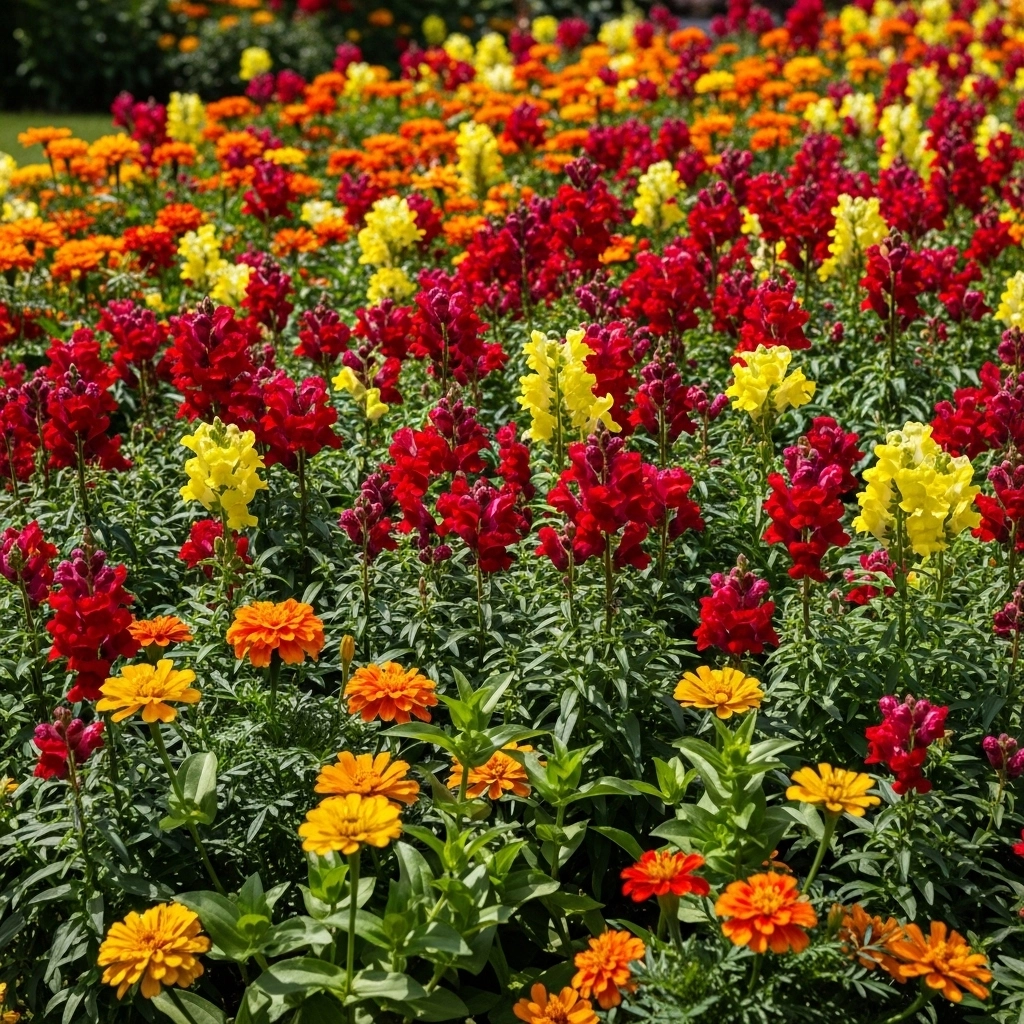
For gardeners who love bold, high-energy color schemes, combining red, orange, yellow, and deep gold snapdragons in a single bed creates a fiery display that commands attention from across the yard. Varieties like the Rocket Red and Rocket Orange are bred for exactly this kind of strong visual impact. Pair them with orange marigolds and golden zinnias to create a warm-season planting that looks equally stunning in a formal bed or a cutting garden. This combination thrives in full sun and will keep its intensity right through until the first frost.
5. Soft Pastel Planting for Romantic Beds
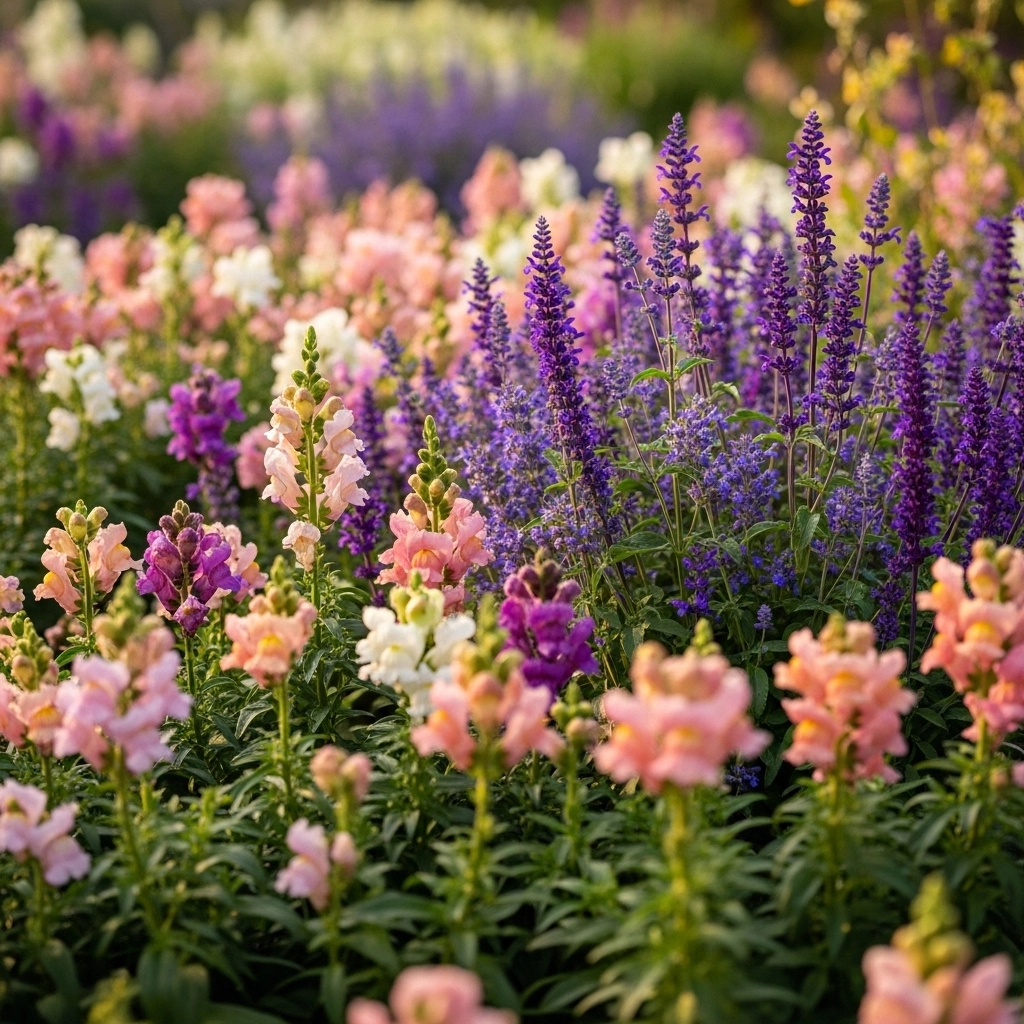
On the opposite end of the spectrum, a planting of pale pink, lavender, peach, and creamy white snapdragons creates a soft, dreamy garden bed that feels serene and romantic. The Chantilly Light Salmon and apple blossom bicolored varieties are particularly beautiful in this type of palette. Pair soft-toned snapdragons with nepeta, lavender, and pale blue salvia for a composition that is cohesive, calming, and highly photogenic. This approach suits front garden beds, courtyard plantings, and any space meant to feel welcoming and gentle.
6. Tiered Height Border
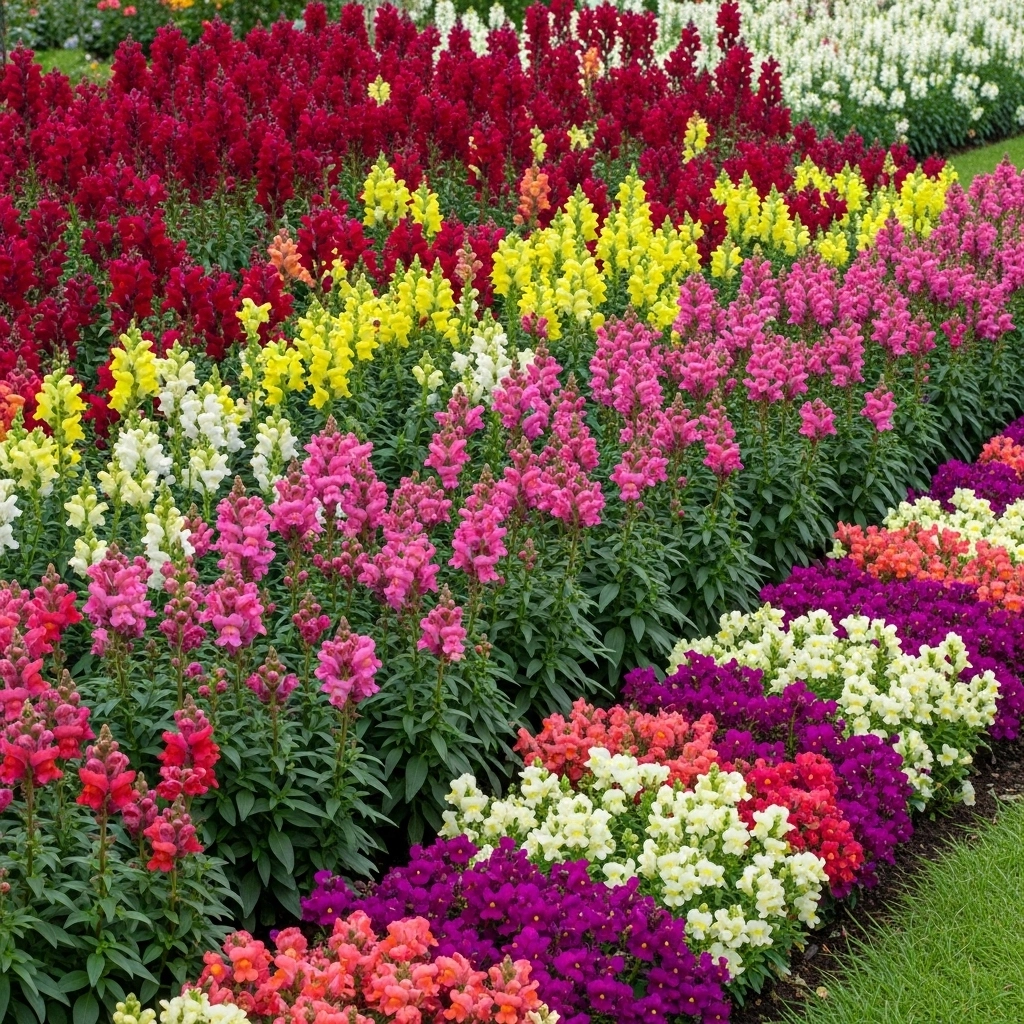
Because snapdragons come in such a wide range of heights, from compact dwarfs of four to six inches up to tall cut-flower types reaching three feet, they lend themselves perfectly to a tiered planting design. Position tall varieties such as Potomac or Rocket at the back of the border, intermediate types measuring twelve to twenty-four inches in the middle zone, and dwarf varieties like Floral Showers or Candy Showers at the very front. This arrangement ensures that every plant is visible and that the border has a satisfying sense of fullness and dimension from any angle.
7. Container Garden on a Patio or Balcony
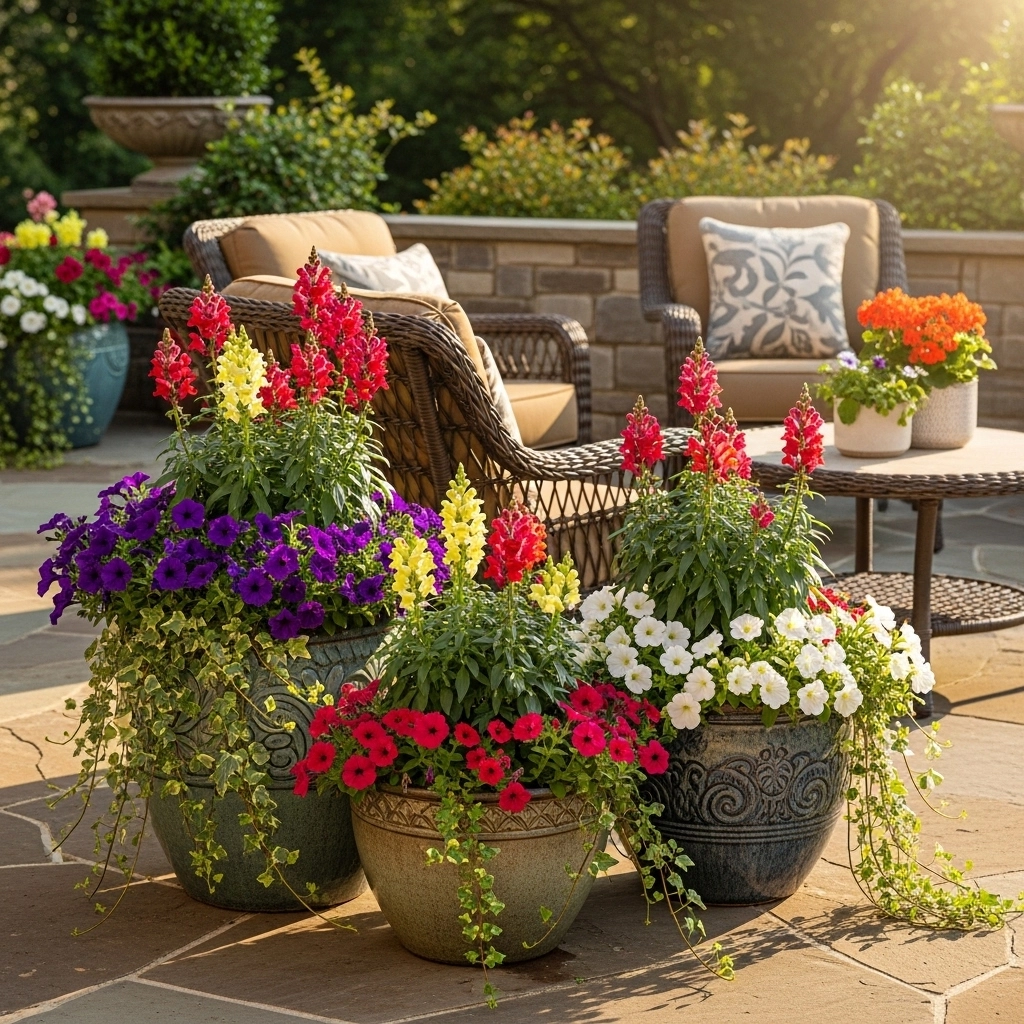
Snapdragons are excellent container plants, making them a go-to choice for patios, balconies, and apartment terraces where in-ground planting is not possible. Use medium to large containers and combine a tall snapdragon variety as the thriller, petunia or calibrachoa as the filler, and trailing ivy geranium or bacopa as the spiller. Group several pots together in varying heights for a coordinated display, or place a single large pot as a focal point beside a front door. Because containers can be moved, they allow gardeners to reposition the color display as seasons and needs change.
8. Pollinator-Friendly Garden Bed
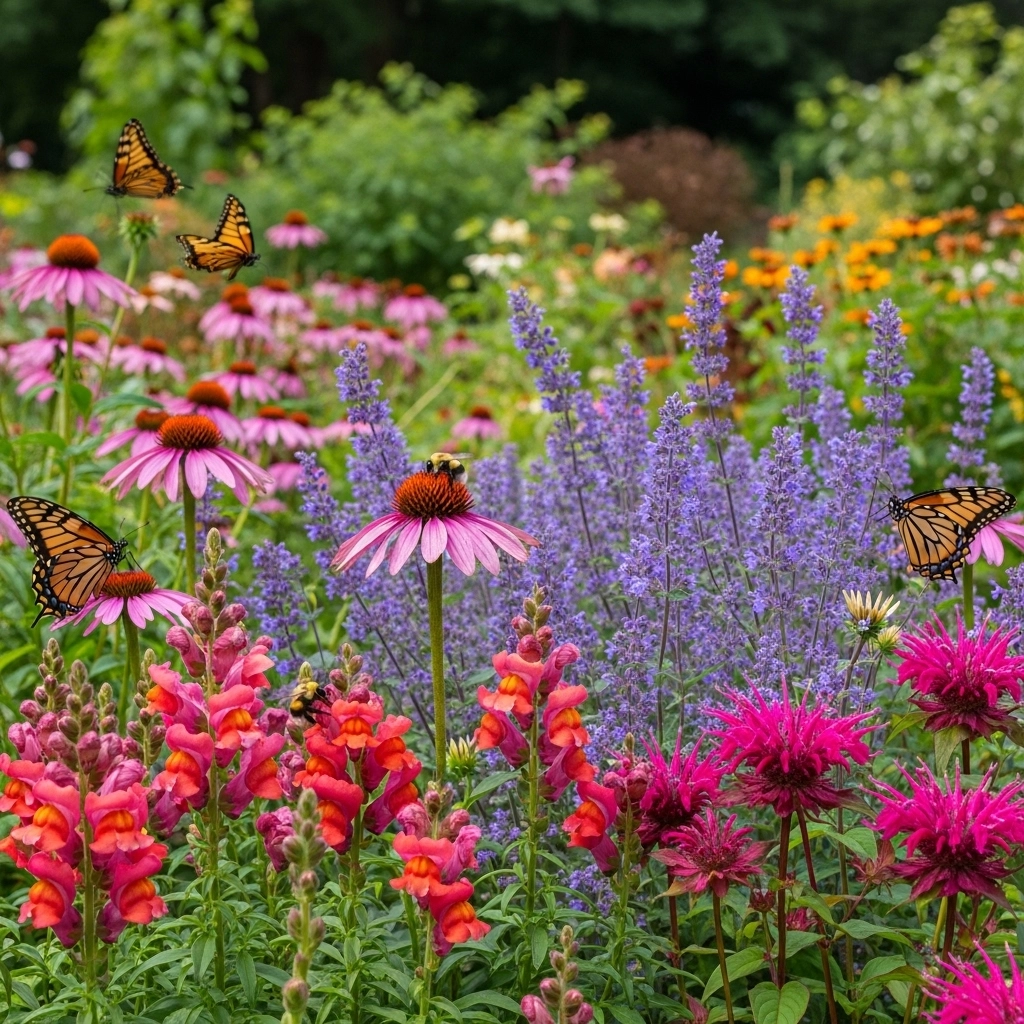
Snapdragons are exceptional pollinator plants, attracting bumblebees, butterflies, and hummingbirds throughout the blooming season. To maximize ecological value, pair them with other nectar-rich plants such as coneflower, catmint, native yarrow, bee balm, and penstemon. The combination creates a garden that is not only beautiful but actively supports local pollinators, which is increasingly important in today’s gardens. Plant a range of snapdragon heights alongside these perennials for a mixed border that serves both ornamental and environmental purposes simultaneously.
9. Cut Flower Garden Row
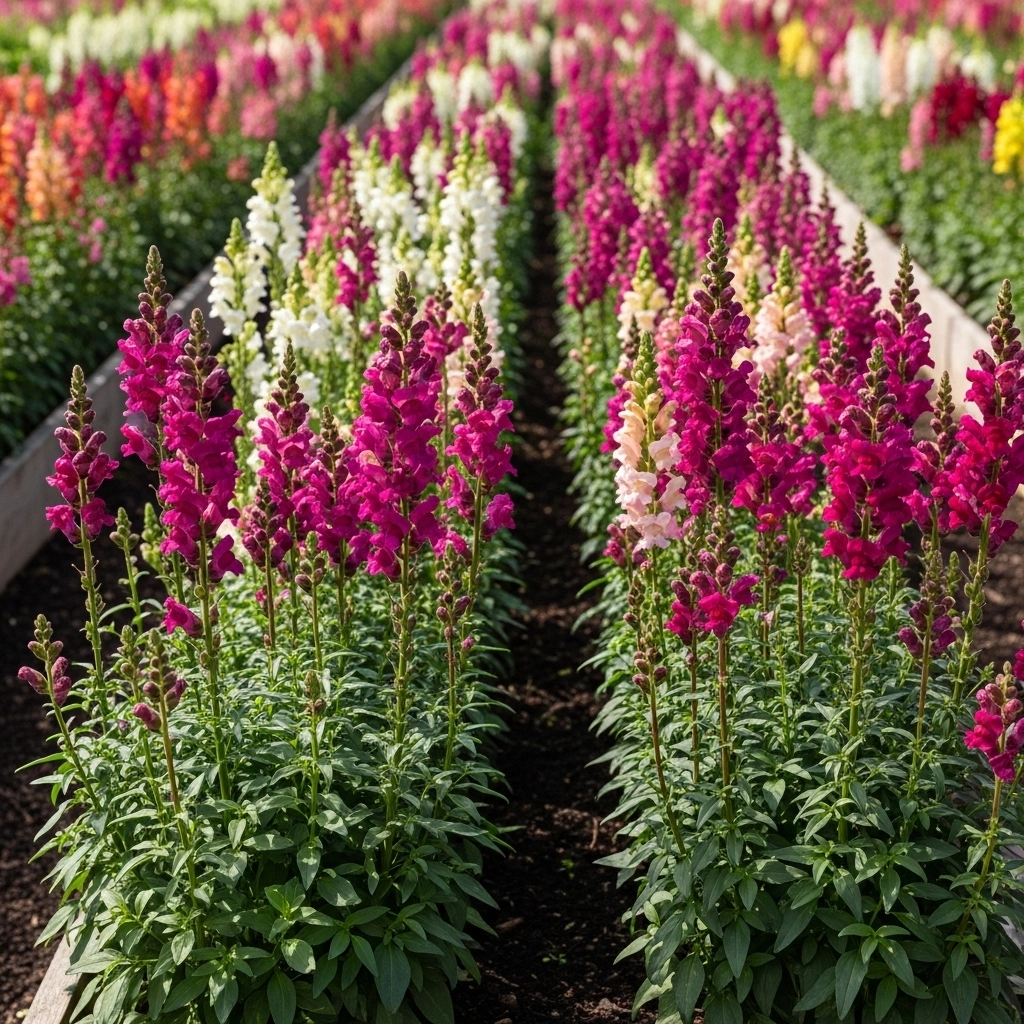
If you love bringing fresh flowers into your home, dedicate a row or raised bed to tall snapdragon varieties grown specifically for cutting. The Potomac, Rocket, and Madame Butterfly series are among the best performers for cut flowers, producing long, strong stems that hold up well in vases. Plant them in rows about six to nine inches apart and pinch out the growing tips when plants are young to encourage more stems per plant. Succession sow every three weeks from late winter to early spring to extend the harvest window throughout the season.
10. Foundation Planting Against a Wall or Fence
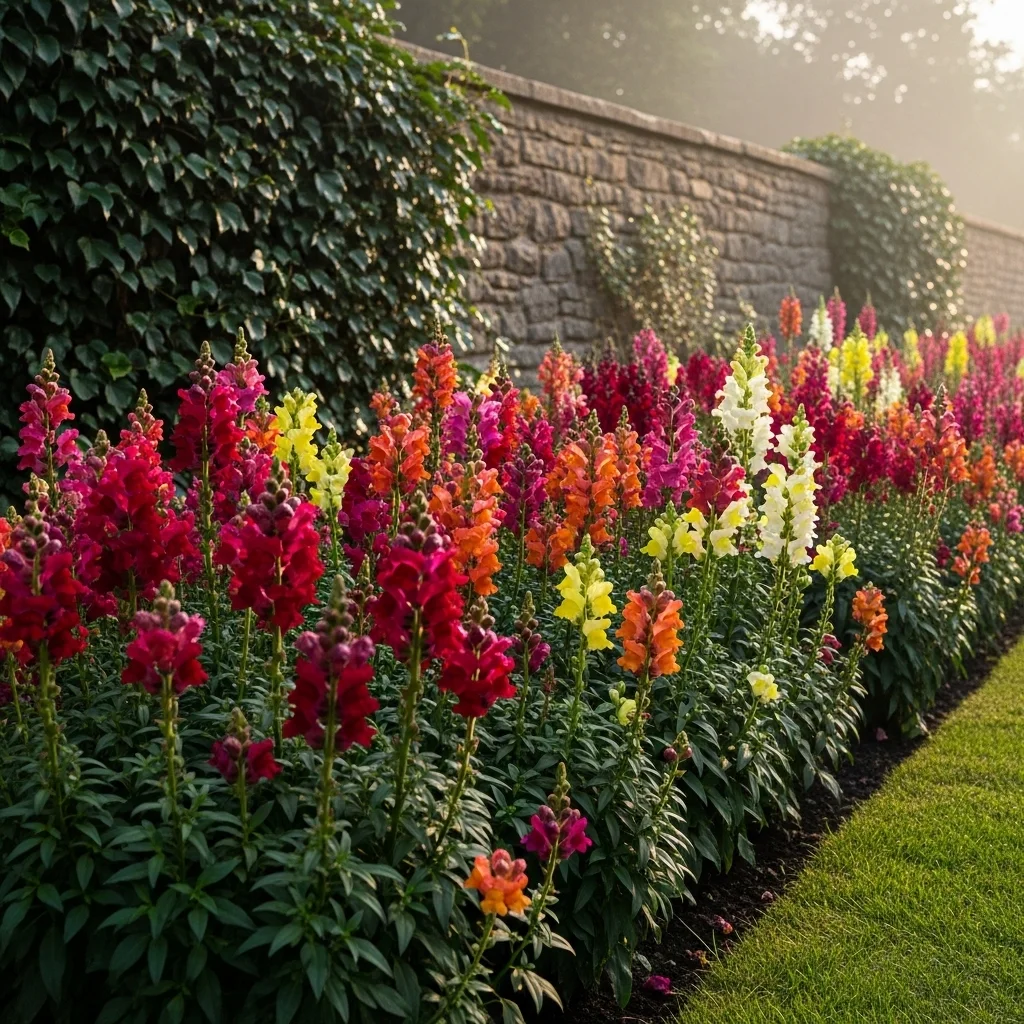
Tall snapdragons planted in front of a fence, wall, or broadleaf evergreen hedge create a striking seasonal display that brings a formal garden element to life. The spiky vertical forms of the flowers contrast beautifully with the solid, flat background behind them. Shrubs like choisya, pittosporum, and euonymus serve as excellent evergreen backdrops that provide year-round structure while the snapdragons deliver seasonal color in spring and early summer. This approach works particularly well in formal and semi-formal garden styles.
11. Snapdragons as Pathway Edging
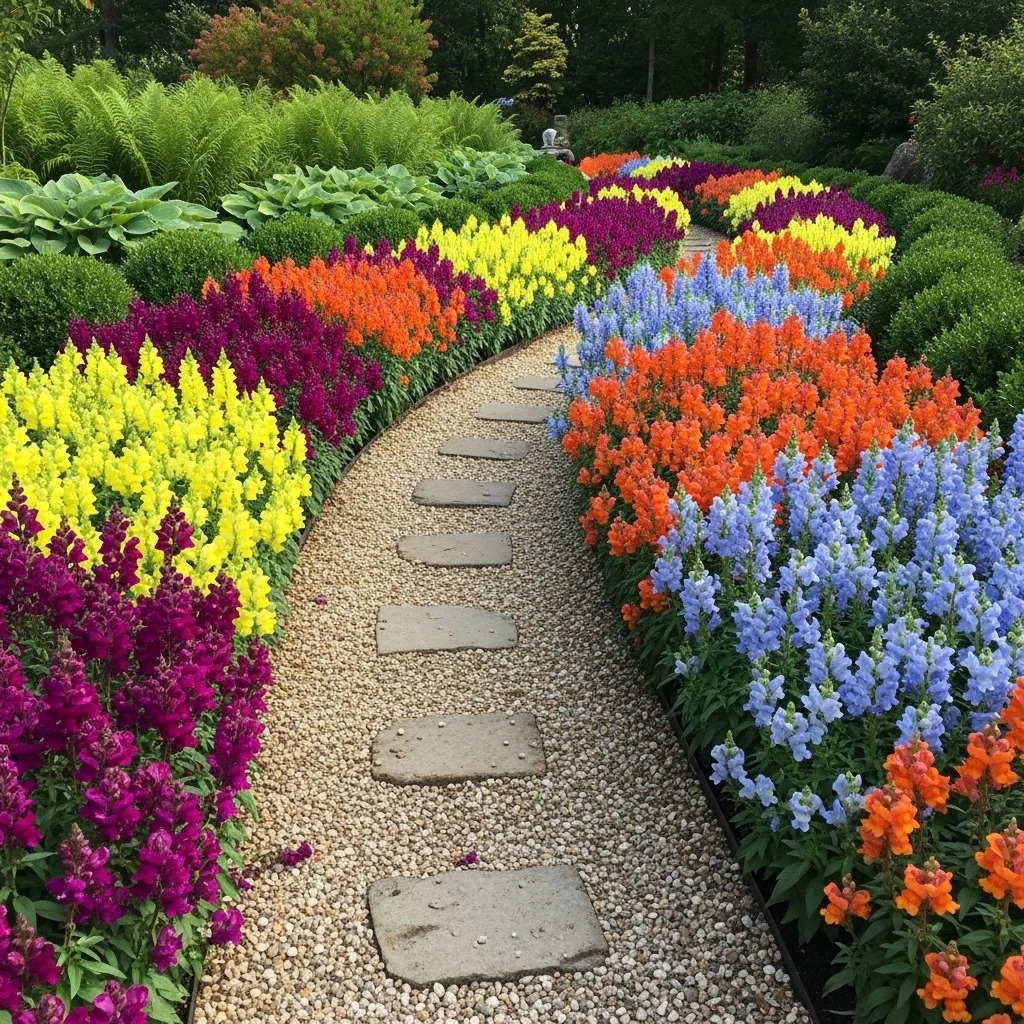
Lining a garden path with dwarf or intermediate snapdragons creates a welcoming corridor of color that makes any walkway feel intentional and well-designed. Choose compact varieties like Floral Showers or Twinny for paths where a low, tidy edge is desirable, and space plants around eight to ten inches apart for a dense, continuous display. For gravel paths, lower-growing forms blend seamlessly with the surrounding materials while still contributing visible color. Alternate two complementary colors on either side of the path for a playful, symmetrical effect.
12. Snapdragons in a Hanging Basket
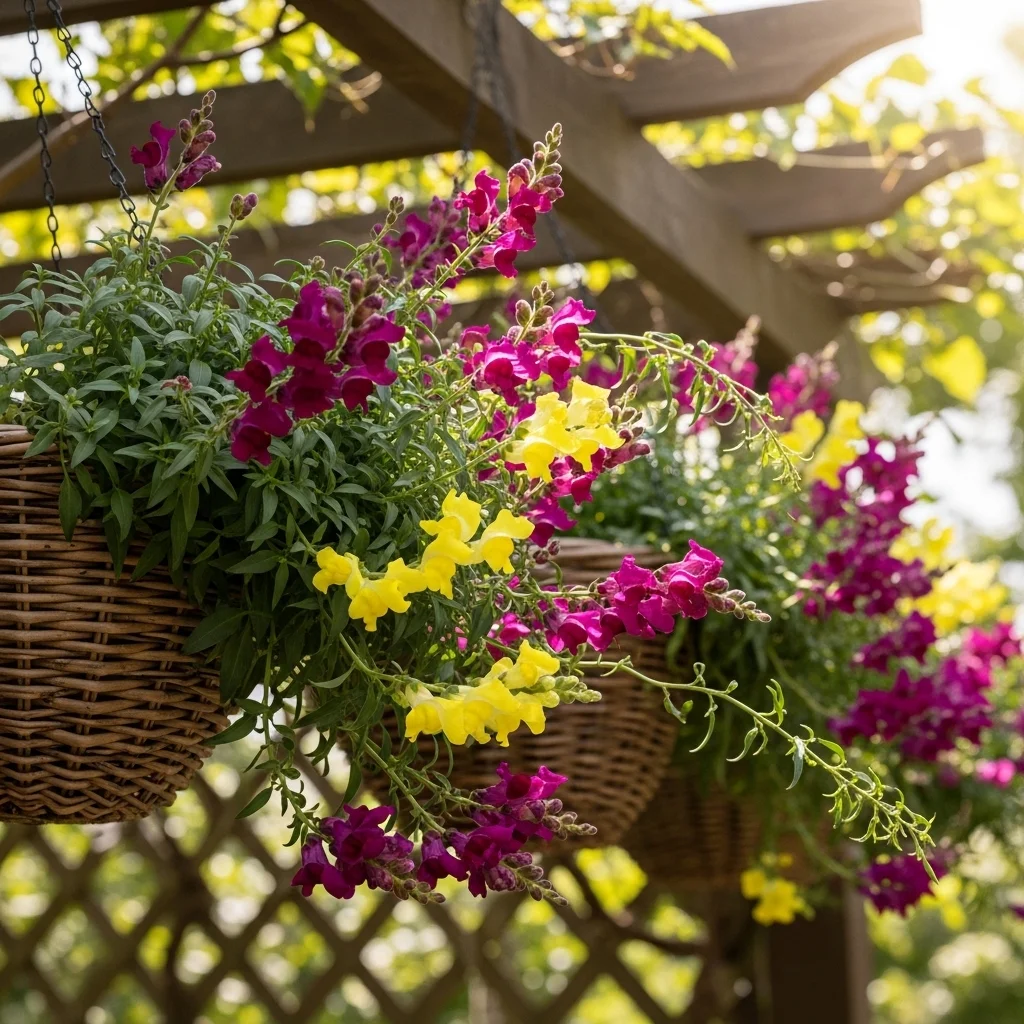
Trailing snapdragon varieties such as the Candy Showers series were bred specifically for hanging baskets and window boxes. Unlike traditional upright forms, these plants cascade gracefully over the edges of their containers, creating a waterfall of blooms in shades ranging from deep purple and magenta to pale yellow and white. Hang baskets at varying heights on a porch or pergola and combine trailing snapdragons with upright verbena or calibrachoa for a layered, textured arrangement that looks full and lush from every angle.
13. Snapdragons with Ornamental Grasses
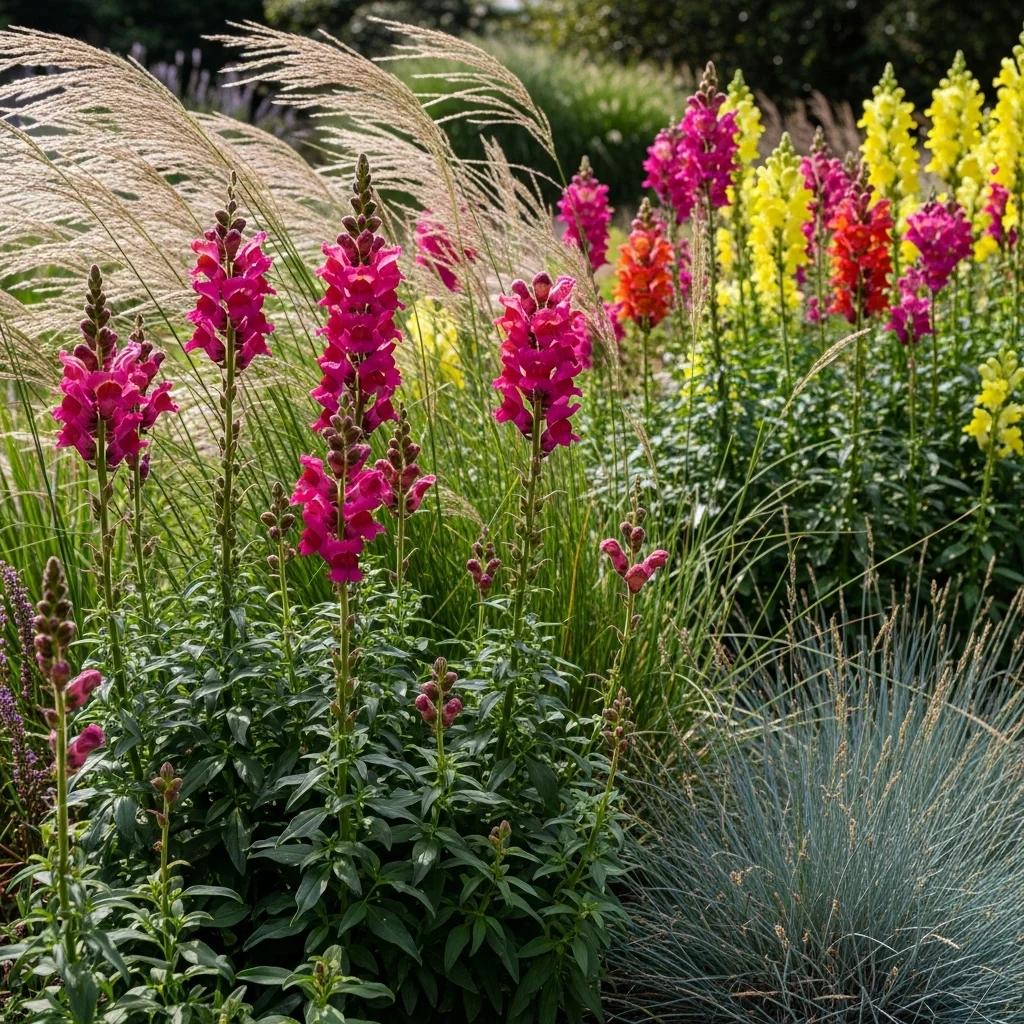
Combining the stiff, architectural spikes of tall snapdragons with the soft, flowing movement of ornamental grasses creates a dynamic garden contrast that plays beautifully in the breeze. Feather reed grass, blue fescue, and Japanese forest grass all pair well with snapdragons. The grass foliage provides textural contrast and fills in the base of the planting when snapdragons are between bloom cycles. This combination works particularly well in naturalistic and prairie-inspired garden designs where movement and texture are valued as much as color.
14. Vegetable Garden Companion Planting
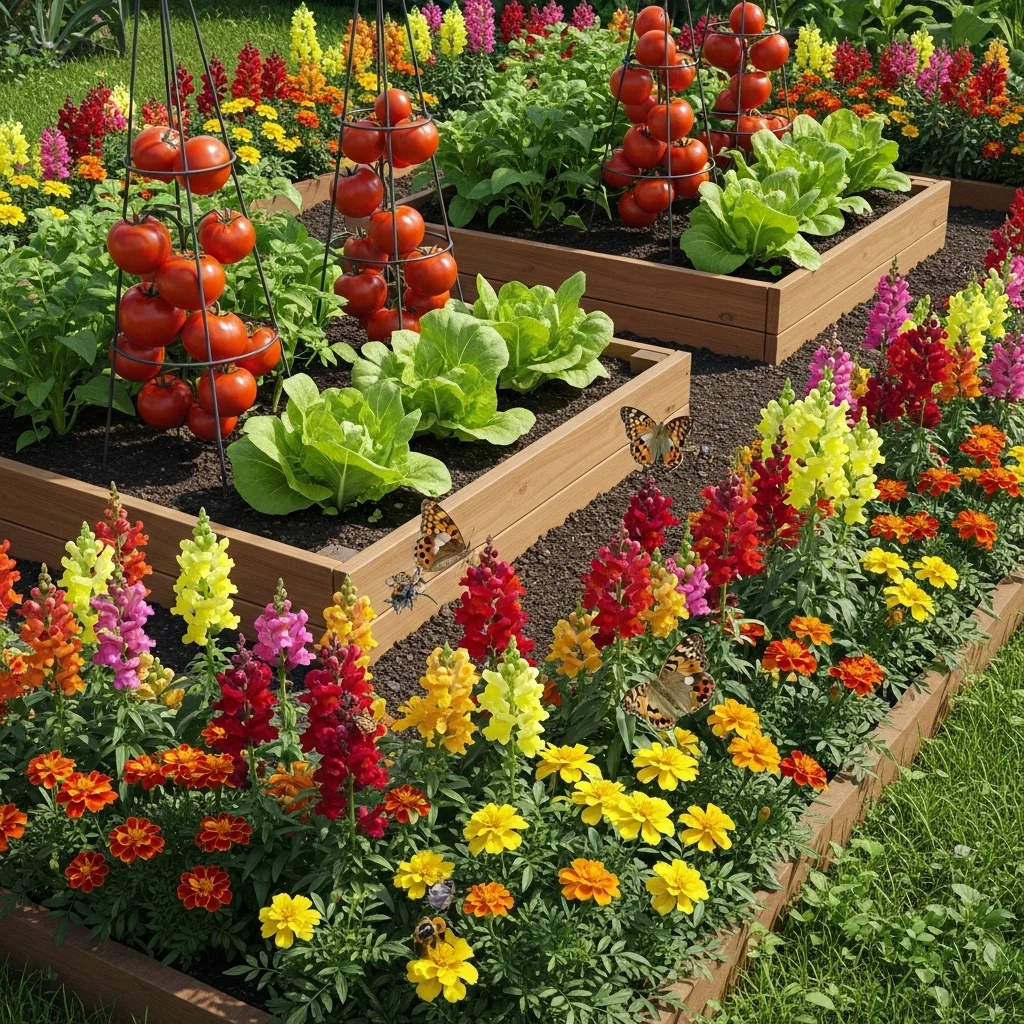
Snapdragons are outstanding companions in the vegetable garden. Planted near tomatoes, they attract beneficial insects that help with pollination and pest control, while marigolds nearby deter nematodes and aphids. The combination of snapdragons, marigolds, and petunias around the edges of a vegetable bed creates a colorful, functional border that serves both aesthetic and agricultural purposes. Gardeners working in kitchen gardens will find that snapdragons add beauty to what might otherwise be a purely utilitarian space, making the garden a more enjoyable place to spend time.
15. Monochromatic Deep Purple and Burgundy Bed
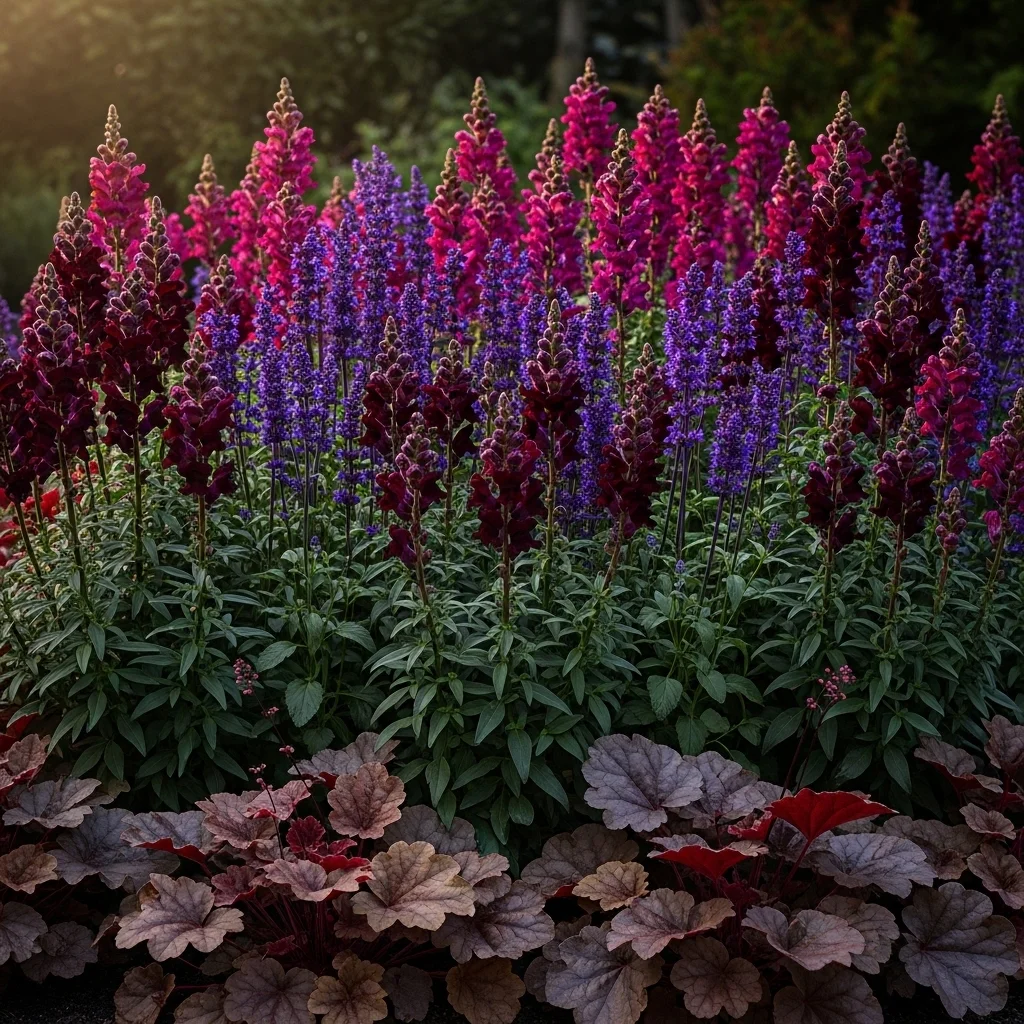
A planting focused entirely on deep purples, rich burgundies, and dark wine-toned snapdragons creates a sophisticated, dramatic garden statement that feels luxurious and moody. The Black Prince snapdragon is one of the most popular choices for this effect, with its deep crimson-burgundy blooms that appear almost velvety in certain light. Pair these dark-toned varieties with purple salvia, dark-leafed heuchera, and deep violet petunias for a planting that feels cohesive and deliberately composed. This design approach suits formal garden settings and modern landscapes particularly well.
16. Spring Bulb and Snapdragon Combination
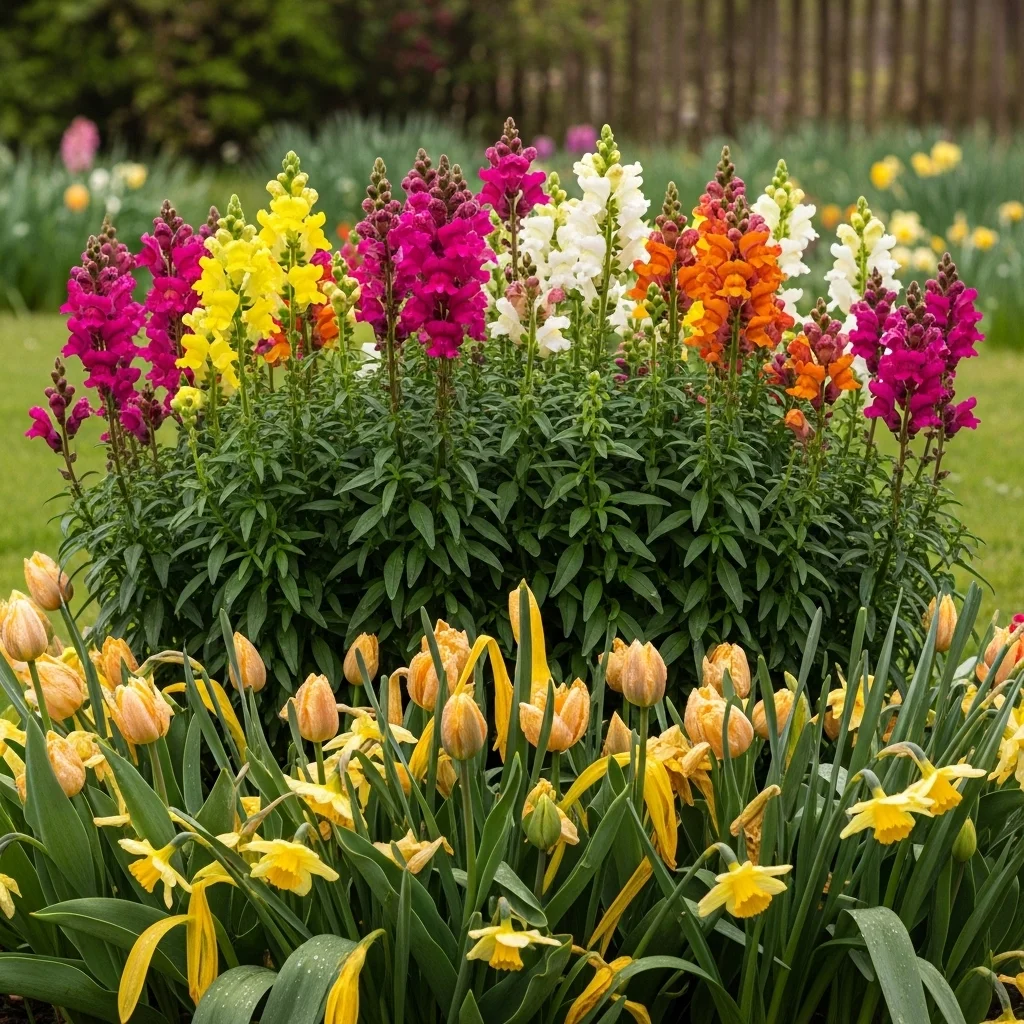
One of the most practical snapdragon ideas is using them to bridge the gap between spring bulb season and summer perennial blooming. As tulips, daffodils, and alliums begin to fade, their yellowing foliage can make the garden look unkempt. Planting snapdragons nearby covers the declining bulb foliage while simultaneously providing a burst of fresh color. This technique, sometimes called interplanting, ensures the garden looks tidy and abundant at all times, without sacrificing the spring display that bulbs deliver. Choose snapdragon colors that complement the bulb varieties planted in the same bed.
17. Snapdragons with Lavender and Salvia
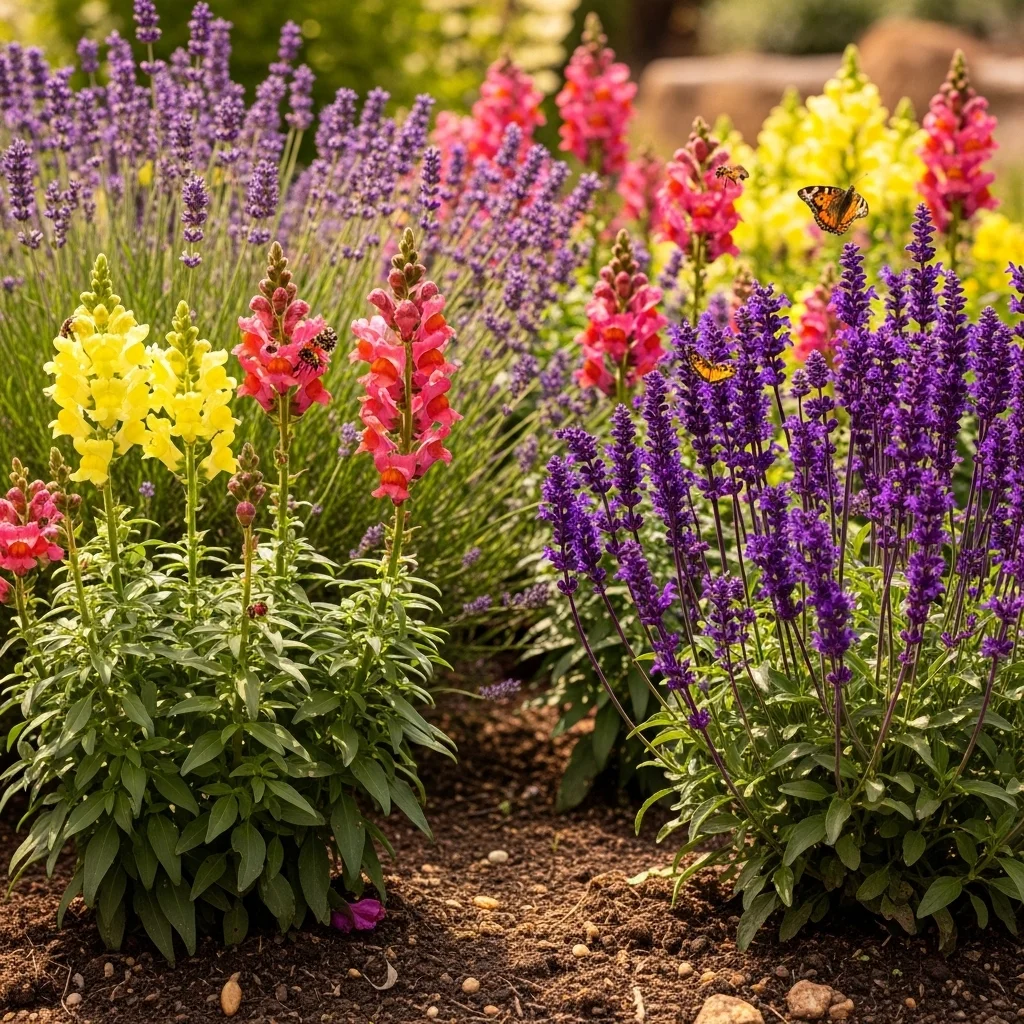
The combination of snapdragons with lavender and salvia creates one of the most harmonious and long-lasting garden pairings available to the cool-season gardener. All three plants share a preference for well-drained soil and full sun, and their flower forms contrast beautifully. The fat, hinged blooms of the snapdragons play against the delicate whorled spikes of salvia and the fine, fragrant racemes of lavender, producing a planting that is rich in texture as well as color. This trio is also highly attractive to bees and butterflies, making it ideal for wildlife-friendly gardens.
18. Formal Geometric Bed Design
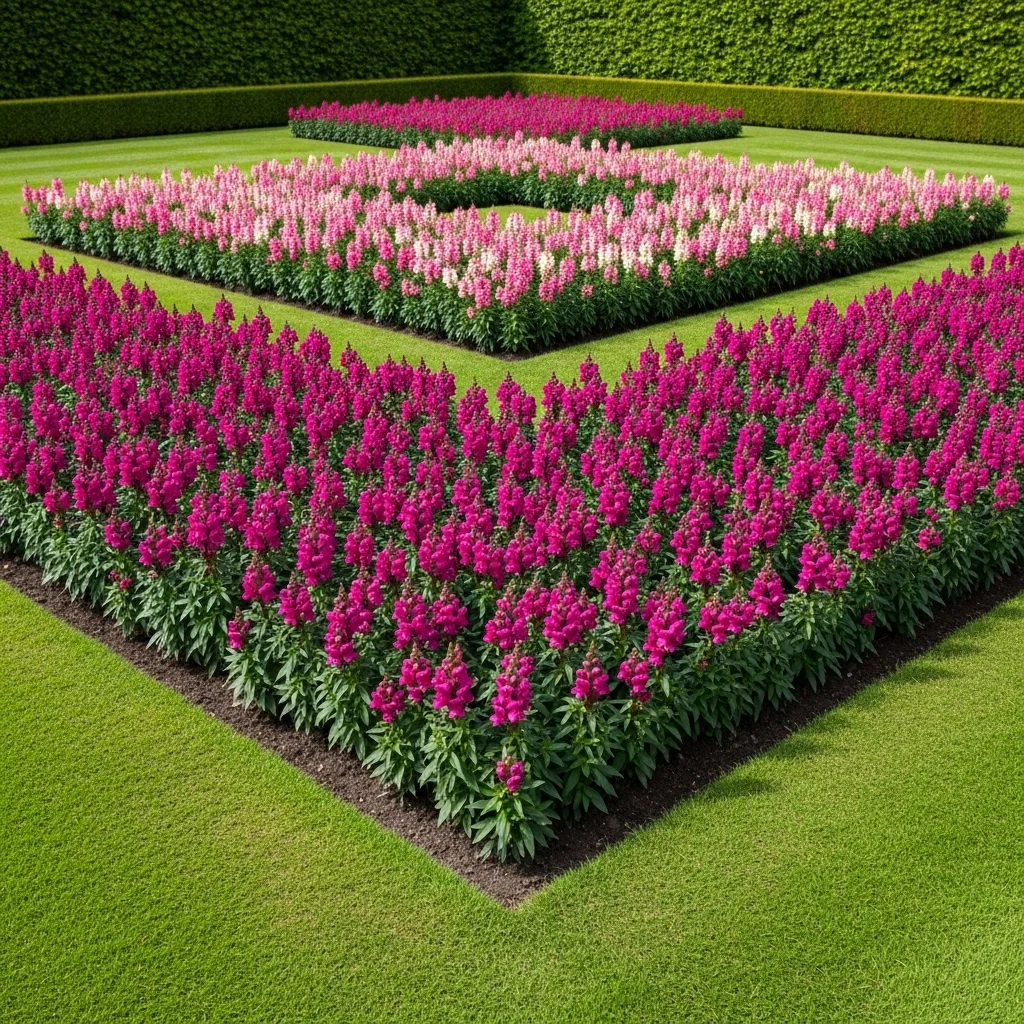
In a formal garden setting, snapdragons can be used to fill geometric beds with orderly masses of color. Choose a single variety and a single color, then plant in neat rows or blocks to create a defined, structured display. This approach is common in public parks and formal estate gardens, where the visual impact comes from scale and uniformity rather than variety. The Rocket series, with its tall, upright habit and strong stems, is particularly well-suited to formal mass planting. Deadhead regularly to keep the display looking crisp and to prolong flowering.
19. Fall Snapdragon Revival Garden
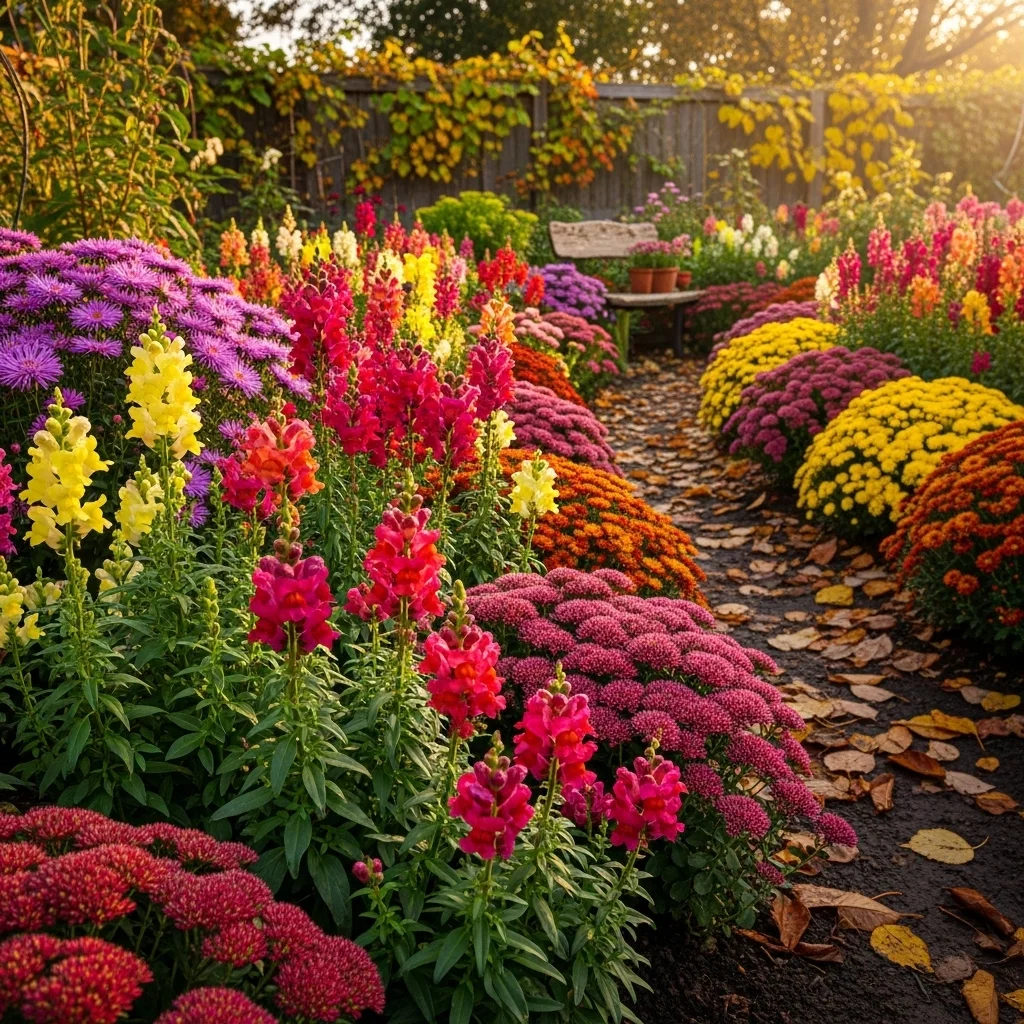
Many gardeners do not realize that snapdragons perform a second act in autumn. Plants that slowed or stopped blooming during the peak heat of midsummer will often revive and flower again vigorously as temperatures cool in late August and September. To make the most of this second season, cut plants back by one third in late summer, apply a liquid fertilizer, and water well. Pair reblooming snapdragons with autumn-flowering companions such as asters, sedums, and ornamental mums for a fall display that bridges the gap between the main growing season and the first frosts.
20. Azalea-Flowered Snapdragons for a Unique Display
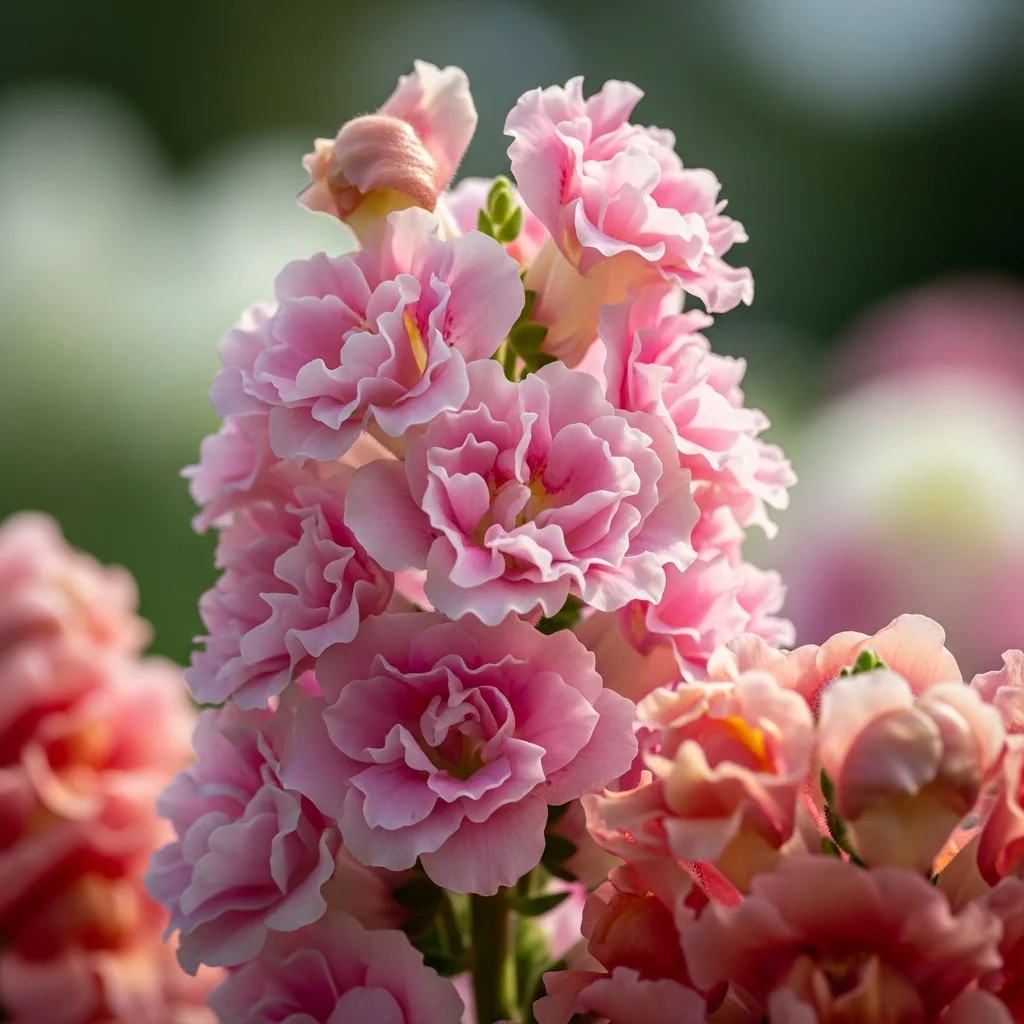
Most people picture the classic hinged, two-lipped snapdragon bloom when they think of this flower, but the Madame Butterfly series offers something entirely different. These azalea-flowering snapdragons produce open, ruffled, double blooms that look more like an azalea or a delphinium than a traditional snapdragon. They are particularly popular for wedding flowers and high-end floral arrangements because of their delicate, layered petals and soft, romantic appearance. In the garden, they add an element of surprise and visual refinement that elevates any planting from ordinary to extraordinary.
Essential Growing Tips for Healthy Snapdragons
Choosing the Right Location
Snapdragons grow best in a location that receives at least six hours of direct sunlight per day. In regions with very hot summers, light afternoon shade can prevent heat stress and extend the blooming period. Good air circulation around plants is important to reduce the risk of fungal diseases such as rust and powdery mildew, so avoid planting in areas with poor airflow.
Soil Preparation and Planting
Well-drained, humus-rich soil is ideal. Loosen the soil to a depth of at least twelve inches and incorporate compost before planting. Space intermediate and tall varieties twelve to eighteen inches apart to allow good airflow and room for root development. For container plantings, use a quality potting mix with perlite added for drainage.
Watering and Feeding
Keep plants consistently moist during the establishment phase, then water about one inch per week once established. Always water at the base of the plant rather than overhead to keep foliage dry and reduce disease risk. Feed every four to six weeks with a balanced liquid fertilizer using a 10-10-10 ratio to maintain strong, productive growth throughout the season.
Deadheading and Pinching
Regular deadheading is one of the single most effective ways to keep snapdragons blooming over a long period. Remove spent flower spikes by cutting them back to just below the lowest faded bloom. Pinching out the growing tips of young plants when they reach six inches tall encourages branching and results in more flower stems per plant. This simple technique can dramatically increase the volume of flowers produced over the course of the season.
Conclusion
Snapdragons are among the most rewarding and adaptable flowers a gardener can grow. Their extraordinary color range, varied heights, long blooming season, and willingness to thrive in containers, borders, cutting gardens, and companion plantings make them genuinely indispensable for anyone who wants a garden that stays colorful and visually interesting from spring through fall. Whether you are drawn to the romance of a pastel cottage garden, the drama of a deep burgundy border, the practicality of a cut flower row, or the elegance of a formal geometric bed, there is a snapdragon idea in this list that will suit your style and your space perfectly.
The 20 ideas covered here are not just decorative concepts. They are grounded in the real growth habits, cultural preferences, and design strengths of this remarkable flower. Choose one or two ideas to begin with, refine your approach over a season, and then build on your experience year after year. Snapdragons reward attentive gardeners with season after season of outstanding color, and once you begin growing them with purpose and intention, they will become a permanent fixture in your garden design toolkit.
Frequently Asked Questions
1. When is the best time to plant snapdragons outdoors?
Snapdragons prefer cool temperatures and should be planted outdoors in early spring, a few weeks before the last expected frost date in your area. In mild-winter climates, they can also be planted in autumn for winter and early spring blooming. Starting seeds indoors eight to ten weeks before the last frost date gives plants a strong head start and earlier blooms.
2. Are snapdragons perennials or annuals?
Snapdragons are technically tender perennials, meaning they can overwinter and return in USDA zones 7 through 11 where frosts are mild. In colder zones, they are grown as annuals, completing their life cycle in a single season. Even in warmer regions, they rarely bloom as vigorously in their second year, so most gardeners replant them fresh each season for the best display.
3. Do snapdragons come back every year?
In warmer climates, snapdragons may survive mild winters and return the following spring. They also freely self-seed, meaning that even when the parent plant dies, seedlings often appear in the same area the following season. To encourage self-seeding, allow a few plants to set seed naturally in autumn and leave the soil undisturbed over winter.
4. What are the best companion plants for snapdragons?
Snapdragons pair well with a wide range of annuals and perennials. Excellent annual companions include petunias, marigolds, calibrachoa, alyssum, cosmos, and zinnias. Strong perennial companions include lavender, catmint, coneflower, salvia, yarrow, and dianthus. Avoid planting them near fennel or dill, which compete for nutrients and can inhibit their growth.
5. Why have my snapdragons stopped blooming in summer?
Most snapdragon varieties are cool-season bloomers and naturally slow or pause flower production during the hottest weeks of midsummer. This is normal and not a sign of a problem. Keep plants watered, cut them back lightly, and apply a balanced fertilizer. As temperatures drop in late August and September, the plants will typically revive and produce a strong second flush of blooms well into autumn.