
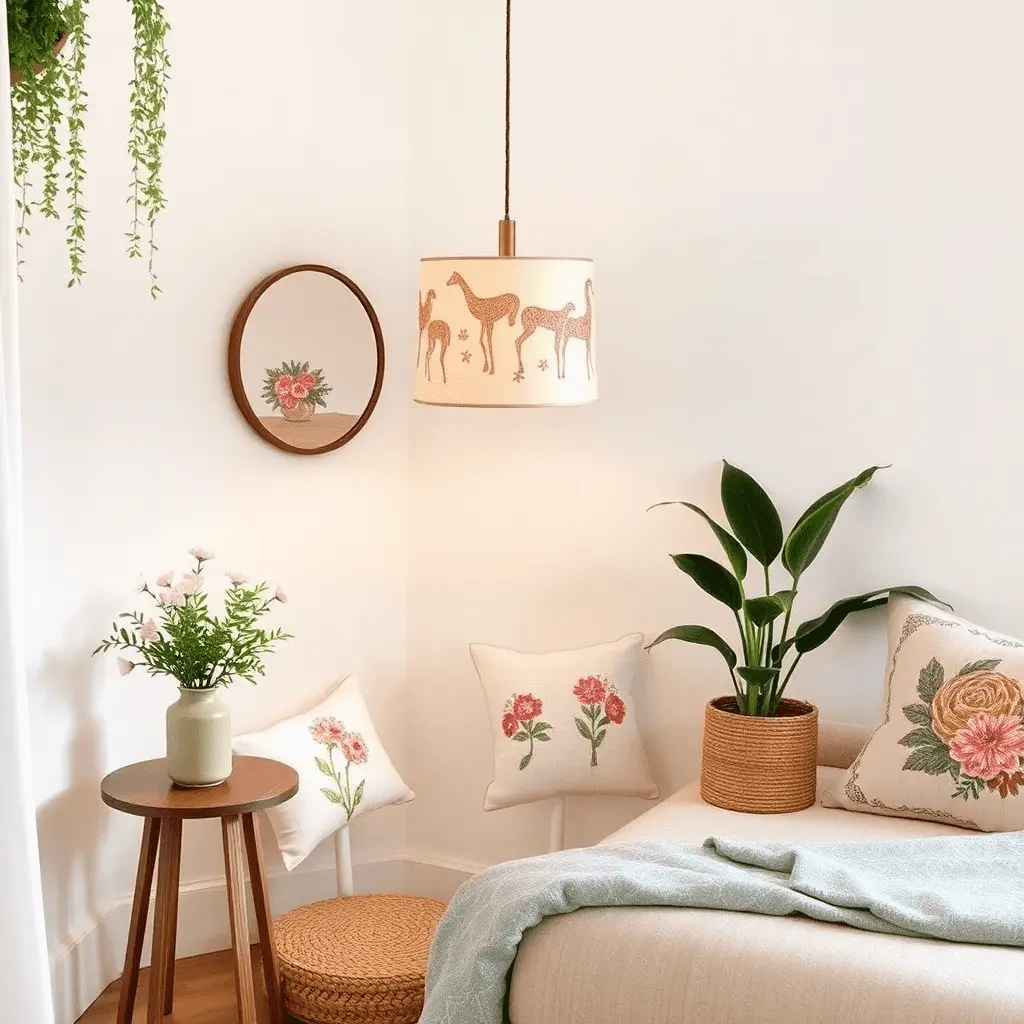
19+ Beautiful Embroidery Ideas for Stylish Home Decoration
Introduction
Embroidery Ideas for Stylish Home Decoration, Home decoration is a deeply personal journey. It reflects who you are, what you love, and how you want the people who visit your space to feel. Among all the decorative arts that have stood the test of time, embroidery remains one of the most versatile, accessible, and genuinely beautiful ways to bring warmth and character into any living space. From intricately stitched wall hangings to hand-embroidered throw pillows, the possibilities are as broad as your imagination.
What makes embroidery particularly special as a form of home decoration is its ability to combine artistry with function. A stitched table runner is not simply a craft project. It is a centerpiece that anchors a dining room. An embroidered lampshade is not just a light cover. It becomes a glowing work of art when the lamp is switched on. Whether you are a practiced needle worker or someone exploring the craft for the first time, embroidery offers something meaningful at every skill level.
This article walks you through 20 of the most beautiful and stylish embroidery ideas that can genuinely transform the look and feel of your home. Each idea is accompanied by context, creative direction, and practical insight to help you bring it to life with confidence.
1. Embroidered Throw Pillows That Define Your Living Room
Few decorative elements have the power to redefine a room as quickly and affordably as throw pillows. When those pillows are hand-embroidered, they move from simple accents to statement pieces. Consider choosing a neutral base fabric such as linen or cotton in ivory, sage green, or dusty blue, then embroidering detailed floral clusters, geometric shapes, or even meaningful words across the front panel.
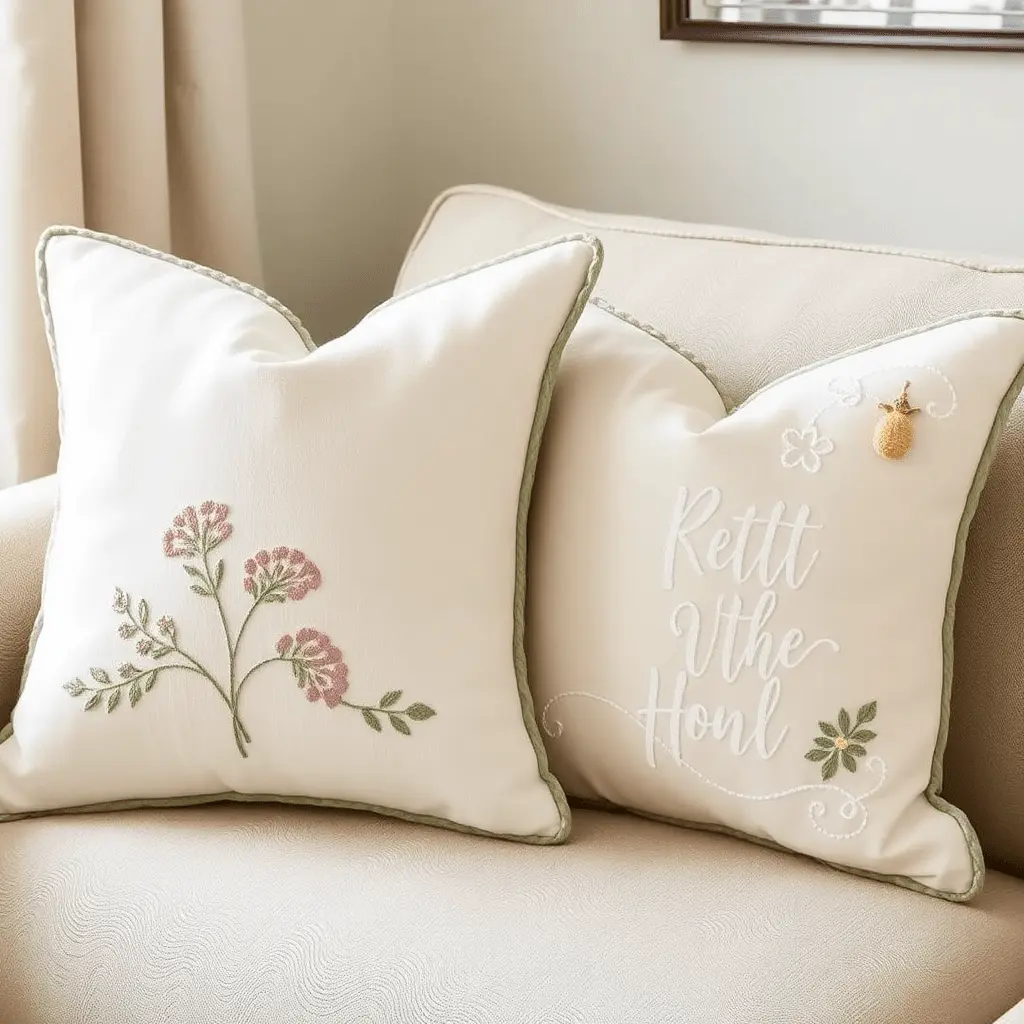
The beauty of embroidered throw pillows lies in their adaptability. You can change them seasonally; swap covers without replacing the inserts and design each one to coordinate with your existing color palette. Satin stitch, chain stitch, and French knots are particularly effective for achieving texture and depth on pillow surfaces.
2. Embroidery Hoop Wall Art for Modern Interiors
The embroidery hoop has moved well beyond its role as a stitching tool. Today it serves as one of the most popular and affordable forms of textile wall art. Stretch your chosen fabric tightly within a wooden hoop, complete your design, and hang it directly as a finished piece.
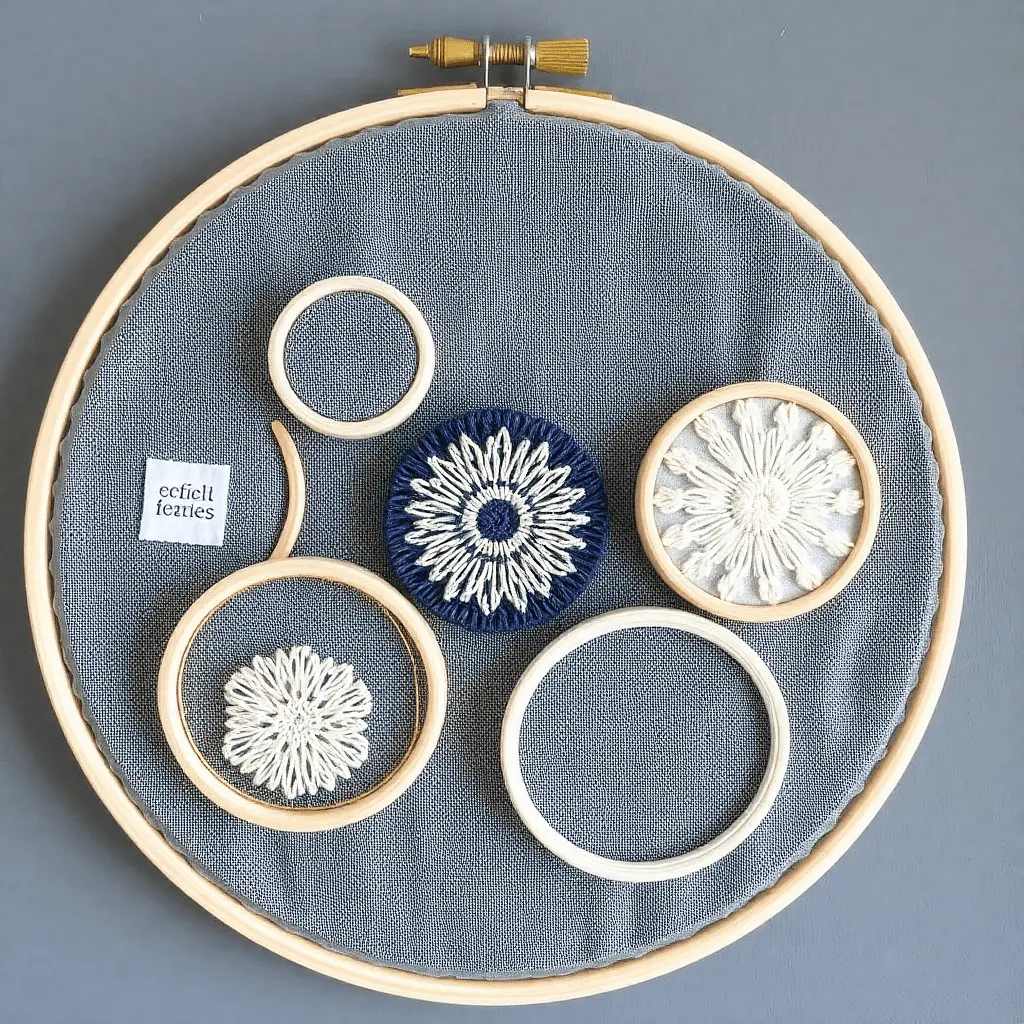
What makes hoop art so appealing for modern interiors is its unfinished, honest aesthetic. It does not pretend to be a framed painting. It announces itself as handmade with pride. You can wrap the hoop rim with colored thread, leave it natural, or paint it to match your room. Groupings of multiple hoops in varying sizes create a dynamic gallery effect on any wall.
3. Floral Embroidery Panels for the Living Room
Large-scale floral embroidery stretched over a canvas frame or mounted on a linen backing makes for an incredibly striking living room focal point. Think oversized blooms rendered in silk thread, layered petals built up with satin stitch, and trailing stems created with stem stitch or split stitch.
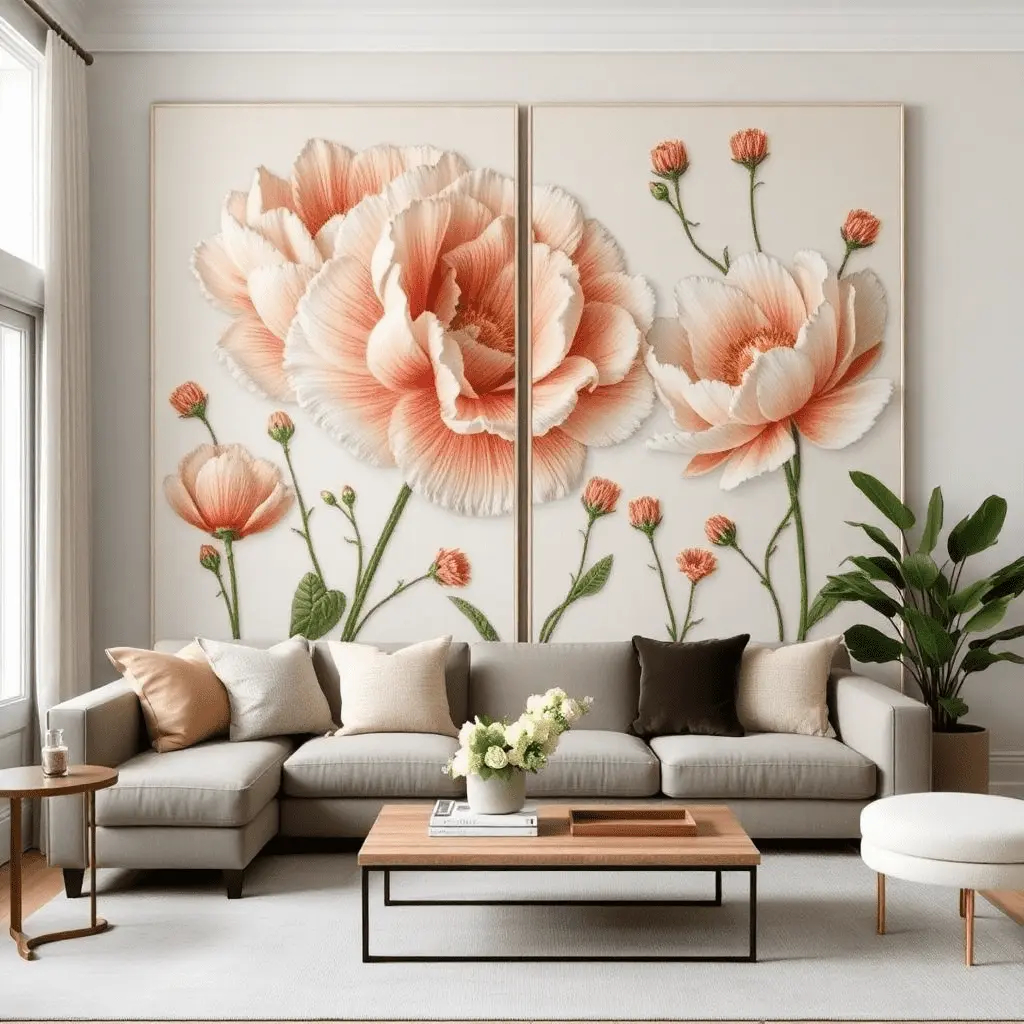
Floral embroidery works across nearly every interior style. In a farmhouse setting it feels rustic and tender. In a Scandi-inspired room it reads as clean and artful. In a maximalist space it adds richly textured depth. Choose thread colors that pull from existing tones in your furniture or rugs to create a cohesive visual conversation.
4. Hand-Stitched Table Runners for Dining Elegance
A table runner is one of those objects that works quietly in the background of a room until someone looks closely and realizes it is extraordinary. An embroidered table runner brings that moment of discovery every time guests sit down to eat.
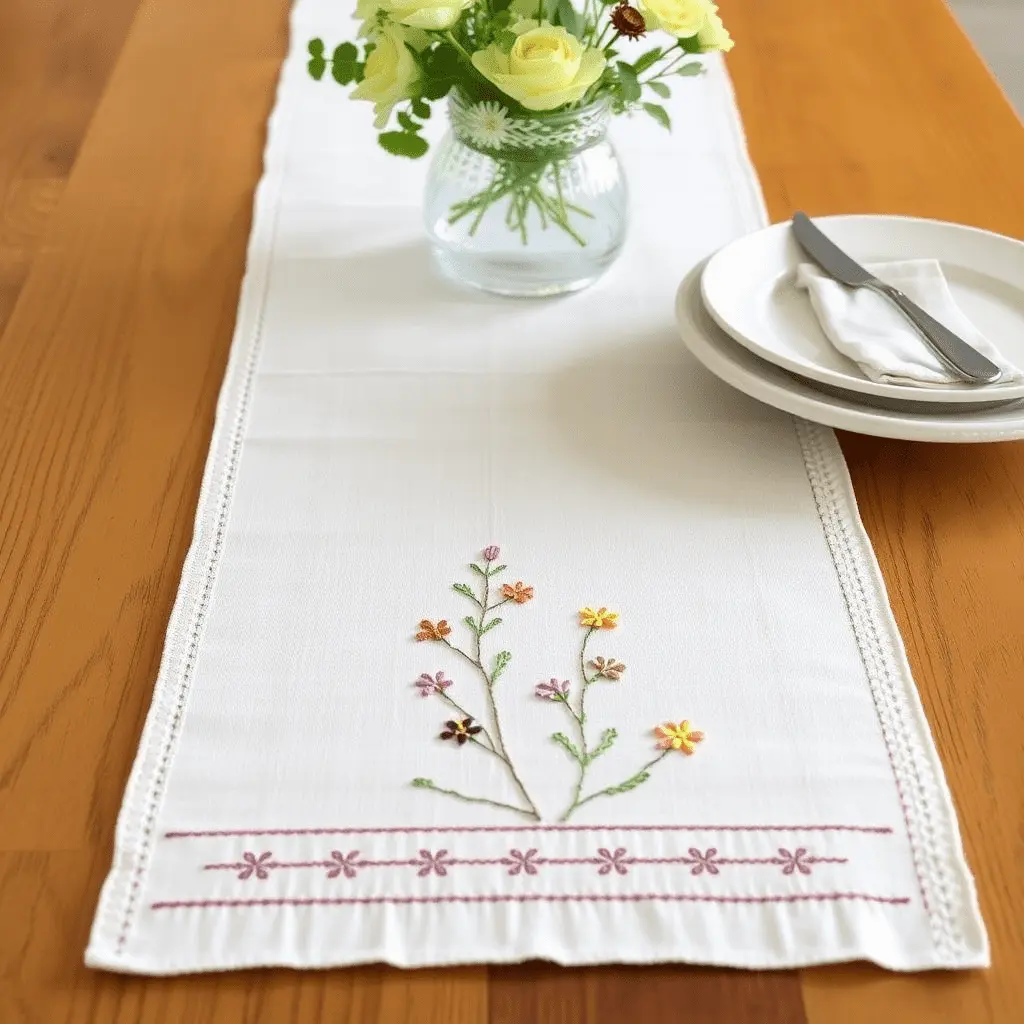
Linen and cotton work best as base fabrics since they hold stitches beautifully and launder well. Border designs with repeating leaf motifs, geometric bands, or scattered wildflowers are all excellent choices. You can leave generous linen margins on either side of the embroidery to let the handwork breathe against the natural fabric.
5. Botanical Embroidery as Framed Artwork
There is something deeply satisfying about botanical embroidery, particularly when it is framed and displayed as fine art. Detailed renderings of ferns, eucalyptus, herbs, or wildflowers stitched in thread carry the same contemplative quality as a botanical illustration. The texture of thread gives the work a tactile richness that no print can replicate.
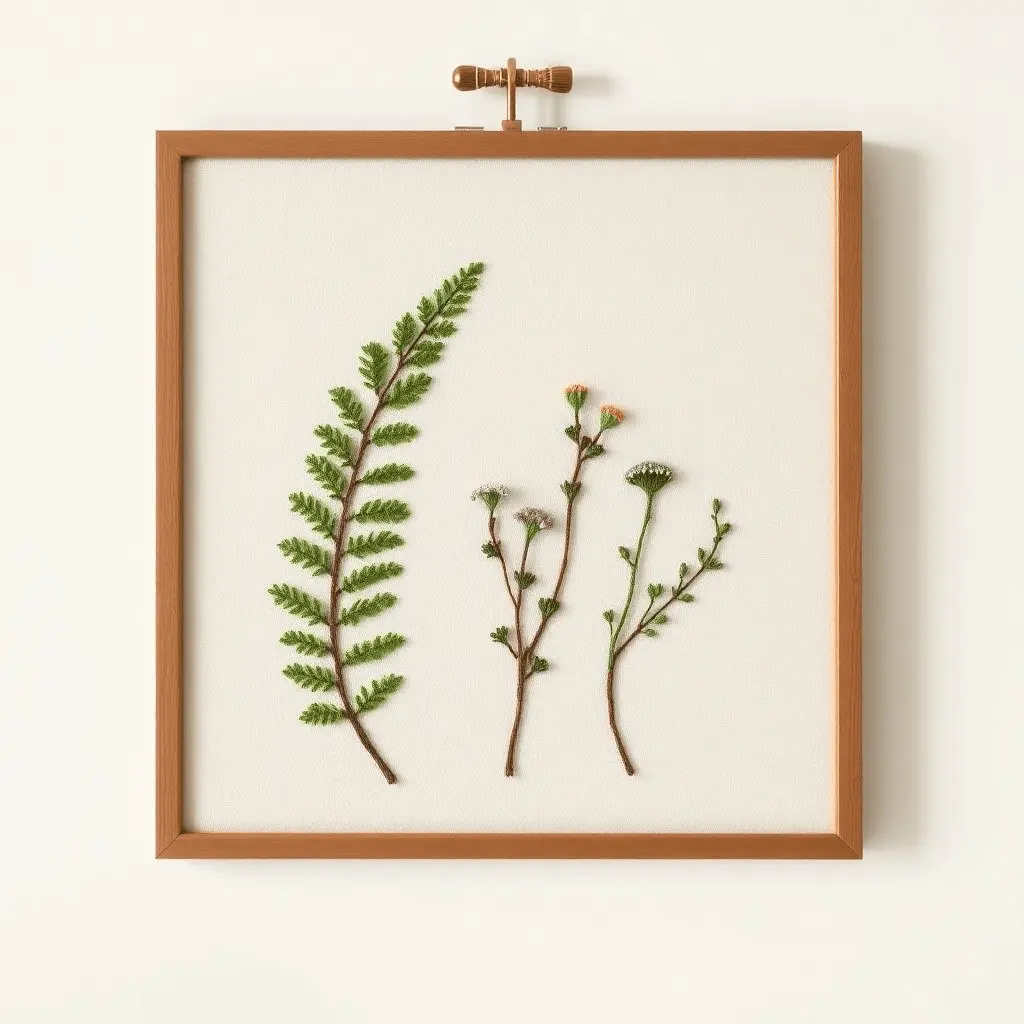
Frame your finished piece in a simple wooden or metal frame and pair it with a complementary mat. A series of three or five botanical embroidery pieces hung in a row along a hallway or above a bed creates a cohesive, gallery-worthy display that never goes out of style.
6. Embroidered Curtains and Window Panels
Window treatments represent some of the largest visual real estate in any room, which makes them an ideal canvas for embroidery. Adding hand-embroidered borders along the hem or leading edge of curtain panels introduces elegance and craftsmanship without overwhelming the space.
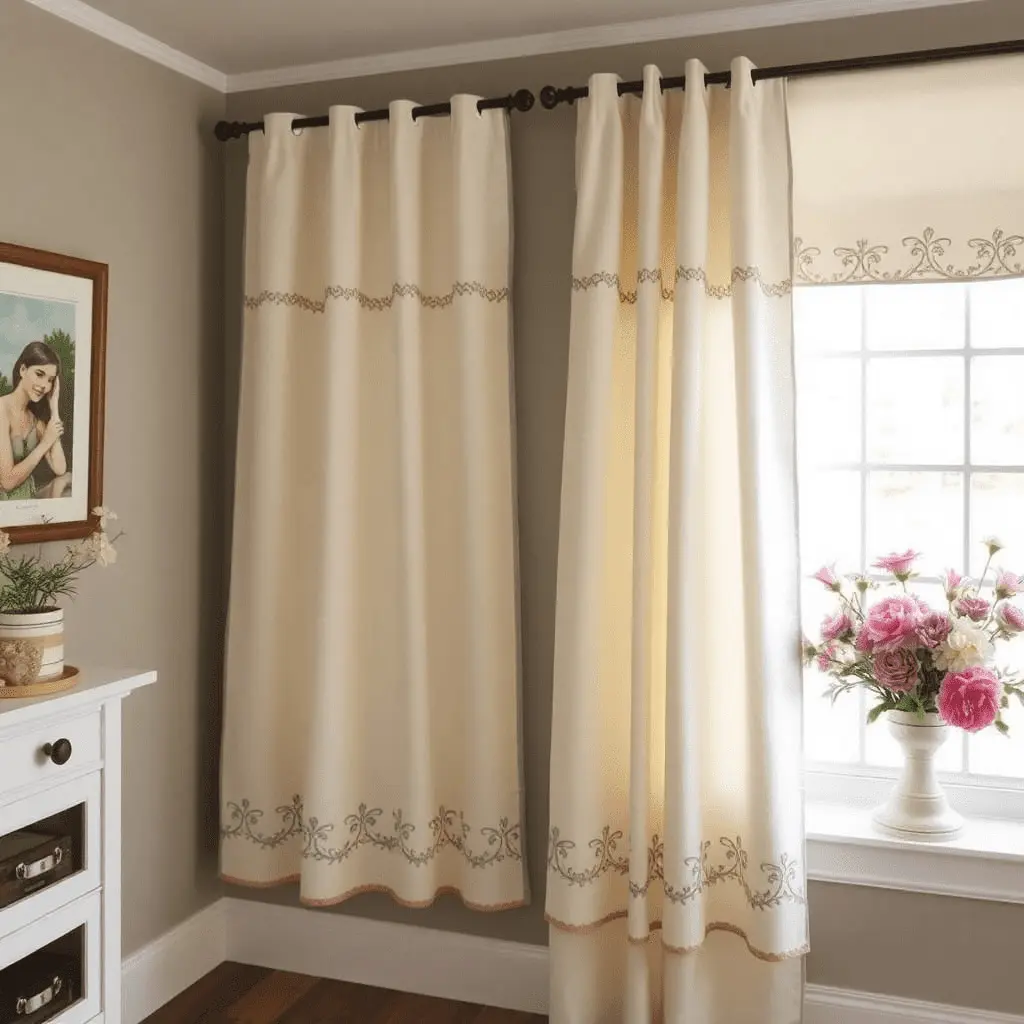
For curtains, consider simpler designs with strong visual impact from a distance. Running vines, geometric border patterns, or repeating leaf shapes work particularly well. Use a thick cotton or linen fabric to support the weight of the embroidery and choose thread colors that either match the curtain for a tone-on-tone effect or contrast deliberately to create definition.
7. Monogrammed Linen Napkins and Table Linens
There is a timeless sophistication to monogrammed table linens that elevates even the most casual meal into something that feels considered and special. Embroidering initials or family crests onto linen napkins, placemats, or tablecloths connects your table setting to a long tradition of domestic artisanship.
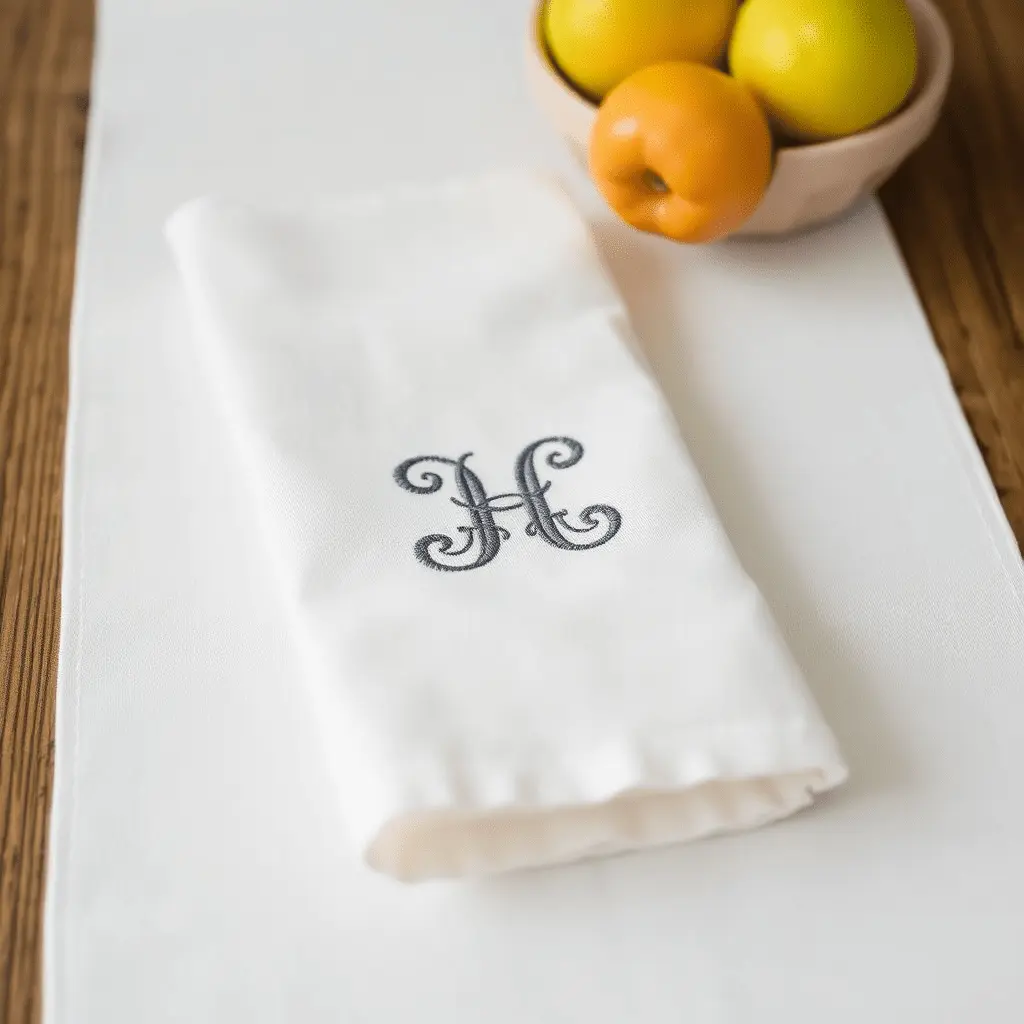
Satin stitch monograms in a classic serif font feel formal and refined. Conversely, a loose, irregular script rendered in backstitch or chain stitch creates a relaxed, contemporary feel. Either approach transforms an ordinary linen item into something you will want to keep for decades.
8. Abstract Geometric Embroidery for Contemporary Homes
Not all embroidery needs to represent something from the natural world. Abstract geometric embroidery, featuring bold lines, repeated triangles, circular compositions, and asymmetric arrangements, is a wonderful way to bring modern visual energy into a room.
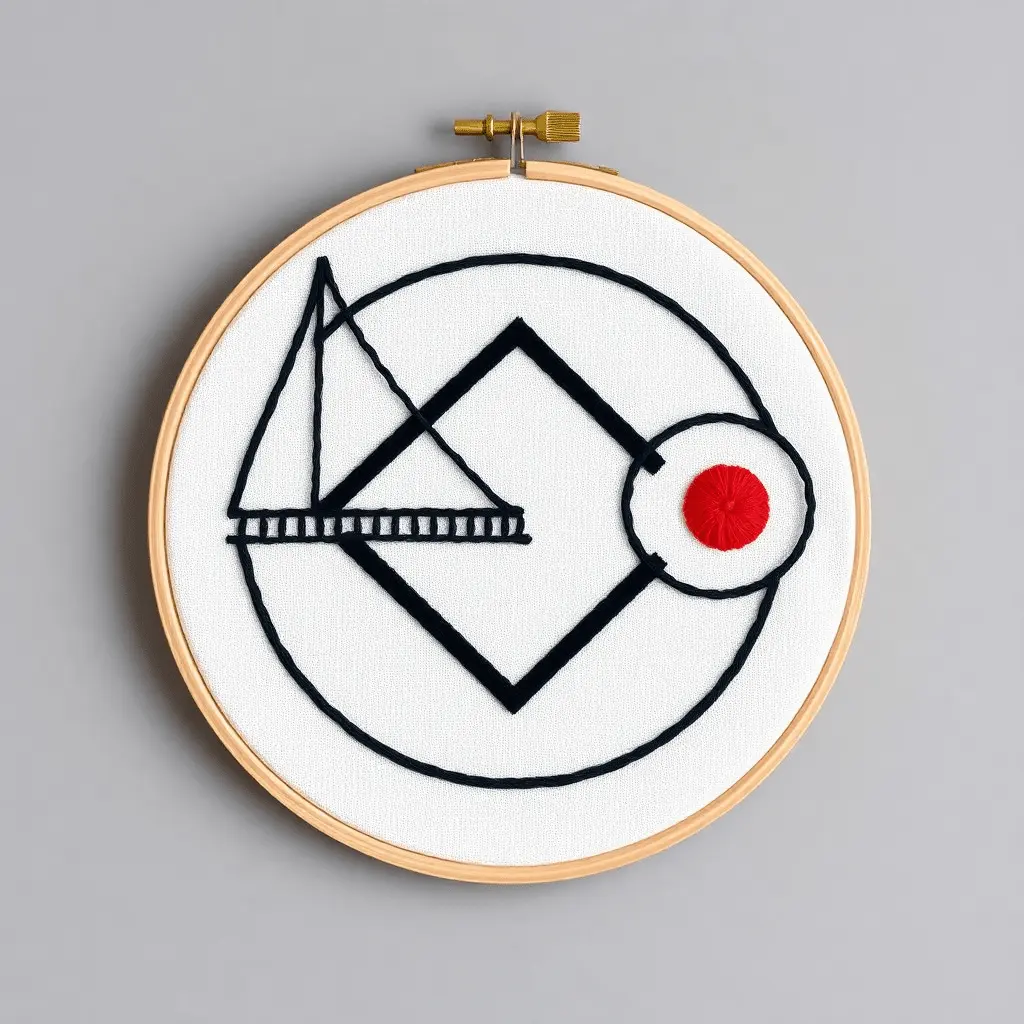
This style works beautifully as hoop art, on cushion covers, or stretched over a wooden frame. The graphic quality of geometric embroidery appeals particularly to those who love contemporary design but want the warmth and handmade quality that machine-produced art simply cannot deliver.https://embroiderylegacy.com/machine-embroidery-project-home-decor/
9. Embroidered Lampshades That Glow with Character
An embroidered lampshade creates an entirely different experience when the lamp is on versus off. In daylight, you see the needlework resting on the fabric surface. At night, the backlight illuminates the threads and makes the design glow in an almost magical way.
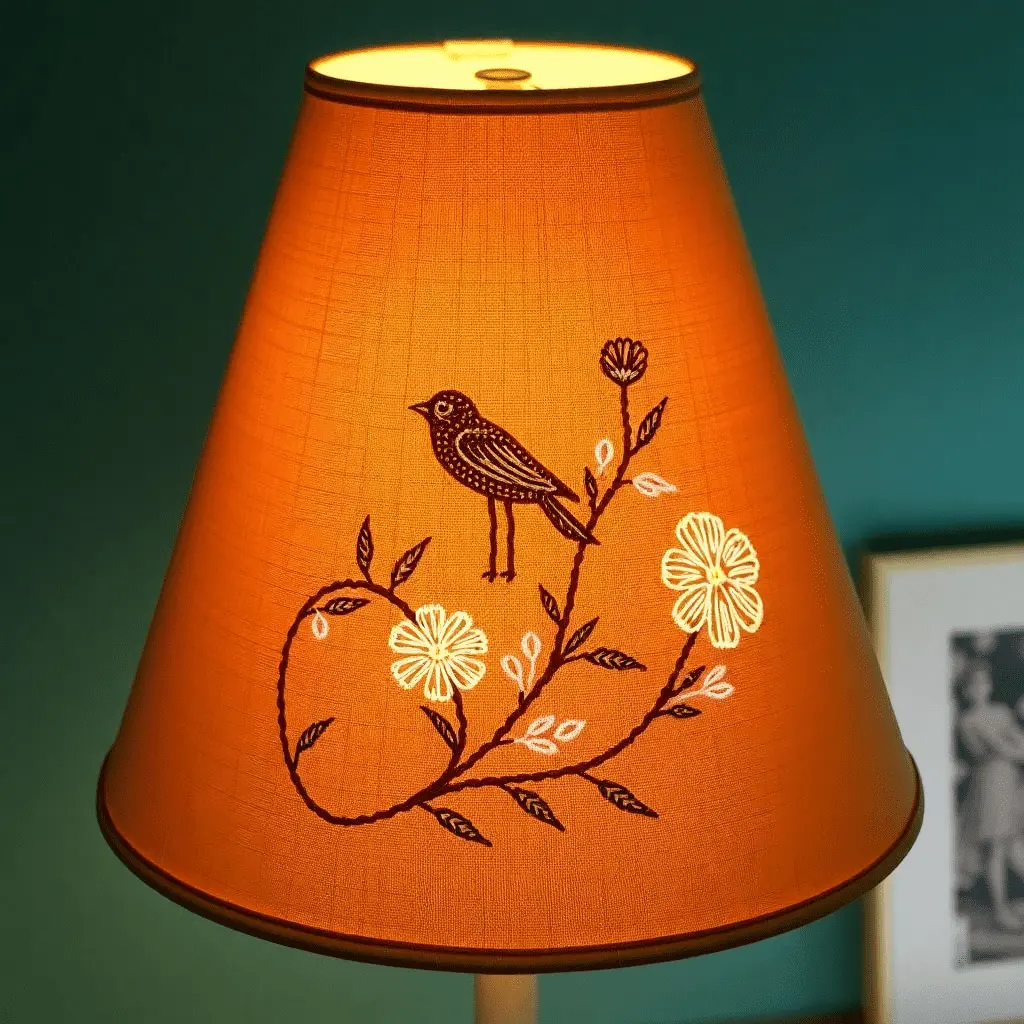
Choose a fabric lampshade with a smooth, flat panel construction for easiest access. Work with fine thread and a small needle. Keep designs relatively open and airy since dense stitching can block too much light. Flowers, birds, and foliage are classic choices that translate beautifully when backlit.
10. Embroidered Bedding and Duvet Covers
The bedroom is the most personal room in any home, and embroidered bedding makes it feel truly yours. Whether you choose to embroider your pillowcases, duvet cover, or a dedicated bed runner placed across the foot of the bed, hand-stitched textiles bring an undeniable sense of craft and care to the sleeping space.
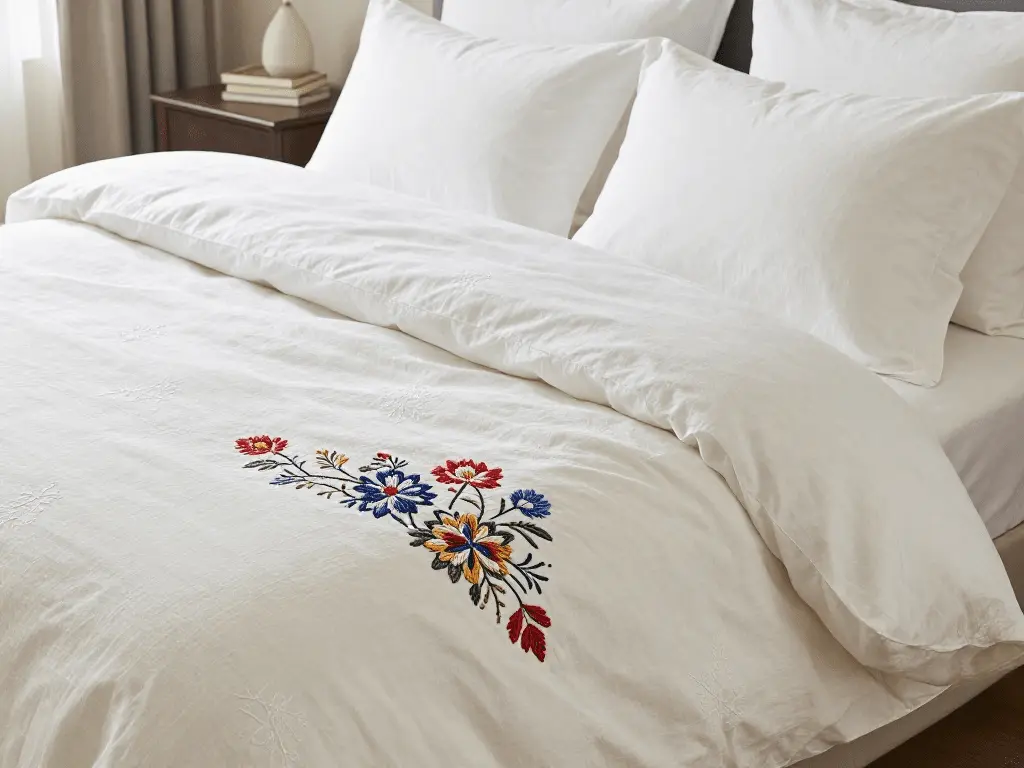
White or ivory linen bedding with delicate white-on-white embroidery creates a serene, luxurious aesthetic reminiscent of fine European hotel rooms. Alternatively, bold colored thread on neutral bedding adds personality and visual punch without requiring any other decorative changes.
11. Kitchen Towels with Embroidered Motifs
The kitchen is often overlooked as a space for decorative embroidery, but it is actually one of the most charming places to introduce stitched textiles. Embroidered kitchen towels featuring herbs, vegetables, fruit, coffee cups, or simple culinary quotes bring a warm, artisanal energy to a space that is primarily about function.
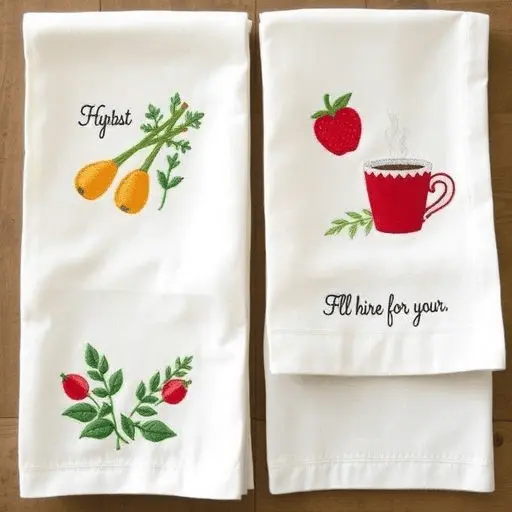
Cotton flour sack towels are ideal for this project since they have a tight, smooth weave that accepts stitching beautifully and withstands frequent washing. A set of four or six matching towels with coordinated but varied designs makes both a beautiful display and a genuinely useful household item.
12. Seasonal and Holiday Embroidery Decor
One of the great joys of embroidery as a home decoration practice is the ability to rotate pieces seasonally and create a home that feels attentive to the rhythms of the year. Spring brings opportunities for cherry blossom and tulip designs. Summer invites coastal motifs and sunflower compositions. Autumn calls for richly colored leaf and pumpkin embroidery. Winter is the natural season for evergreen branches, snowflakes, and candlelight.
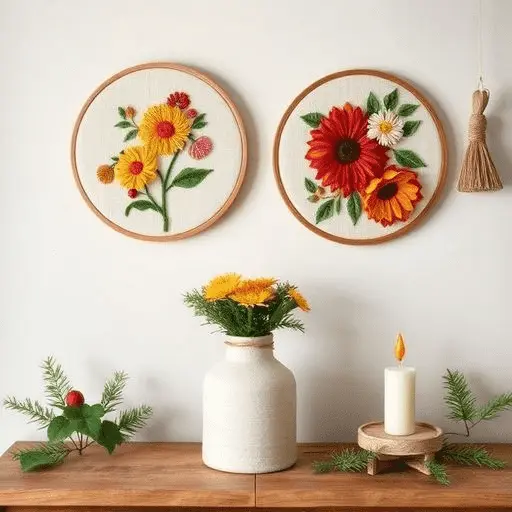
Building a collection of seasonal embroidery pieces over time is one of the most satisfying creative pursuits a home decorator can undertake. Each piece carries the memory of when it was made and becomes more meaningful with every passing year.
13. Embroidered Tablecloths as Heirloom Pieces
A fully embroidered tablecloth is one of the most ambitious and rewarding home decoration projects a needleworker can undertake. Such pieces, worked in cross-stitch, crewelwork, or surface embroidery, often become family heirlooms passed down across generations.
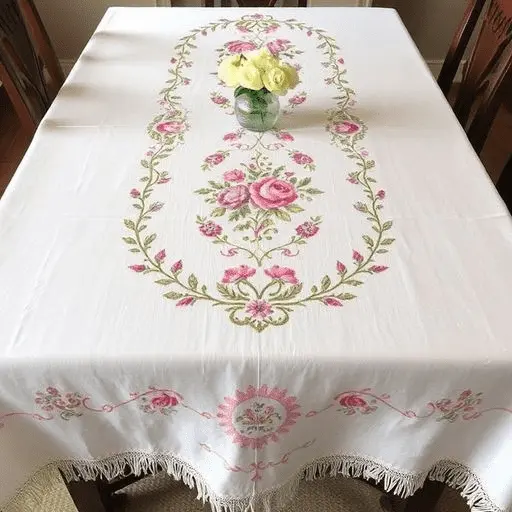
Even if a full tablecloth feels too ambitious to begin with, an embroidered centerpiece panel placed in the middle of a plain tablecloth achieves a similar visual effect with a more manageable scope of work. The result is a dining table that tells a story every time it is set.
14. Framed Embroidery Art as a Focal Point
While hoop art has a casual, accessible energy, properly framed embroidery can be just as commanding as any oil painting or photographic print. The key is choosing the right combination of frame, mat, and backing to complement rather than overwhelm the stitched design.
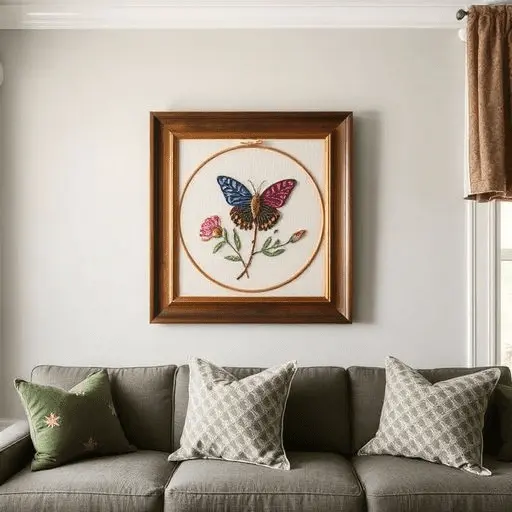
Deep-set shadow box frames work particularly well for three-dimensional embroidery techniques such as stump work or raised goldwork. Flat frames suit surface embroidery and cross-stitch designs. Consider professional framing for pieces that represent many hours of work, as a quality frame transforms even a small embroidery into something gallery-worthy.
15. Embroidered Ottoman and Footstool Covers
An upholstered ottoman or footstool with an embroidered top panel is one of those rare decorative objects that manages to be both a functional piece of furniture and a genuine conversation starter. Needlepoint, crewelwork, and canvas embroidery are all well-suited to this application since they create durable, dense surfaces that can withstand regular use.
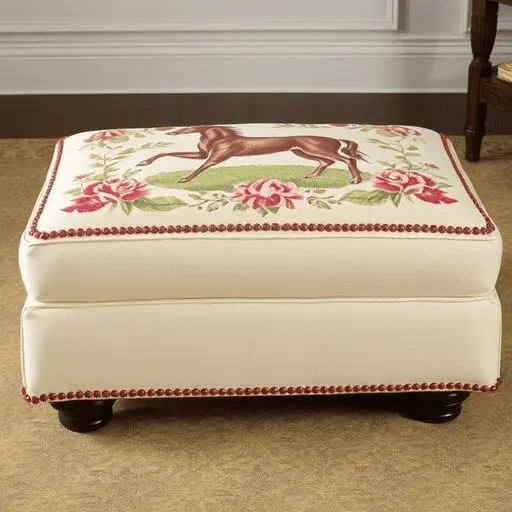
Classic designs for this purpose include florals, hunting scenes, geometric tapestry patterns, and botanical compositions. The finished piece adds a layer of handmade artistry to any sitting room that no mass-produced furniture can replicate.
16. Embroidery Gallery Wall with Mixed Pieces
A gallery wall composed entirely of embroidery pieces in varied sizes, frames, and styles is one of the most visually interesting and personal wall displays you can create. Mix hoop art with framed pieces, include work from different makers, and vary the stitch styles and color palettes for a collection that feels curated rather than matched.
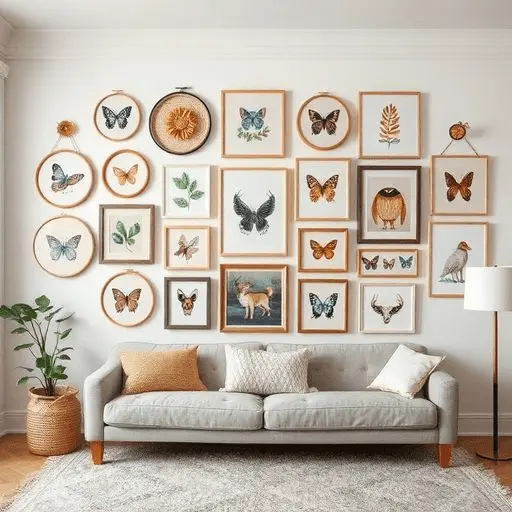
Lay all pieces on the floor first and experiment with arrangements before committing to wall placement. Generally, placing the largest piece slightly left or right of center creates a dynamic asymmetry that feels intentional. Connect pieces visually through a shared color thread or thematic consistency even when styles vary widely.
17. Nature-Inspired Embroidery Accents Throughout the Home
Nature is the most enduring source of inspiration in all decorative arts, and embroidery is no exception. Birds perched on branches, mushrooms nestled among leaves, dragonflies hovering over still water, and bees working among wildflowers are all timeless motifs that bring the outdoors inside in the most tactile and intimate way possible.
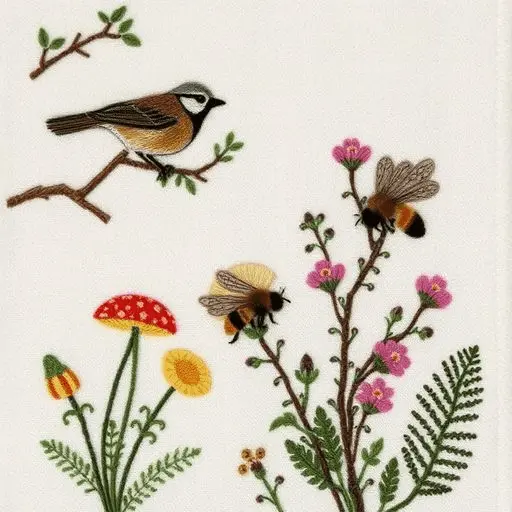
Nature-inspired embroidery pieces work in every room of the home. A stitched songbird on the bedroom wall. A cluster of wildflowers on the hallway runner. A single fern frond on a bathroom hand towel. Each small piece contributes to an overall atmosphere of natural warmth and organic beauty.
18. Embroidered Wreaths for Doors and Walls
An embroidered wreath is a unique decorative object that combines the visual tradition of the decorative wreath with the tactile richness of needlework. Using wire or grapevine as a base, you can attach small, embroidered flowers, leaves, and berries to create a wreath that is entirely one of a kind.
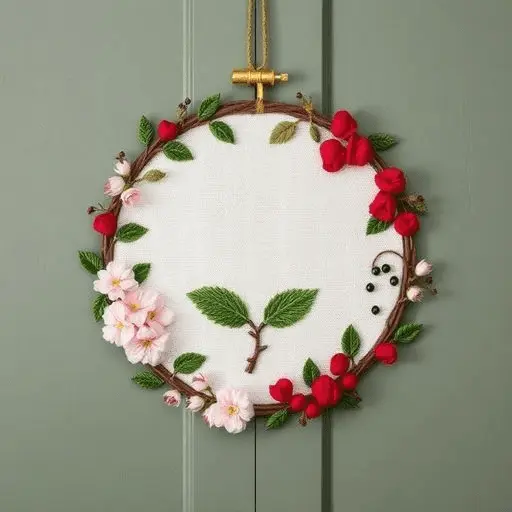
Alternatively, embroidering a wreath design directly onto fabric and framing it creates a circular wall decoration that reads beautifully in both traditional and contemporary interiors. Seasonal variations, a winter wreath of holly and berries replaced in spring with cherry blossom, make this a decoration you can refresh throughout the year.
19. Vintage and Traditional Embroidery Styles Reimagined
Traditional embroidery styles such as crewelwork, blackwork, goldwork, and Hungarian Kalocsa embroidery are experiencing a significant revival among interior decorators and craft enthusiasts who appreciate historical artistry. These styles carry centuries of cultural history and, when incorporated thoughtfully into a contemporary home, create a powerful sense of depth and storytelling.
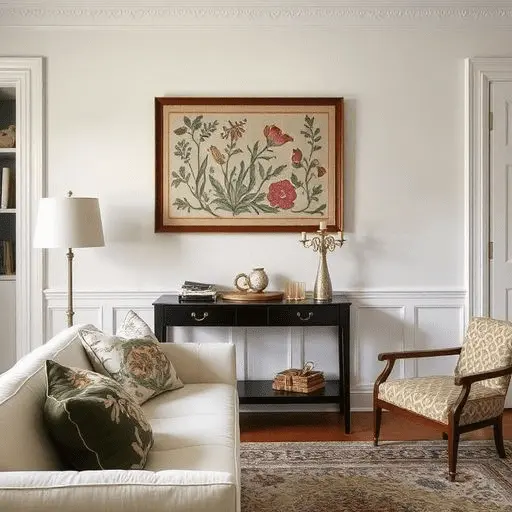
A crewelwork cushion on a modern sofa. A framed piece of goldwork above a minimalist console table. These pairings create the productive tension between old and new that makes a room genuinely interesting. Do not be afraid to learn and use traditional techniques. They exist precisely because they work.
20. Modern Minimalist Embroidery for Clean Contemporary Spaces
Not every home calls for rich, complex embroidery. In spaces defined by clean lines, neutral palettes, and thoughtful restraint, minimalist embroidery provides warmth without visual noise. A single line drawing of a mountain range stitched in fine thread on natural linen. A simple geometric shape in monochrome. A delicate botanical outline with no color fill.
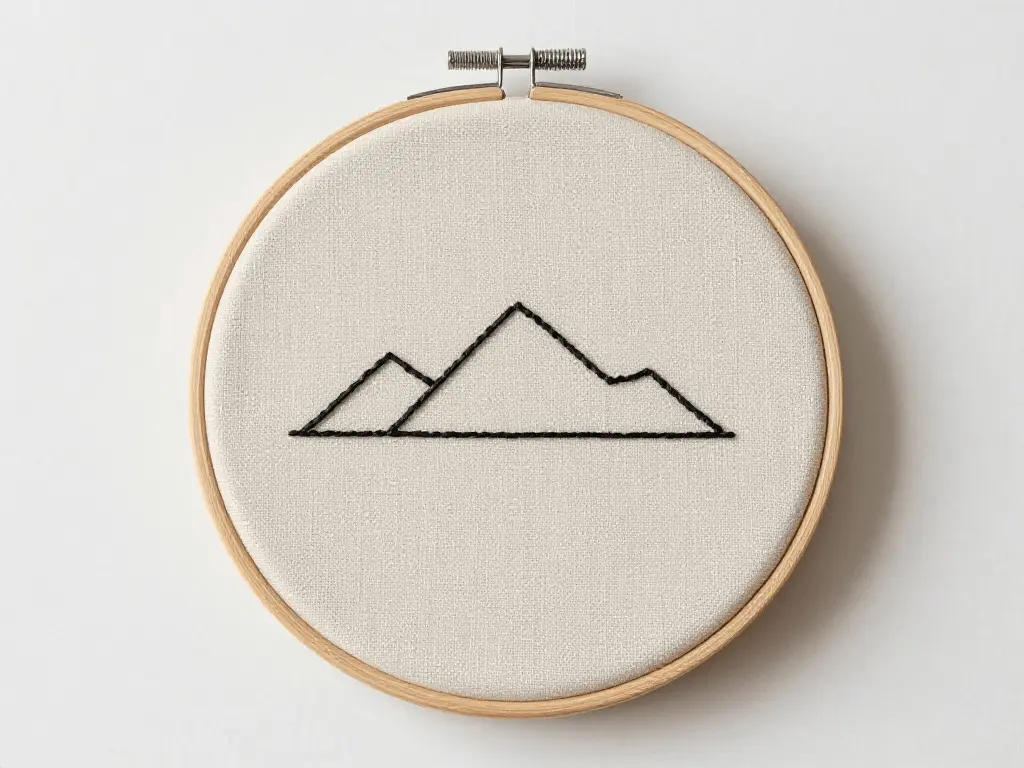
Minimalist embroidery proves that needlework does not need to be elaborate to be beautiful. Sometimes the most powerful statement is made with just a few carefully placed stitches that invite the viewer to slow down, look closely, and appreciate the quiet skill behind each one.
Conclusion
Embroidery is one of the most deeply human forms of decoration. Every stitch is placed by hand, driven by intention, and shaped by the personality of the person holding the needle. That humanity is precisely what makes embroidered home decor so enduring and so difficult to replicate with any machine or mass-production process.
Whether you choose to begin with something as approachable as a set of embroidered kitchen towels or as ambitious as a full tablecloth worked in traditional crewelwork, the process of stitching something beautiful into your home connects you to a tradition of domestic artisanship that spans centuries and cultures. Start with one idea from this list. Let it lead you to the next. Before long, your home will carry the quiet, remarkable signature of your own hands, and there is truly nothing more stylish than that.
Frequently Asked Questions
1. What type of fabric is best for home decor embroidery?
Linen and cotton are the most recommended fabrics for embroidery intended for home decoration. They hold stitches firmly, launder well, and have a natural texture that complements embroidery thread beautifully. For upholstered items like ottomans or footstools, a heavier canvas or wool fabric provides the durability the piece needs.
2. Can beginners attempt embroidery for home decoration?
Absolutely. Many of the most effective embroidery ideas for home decoration are well within reach for complete beginners. Embroidered kitchen towels, simple hoop art with basic stitches, and monogrammed napkins all require only foundational techniques. Starting with a small project builds both skill and confidence quickly.
3. How do I care for embroidered home decor items?
Most embroidered home textiles should be hand-washed in cool water with a gentle detergent or placed in a mesh laundry bag on a delicate machine cycle. Always air-dry embroidered items flat to preserve the shape of the fabric and the integrity of the stitches. Avoid wringing or tumble drying.
4. What embroidery stitches are most useful for home decor projects?
Satin stitch, stem stitch, chain stitch, French knots, and backstitch cover the vast majority of what is needed for beautiful home decor embroidery. Each stitch has its own texture and visual quality and combining them within a single design creates the depth and interest that makes a piece truly compelling.
5. How long does it take to complete an embroidery piece for home decoration?
The time required depends entirely on the complexity and scale of the design. A simple set of embroidered kitchen towels might take three to five hours total. A large botanical panel or embroidered tablecloth could require weeks or months of steady work. The process itself is meditative and rewarding, so many embroiderers find the time spent as valuable as the finished piece.
2 Comments